Best Places to Elope in Utah
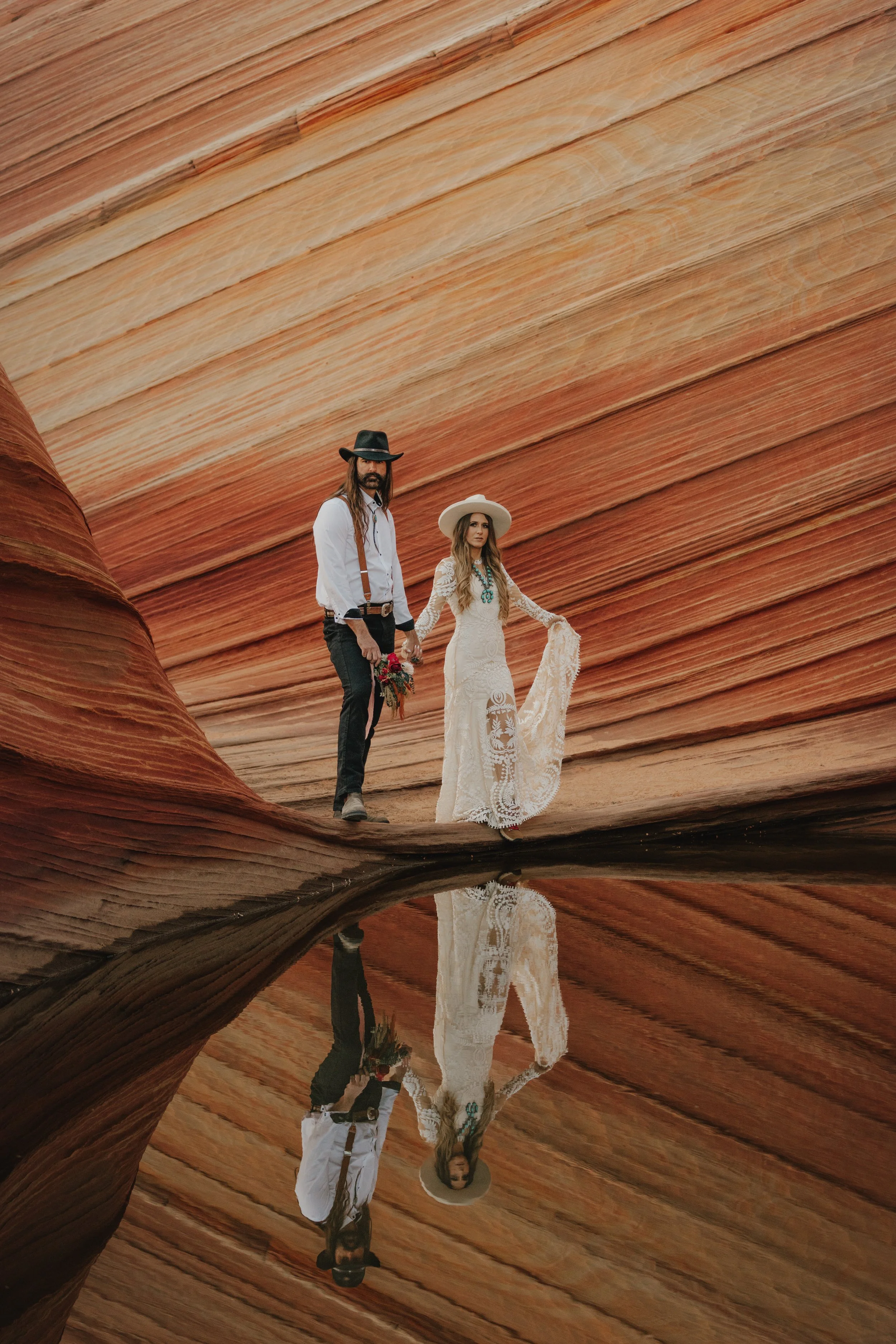
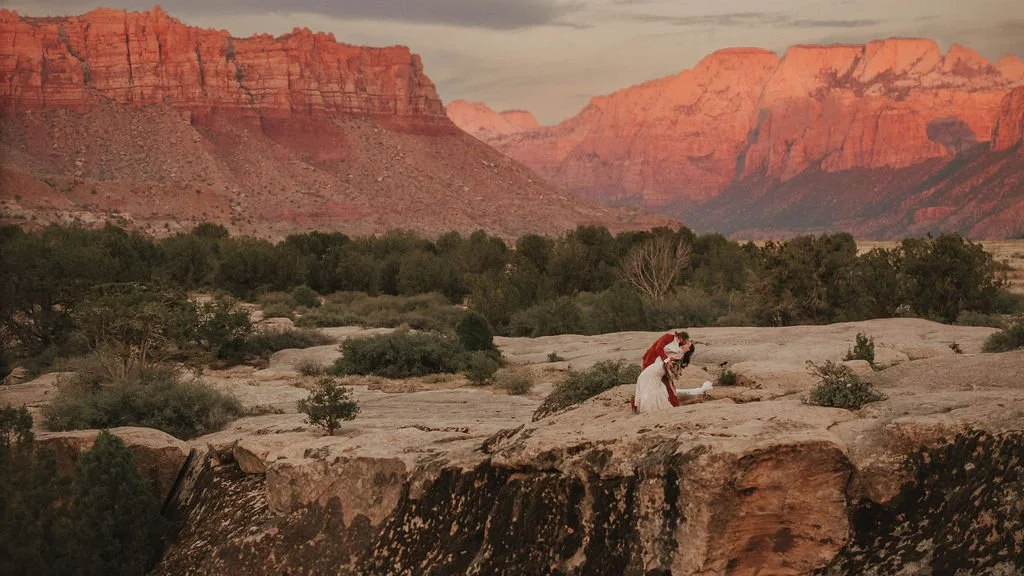
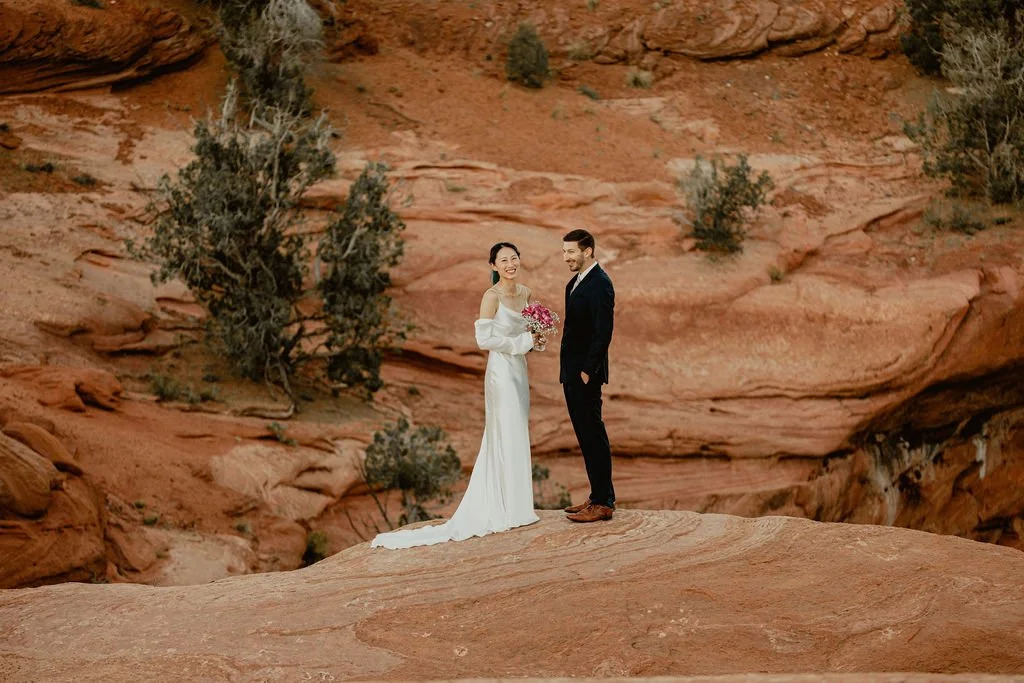
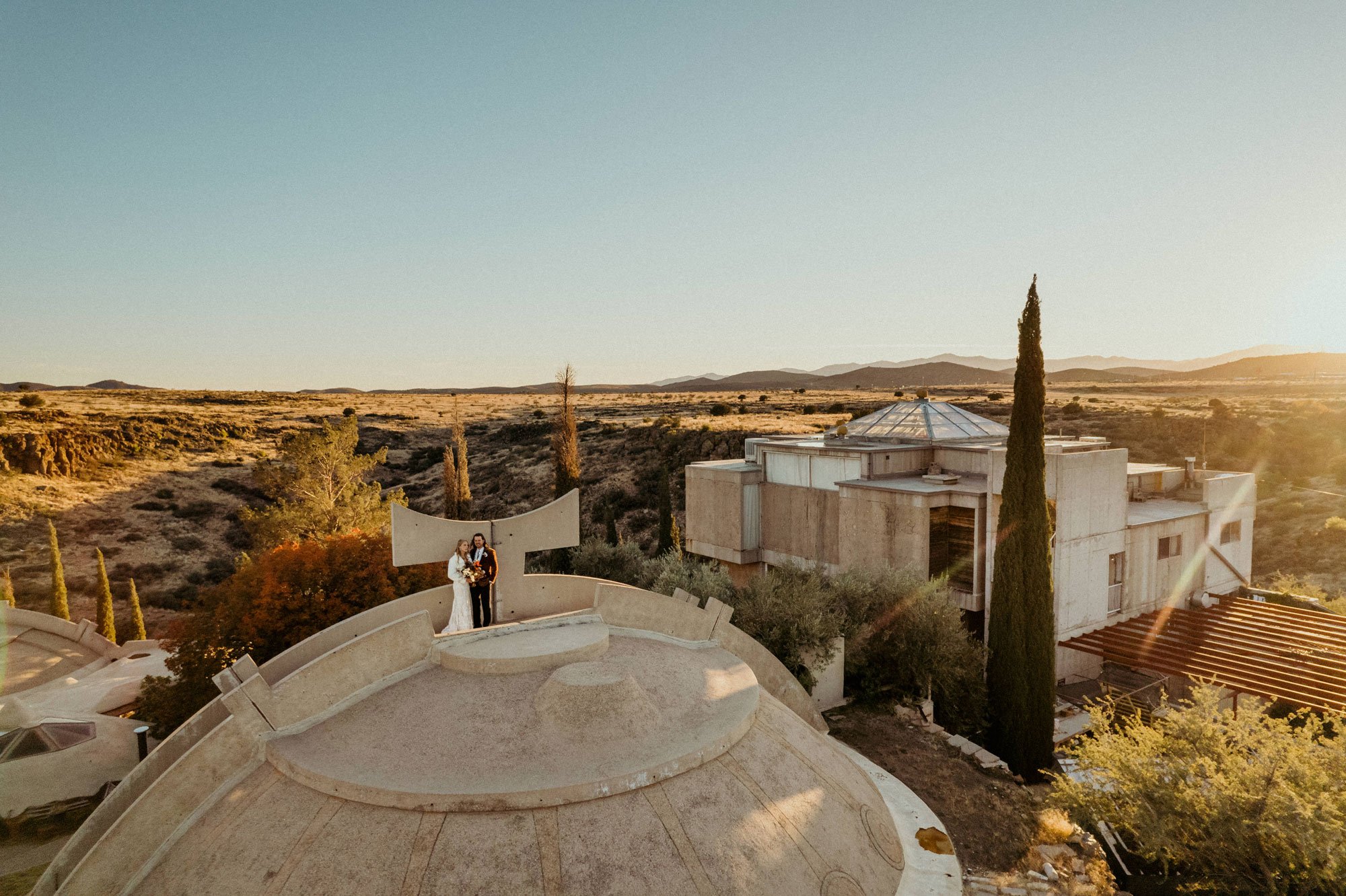
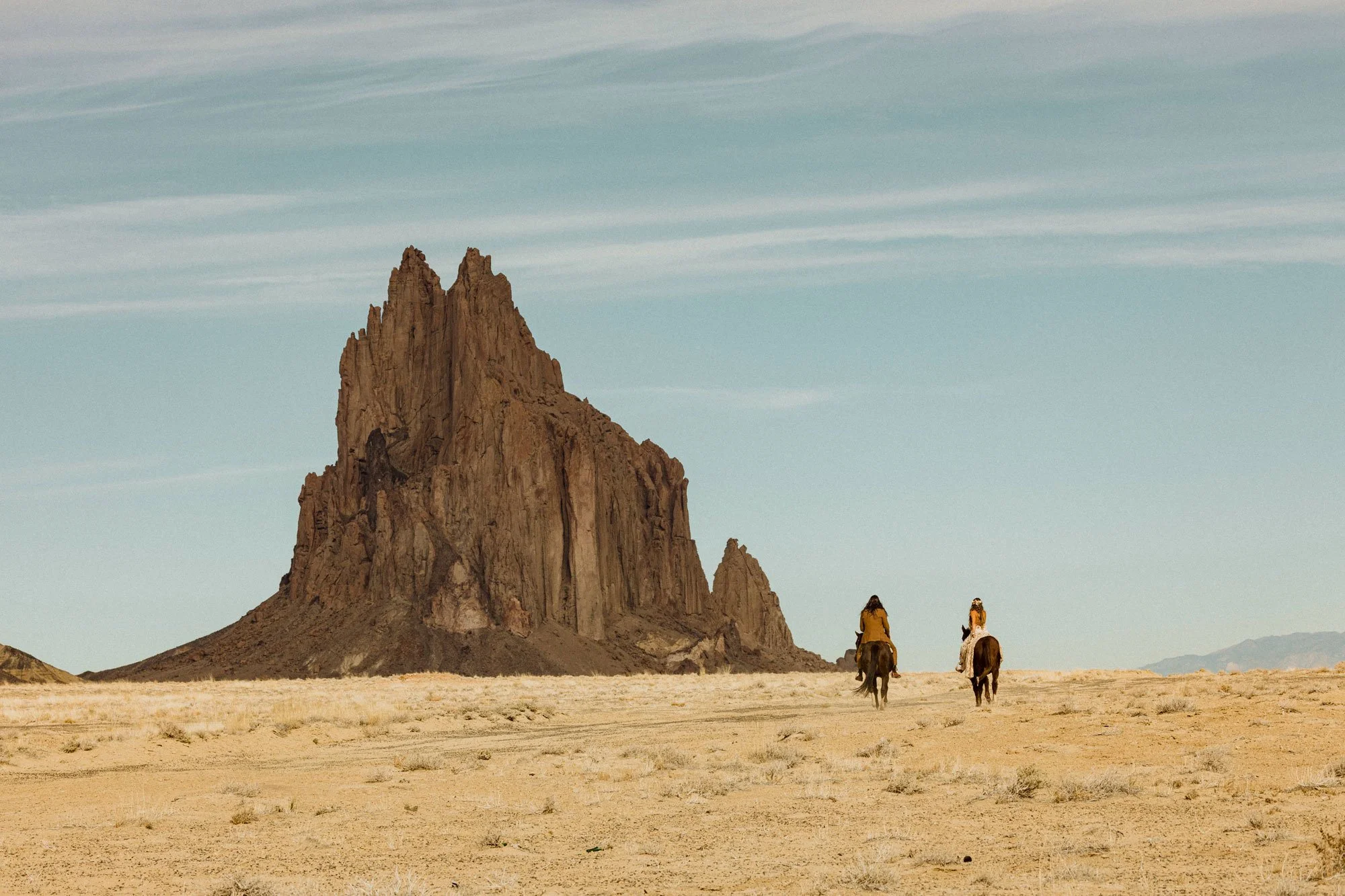
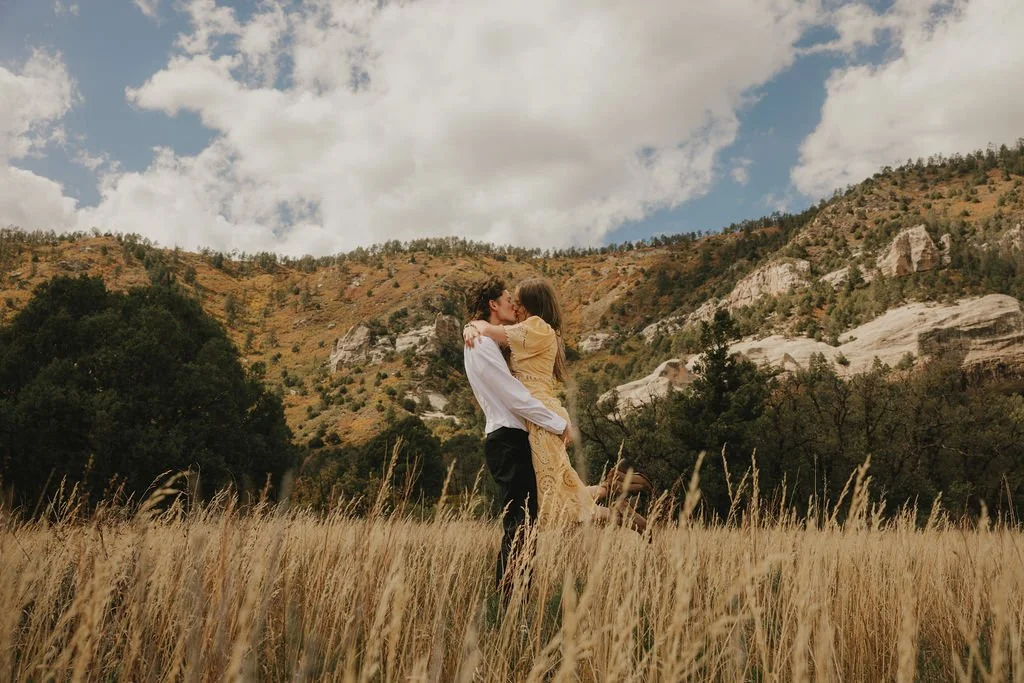
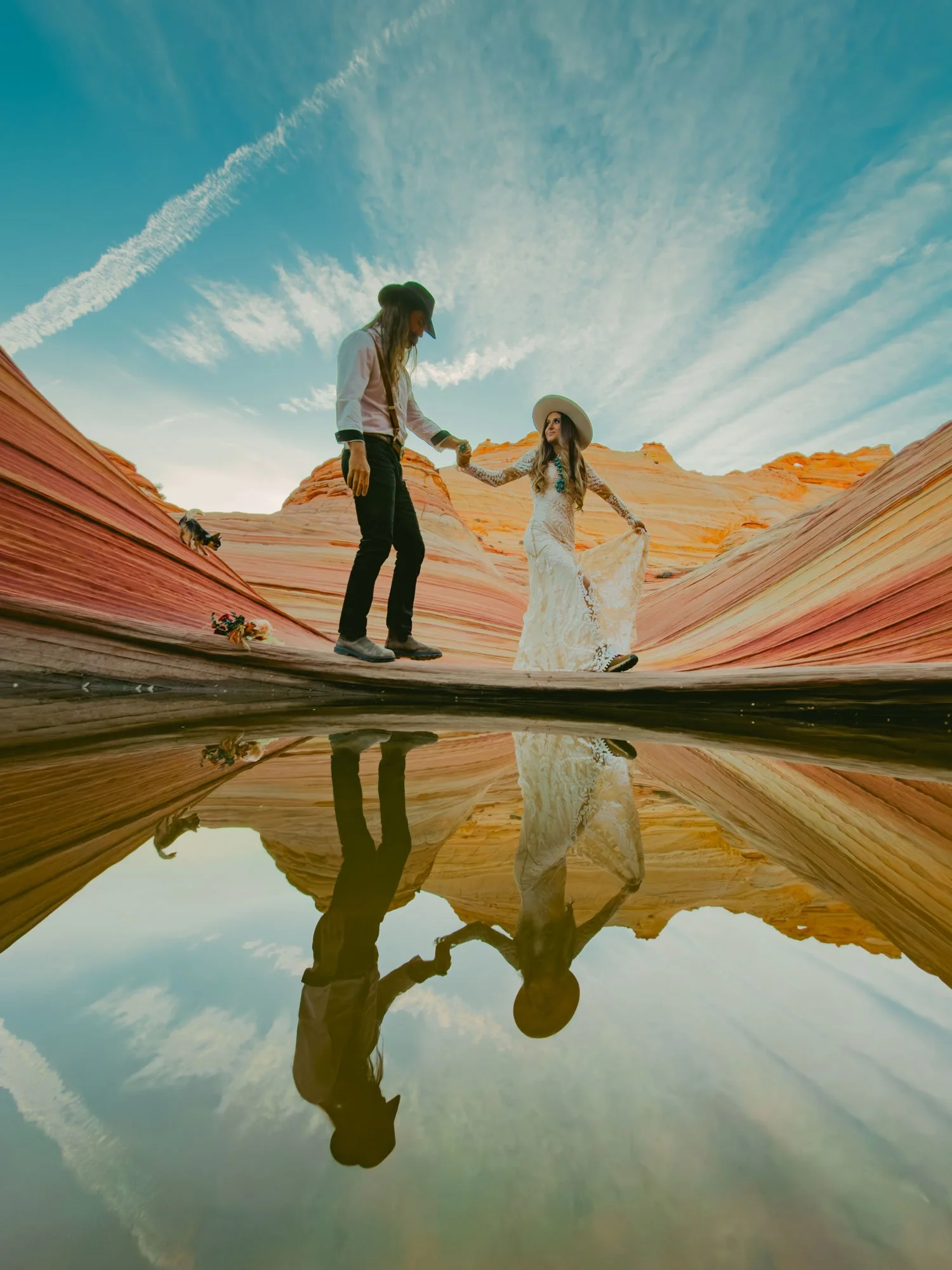
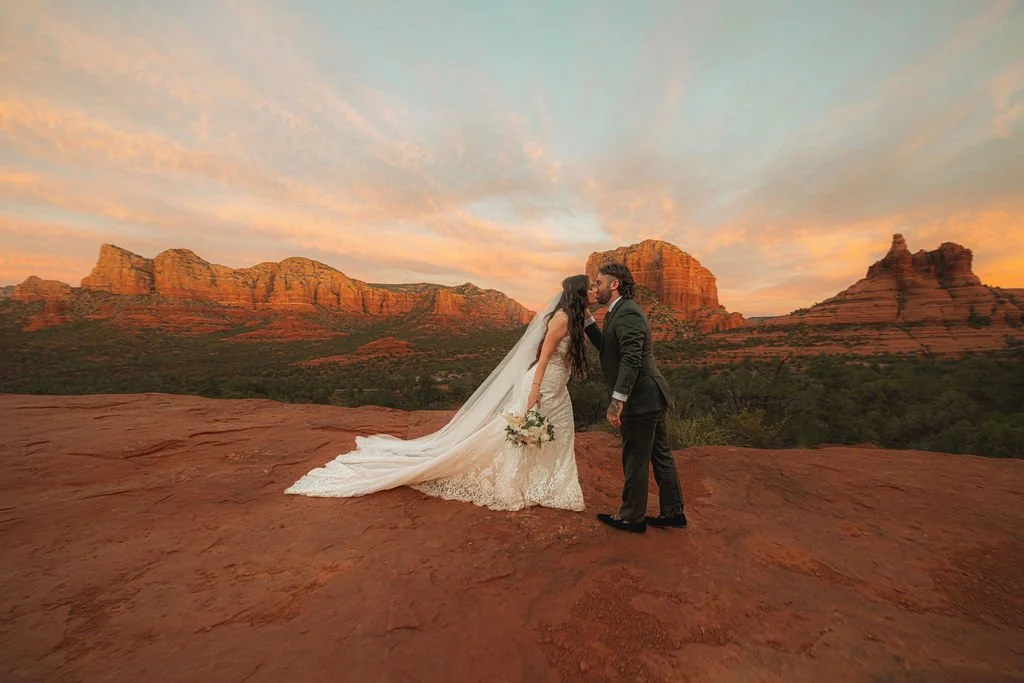
The best places to elope in Utah are Zion National Park, Arches National Park, Bryce Canyon, Dead Horse Point State Park, and Capitol Reef National Park, thanks to their dramatic red rock scenery, relatively accessible permit processes, and year-round elopement photography conditions. Utah's "Mighty 5" national parks, along with a handful of lesser-known state parks and alpine locations, give couples an unmatched range of backdrops — from slot canyons and sandstone arches to alpine lakes and salt flats, all within a few hours' drive of each other.
At Shutterfreek, we've spent years photographing intimate weddings across Utah's national parks and backcountry, and we've learned firsthand which locations actually deliver on their Instagram promise, which ones require permits months in advance, and which ones are best left to a small guided hike rather than a big production. This guide breaks down the state's top elopement locations, what permits and timing to expect, and how to plan a ceremony that feels like you — not a copy-paste of someone else's wedding photos.
We've also seen firsthand how much of an elopement's success comes down to decisions made weeks before the ceremony itself, not just the location, but the season, the time of day, and how realistic the plan is given two people's hiking ability and wardrobe. A location that looks perfect in a photo can be a logistical headache if it requires a permit you didn't know you needed, or a sunrise timing that doesn't match golden hour for your specific month. This guide is built to help you avoid those surprises, using details we've confirmed on location rather than secondhand from a listicle.
Why Utah Is One of the Best States to Elope In
Utah pairs geologic diversity with logistical ease. Couples can stand in a red rock amphitheater in the morning and a high-alpine meadow by afternoon, all without leaving one state. Marriage licenses are issued same-day at any county clerk's office, have no waiting period, and are valid for 30 days — making Utah genuinely simple for out-of-state and international couples to elope in. Add in a robust network of local vendors experienced specifically in elopement photography, like our team at Utah adventure elopement photography, and it's easy to see why Utah has become one of the most searched elopement destinations in the country.
Table 1: Utah's Top Elopement Locations at a Glance
| Location | Best For | Permit Required? | Best Season |
|---|---|---|---|
| Zion National Park | Dramatic canyon views, easy access | Yes, for ceremonies/large groups | March–May, Sept–Nov |
| Arches National Park | Iconic arch backdrops | Yes, special use permit | April–May, Sept–Oct |
| Bryce Canyon | Hoodoos, sunrise light | Yes, for groups over 8 | May–Sept (cooler mornings) |
| Dead Horse Point State Park | Canyonlands overlook views | Yes, wedding permit | April–June, Sept–Oct |
| Capitol Reef National Park | Fewer crowds, orchards + cliffs | Yes, for organized ceremonies | April–May, Sept–Oct |
| Canyonlands National Park | Remote, rugged backcountry feel | Yes, special use permit | March–May, Sept–Nov |
| Antelope Island State Park | Great Salt Lake, bison, sunsets | Yes, event permit | April–June, Sept–Oct |
| Mount Timpanogos / Uinta Mountains | Alpine lakes, wildflowers | No permit for small groups | July–August |
Permit requirements and fees change periodically — always confirm current rules directly with the park or state office before booking travel.
1. Zion National Park
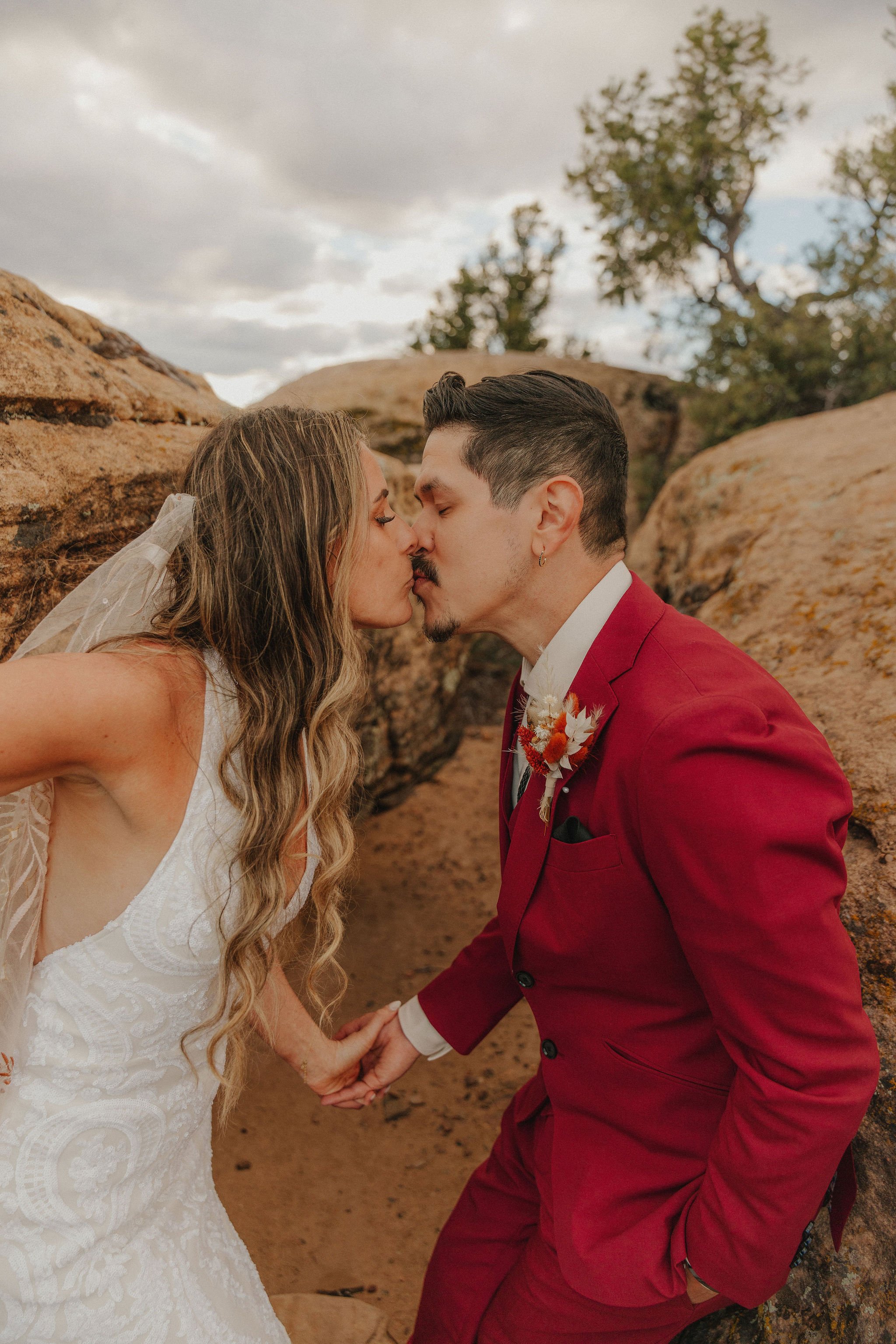
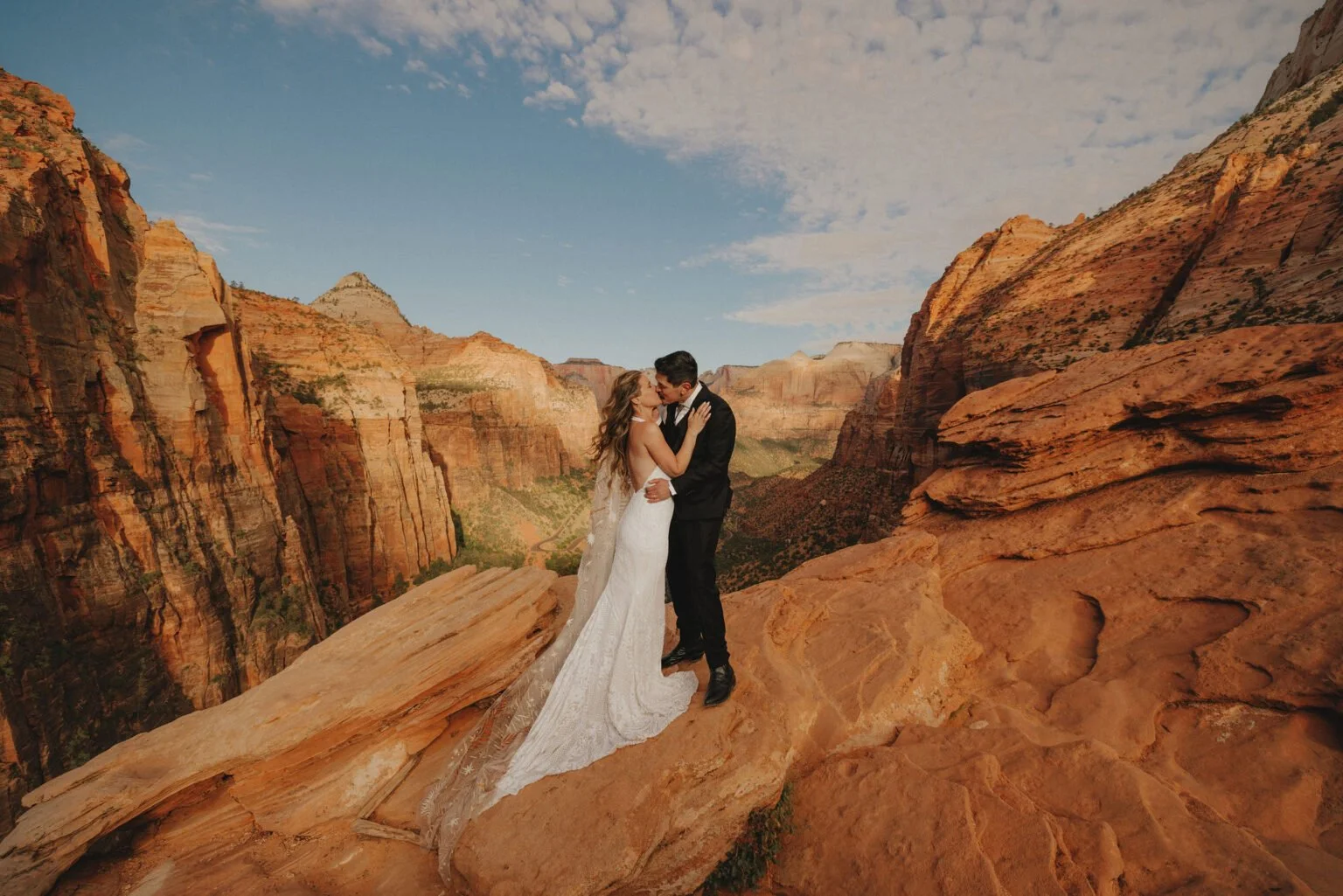
Zion is the most photographed elopement location in Utah for good reason — towering sandstone cliffs, the Virgin River, and trails ranging from a flat paved path to the strenuous Angels Landing. Popular ceremony spots include the Zion Canyon Overlook, Canyon Junction Bridge, and the Grotto area. Small, unamplified ceremonies with fewer than 12 people generally don't need a permit, but anything larger, or any use of props like arches or amplified sound, requires one from the National Park Service. If you're set on Zion, our guide to Zion Canyon wedding photographer breaks down the best trailheads by crowd level and light direction.
2. Arches National Park
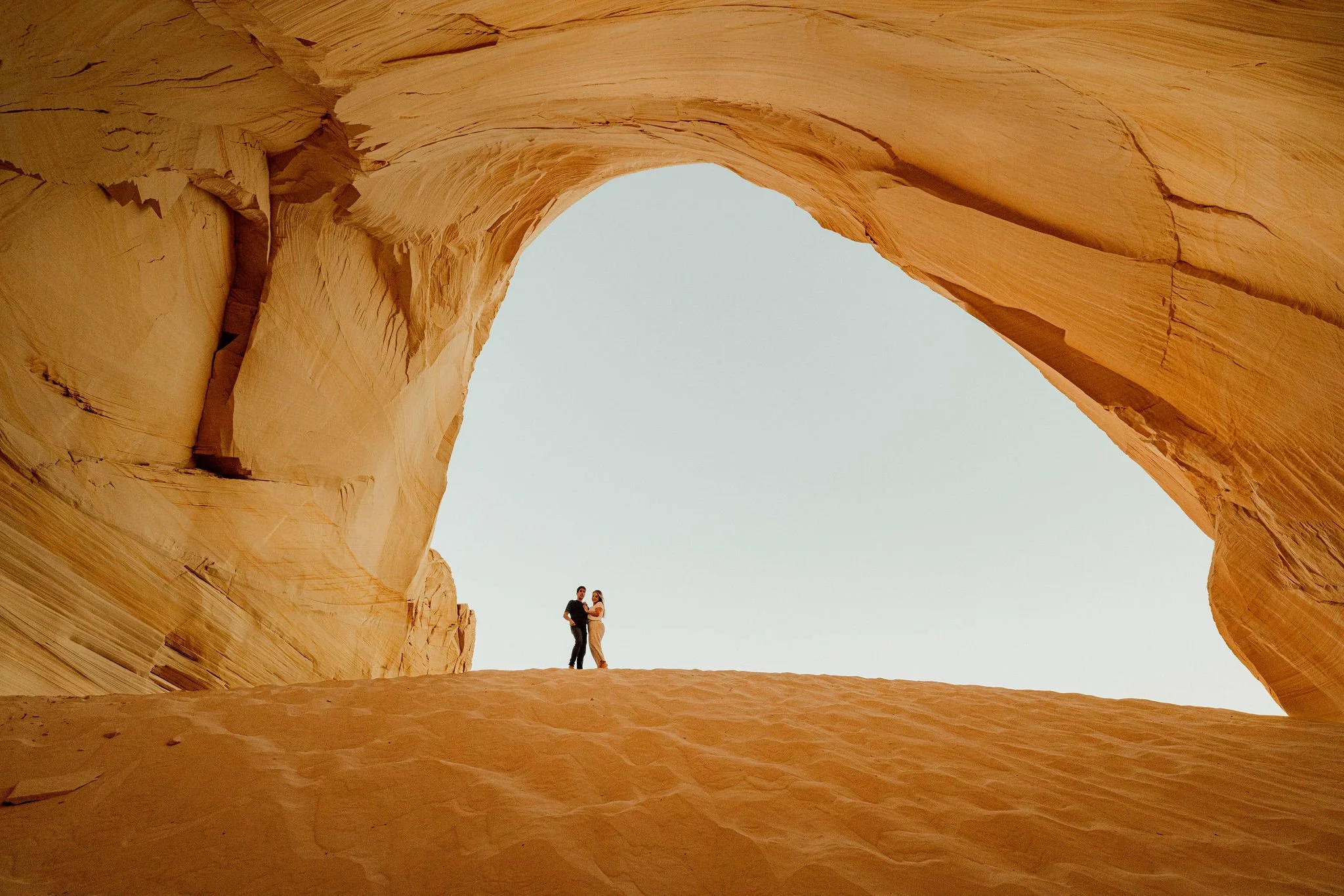
Home to over 2,000 natural sandstone arches, this park near Moab delivers some of the most iconic silhouettes in elopement photography. Delicate Arch is the showstopper, but it requires a 3-mile round-trip hike and heavy foot traffic during daylight hours, so many couples opt for a sunrise ceremony to get the trail — and the arch — to themselves. Landscape Arch and the Windows Section offer easier access for couples who want the drama without the mileage.
3. Bryce Canyon National Park
Bryce's hoodoo-filled amphitheater looks almost otherworldly at sunrise, when the orange spires catch the first light of day. Sunrise Point and Sunset Point are both accessible via short walks from the parking area, making Bryce one of the more logistically forgiving parks for couples who don't want a long hike on their wedding day. Because Bryce sits at over 8,000 feet, expect cooler temperatures even in summer — pack layers.
4. Dead Horse Point State Park
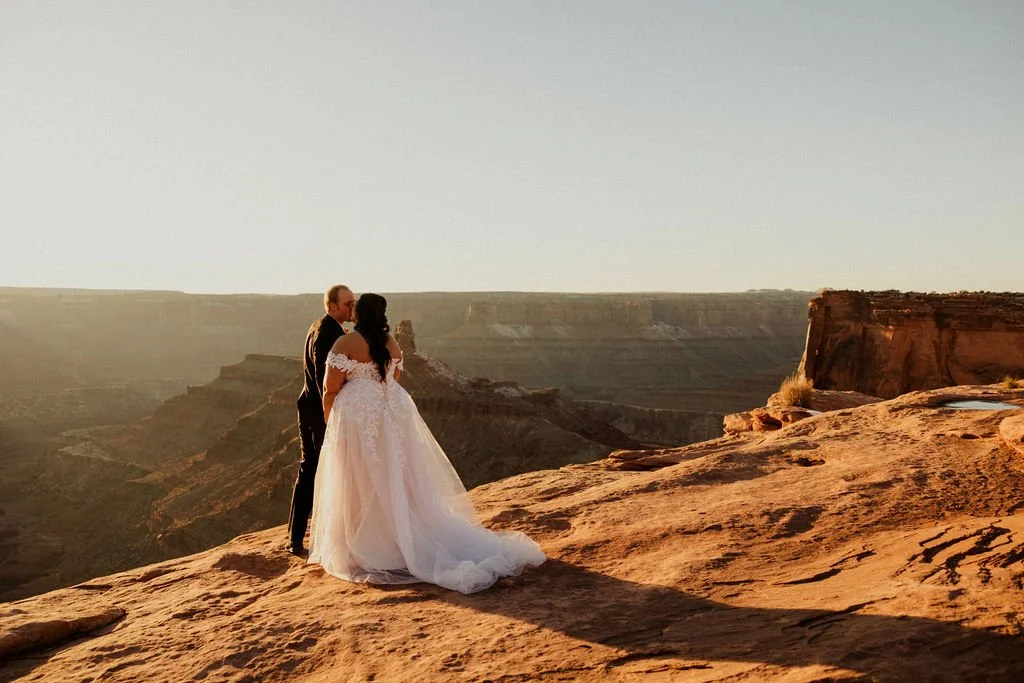
Often mistaken for a national park thanks to its scale, Dead Horse Point offers a sweeping view of the Colorado River carving through Canyonlands below — a view often compared to the Grand Canyon. It's a favorite for couples who want dramatic scenery without the crowds or permitting complexity of the national parks. State park wedding permits are straightforward to obtain and can typically be secured a few weeks out, making this a good option for couples planning on shorter notice.
5. Capitol Reef National Park
Capitol Reef is Utah's most underrated park — a mix of red cliffs, historic orchards, and the Waterpocket Fold rock formation, with a fraction of the visitors of Zion or Arches. Couples looking for privacy on their wedding day without sacrificing scale often land here. The Gifford Homestead and Fruita Historic District add a softer, pastoral contrast to the surrounding cliffs.
6. Canyonlands National Park
For couples who want true backcountry solitude, Canyonlands' Island in the Sky and Needles districts offer some of the most remote, rugged elopement settings in the state. Mesa Arch is the park's most photographed spot, especially at sunrise when light pools underneath the arch — but it does draw a crowd, so plan your ceremony timing accordingly or choose a quieter overlook nearby.
7. Antelope Island State Park
Sitting in the middle of the Great Salt Lake, Antelope Island offers a completely different Utah landscape: open grasslands, free-roaming bison, and mirror-like sunset reflections on the water when conditions align. It's an easy add-on for couples eloping near Salt Lake City who want a single, dramatic sunset location without a long drive into the backcountry.
Table 2: Best Season and Ceremony Style by Location
| Location | Ideal Ceremony Time | Hike Difficulty | Ceremony Style Fit |
|---|---|---|---|
| Zion National Park | Sunrise or late afternoon | Easy to strenuous | Intimate or small group |
| Arches National Park | Sunrise | Moderate | Intimate, photo-focused |
| Bryce Canyon | Sunrise | Easy | Intimate |
| Dead Horse Point | Sunset | Easy | Intimate or small group |
| Capitol Reef | Midday to sunset | Easy to moderate | Private, low-crowd |
| Canyonlands | Sunrise | Moderate to strenuous | Backcountry, adventurous |
| Antelope Island | Sunset | Easy | Intimate, scenic |
| Alpine (Timpanogos/Uintas) | Midday summer | Strenuous | Adventurous, hiking couples |
8. Alpine Lakes: Mount Timpanogos and the Uinta Mountains
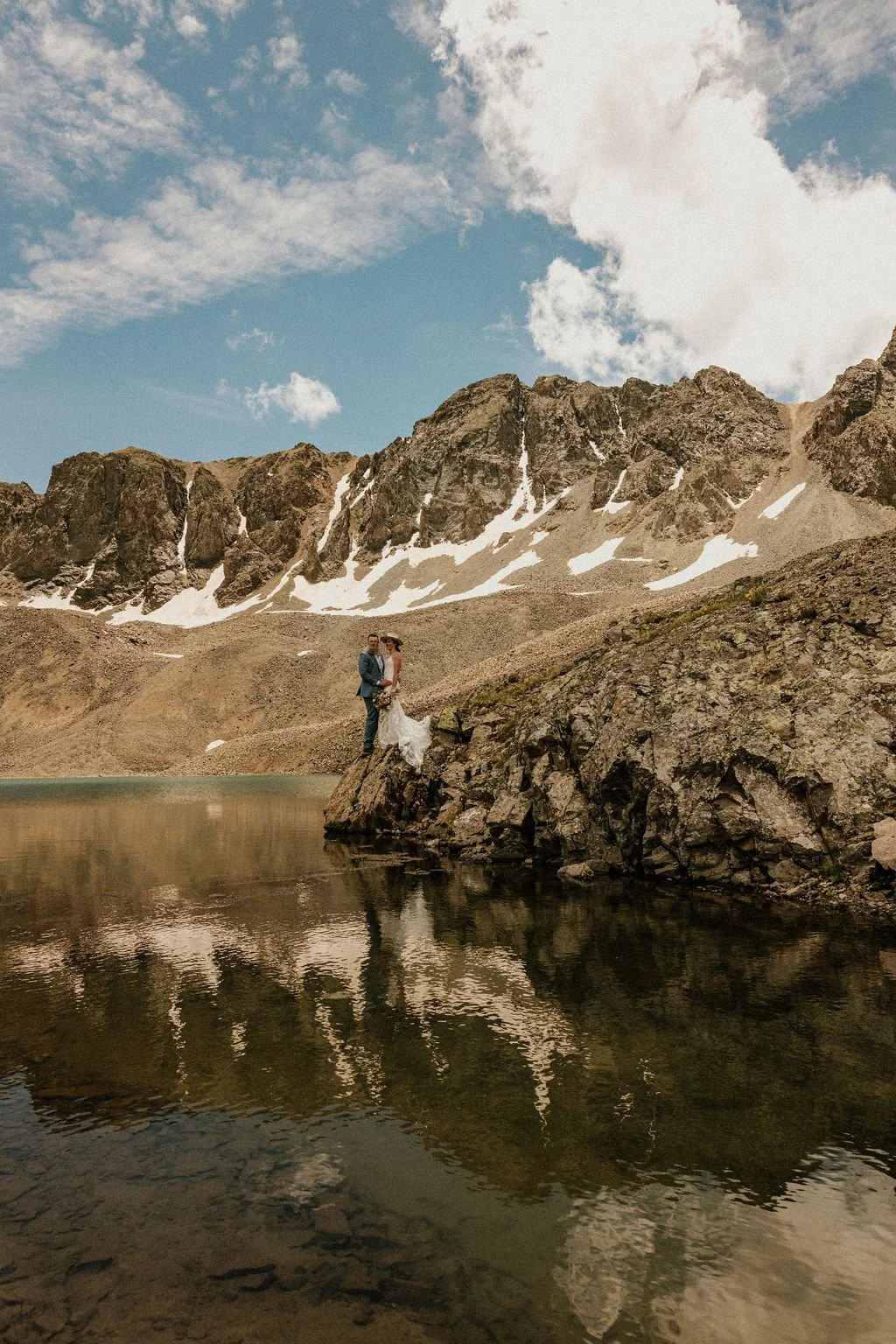
If red rock isn't your vision, Utah's alpine terrain offers wildflower meadows, glacial lakes, and pine forests, particularly through July and August when snowmelt clears the higher trails. Cecret Lake near Alta and the Mirror Lake Highway corridor in the Uintas are popular for couples who want a hiking-elopement combined with a genuine adventure. These locations typically don't require a permit for small, unamplified ceremonies, but trail conditions and afternoon thunderstorms should factor into your timing.
How to Choose the Right Location for Your Elopement
Start with three questions: How much hiking are you both realistically comfortable with in wedding attire? Do you want privacy or are you fine sharing a viewpoint with other hikers? And how far are you willing to travel between your ceremony site and your accommodations? Couples who want maximum drama with minimal hiking tend to gravitate toward Dead Horse Point or Bryce Canyon's rim viewpoints, while couples chasing a true backcountry feel often choose Canyonlands or the alpine lakes.
It also helps to think about your ceremony in terms of a "home base." Zion, Bryce, and Capitol Reef all sit within driving distance of small mountain towns like Springdale, Torrey, and Tropic, which makes it easy to combine your elopement with a multi-day honeymoon stop rather than a single-day production. Couples eloping near Moab, meanwhile, get the added benefit of two parks, Arches and Canyonlands, within a 20-minute drive of each other, so a sunrise ceremony at one and sunset portraits at the other is a realistic single-day plan. If your travel dates are flexible, building in a buffer day for weather is one of the simplest ways to protect your ceremony from a forecast that shifts at the last minute.
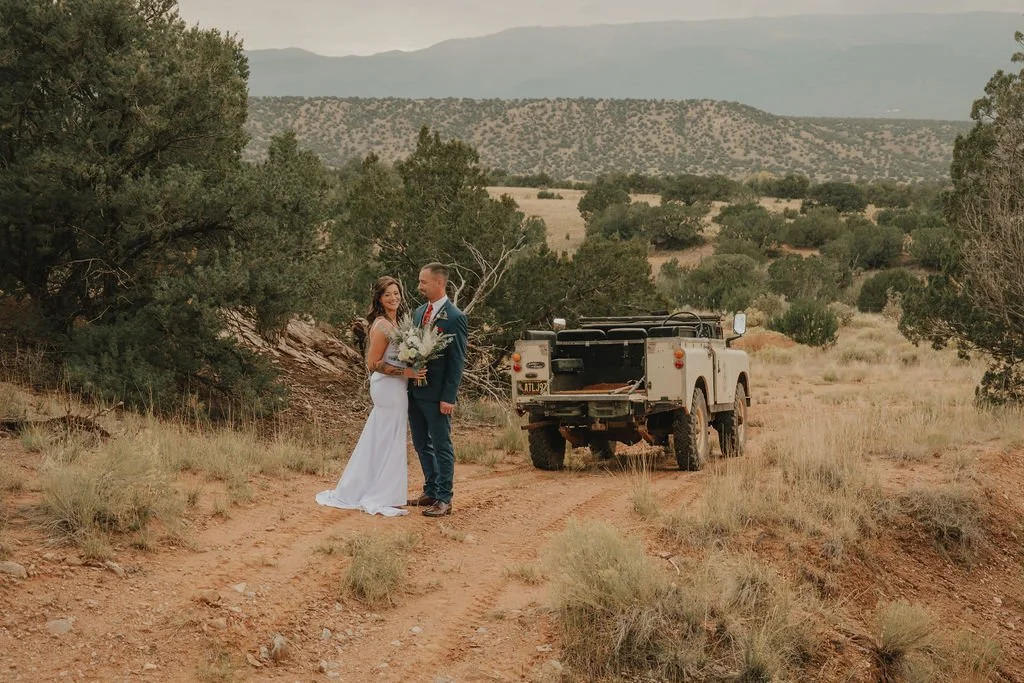
If you're weighing red rock against a different kind of desert landscape entirely, it's also worth comparing Utah to nearby options like New Mexico adventure elopements, which offer a different geological and cultural backdrop for couples still deciding between states.
Permits, Legal Requirements, and Timing
Every Utah county clerk's office issues marriage licenses same-day, with no waiting period and no residency requirement — the license is valid for 30 days statewide. National park ceremonies of more than a handful of people, or any ceremony using amplified sound, an arch, chairs, or other props, generally require a Special Use Permit from the relevant park office, and these can take two to six weeks to process depending on the season. State parks like Dead Horse Point and Antelope Island have their own, typically faster, permit processes. Booking your photographer early matters too — peak shoulder-season weekends (April–May and September–October) fill up months in advance for the most in-demand Zion and Arches locations.
Planning Tips from a Utah Elopement Photography Team
After photographing dozens of ceremonies across these parks, a few patterns hold true regardless of location. Sunrise ceremonies almost always outperform midday ones, both for lighting and for having a location to yourselves. Wind is a bigger factor than most couples expect at elevation — bring a shorter veil or skip it for exposed overlooks like Dead Horse Point. And weather backup plans matter more in Utah's shoulder seasons than couples anticipate, since afternoon storms can roll in quickly in the high desert. If you're still narrowing down a location or want help matching a site to your specific vision, our full breakdown of Utah elopement photography planning covers permit timelines, golden hour windows, and gear considerations for each park in more depth. You can also see the full range of ceremonies we've covered through our elopement photography portfolio.
Planning your own Utah elopement? Shutterfreek has spent years documenting ceremonies across Utah's national parks and backcountry, from permit logistics to golden-hour timing. Reach out to start planning your day.
Frequently Asked Questions
-
Zion National Park is the most popular elopement location in Utah, largely due to its accessibility, dramatic canyon scenery, and range of hiking options from easy paved trails to more strenuous routes.
-
It depends on group size and setup. Small, unamplified ceremonies with a handful of guests typically don't require a permit, but larger groups, amplified sound, or props like arches or chairs generally require a Special Use Permit from the National Park Service.
-
Costs vary widely, but a simple Utah elopement with a marriage license, officiant, and photographer typically ranges from $1,500 to $5,000, not including travel and lodging, depending on location permits and vendor packages chosen.
-
Spring (April–May) and fall (September–October) offer the most comfortable temperatures and best light for red rock locations, while alpine locations like the Uintas are best visited in July and August after snowmelt clears the trails.
-
Yes. Utah has no residency or waiting-period requirement for marriage licenses, and licenses issued by any county clerk are valid statewide for 30 days, making it straightforward for out-of-state and international couples to elope.
Keep reading