Best Places to Elope in Arizona
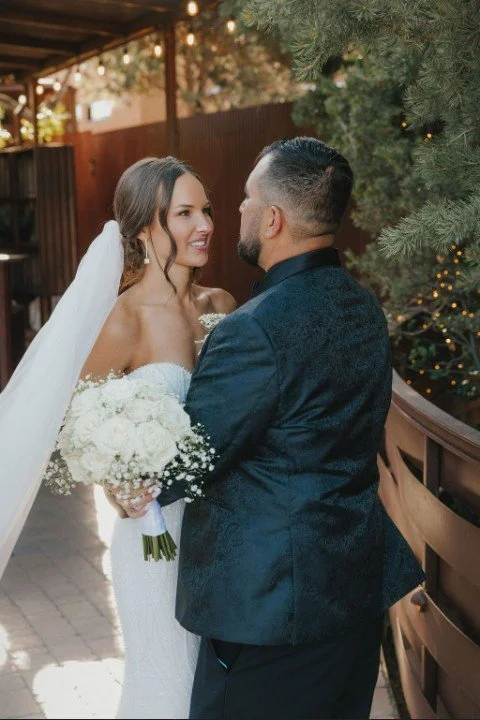
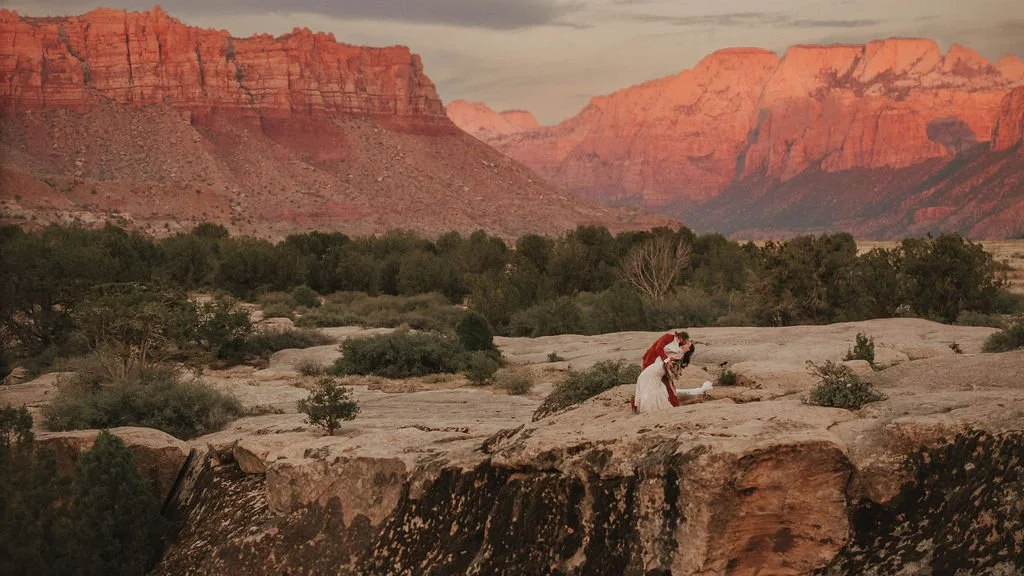
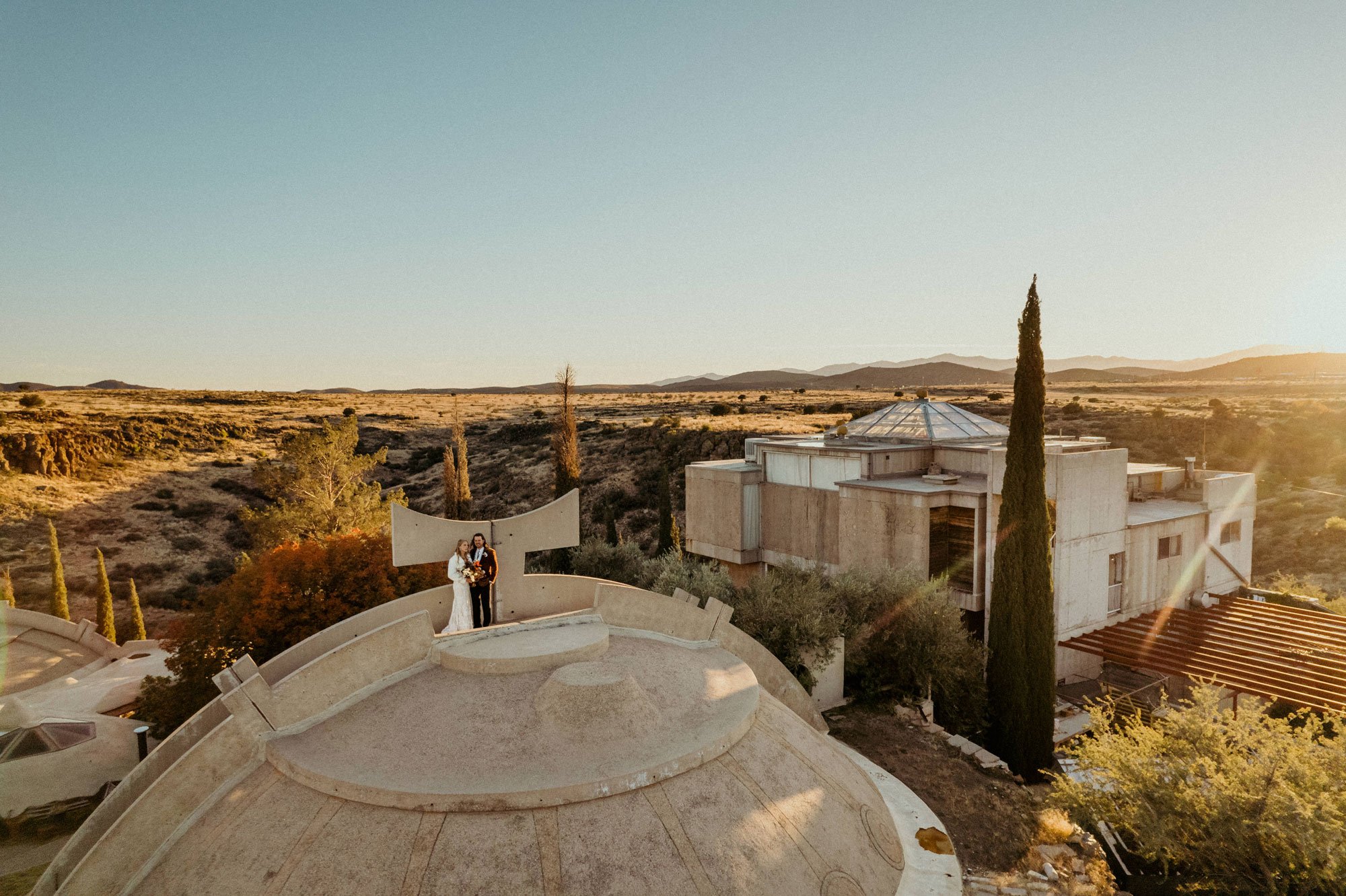
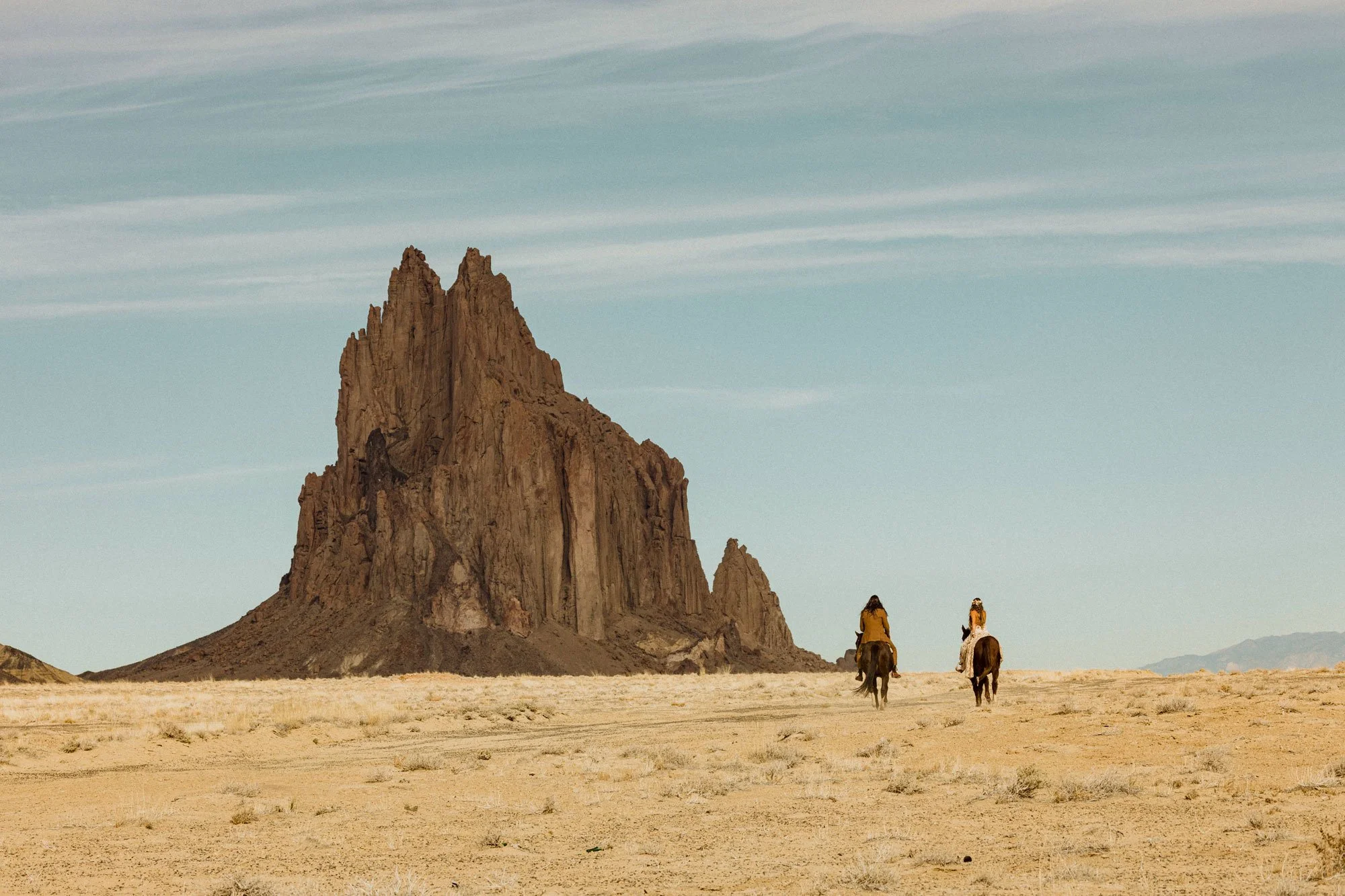
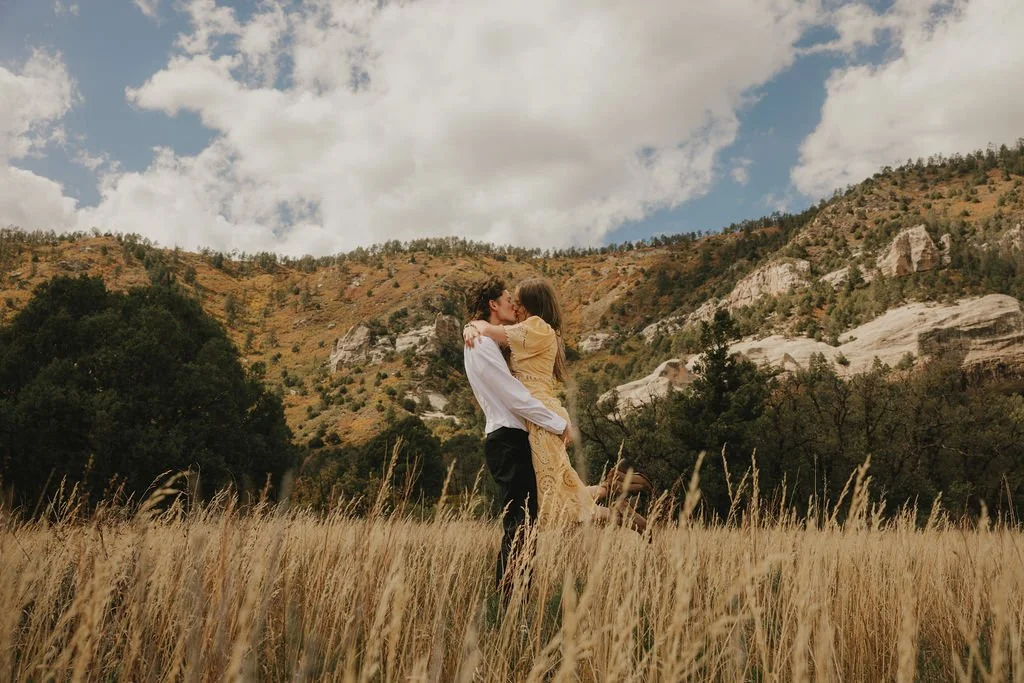
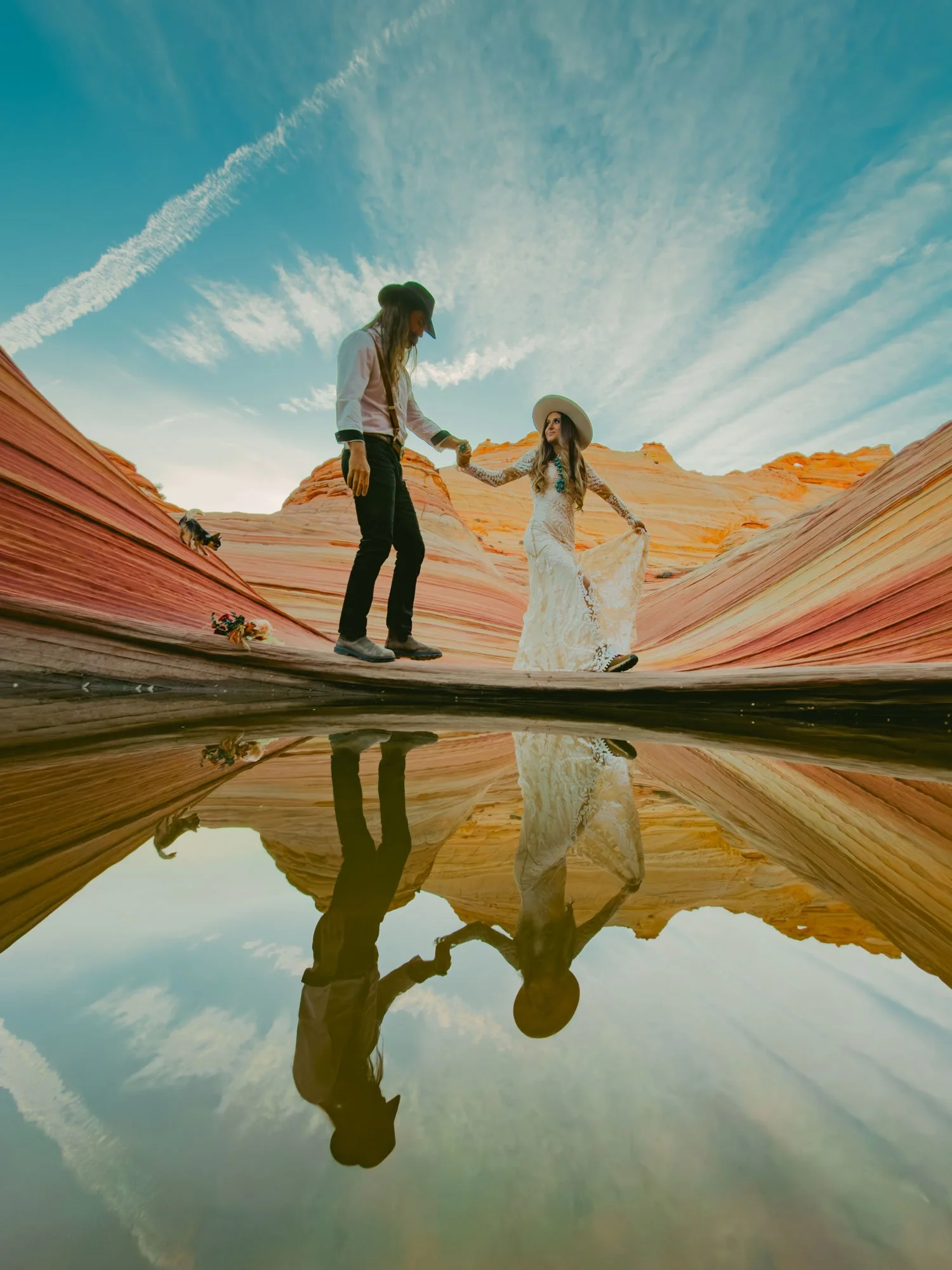
The best places to elope in Arizona are Sedona's red rock buttes, the Grand Canyon's South Rim, Antelope Canyon's glowing sandstone corridors, Horseshoe Bend, and Saguaro National Park outside Tucson, each location offers dramatic natural backdrops, manageable permit processes, and enough privacy for an intimate ceremony with just the two of you (or a small group of guests). Arizona's mix of desert, canyon, and mountain terrain means couples can elope surrounded by red rock spires in the morning or watch a monsoon sunset paint the Superstition Mountains gold, all within driving distance of Phoenix or Sedona.
At Shutterfreek, we've photographed elopements across the Southwest for over a decade, and Arizona consistently ranks as one of the easiest states to plan an intimate wedding in — the permitting is straightforward compared to neighboring states, the light is extraordinary nearly year-round, and there's genuine variety packed into a single road trip. This guide breaks down the eleven locations couples ask us about most, what each one costs to permit, when to go, and how to plan the legal side so your elopement day runs smoothly.
Why Arizona Is One of the Best States to Elope
Arizona draws eloping couples for three practical reasons: light, logistics, and landscape diversity. The state gets over 280 sunny days a year, which matters enormously for outdoor ceremony photography. Most of its iconic elopement spots, Sedona, the Grand Canyon, Scottsdale, sit within a few hours of Phoenix Sky Harbor International Airport, so out-of-state couples aren't looking at a full day of driving just to reach a trailhead. And because Arizona doesn't require a waiting period or blood test for a marriage license, couples can often obtain their license and legally marry within the same trip.
1. Sedona — Red Rock Elopement Capital of Arizona
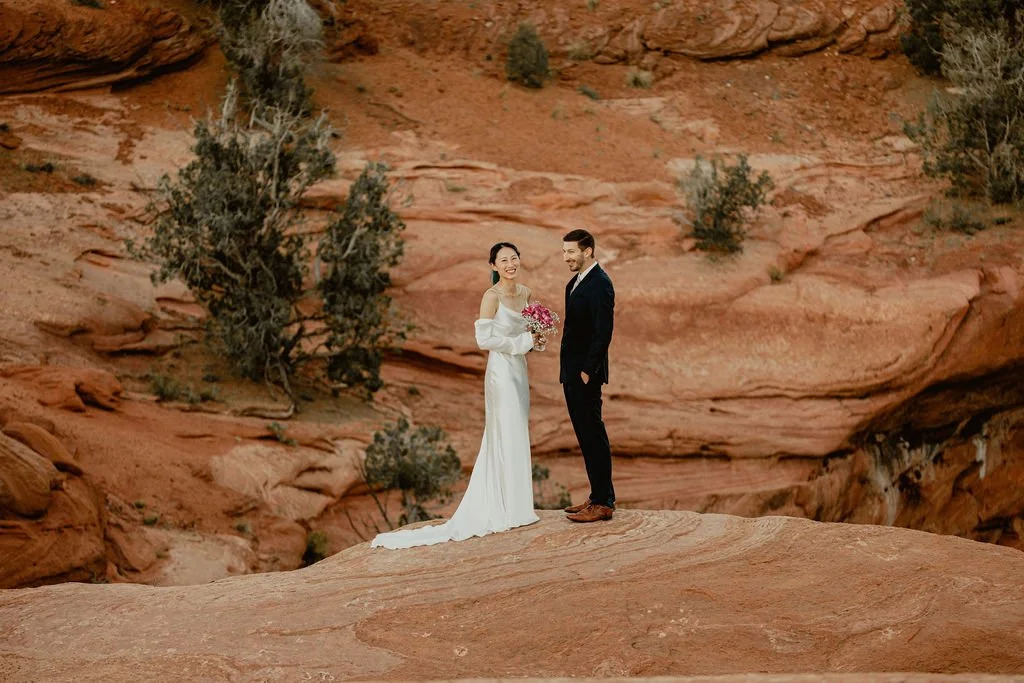
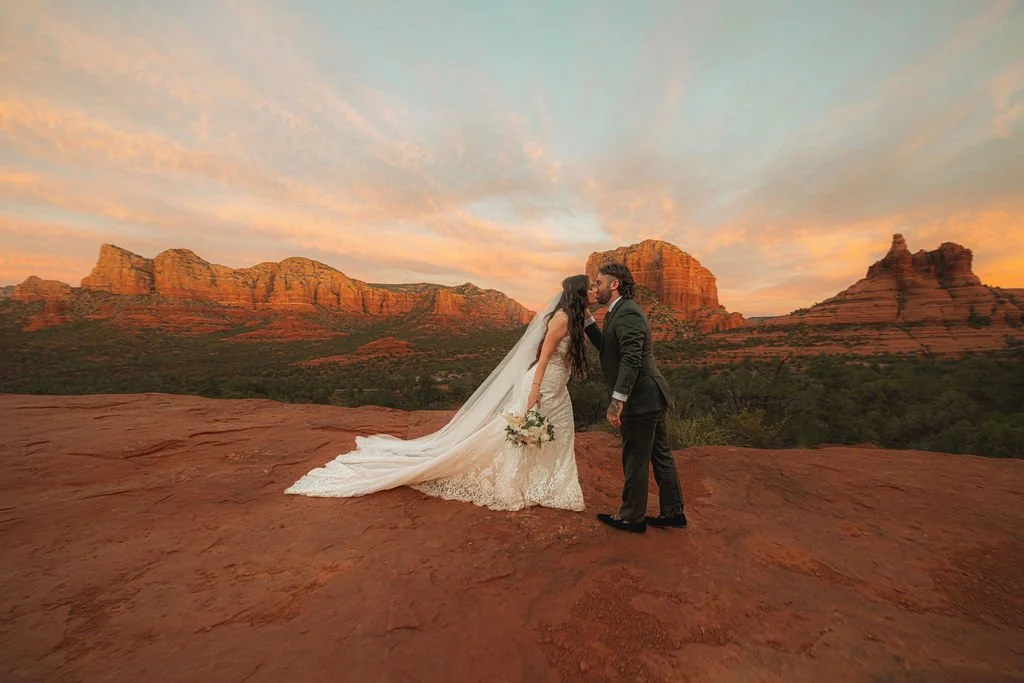
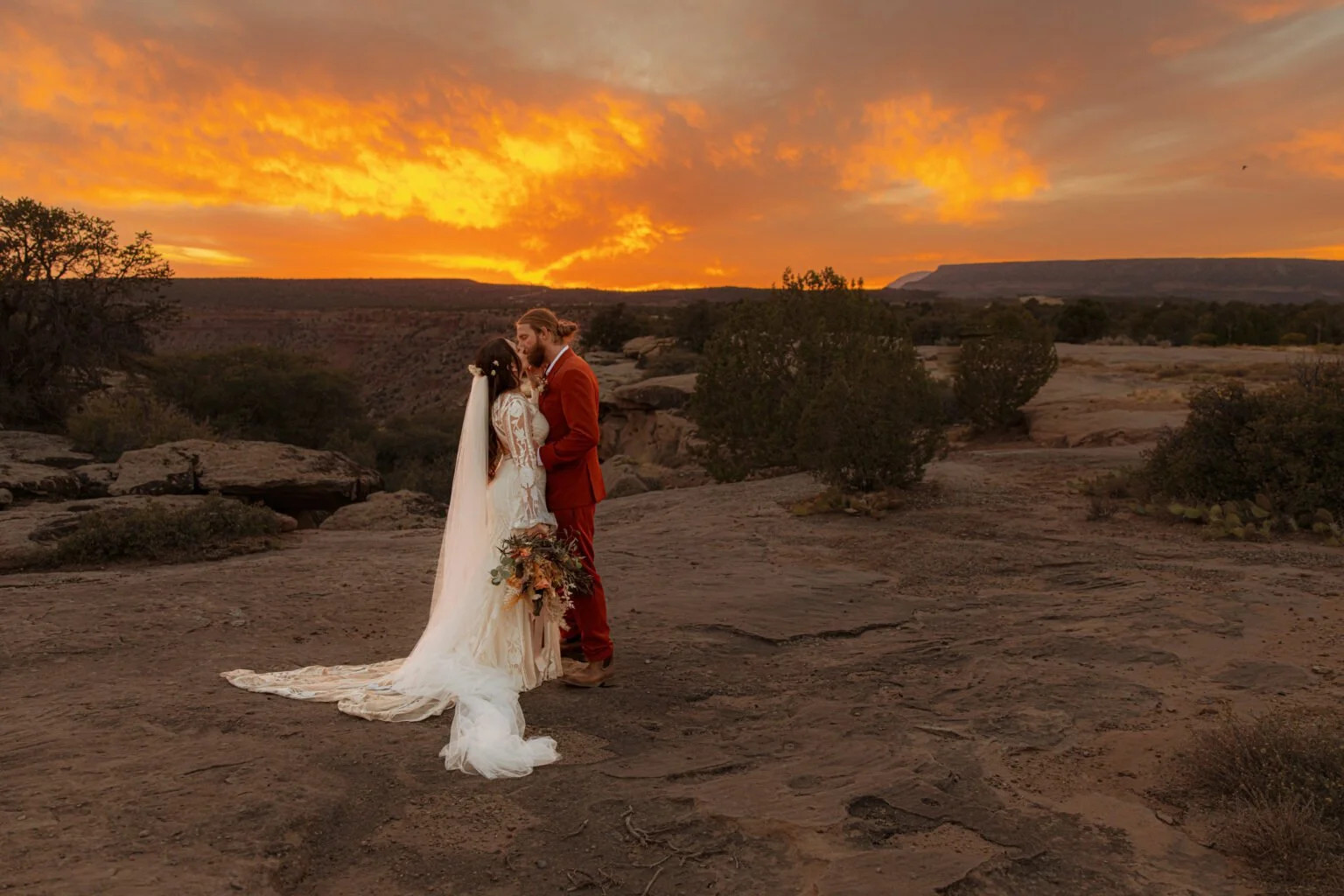
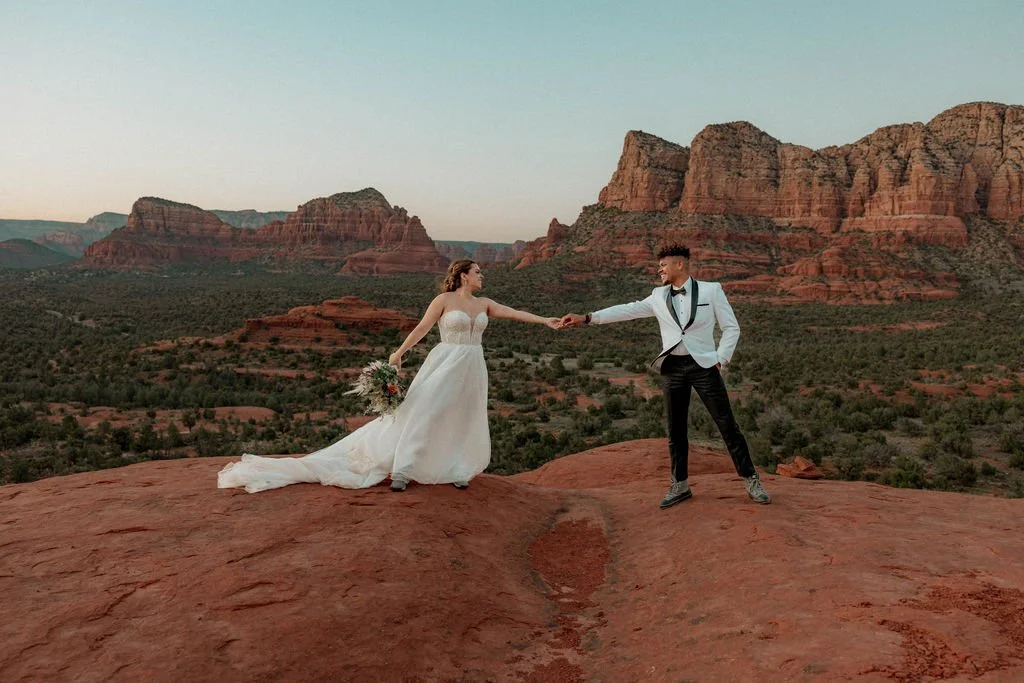
Sedona is, by a wide margin, the most requested elopement location we shoot in Arizona. Cathedral Rock, Bell Rock, and Airport Mesa each offer a short hike to a viewpoint with sweeping red rock panoramas, and the golden hour light against the sandstone is difficult to replicate anywhere else in the state. Permits through Coconino National Forest are inexpensive for small ceremonies (typically under 75 guests), and most trailheads allow ceremonies without amplified sound restrictions that larger venues impose.
Couples planning a Sedona elopement should book Cathedral Rock or Merry-Go-Round Rock trailheads at least three months out during peak season (March–May and September–November), since permit slots and parking fill quickly.
2. Grand Canyon National Park
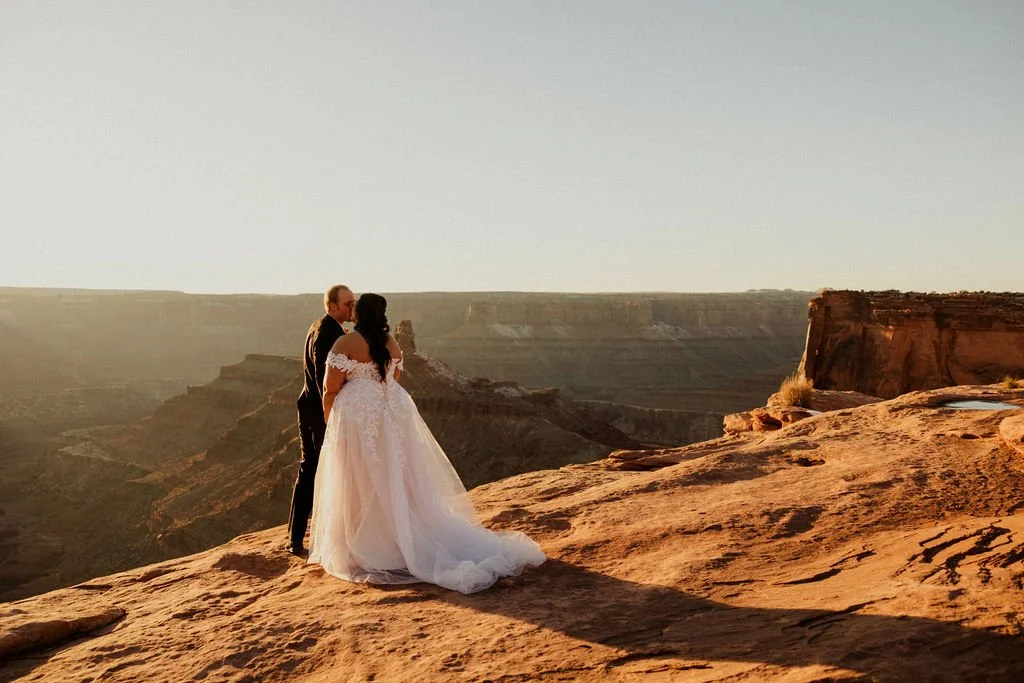
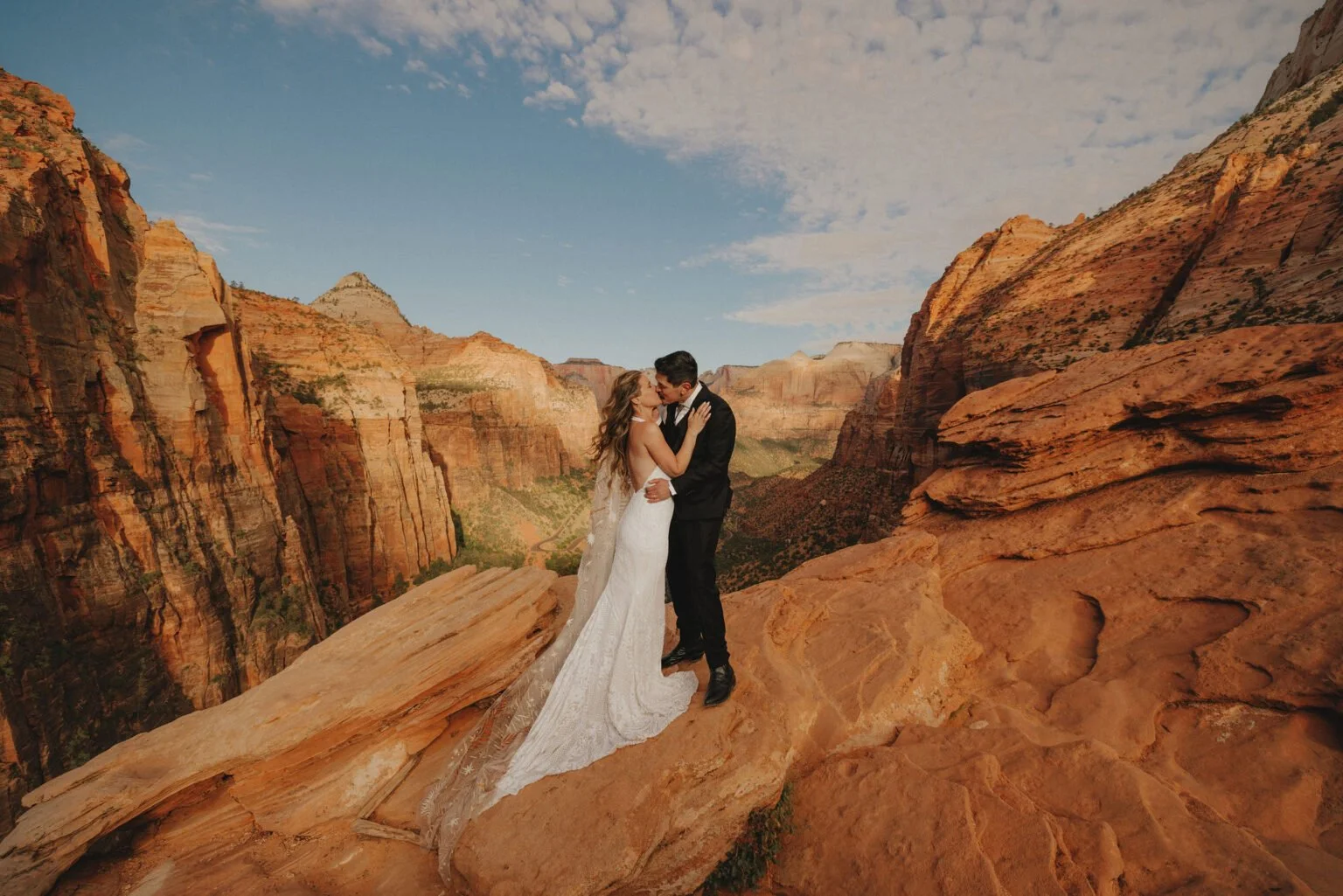
For couples who want scale and drama, nothing in Arizona, or arguably the country, competes with a Grand Canyon elopement. Ceremonies at Shoshone Point or along the Rim Trail near Mather Point require a special-use permit through the National Park Service, filed at least ten business days in advance. The South Rim is accessible year-round; the North Rim is seasonal and closed roughly mid-October through mid-May due to snow.
3. Antelope Canyon
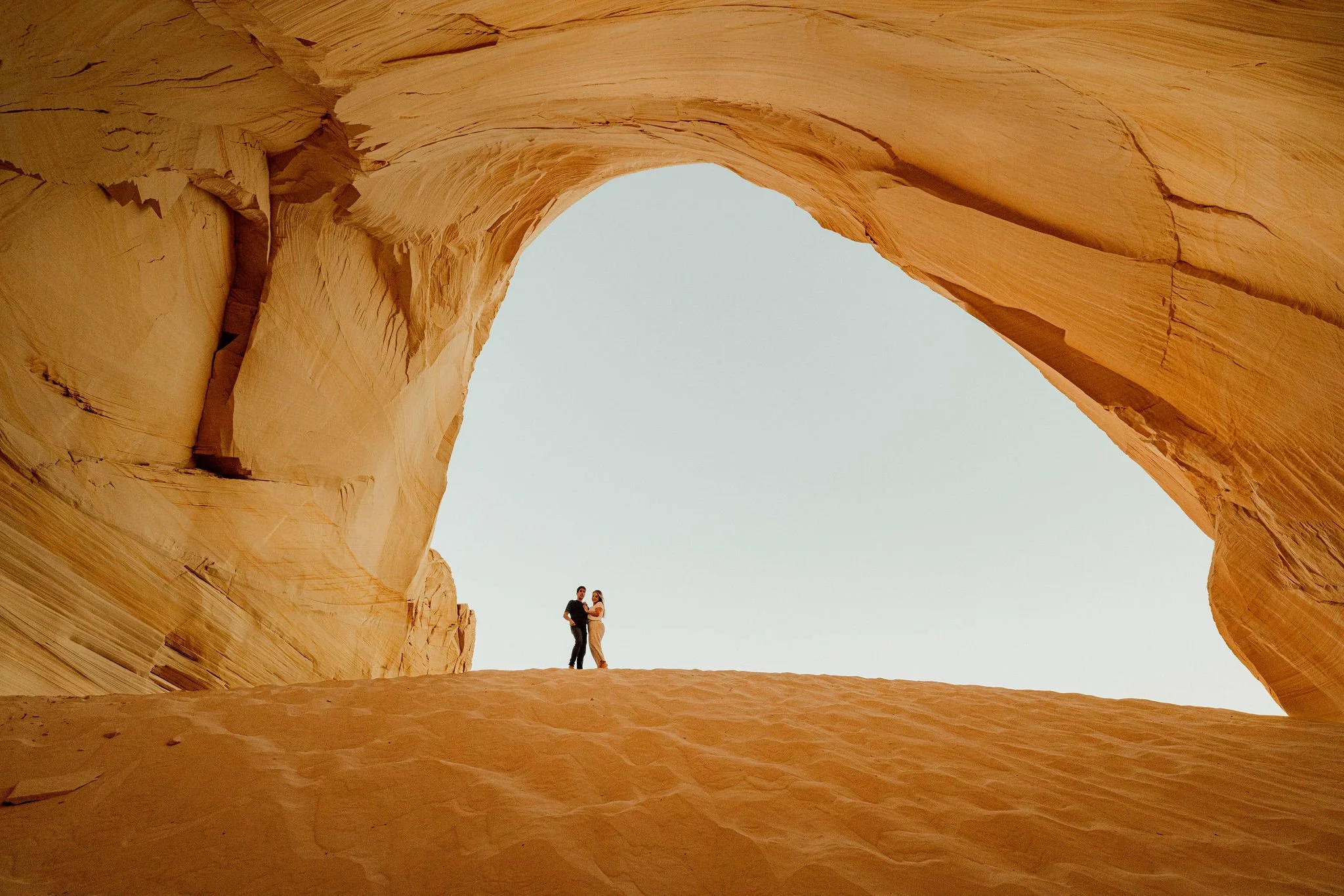
Antelope Canyon, near Page, is a slot canyon on Navajo Nation land, and it's unlike anywhere else on this list — narrow sandstone walls curve overhead and the canyon light shifts from deep purple to bright orange depending on the hour. Ceremonies here require booking through an authorized Navajo guide service, since the canyon isn't accessible independently. It's a tight, intimate space best suited to a couple eloping alone or with one or two witnesses.
4. Havasu Falls
Havasu Falls, inside the Havasupai Reservation, is for couples who want their elopement to be a genuine backcountry adventure. Reaching the turquoise waterfalls requires a 10-mile hike (or helicopter/mule transport) and an overnight permit booked through the Havasupai Tribe's reservation system, which typically opens once a year and sells out within hours. It's logistically demanding, but the payoff — turquoise pools against red canyon walls — is unmatched.
5. Horseshoe Bend
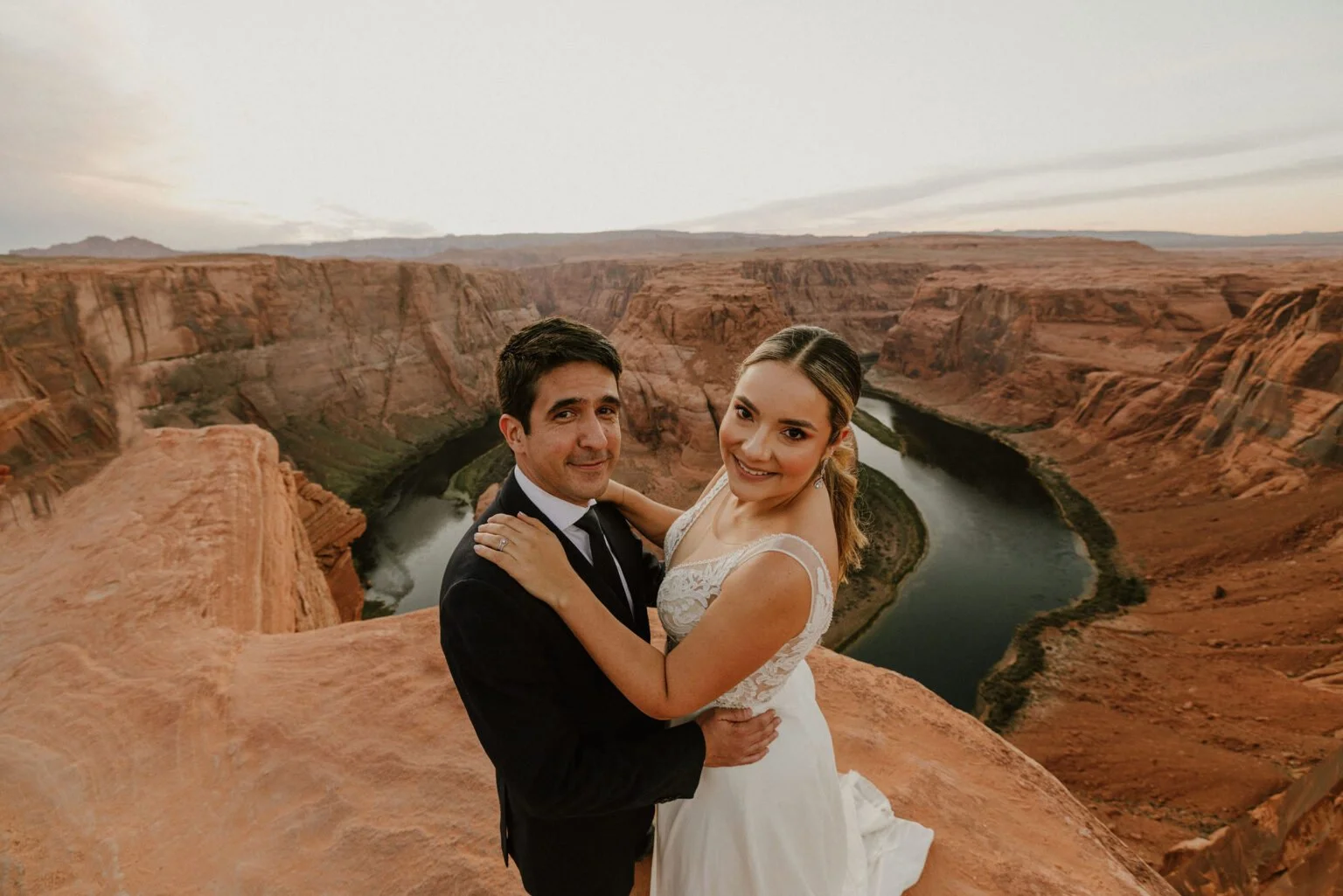
Horseshoe Bend, also near Page, offers one of the most photographed views in the Southwest: the Colorado River curling around a sandstone plateau, 1,000 feet below the rim. It's managed by the City of Page, requires a day-use fee, and involves a moderate 1.5-mile round-trip walk from the parking area — approachable for most couples without a permit application process at all.
6. Saguaro National Park, Tucson
Saguaro National Park, split into east and west districts around Tucson, gives couples the quintessential Sonoran Desert backdrop, towering saguaro cacti silhouetted against a pink-and-orange sunset sky. It's less trafficked than Sedona or the Grand Canyon, which means more privacy for your vows, and permits are processed through the National Park Service for a modest fee.
7. Petrified Forest National Park
Petrified Forest, in northeastern Arizona, is one of the most underrated elopement locations in the state. The Painted Desert section offers striped badlands in shades of lavender and rust, while the petrified wood formations add a surreal, almost otherworldly texture to photos. It sees a fraction of the visitors that Sedona or the Grand Canyon do, making it ideal for couples who want total privacy without an off-grid hike.
8. Superstition Mountains, Mesa
The Superstition Mountains east of Mesa offer a rugged, less-polished alternative to Sedona's red rocks — jagged peaks, desert wildflower blooms in spring, and trailheads like Peralta and Siphon Draw that are far quieter on weekdays. Couples eloping here often pair the ceremony with a Mesa reception or dinner afterward, since the area sits close to East Valley restaurants and boutique hotels. If you're planning a Mesa-based elopement, our Mesa wedding photographer guide covers venue permits and timing specific to the East Valley.
9. Scottsdale Desert Elopements
Scottsdale blends desert scenery with resort-level convenience — couples can elope at a private desert overlook in the McDowell Sonoran Preserve in the morning and be at a spa or rooftop dinner reservation by evening. It's the top choice for couples who want an adventurous ceremony without sacrificing hotel amenities. For a full breakdown of Scottsdale-specific permits, best-light timing, and preserve trailheads, see our Scottsdale elopement photographer guide.
10. Chapel of the Holy Cross, Sedona
Built directly into a red rock formation, the Chapel of the Holy Cross is Arizona's most iconic architectural elopement venue. It's a public chapel, so private ceremonies inside require advance coordination with the chapel office, but the outdoor terrace — framed by Sedona's buttes — is available for shorter vow exchanges and photography without the same restrictions.
11. Monument Valley
Straddling the Arizona–Utah border, Monument Valley's sandstone buttes are as close to a cinematic Western backdrop as an elopement location gets. Ceremonies require a guided tour through the Navajo Tribal Park, since most of the valley floor isn't accessible independently. It pairs naturally with a broader Southwest road-trip elopement — many of our couples combine a Monument Valley ceremony with stops in southern Utah; our Utah elopement locations guide covers the closest overlapping spots like the Utah side of the valley and nearby Goosenecks State Park.
Table 1: Arizona Elopement Locations — Permits, Cost & Best Season
| Location | Managing Agency | Permit Required | Approx. Permit Cost | Best Season |
|---|---|---|---|---|
| Sedona (Cathedral Rock) | Coconino National Forest | Yes | $90–$150 | March–May, Sept–Nov |
| Grand Canyon (South Rim) | National Park Service | Yes | $150 flat fee | Year-round |
| Antelope Canyon | Navajo Nation (guided only) | Yes, via tour operator | $75–$120 per person | March–October |
| Havasu Falls | Havasupai Tribe | Yes, annual lottery | ~$455 for 3-night permit | March–October |
| Horseshoe Bend | City of Page | Day-use fee only | $10 vehicle fee | Year-round |
| Saguaro National Park | National Park Service | Yes | $50–$100 | Oct–April |
| Petrified Forest | National Park Service | Yes | $50 | Sept–May |
| Superstition Mountains | Tonto National Forest | Yes | $75–$100 | Oct–April |
| Scottsdale (McDowell Preserve) | City of Scottsdale | Yes | $75–$150 | Oct–April |
| Monument Valley | Navajo Tribal Park (guided) | Yes, via guide | $80–$150 per person | April–October |
Permit costs and availability change; confirm current pricing directly with the managing agency before booking.
Table 2: Best Time of Year by Arizona Region
| Region | Ideal Elopement Months | Avoid | Why |
|---|---|---|---|
| Sedona / Red Rock Country | March–May, September–November | July–August | Summer heat can exceed 100°F, and monsoon storms can create challenging outdoor conditions. |
| Grand Canyon (South Rim) | April–June, September–October | December–February | Winter brings colder temperatures and more challenging conditions, while the North Rim is closed during this period. |
| Page (Antelope Canyon / Horseshoe Bend) | March–May, September–October | June–August | Monsoon season can increase the risk of flash flooding in canyon areas, while summer temperatures can be intense. |
| Tucson (Saguaro National Park) | October–April | June–August | Desert temperatures regularly reach or exceed 105°F during the hottest summer months. |
| Phoenix / Scottsdale / Mesa | October–April | June–August | Extreme summer heat makes outdoor elopement ceremonies and photography considerably more difficult. |
| Northern AZ (Petrified Forest / Monument Valley) | April–June, September–October | January–February | Higher elevations can bring snow, freezing temperatures, and difficult travel conditions during winter. |
How to Plan Your Arizona Elopement
Choose your location based on season first, not aesthetics alone. A Sedona ceremony booked in July can mean triple-digit heat by 10 a.m. Match your date to the region's cooler window before falling in love with a specific trailhead.
File your permit as early as the agency allows. National Forest and NPS permits for small ceremonies are usually low-cost, but popular trailheads like Cathedral Rock cap the number of daily ceremony slots.
Book your photographer before your permit, if possible. Availability for peak-season Arizona dates (spring and fall weekends) books out six to nine months ahead for experienced elopement photographers.
Build in a weather contingency. Arizona's monsoon season (roughly July–September) brings fast-moving storms, especially in canyon locations — have a backup time or nearby indoor option.
Confirm your legal paperwork window. Arizona marriage licenses are valid for one year from issue date, and there's no waiting period, so most couples pick up the license within a few days of their ceremony.
Arizona Elopement Permits and Legal Requirements
Arizona doesn't require a blood test or residency to marry, and licenses are issued same-day at county offices (Maricopa, Coconino, and Yavapai counties handle the bulk of elopement-related license requests). Land-use permits are separate from your marriage license and depend entirely on where you're standing: National Forest land, National Park Service land, city parks, and tribal land each have their own permitting body, fee structure, and lead time, which is why the location table above lists the correct agency for each spot rather than a single statewide process.
Choosing the Right Arizona Elopement Photographer
The location sets the backdrop, but the photographer determines whether the day actually gets documented the way it happened, permit logistics, sunrise timing, hiking with gear, and knowing how far a location's light window stretches before it's gone. Shutterfreek has spent years shooting adventure elopements across Arizona's red rock, canyon, and desert terrain, and our elopement photography page walks through how we plan a day around your chosen location, from permit coordination to backup timing for monsoon season.
Exploring Elopements Beyond Arizona
Several of our Arizona couples end up extending their trip across state lines, since some of the Southwest's most striking terrain sits within a few hours of the Arizona border. If you're weighing Arizona against neighboring options, our New Mexico adventure elopements guide covers White Sands and the Bisti Badlands, and our Utah elopement locations guide breaks down Zion, Arches, and the Utah side of Monument Valley for couples building a multi-state road-trip elopement.
Final Thoughts
Arizona packs an unusual amount of variety into one state, red rock buttes, slot canyons, saguaro-studded desert, and a mile-deep canyon, all reachable without the multi-day driving that a state like Utah or New Mexico might require to see comparable terrain. Whether you're drawn to Sedona's accessibility, the Grand Canyon's scale, or Havasu Falls' backcountry adventure, the right permit and season research up front makes the difference between a smooth elopement day and a stressful one.
Frequently Asked Questions
-
Sedona is the most popular choice for its combination of accessible trailheads, dramatic red rock scenery, and relatively simple permit process, but the Grand Canyon and Antelope Canyon are close seconds for couples wanting a bigger sense of scale or a more otherworldly setting.
-
Yes, in most cases. Any ceremony held on National Forest, National Park, city, or tribal land requires a permit specific to that land manager — even for a ceremony with only two people. Fees typically range from $50 to $150, though tribal-land locations like Antelope Canyon or Monument Valley require booking through an authorized guide instead of a standalone permit.
-
Horseshoe Bend is one of the most affordable options since it only requires a $10 day-use parking fee rather than a formal ceremony permit. Petrified Forest and Saguaro National Park are also budget-friendly, with permit fees typically under $100.
-
Spring (March–May) and fall (September–November) offer the most comfortable temperatures across nearly every region in the state. Summer should be avoided in lower-elevation areas like Phoenix, Scottsdale, and Tucson, where daytime highs regularly exceed 105°F.
-
Couples apply in person at any county clerk's office, Maricopa, Coconino, and Yavapai counties are the most common for elopement trips, and licenses are typically issued the same day, with no waiting period or blood test required. The license is valid for one year from the issue date.
Keep reading