White Sands National Park Elopement Guide

Eloping at White Sands National Park means securing a Special Use Permit through the National Park Service, choosing a sunrise or sunset time slot to avoid the midday heat and crowds, and working with a New Mexico-based elopement photographer who knows the dunes' best backdrops and lighting windows. The park's rolling white gypsum dunes near Alamogordo, New Mexico create one of the most surreal, moon-like landscapes in the country for an intimate ceremony, but because it's an active national park with strict rules on group size, timing, and access, proper planning makes the difference between a magical elopement and a logistical headache. This guide walks through every step, from permits to packing lists, so your White Sands elopement goes exactly as planned.
What Makes White Sands National Park a Top Elopement Destination
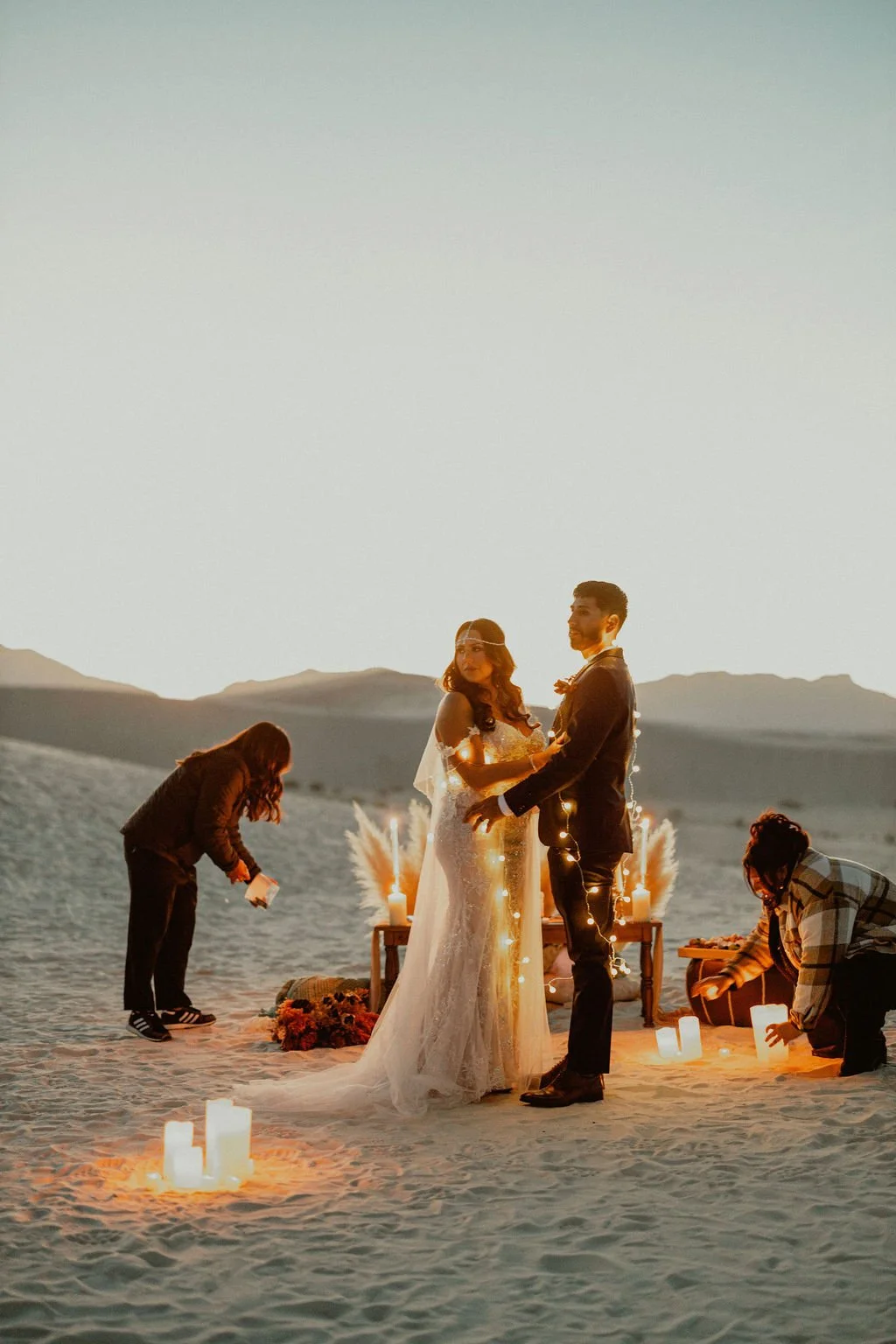
White Sands isn't just another pretty backdrop, it's one of the most unique elopement landscapes on Earth. The park protects the largest gypsum dune field in the world, and the dunes shift and reshape constantly, meaning no two elopement photos ever look quite the same. Couples are drawn to the stark contrast of blinding white sand against deep blue New Mexico skies, the total absence of trees or buildings breaking the horizon, and the way golden-hour light turns the dunes soft pink and lavender. Unlike more crowded national parks, White Sands still offers pockets of true privacy if you time your visit correctly, which is exactly what an elopement calls for: minimal witnesses, maximum intimacy, and a landscape that does the heavy lifting visually.
Permits & Legal Requirements for a White Sands Elopement
Any wedding ceremony, elopement, or vow renewal held within White Sands National Park requires a Special Use Permit (SUP) from the National Park Service. This applies even to small, two-person ceremonies with no formal decor. The permit process typically needs to be submitted at least 10–14 business days in advance, and approval is not guaranteed on short notice, especially during peak spring and fall booking seasons.
Here's a quick breakdown of what to expect:
| Requirement | Detail | Notes |
|---|---|---|
| Permit Type | Special Use Permit (Wedding/Elopement) | |
| Where to Apply | White Sands National Park Visitor Center / NPS website | |
| Processing Time | 10–14 business days minimum | |
| Typical Fee Range | $50–$150 | Subject to change; confirm current rates with the park. |
| Guest Limit (Elopement) | Usually capped at small groups | Verify the current limit with NPS. |
| Photography Restrictions | No commercial rigs/drones without separate commercial use authorization | |
| Marriage License | Must be obtained separately from Otero County or your home county |
Note that a marriage license is a completely separate step from the park permit, you'll need to secure that through the appropriate New Mexico county clerk's office before your ceremony date. Because rules and fees can be updated by the National Park Service without notice, always verify current requirements directly with the White Sands National Park administration before finalizing your date.
Best Time of Day and Season for a White Sands Elopement
Timing is arguably the single biggest factor in a successful White Sands elopement, both for comfort and for photography. The park sits in the Tularosa Basin, a high desert region that regularly climbs past 90°F between May and September, with sand surface temperatures running even hotter. Sunrise ceremonies are the most popular choice among couples we've worked with because they offer cooler temperatures, softer directional light, and a much better chance at having the dunes to yourselves before the park fills with day visitors.
Sunset is the second-best window, delivering that famous pink-and-gold gypsum glow, but it does mean sharing the space with more photographers and sightseers who come specifically for sunset views. Fall (October–November) and spring (March–April) offer the most temperate daytime conditions if a mid-morning or late-afternoon ceremony is preferred instead. Winter elopements are less common but can be stunning, with crisp light and dramatically fewer crowds.
Choosing Your White Sands Elopement Location and Backdrop

Because White Sands is a protected natural landscape, you won't find manicured "ceremony sites" the way you would at a traditional venue. Instead, the goal is finding a dune ridge, bowl, or open flat that offers privacy, good light direction, and safe footing. Some couples prefer a high dune crest for that dramatic "standing above the world" feel, while others prefer a low bowl surrounded by rippled sand walls for a more intimate, enclosed feeling in photos.
An experienced adventure elopement photographer will typically scout a few backup locations in advance, since wind can reshape dune contours literally overnight. If you're picturing a specific composition from Pinterest or Instagram, share it early, a seasoned photographer familiar with the park can usually identify the general area it was shot and suggest a similarly styled alternative nearby, since exact recreation isn't always possible.
What to Wear: Outfit Tips for a Dune Elopement
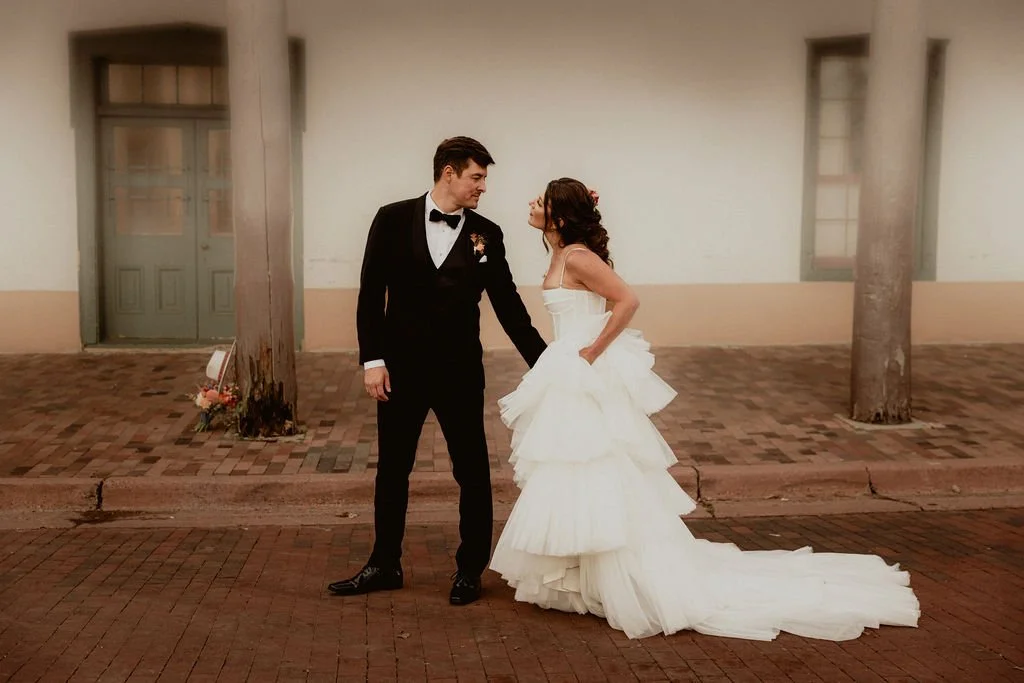
Dress choice matters more at White Sands than at almost any other elopement location, largely because of sand, wind, and heat. Flowing fabrics photograph beautifully against the stark white dunes, but heavier, structured gowns can be exhausting to move in and prone to staining from gypsum dust (which, unlike regular sand, can cling and streak on darker fabrics).
| Consideration | Warm-Season Recommendation (May–Sept) | Cool-Season Recommendation (Oct–April) |
|---|---|---|
| Fabric Weight | Lightweight chiffon, crepe, linen | Mid-weight silk, satin, layered chiffon |
| Color | Ivory, white, soft pastels (blends beautifully with dunes) | Deeper tones like sage, rust, or dusty blue for contrast |
| Footwear | Barefoot or minimal sandals (sand gets extremely hot) | Boots or closed shoes (sand cools quickly at dawn/dusk) |
| Layers | Light shawl for wind, sun hat for midday | Jacket or wrap for cooler mornings/evenings |
| Accessories | Avoid heavy veils in high wind; opt for shorter veils | Longer veils photograph well with less wind resistance |
A general rule: simpler is almost always better here. The dunes are the statement piece, so let your outfit complement rather than compete with the landscape.
Building Your Timeline: A Sample White Sands Elopement Schedule
A well-paced timeline keeps the day relaxed instead of rushed, especially with the added driving and hiking time within the park. Here's a realistic sunrise elopement structure many couples follow:
4:30–5:00 AM — Arrive at park entrance before gates open; get in line for early access
5:15–5:45 AM — Hike to chosen dune location, set up any small decor
6:00–6:30 AM — Ceremony as the sun rises
6:30–8:00 AM — Portrait session while light is still soft
8:00–9:00 AM — Optional second outfit change or detail shots before heat sets in
9:00 AM — Depart before midday sun and crowds intensify
Sunset timelines mirror this in reverse, starting a couple of hours before golden hour and wrapping shortly after sunset when the light fades quickly in open desert.
Vendors You'll Need for a White Sands Elopement
Even the simplest elopement usually involves a small vendor team. At minimum, most couples book:
Photographer/Videographer — Essential for capturing a day that guests won't witness in person.
Officiant — Some couples fly in a friend or family member ordained specifically for the day; others hire a local officiant familiar with the park's rules.
Hair & Makeup Artist (optional) — Many opt for a mobile artist who can meet at a nearby hotel before the early departure time.
Florist (optional) — A small bouquet or boutonniere goes a long way against the dunes' minimalist palette; avoid anything overly delicate in high wind.
Because White Sands sits in a remote part of southern New Mexico, booking vendors who already have experience navigating the permit process and desert conditions saves significant planning stress. Our New Mexico elopement photography guide breaks down local vendor recommendations and logistics specific to this region in more depth.
How White Sands Compares to Other Adventure Elopement Destinations
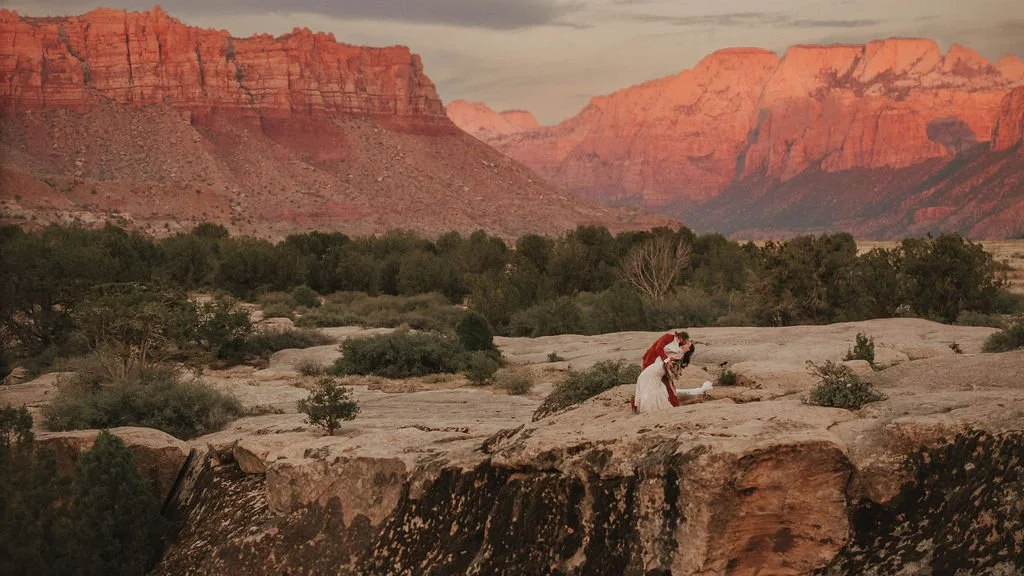
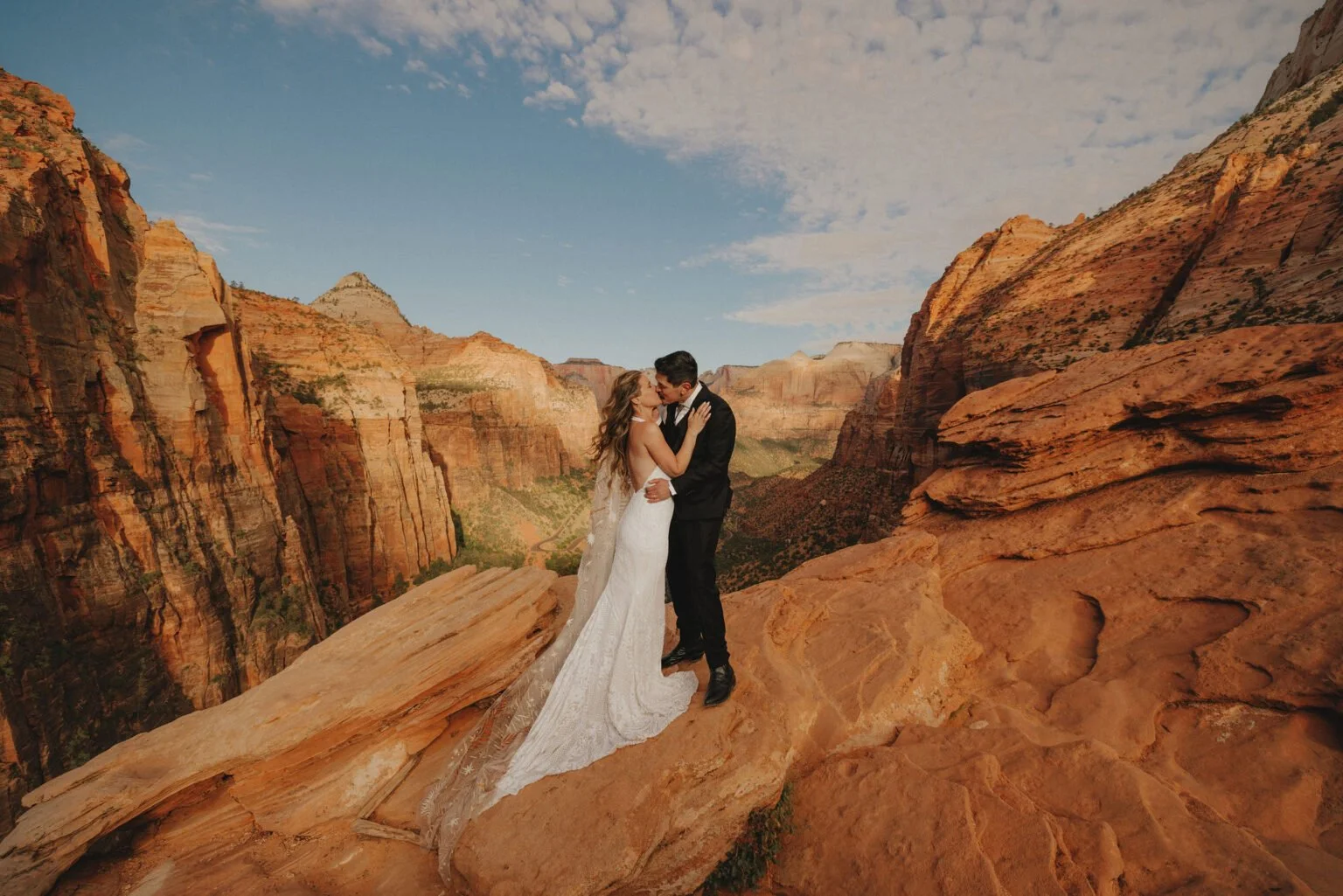
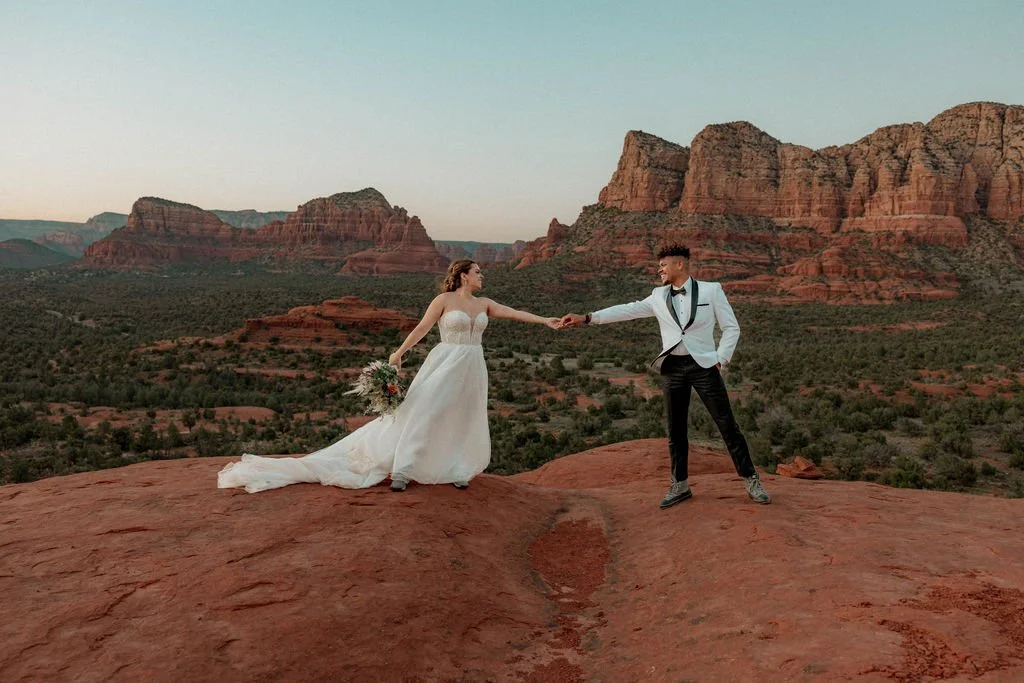
Couples often weigh White Sands against other iconic adventure elopement locations, particularly in neighboring Utah, which has its own set of dramatic red-rock and desert landscapes. Both regions offer permit-based access to protected land and require similar early-morning planning, but the visual result is completely different, Utah leans toward warm red and orange tones and canyon textures, while White Sands offers a cooler, almost lunar white-on-blue palette found nowhere else.
If you're still deciding between destinations, our Utah adventure elopement guide covers permit differences, seasonal timing, and location options for couples considering a Southwest elopement road trip that includes both states.
Packing List for a White Sands Elopement
Because White Sands National Park has no shade, minimal cell service, and limited facilities near the dunes, packing correctly is essential for comfort and safety:
Water (more than you think you need, the dry desert air dehydrates quickly)
Sunscreen and lip balm with SPF
A change of shoes/socks for the drive home
A small blanket or tarp to sit on
Portable battery pack (cell service is unreliable inside the park)
Snacks or a light breakfast for sunrise ceremonies
A garment bag to protect dresses/suits from gypsum dust during transport
Why Couples Choose Shutterfreek for a White Sands Elopement
Planning an elopement in a remote national park comes with real logistical stakes, permits, weather windows, and location scouting all affect whether the day goes smoothly. Our team has photographed adventure elopements across the Southwest, including multiple ceremonies within White Sands National Park, giving us firsthand familiarity with permit timing, ideal dune locations by season, and how to keep a timeline realistic without feeling rushed. If you're comparing New Mexico against other Southwest options, our full New Mexico adventure elopement resources can help you map out a complete trip, not just a single ceremony.
Frequently Asked Questions
-
Yes. Any ceremony held within the park requires a Special Use Permit from the National Park Service, regardless of guest count, submitted at least 10–14 business days before your date.
-
Fall and spring offer the most comfortable temperatures for daytime ceremonies, while sunrise ceremonies work well year-round since they avoid peak heat and crowds even in summer.
-
Costs vary widely, but couples should budget for the park permit fee, marriage license fee through the county clerk, and vendor costs (photography, officiant, and any optional hair/makeup or florals).
-
No. Ceremonies must take place within official park operating hours as outlined in your Special Use Permit; after-hours access is not permitted without special authorization.
-
Elopement permits are generally intended for very small groups. Exact guest limits can change, so confirm the current cap directly with White Sands National Park when applying for your permit.
Keep reading