Small Wedding vs Elopement in New Mexico: How to Choose the Right Celebration
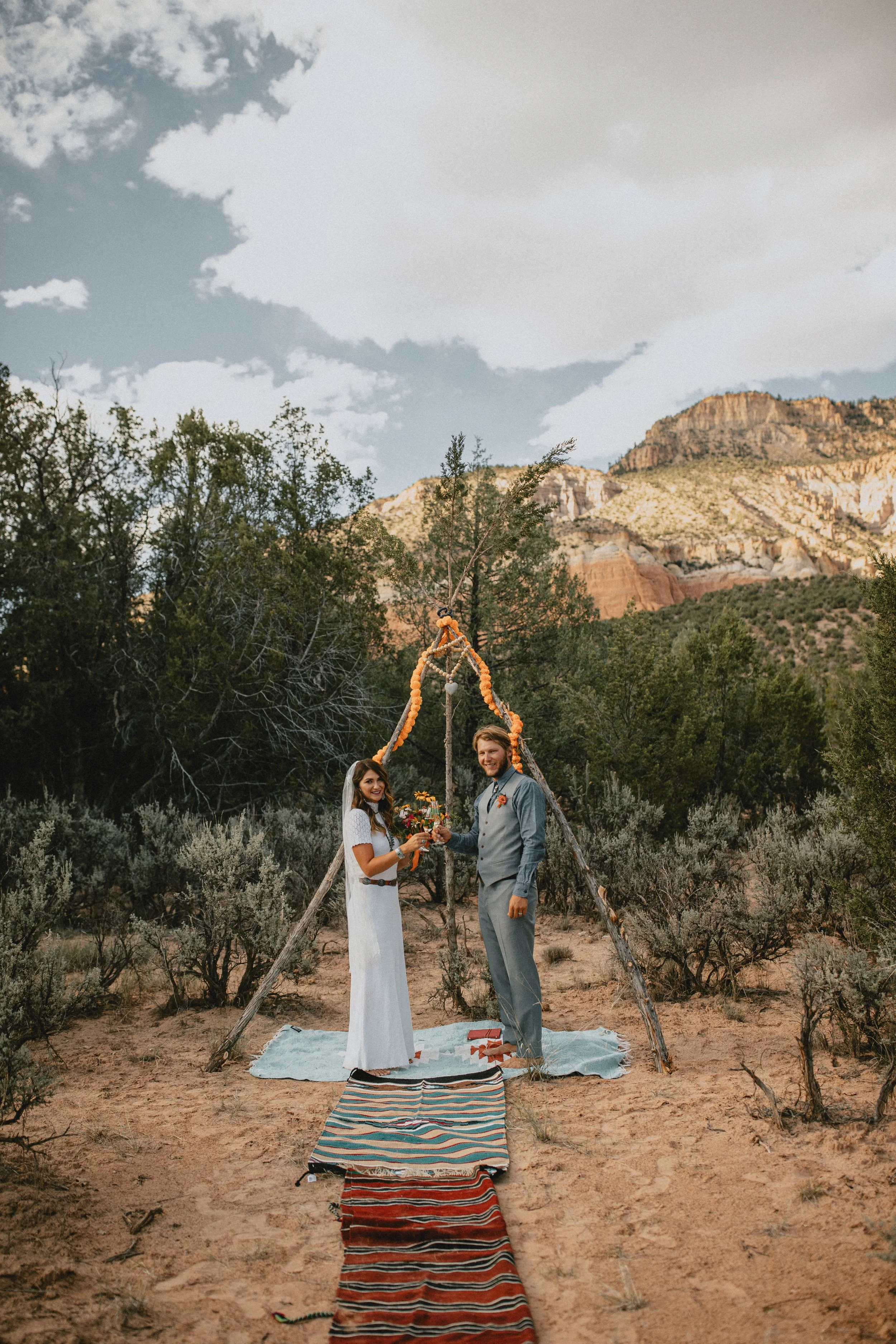
A small wedding in New Mexico typically includes 10–50 guests, a planned ceremony, and a reception at a venue, while an elopement is an intimate, often unscripted ceremony with just the couple (or a handful of loved ones) at a scenic location like White Sands, the Ojito Wilderness, or Ghost Ranch — usually with a much smaller budget, shorter timeline, and zero guest logistics to manage. Both paths lead to a married couple at the end of the day, but the experience, cost, and planning process look very different. If you're trying to decide which one fits your relationship, your budget, and the kind of day you actually want to remember, this guide breaks down the real differences so you can choose with confidence.
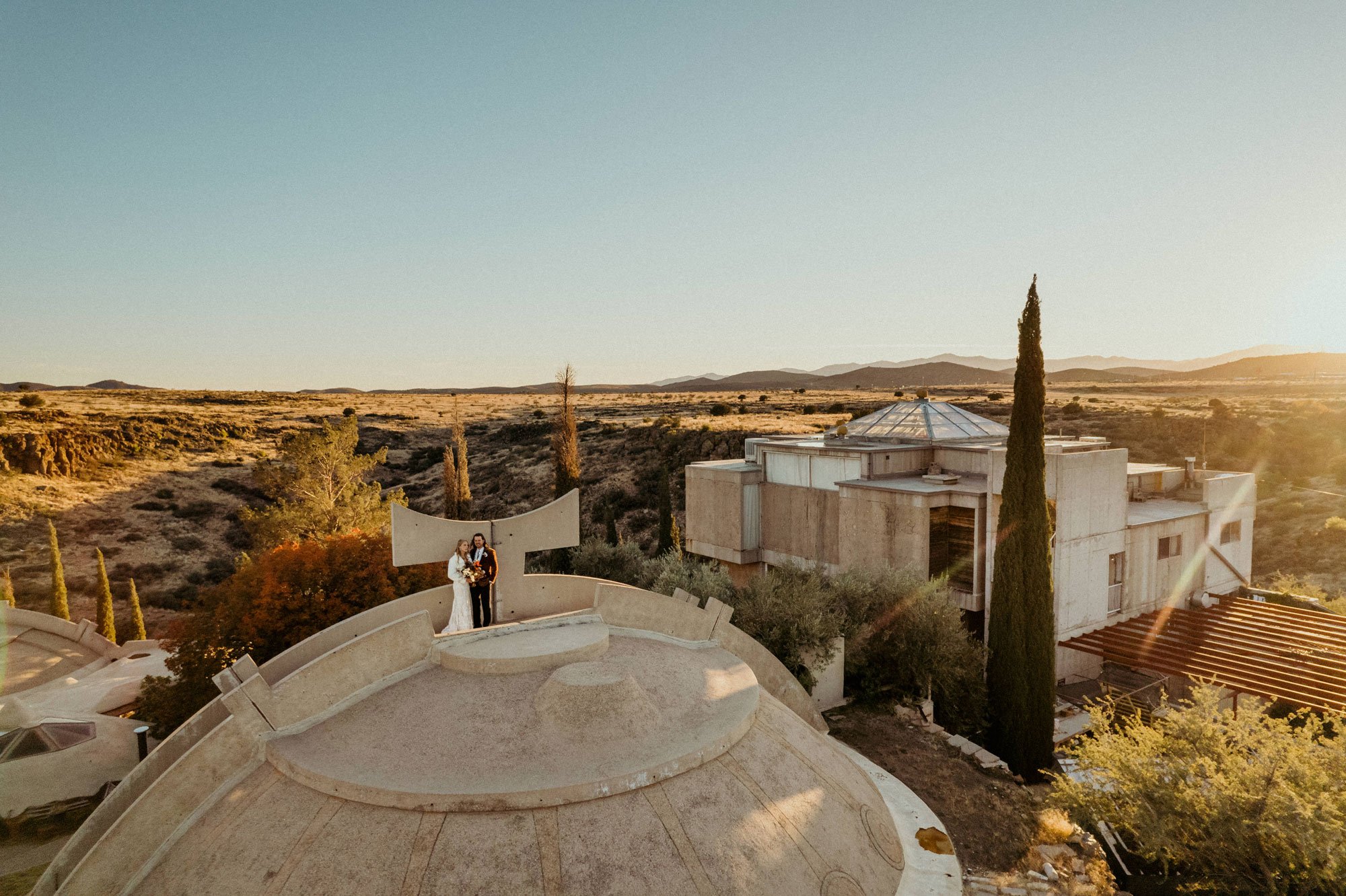
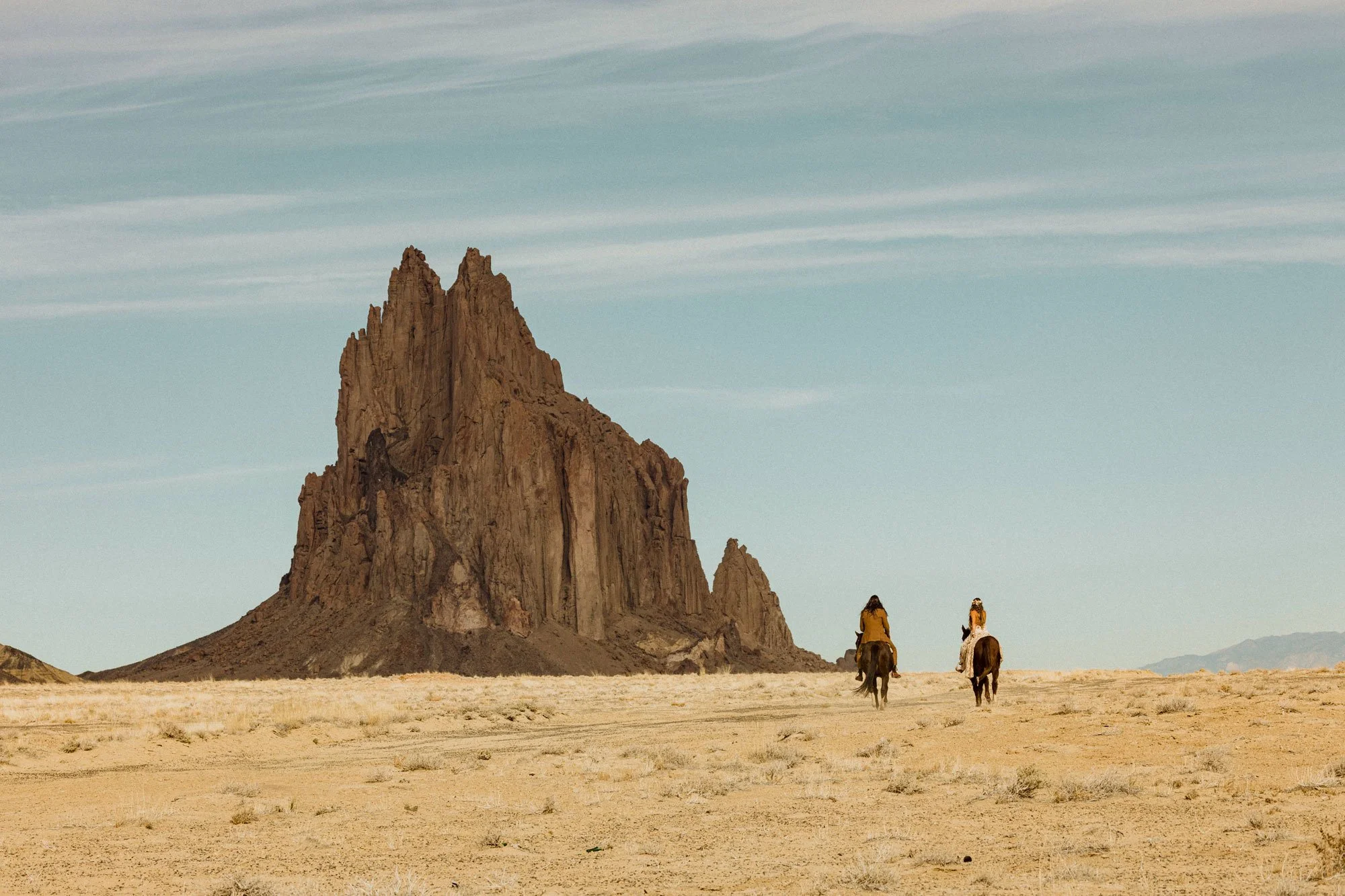
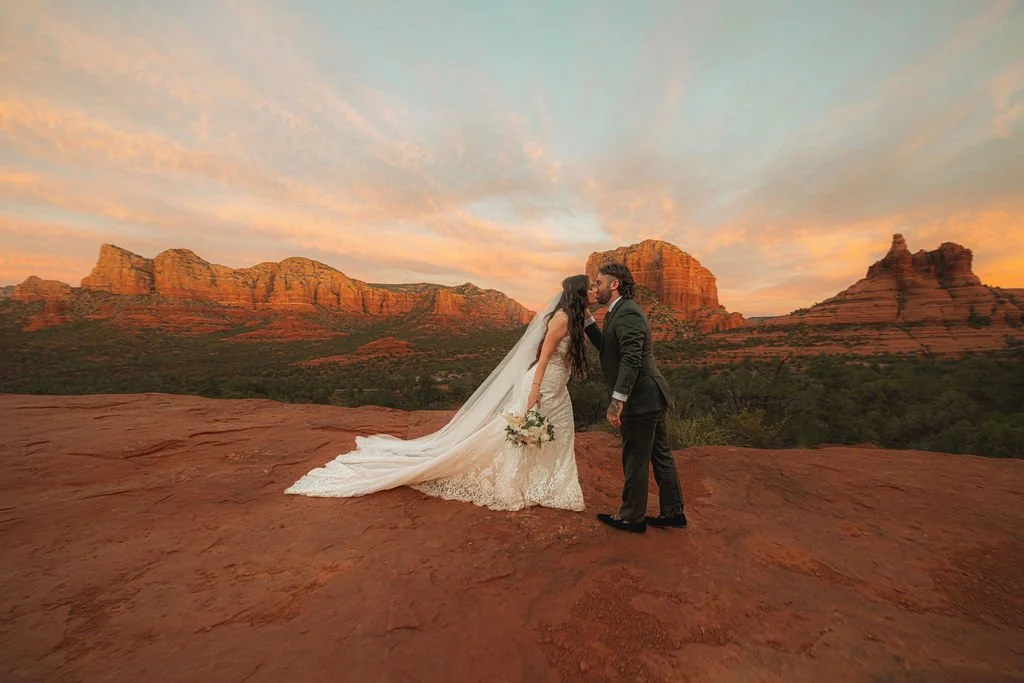
New Mexico happens to be one of the best states in the country for either option. Between the Sandia Mountains, the otherworldly gypsum dunes of White Sands National Park, the red rock backcountry near Abiquiú, and historic adobe courtyards in Santa Fe, the Land of Enchantment offers backdrops that simply don't exist anywhere else. Whether you want twelve people watching you say "I do" under a cottonwood tree or just the two of you hiking to a hidden overlook at sunrise, New Mexico can deliver it.
This guide compares small weddings and elopements across cost, planning timeline, guest experience, legal requirements, and photography — so you can decide which style actually matches how you and your partner want to start your marriage.
What Counts as a Small Wedding in New Mexico?
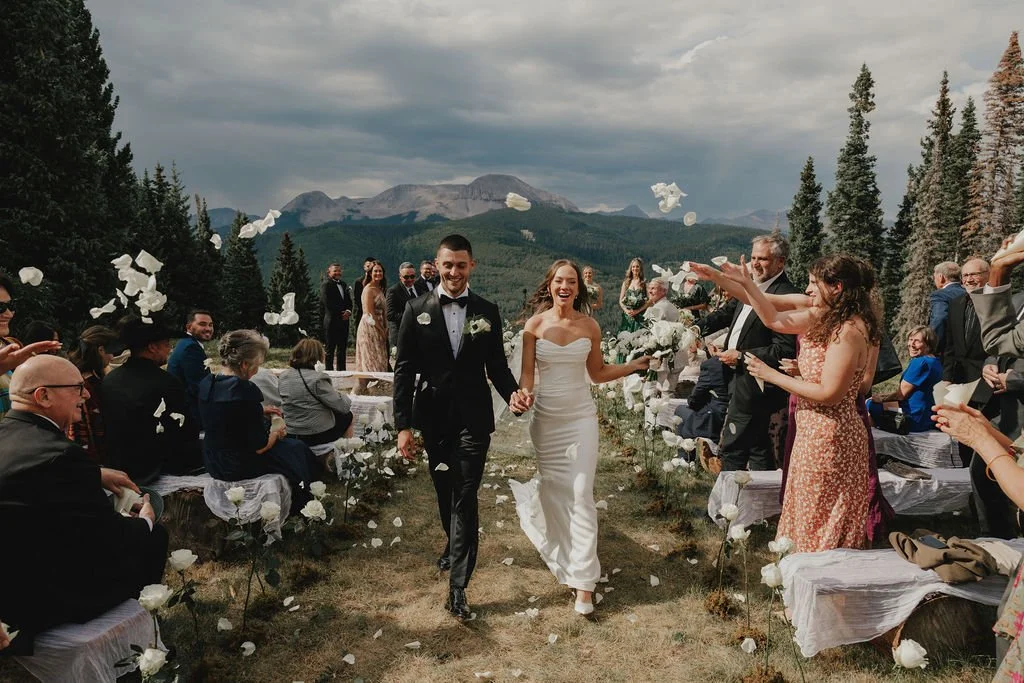
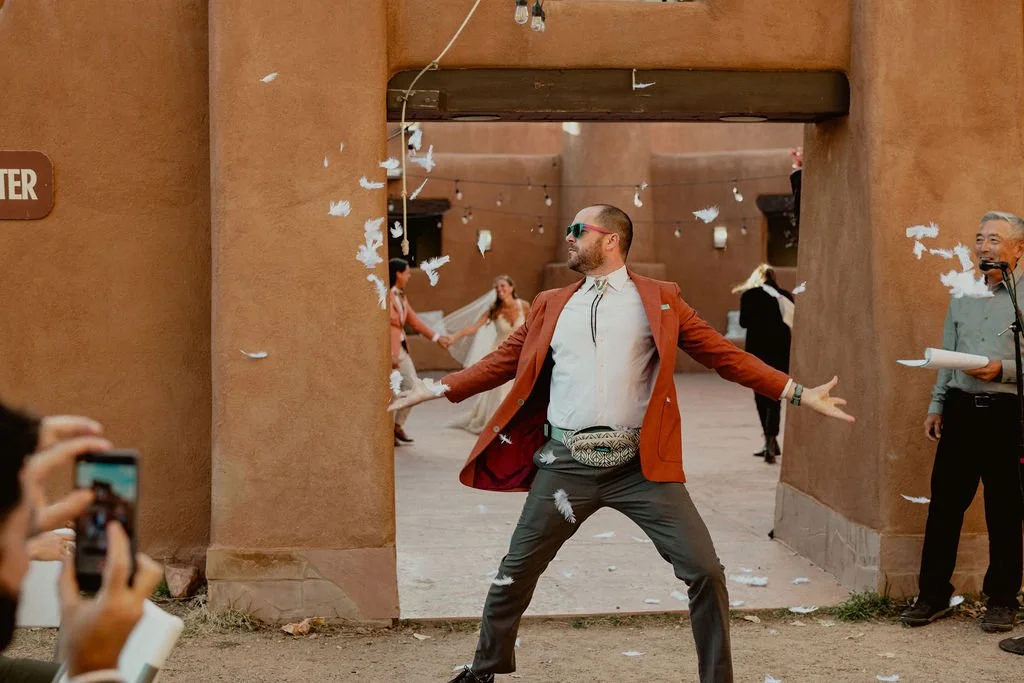
A small wedding generally falls between 10 and 50 guests and retains most of the traditional wedding structure: a ceremony, a reception, vendors like a caterer and DJ or band, and a defined venue. In New Mexico, popular small wedding venues include historic Santa Fe haciendas, Albuquerque's Old Town courtyards, and vineyard properties near Las Cruces.
The defining feature of a small wedding isn't just guest count — it's intention. Couples choosing this route usually want their closest family and friends physically present for the ceremony, even if they're skipping the 150-person ballroom affair. You still get speeches, a first dance, and a sit-down meal, just scaled down to feel more personal and less like a production.
Typical Small Wedding Elements in New Mexico
Ceremony and reception at the same venue (common to reduce logistics)
A licensed officiant and marriage license from a New Mexico county clerk
Catering, often featuring regional New Mexican cuisine
A photographer and sometimes a videographer
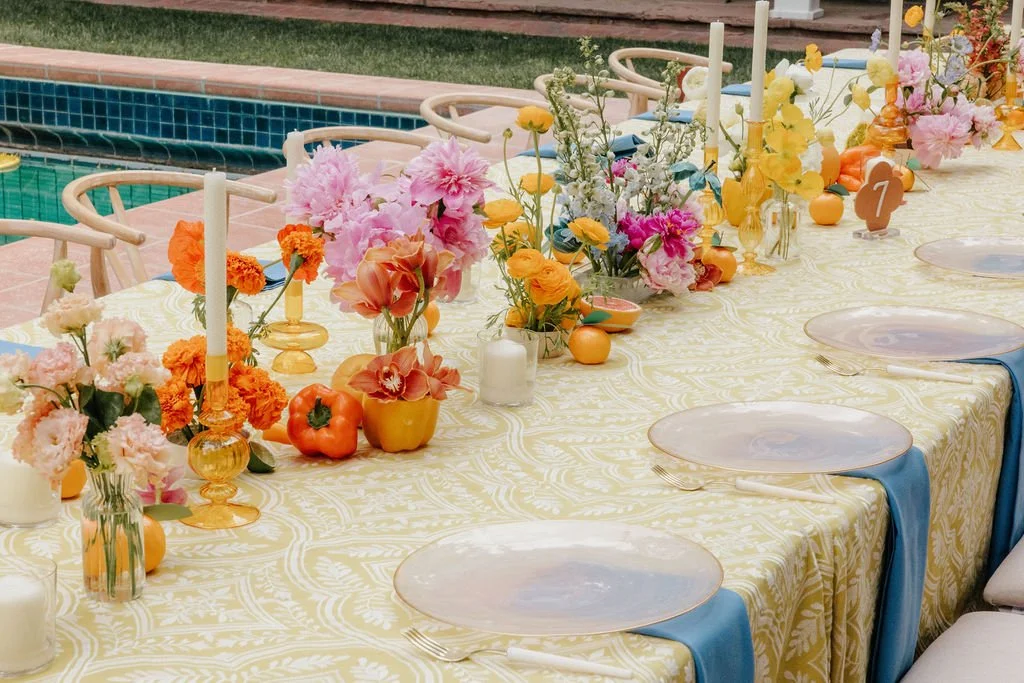
Florals, rentals, and a day-of coordinator
What Counts as an Elopement in New Mexico?
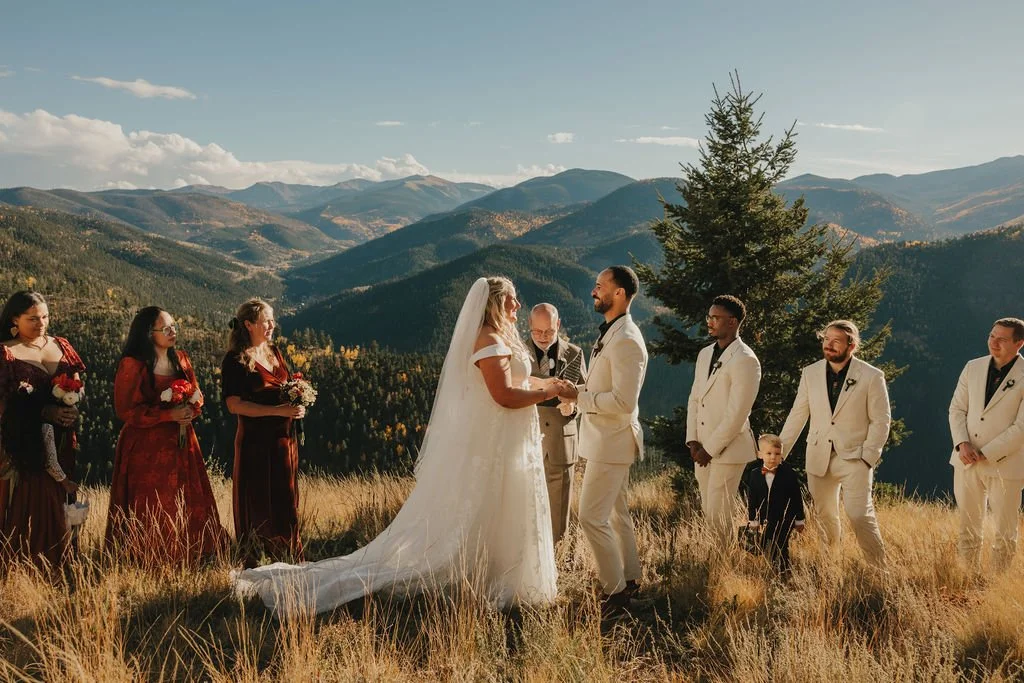
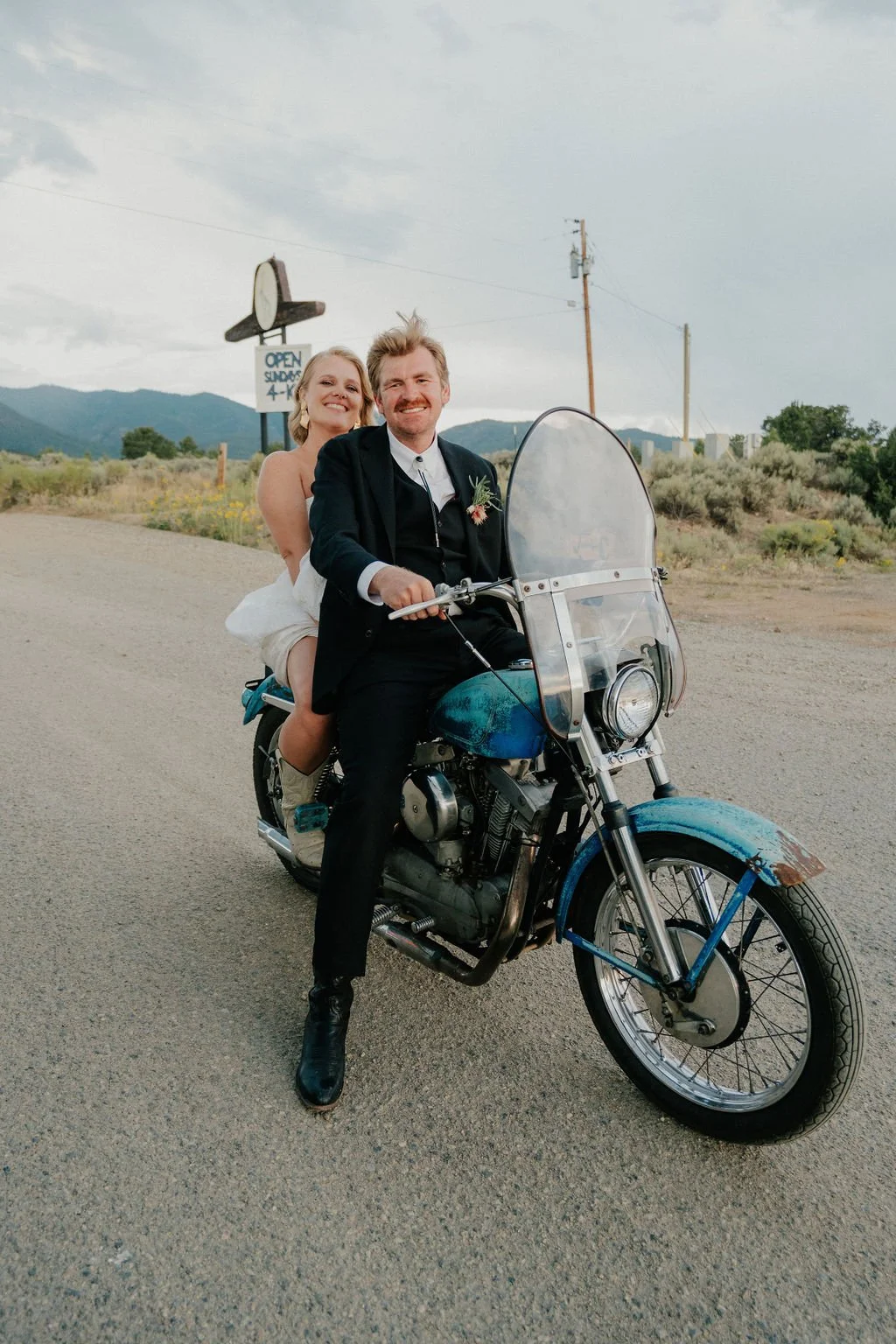
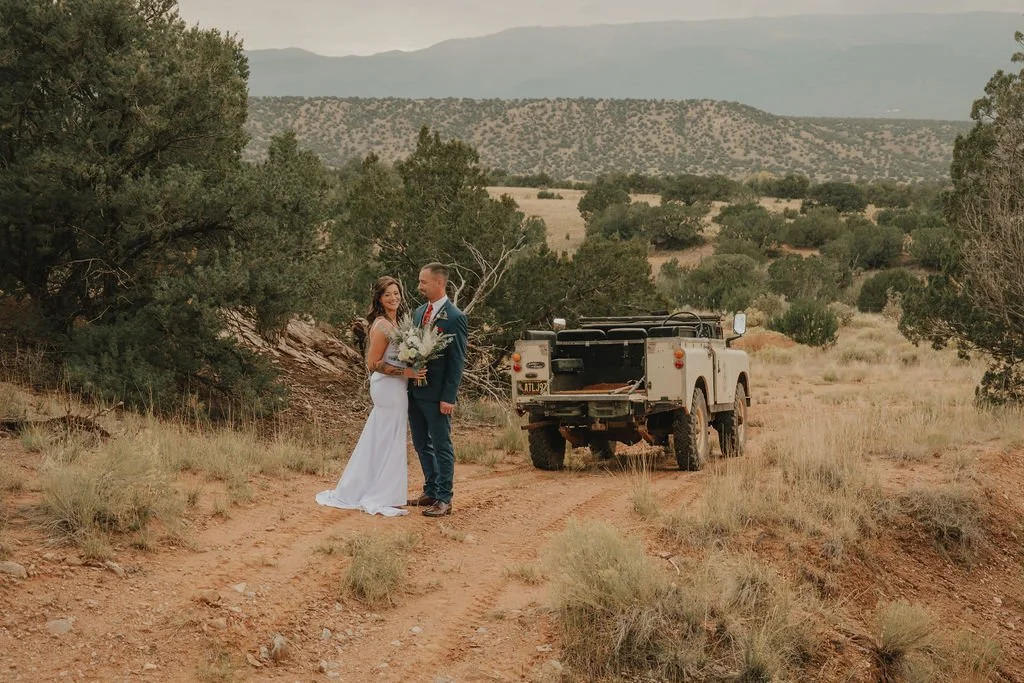
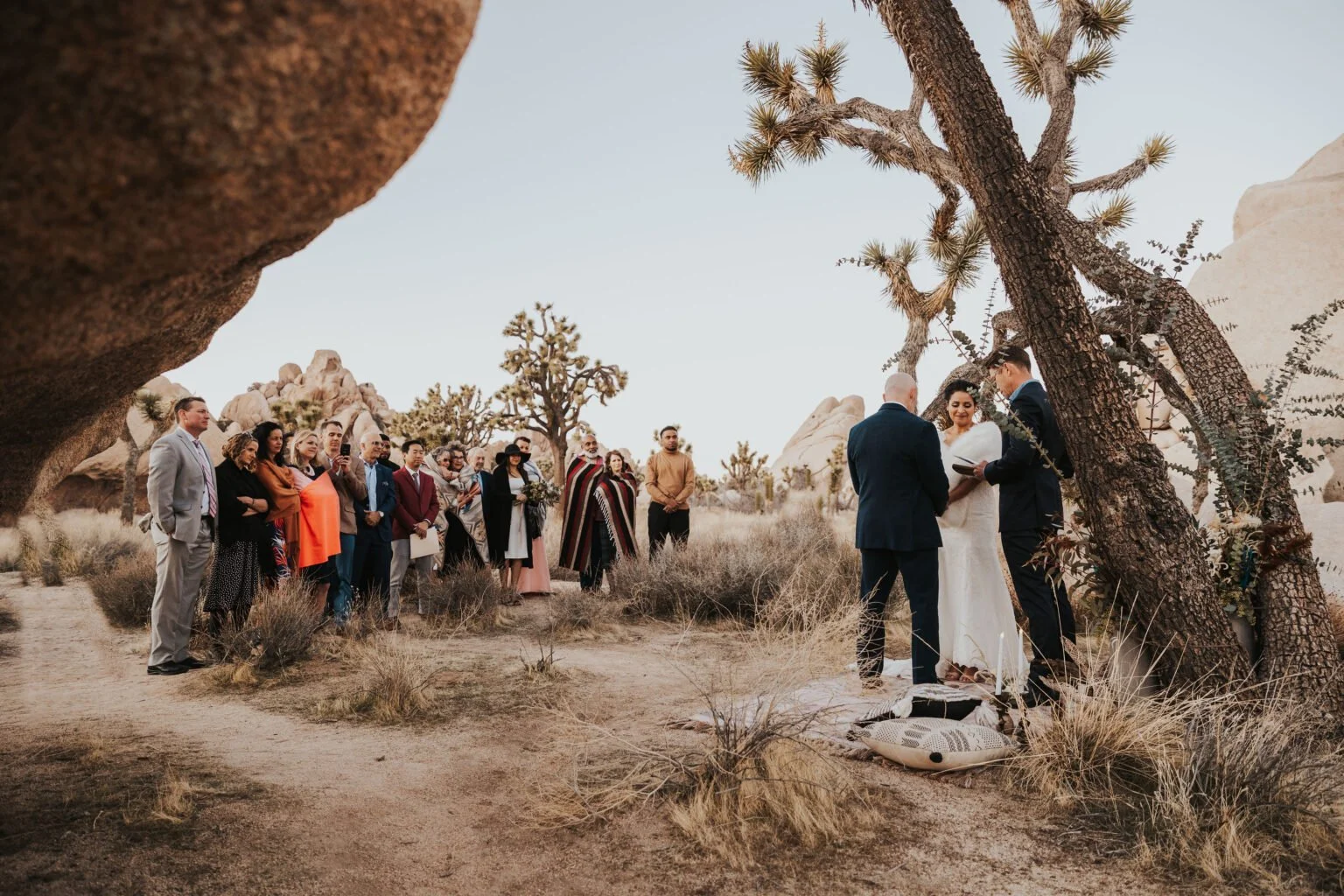
An elopement centers on the couple and the location — not the guest list. Some elopements are truly just two people; others include a handful of witnesses, like immediate family or a couple of close friends, sometimes called a "micro-wedding" elopement hybrid. What separates an elopement from a small wedding is the absence of a traditional reception structure and the emphasis on a meaningful, often adventurous, setting.
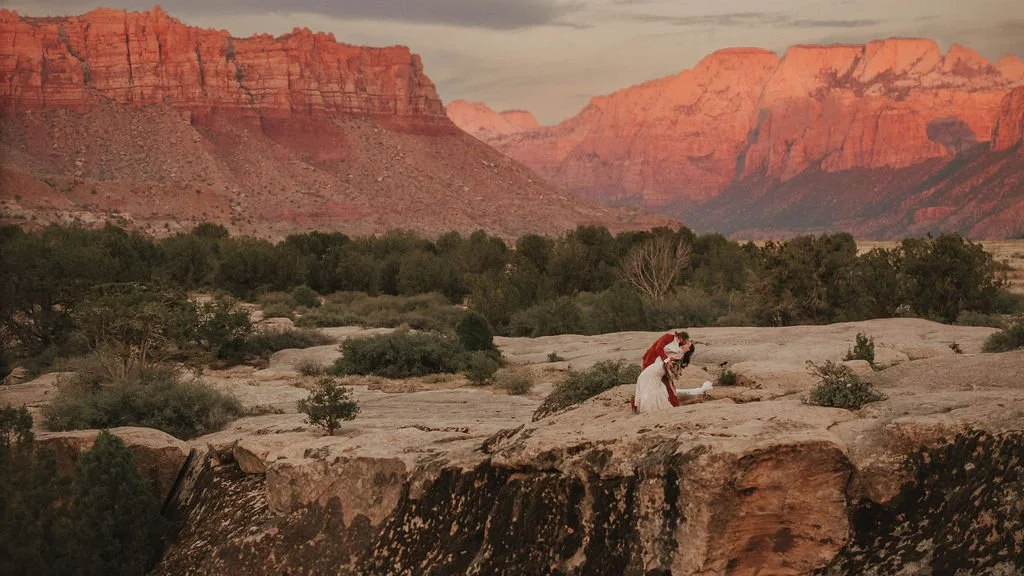
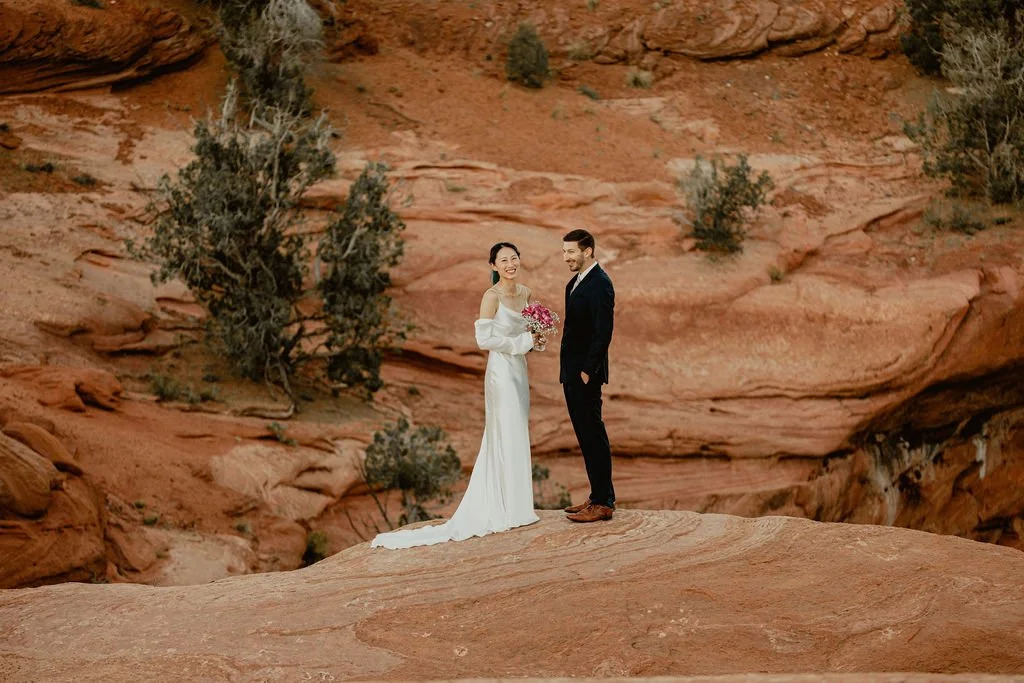
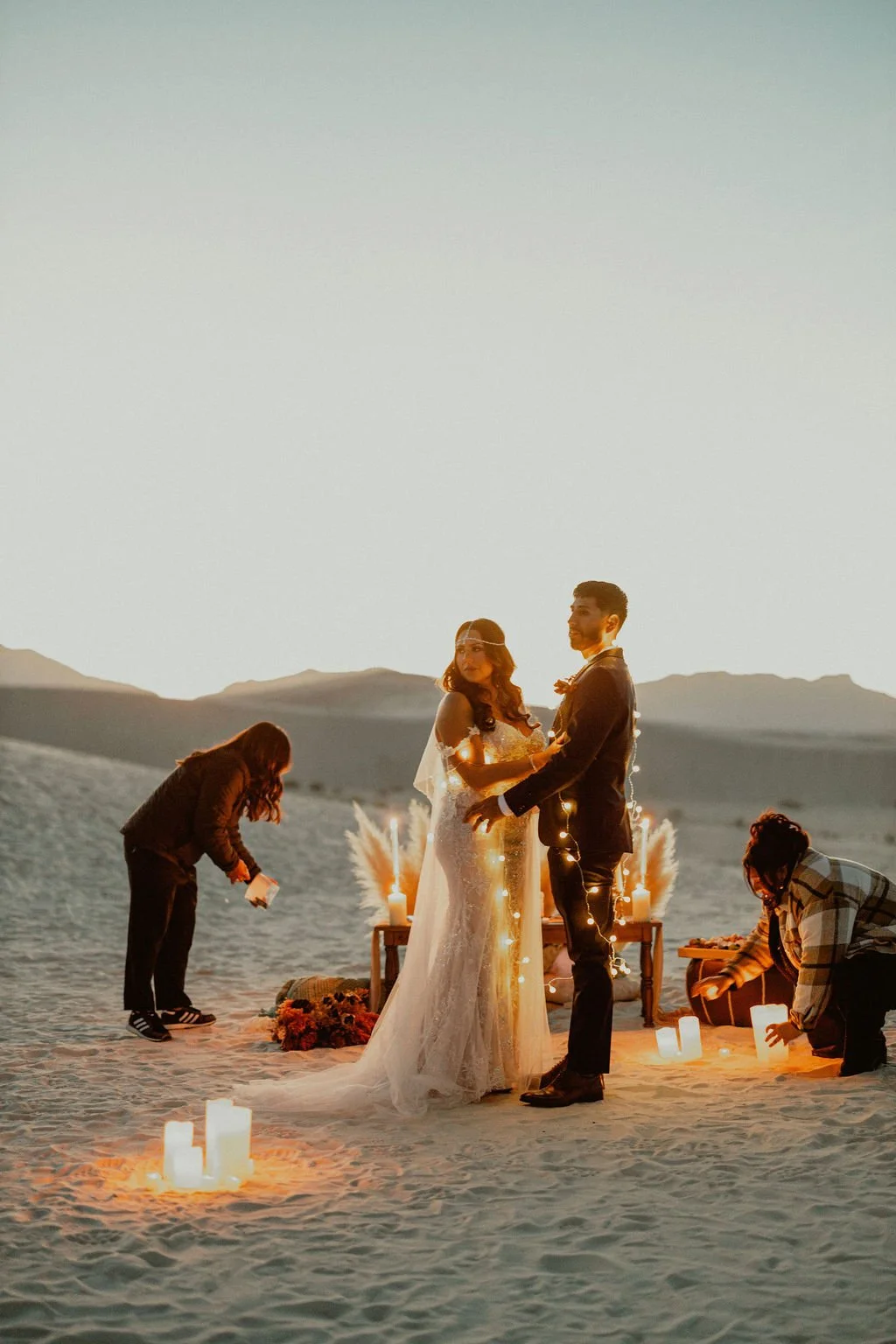
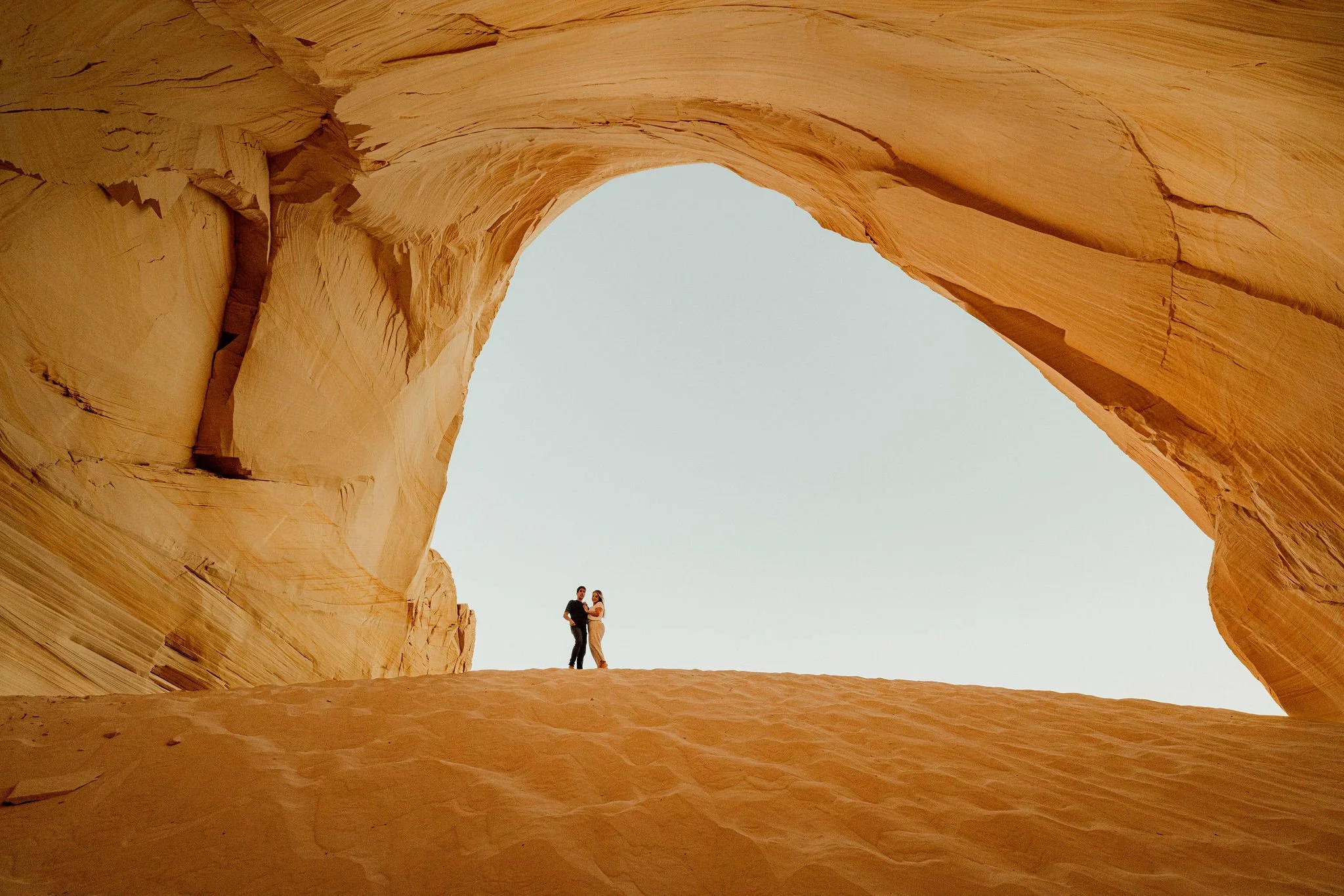
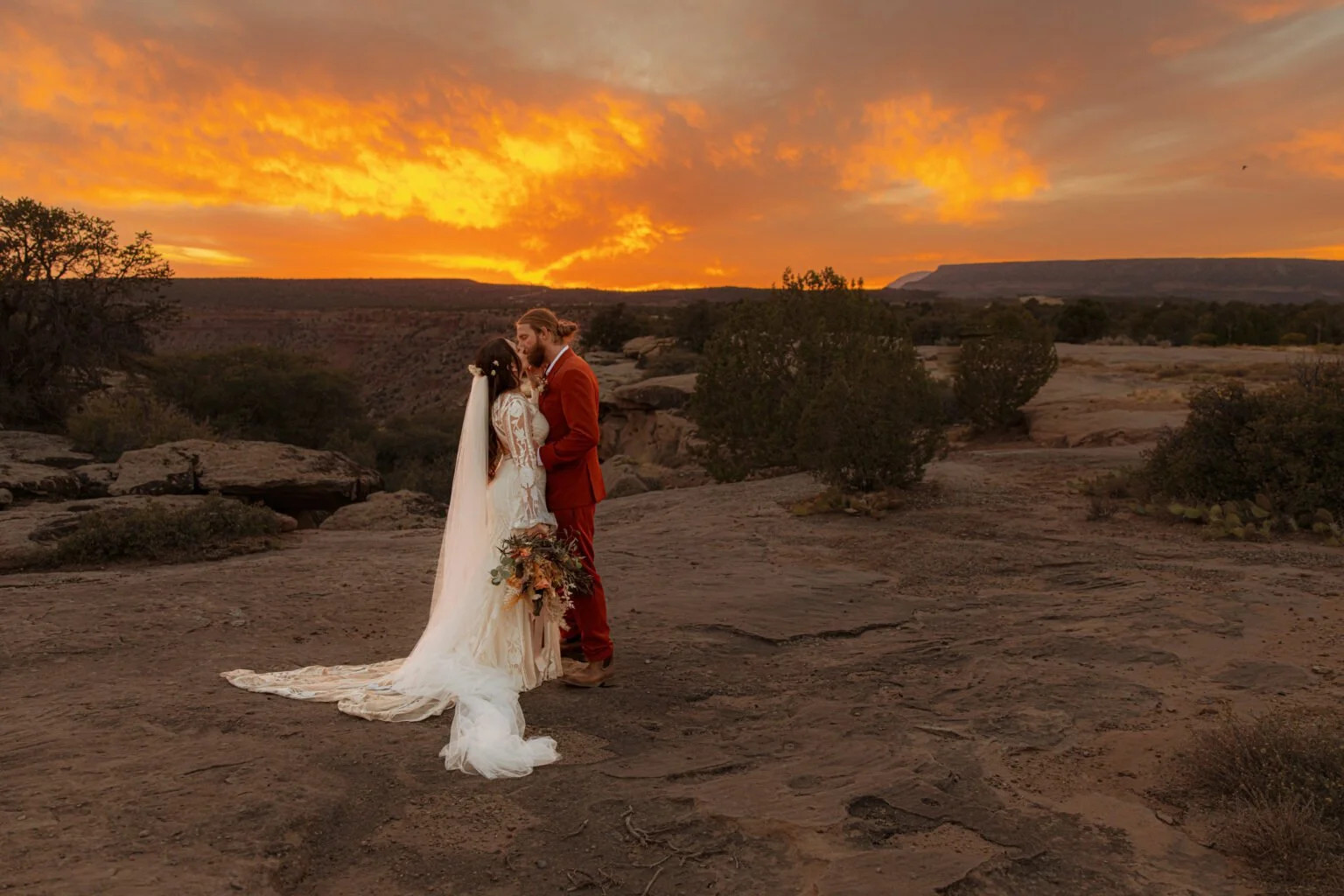
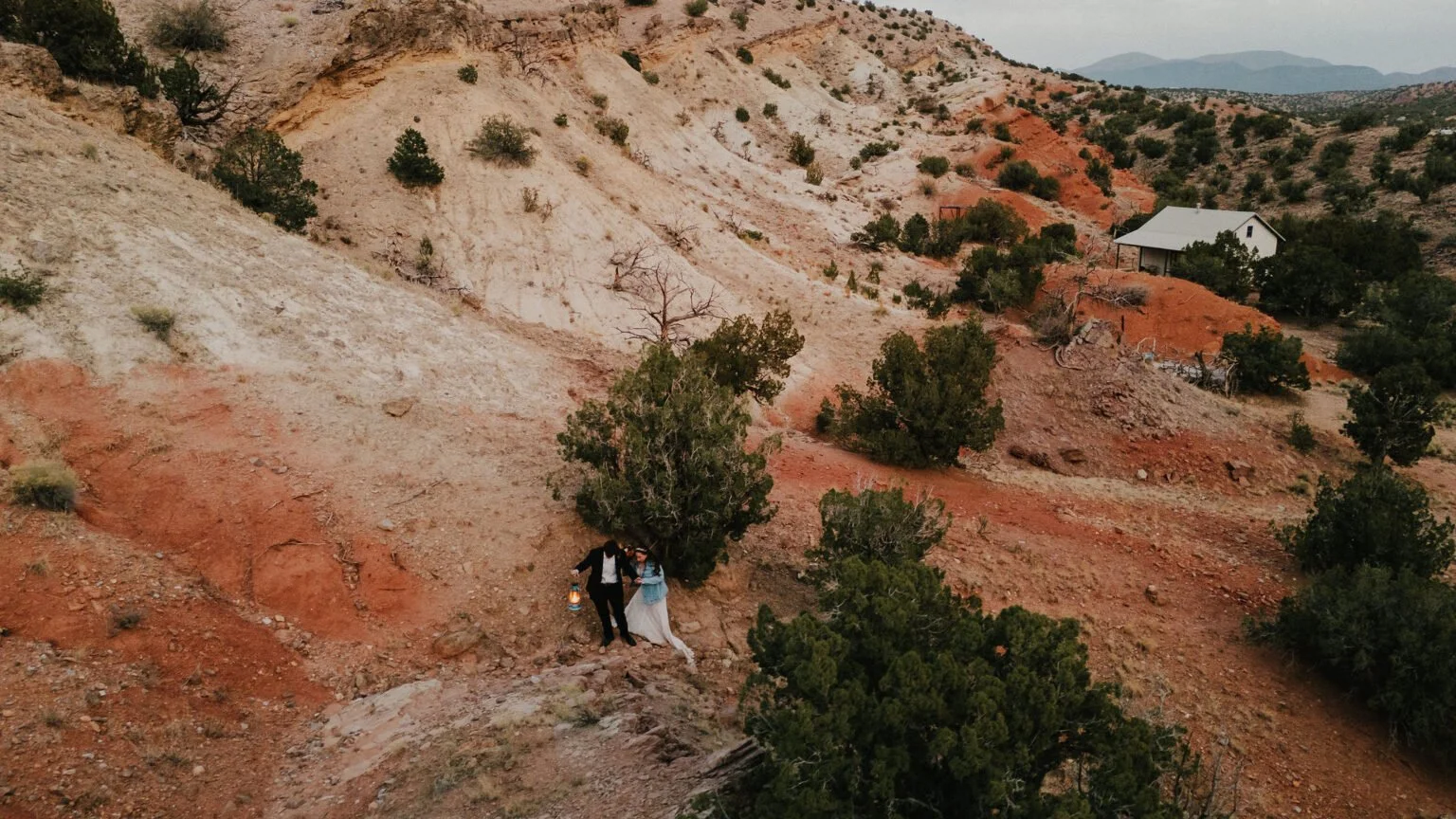
New Mexico is a national draw for elopements because of its sheer variety of dramatic landscapes within a short drive of each other. Couples can hike into the Ojito Wilderness for red rock formations, drive up to the Sandia Crest for mountain views, or stand on the blinding white gypsum sand of White Sands National Park — all without needing a 150-person guest list to coordinate.
Typical Elopement Elements in New Mexico
A permitted outdoor location (national parks and state lands often require permits)
A flexible timeline built around golden hour light
A smaller, more mobile photography and officiant team
Vows written specifically for the couple, often more personal in tone
Little to no reception, sometimes replaced by a dinner for two or a small gathering after
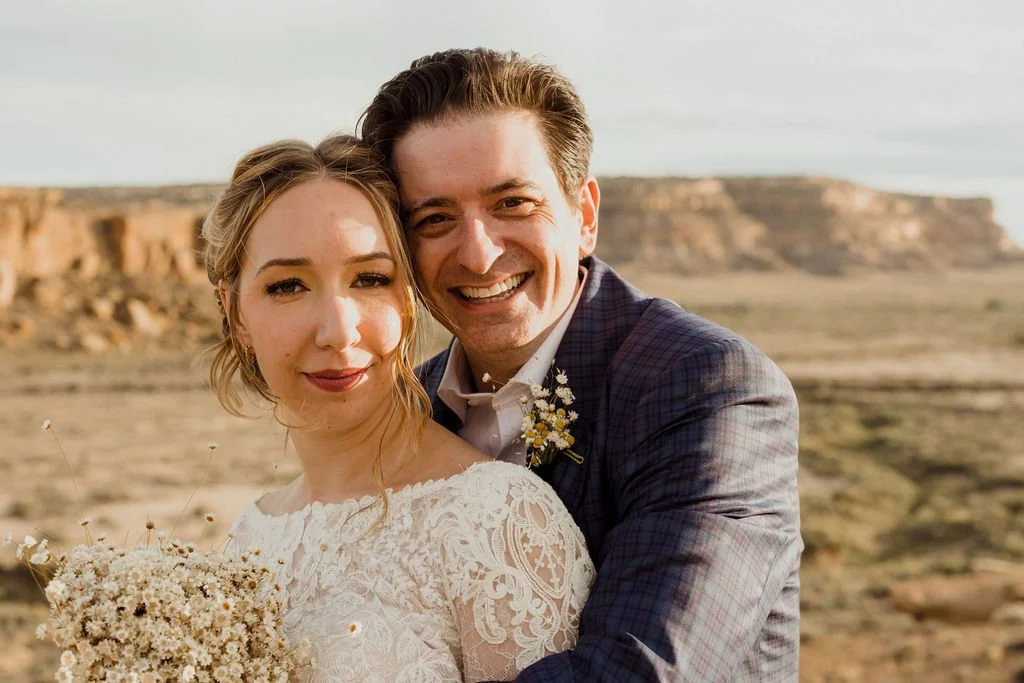
Small Wedding vs Elopement New Mexico: Side-by-Side Comparison
| Factor | Small Wedding (10–50 guests) | Elopement (2–10 people) |
|---|---|---|
| Average Cost | $8,000–$25,000+ | $1,500–$8,000 |
| Planning Timeline | 6–12 months | 1–6 months |
| Guest Involvement | Family and friends attend ceremony + reception | Minimal or no guests; intimate focus |
| Location Flexibility | Limited to venues that can host groups | Wide open — trails, dunes, mountains, deserts |
| Permits Needed | Usually handled by venue | Often required for public/federal land |
| Reception | Traditional dinner, dancing, toasts | Optional or replaced with a private dinner |
| Photography Style | Posed group shots + candids | Adventure, documentary-style, location-driven |
| Best For | Couples who want family present for vows | Couples prioritizing intimacy and scenery |
This comparison isn't about which option is "better" — it's about which structure matches your priorities. Couples torn between the two often find the deciding factor isn't cost at all, but whether they want witnesses for the moment they get married.
Cost Breakdown: Small Wedding vs Elopement in New Mexico
Budget is usually the first thing couples ask about, and it's also where the two options diverge the most.
A small wedding in New Mexico, even scaled down to 20–30 guests, still carries most fixed wedding costs: venue rental, catering per head, a bar package, florals for tables, rentals like chairs and linens, and often a coordinator. Even at a modest scale, these line items add up quickly, which is why small weddings in the state commonly land in the $8,000–$25,000 range depending on venue and vendor choices.
An elopement removes nearly all of those line items. There's no per-head catering bill, no rental furniture, and often no venue fee beyond a park permit (which can range from $6 to a few hundred dollars depending on location and group size). Most of an elopement budget goes toward photography, an officiant, and sometimes a small post-ceremony dinner — which is why elopement budgets in New Mexico often fall between $1,500 and $8,000 total.
Where the Money Actually Goes
| Expense Category | Small Wedding | Elopement |
|---|---|---|
| Venue/Permit | $2,000–$8,000 | $0–$300 |
| Catering | $2,500–$10,000 | $0–$500 (optional dinner) |
| Photography | $2,000–$4,500 | $1,200–$3,500 |
| Florals & Decor | $800–$3,000 | $100–$500 |
| Attire | $1,000–$3,000 | $500–$1,500 |
| Officiant | $200–$600 | $200–$600 |
Couples who want the financial flexibility to put more toward a honeymoon, a home down payment, or simply avoid debt often gravitate toward eloping for that reason alone.
Choosing a Location: New Mexico's Best Backdrops for Either Option
New Mexico's geography is the real differentiator compared to other states. Where a small wedding in, say, a hotel ballroom could happen almost anywhere, New Mexico's landscape gives both small weddings and elopements access to locations you can't replicate elsewhere.
White Sands National Park — best for elopements due to permit limits on group size; dramatic white gypsum dunes
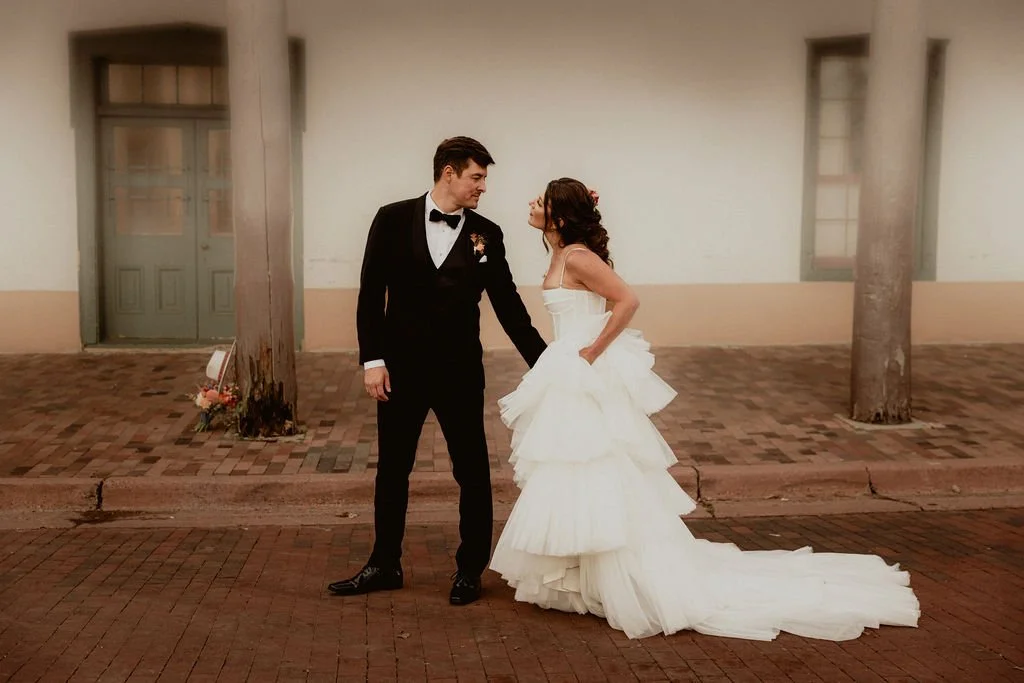
Santa Fe historic district — ideal for small weddings with adobe architecture and courtyard venues
Ghost Ranch (Abiquiú) — red cliffs and high desert mesas, suited to both intimate elopements and small outdoor weddings with proper permitting
Sandia Mountains/Crest — accessible mountain views, popular for sunrise or sunset elopements
Bandelier National Monument — canyon and cliff-dwelling scenery for couples wanting a historic backdrop
If your heart is set on a New Mexico landscape ceremony, it's worth exploring options built specifically around the state's terrain. Shutterfreek'sNew Mexico adventure elopement coverage is built around these exact locations, with routes planned around permit rules and golden-hour timing.
Legal Requirements: What's the Same for Both
Regardless of whether you choose a small wedding or an elopement, New Mexico's marriage license process is identical. You'll need to:
Apply in person at any New Mexico county clerk's office (no residency requirement)
Provide valid photo ID (no blood test or waiting period required)
Pay the license fee (varies by county, generally $25–$35)
Use the license within New Mexico — it's valid statewide once issued
This is one of the reasons New Mexico is so popular for out-of-state and destination elopements: there's no waiting period, so couples can apply and marry within the same trip, sometimes within the same day.
How Photography Differs Between the Two
Photography style is one of the most overlooked differences between small weddings and elopements, but it significantly shapes how the day actually feels.
At a small wedding, a photographer is managing a timeline with multiple "must-have" shots: family formals, the ceremony, the first dance, candid reception moments. Even at 20 guests, there's a structured shot list to get through, which means less flexibility for spontaneous, adventurous photography.
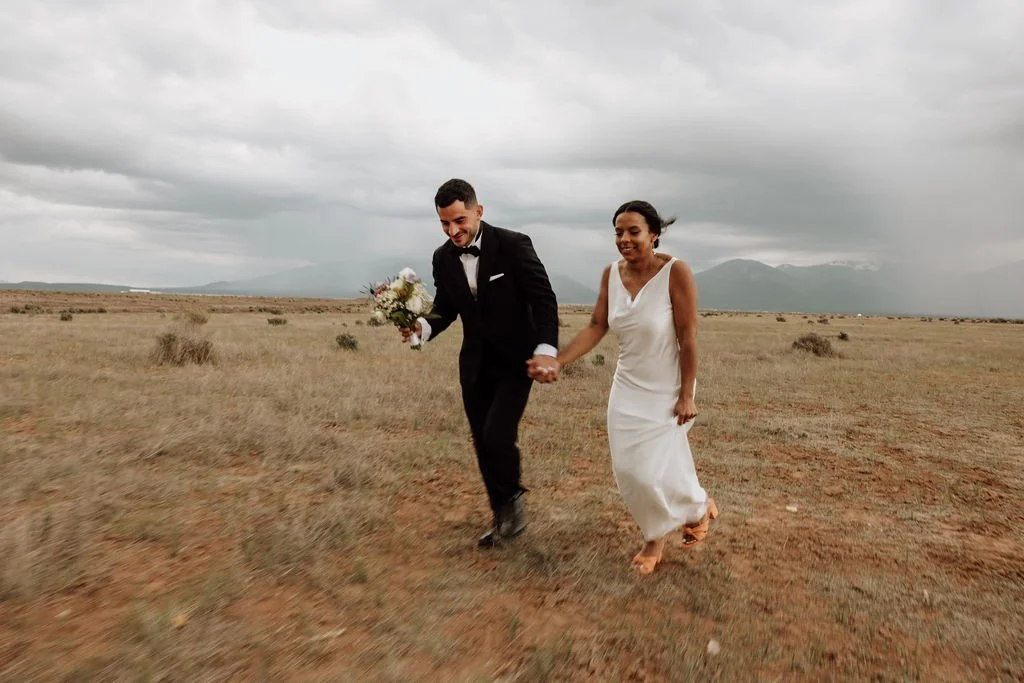
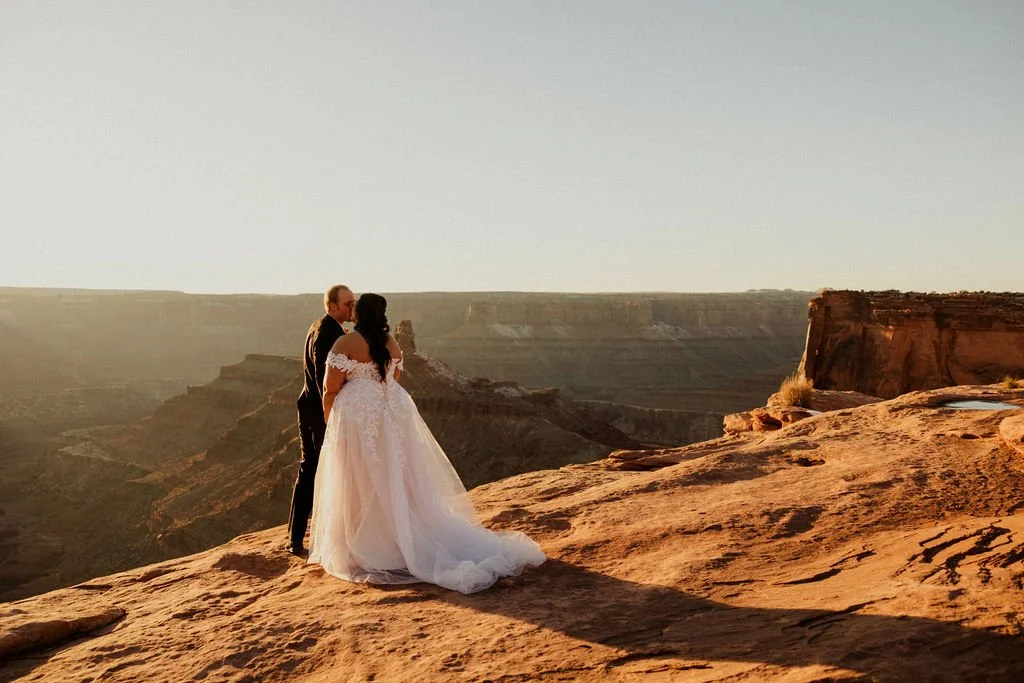
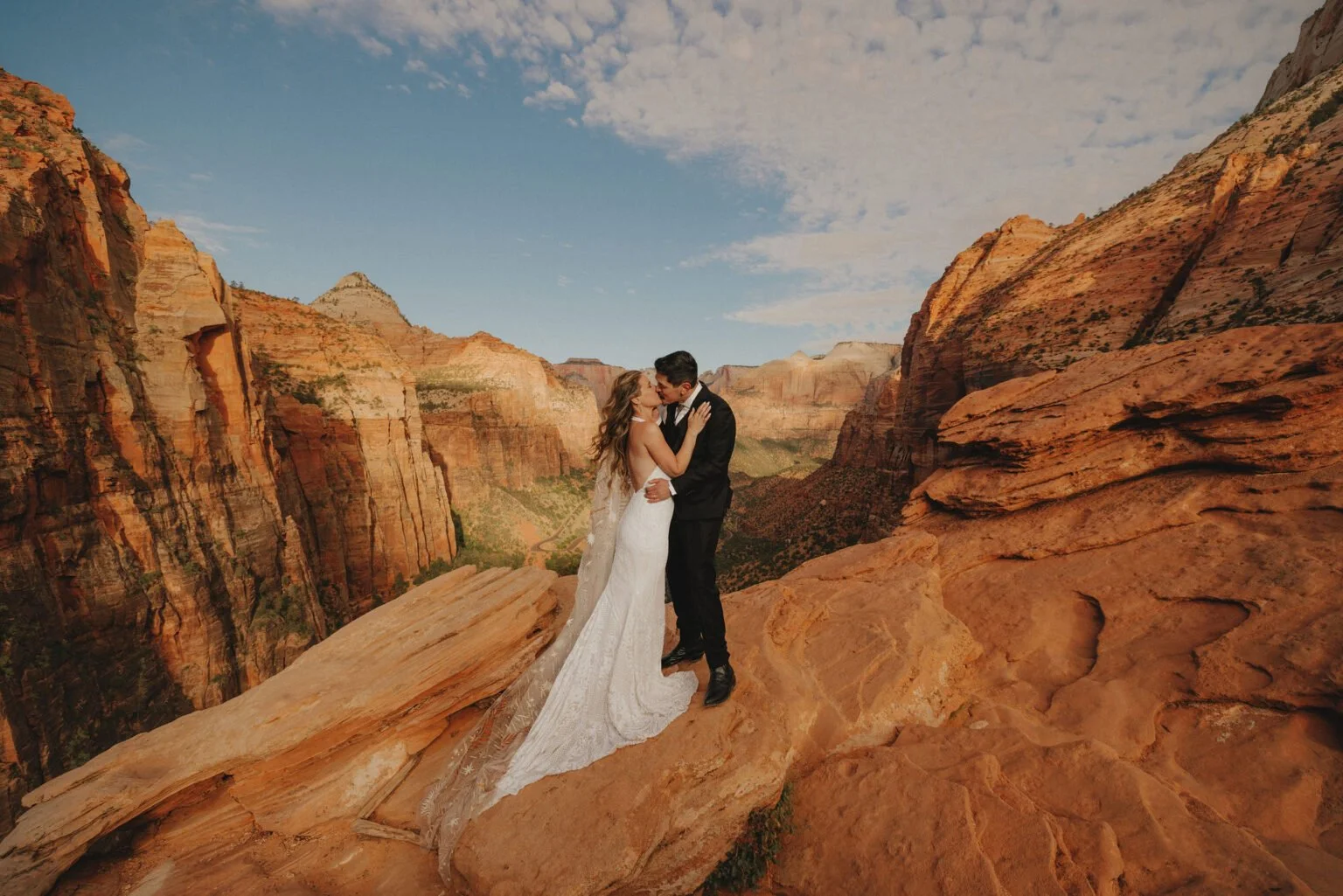
At an elopement, the entire day can revolve around the photography and the experience itself. Since there's no reception schedule to hit, couples often hike to multiple locations, chase better light, or extend the day into golden hour without worrying about guests waiting at a venue. This is why elopement photography tends to feel more documentary and adventure-driven — it's not constrained by a banquet hall timeline.
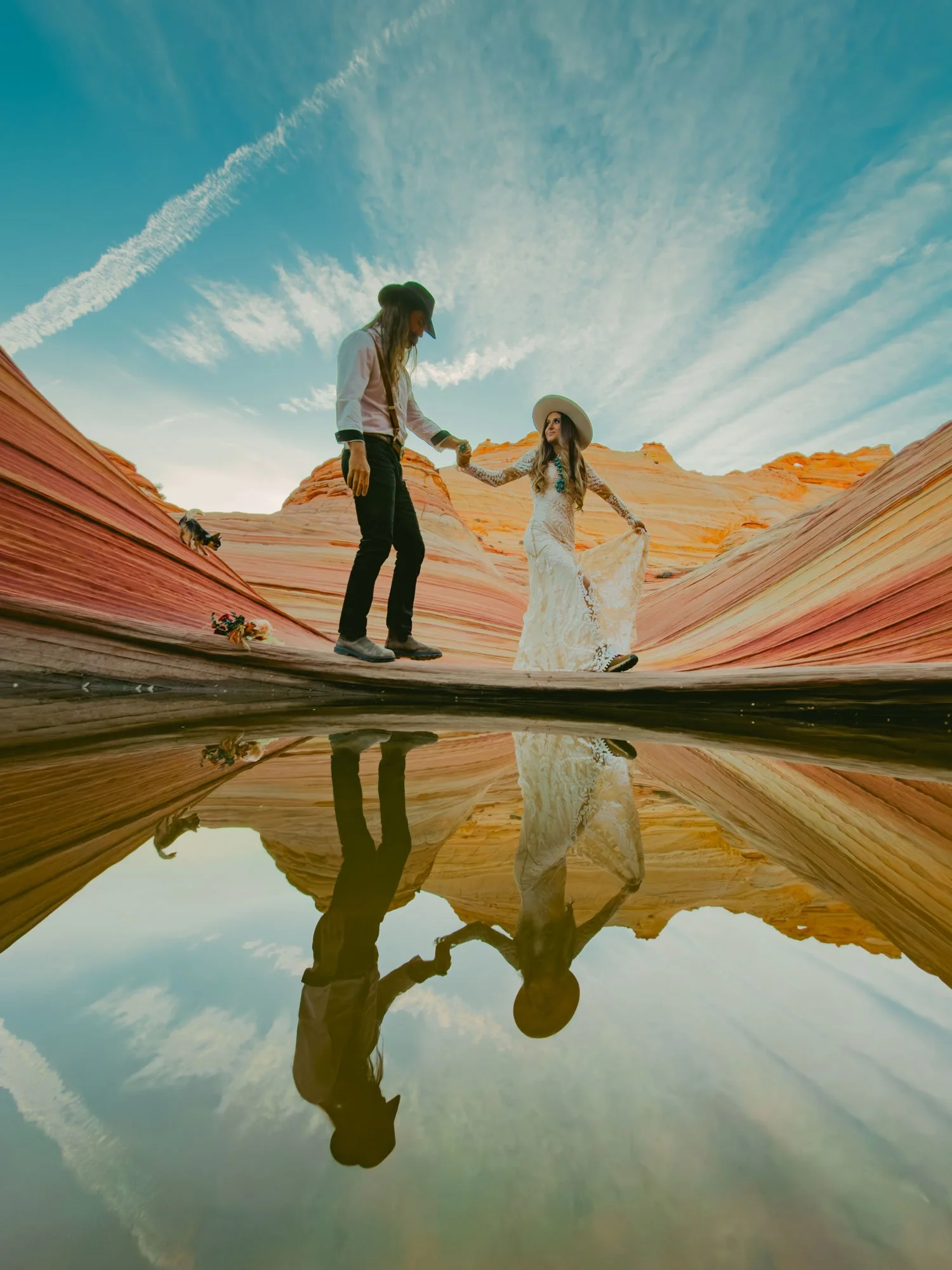
Couples who've eloped in neighboring states often note the same pattern. Utah's red rock canyons, for instance, offer a similar adventure-elopement experience to New Mexico's high desert — you can see how that translates in Shutterfreek'sUtah adventure elopement galleries, where the terrain itself becomes a third character in the photos.
Which Should You Choose? A Quick Self-Check
If you're still undecided, ask yourselves these questions:
Do you want your parents or grandparents physically present when you say "I do"? → Small wedding
Is your budget under $10,000 total? → Elopement is more realistic
Do you want a dance floor and a sit-down dinner with guests? → Small wedding
Do you want a hike, a sunrise, or a remote landscape as your ceremony backdrop? → Elopement
Are you planning the wedding from out of state and want fewer logistics? → Elopement
Do you want photos that include large groups (siblings, parents, wedding party)? → Small wedding
Neither answer is wrong. Some couples even land on a hybrid: an elopement-style ceremony with 8–10 close family members, followed by a larger casual party back home later. New Mexico accommodates both approaches well, since vendors across the state are used to working with couples on either end of the spectrum.
Planning Timeline: How Far Out to Book
A small wedding in New Mexico typically needs 6–12 months of lead time, primarily because venues, caterers, and popular photographers book up far in advance, especially during peak season (April–June and September–October). If you're set on a specific Santa Fe or Albuquerque venue, booking 9–12 months ahead is safest.
Elopements move much faster. Many couples in New Mexico plan and execute an elopement in 1–3 months, since the main moving pieces are a permit (if required), a photographer, and an officiant. Some photographers even take last-minute elopement bookings inside of a few weeks if the location and date are flexible.
Permits and Land Access for New Mexico Elopements
Because elopements frequently happen on public land, it's worth understanding permit basics before locking in a location:
National parks (e.g., White Sands) typically require a Special Use Permit for wedding ceremonies, even small ones
State parks often have lower fees and more flexible group-size rules
BLM land (like much of the Ojito Wilderness) generally requires permits for group gatherings over a certain size, though small elopement parties sometimes fall under standard recreational use
Private land (ranches, private overlooks) requires owner permission but skips federal permitting altogether
A photographer experienced in New Mexico elopements will usually know current permit requirements for popular spots and can help you avoid last-minute surprises.
How New Mexico Compares to Neighboring Elopement Destinations
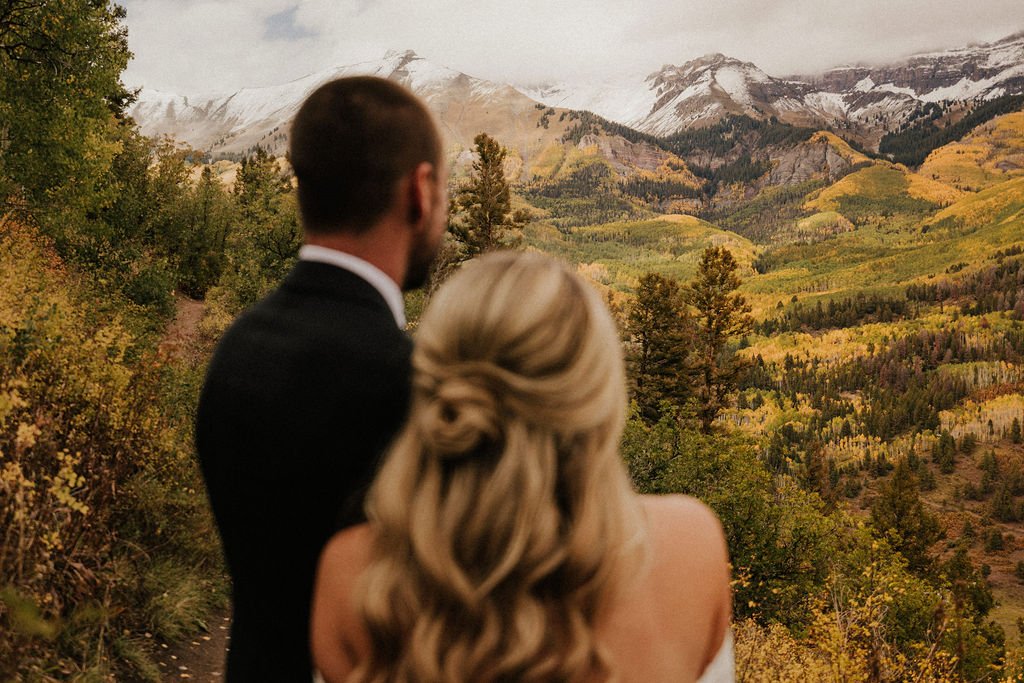
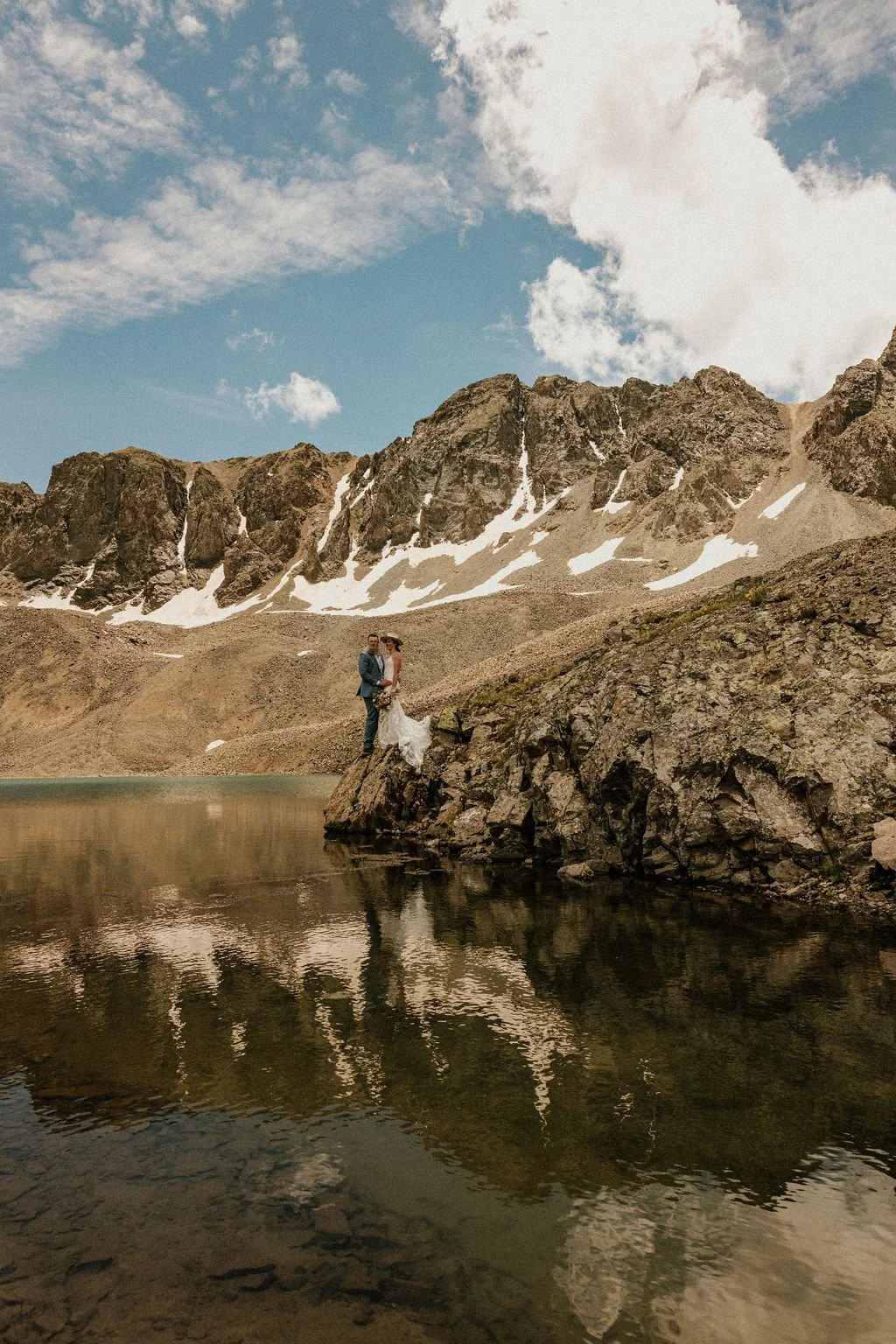
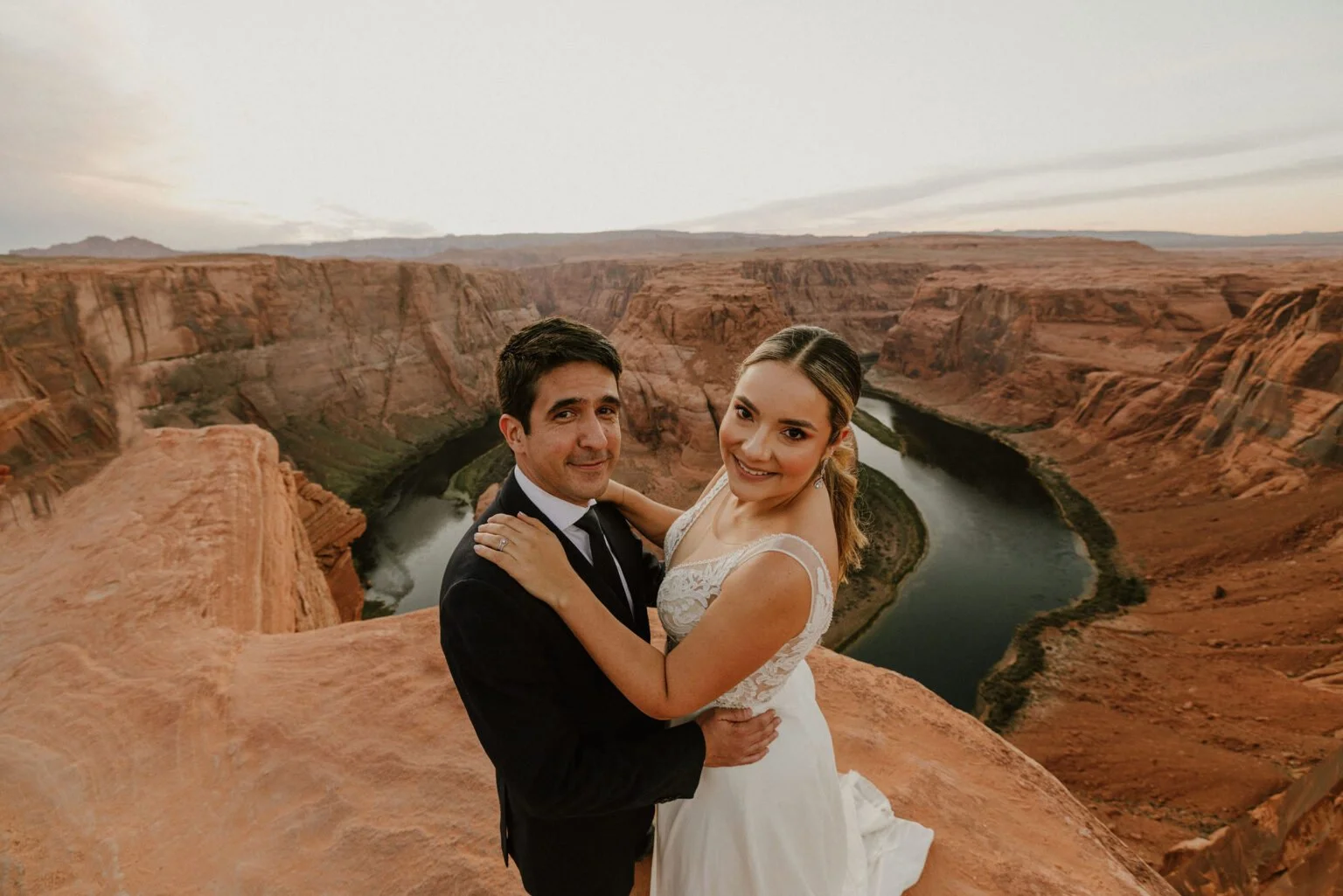
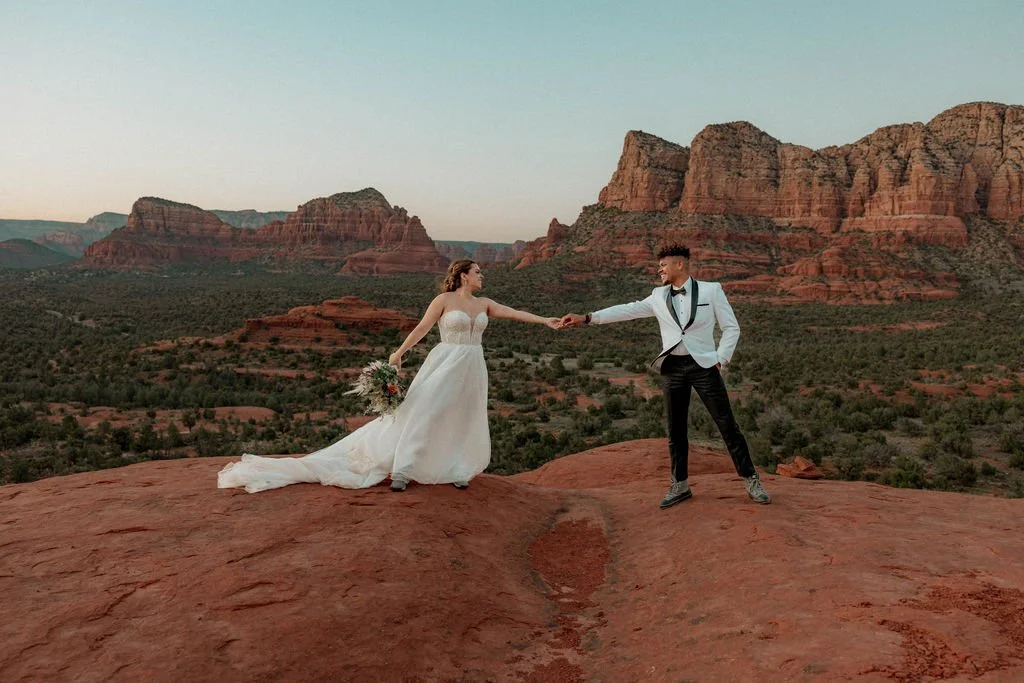
If you're cross-shopping states for your elopement, it helps to know how New Mexico stacks up against its neighbors. Arizona offers saguaro deserts and slot canyons, as seen in Shutterfreek'sArizona adventure elopement work, while Colorado leans toward alpine lakes and mountain peaks, covered in theColorado adventure elopement portfolio. New Mexico sits apart from both with its high desert mesas, gypsum dunes, and adobe architecture — a distinct aesthetic that doesn't overlap much with either neighboring state.
For couples who want a landscape that feels genuinely different from the typical "mountain elopement" photos flooding social media, New Mexico's terrain offers something visually unique.
Final Thoughts
Choosing between a small wedding and an elopement in New Mexico ultimately comes down to what kind of day you want to remember. A small wedding gives you the warmth of family present for your vows and a celebration immediately afterward. An elopement gives you space, intimacy, and a landscape that becomes part of your story in a way a banquet hall never could.
Whichever path fits your relationship, New Mexico's mix of desert, mountain, and historic architecture means you won't be settling for a generic backdrop either way.
Frequently Asked Questions
-
Yes, in most cases. Elopements in New Mexico typically cost $1,500–$8,000, while even a scaled-down small wedding with 20–30 guests usually runs $8,000–$25,000 due to catering, venue, and rental costs.
-
It depends on the location. Ceremonies on national park land, like White Sands, typically require a Special Use Permit, while many state parks and BLM areas have lower fees or more flexible rules. Private land usually only requires owner permission.
-
There's no legal limit, but most elopements stay under 10 guests to preserve the intimate feel and to stay within permit-friendly group sizes for public land ceremonies.
-
No. New Mexico has no waiting period and no residency requirement, so couples can apply for a license and marry on the same trip, even the same day in many counties.
-
Spring (April–June) and fall (September–October) offer the most comfortable temperatures and softest light for photography. Summer ceremonies should plan around midday heat, and winter elopements can take advantage of dramatic snow-dusted desert landscapes.
Keep reading