New Mexico Elopement Guide: Best Spots, Permits & Tips (2026)
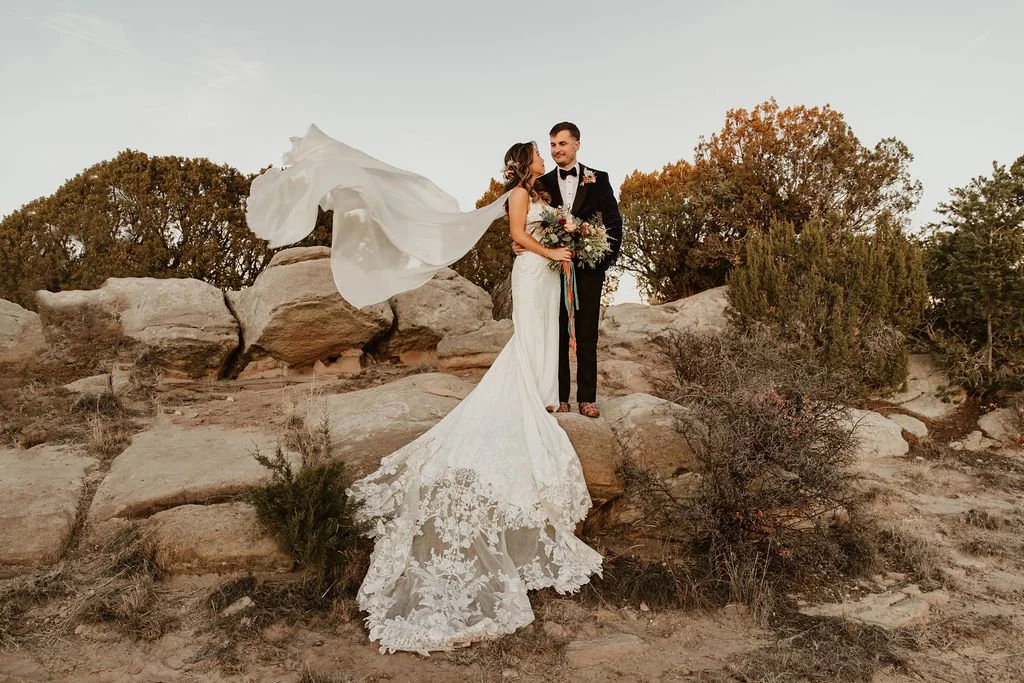
A New Mexico elopement guide should answer one question above all else: where to go, what it costs, and how to legally pull off a small, intimate wedding in the Land of Enchantment. The short answer is that New Mexico is one of the most elopement-friendly states in the country — no waiting period, affordable marriage licenses, and a landscape that ranges from red rock canyons to aspen-covered mountains, all without requiring a special permit for most public land ceremonies. Whether you're dreaming of a sunrise vow exchange at White Sands National Park or a quiet ceremony beneath the cottonwoods in Santa Fe, this guide walks through the legal steps, the best locations by season, real budget numbers, and how to choose a photographer who can handle the terrain as well as the moment.
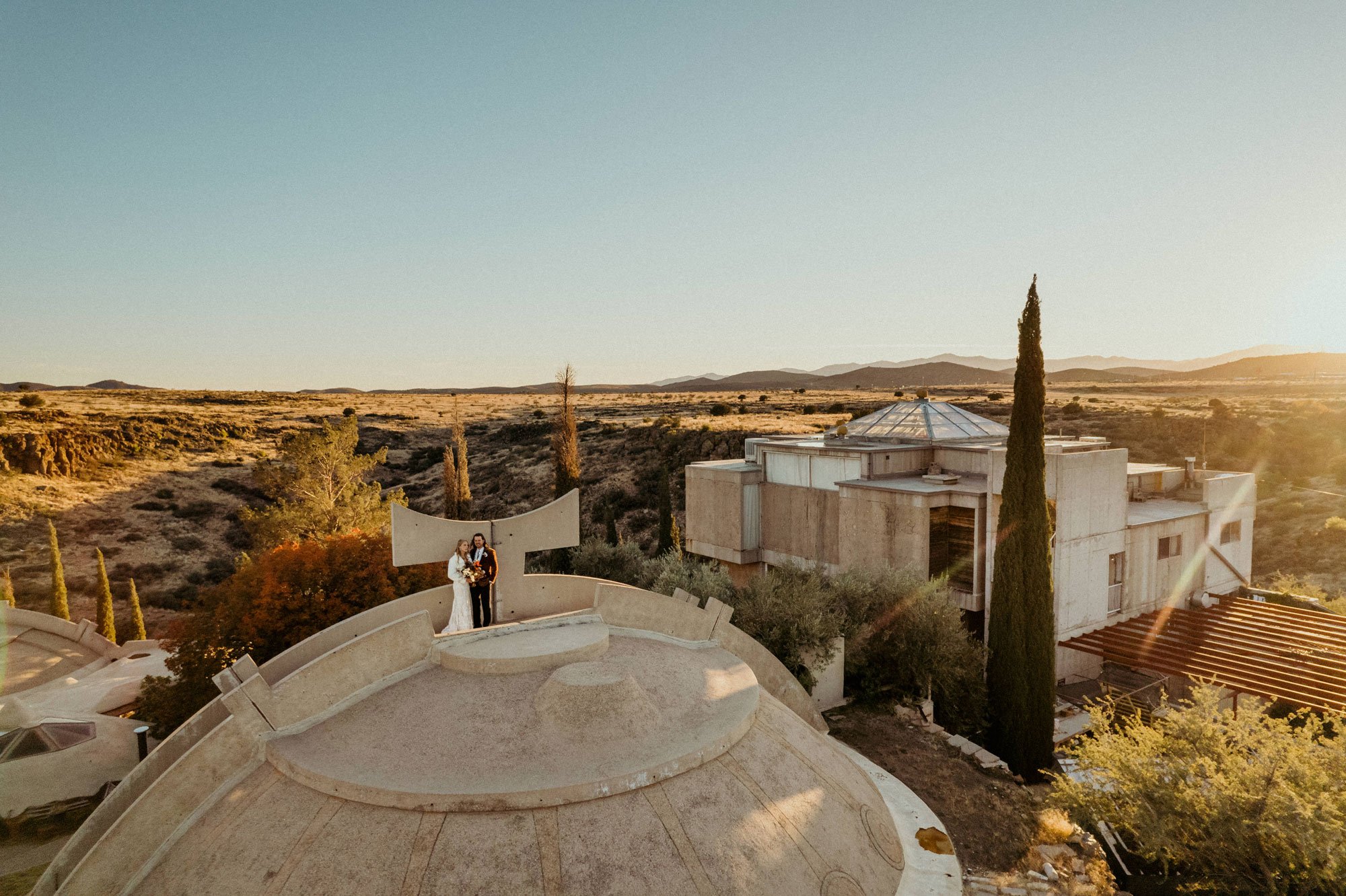
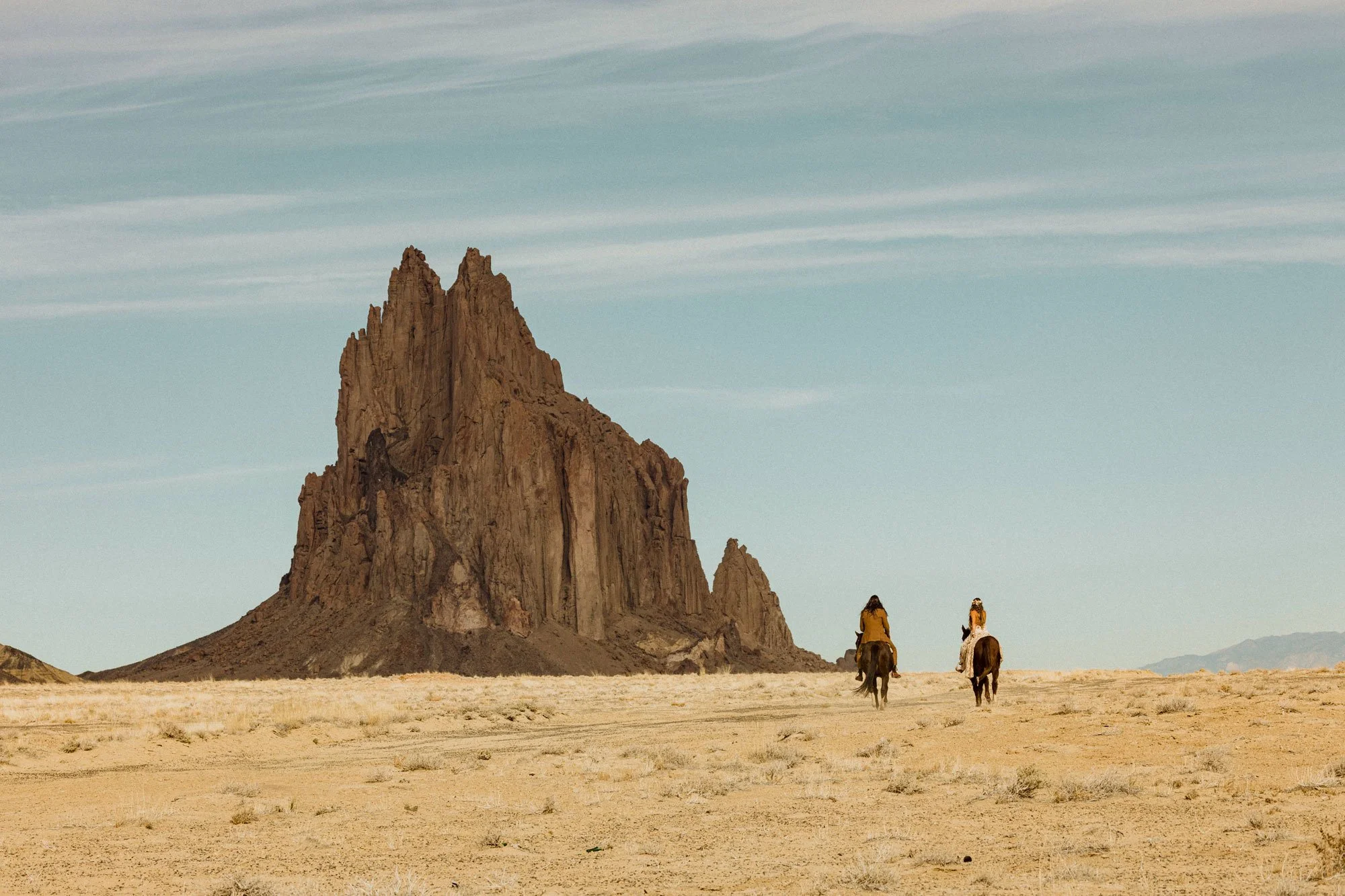
At Shutterfreek, we've photographed elopements across the Southwest for years, and New Mexico consistently surprises couples with how much variety it offers in a single state — desert, alpine forest, historic adobe architecture, and otherworldly geology, often within a two-hour drive of each other.
Why Couples Choose New Mexico for Elopements
New Mexico draws couples who want their wedding day to feel like an adventure rather than a performance. The state's nickname, "Land of Enchantment," isn't just marketing — it reflects genuinely dramatic terrain: gypsum dunes, volcanic rock fields, slot canyons, and high desert mesas that look like nowhere else in the U.S.
Beyond scenery, New Mexico is practical for elopements because:
Marriage licenses are issued same-day with no waiting period
Many state and BLM lands allow small ceremonies without a permit
The cost of living and vendor pricing is lower than neighboring Colorado or California
Year-round mild weather makes off-season elopements realistic
A strong mix of Indigenous, Spanish colonial, and Western history gives ceremonies a distinct cultural backdrop
Step 2: Choose Your Season
New Mexico's elevation changes dramatically across the state, which means the "best" season really depends on where you're eloping.
| Season | Best Regions | What to Expect | Avg. Daytime Temp |
|---|---|---|---|
| Spring (Mar–May) | White Sands, Albuquerque, Santa Fe | Wildflowers, mild winds, fewer crowds | 60–75°F |
| Summer (Jun–Aug) | Taos, Carson National Forest, Sandia Mountains | Lush green scenery, afternoon monsoon storms | 80–95°F |
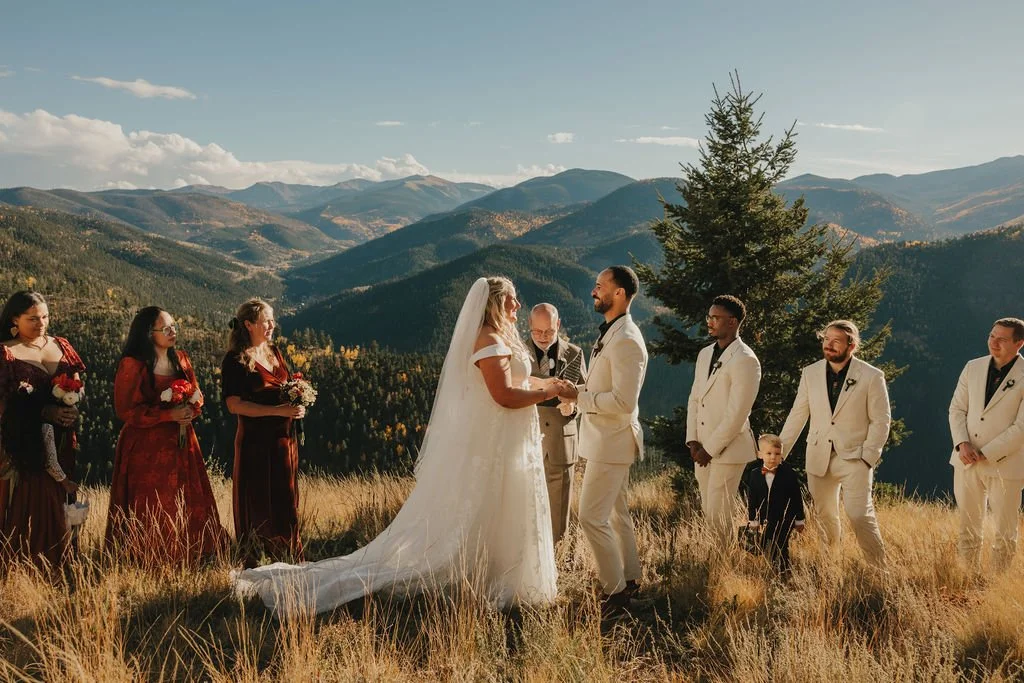
| Fall (Sep–Nov) | Santa Fe, Taos, Aspen Vista Trail | Golden aspens, crisp air, ideal photography light | 55–75°F |
| Winter (Dec–Feb) | White Sands, Santa Fe Plaza, Bandelier | Quiet atmosphere, dramatic skies, possible snow at elevation | 30–50°F |
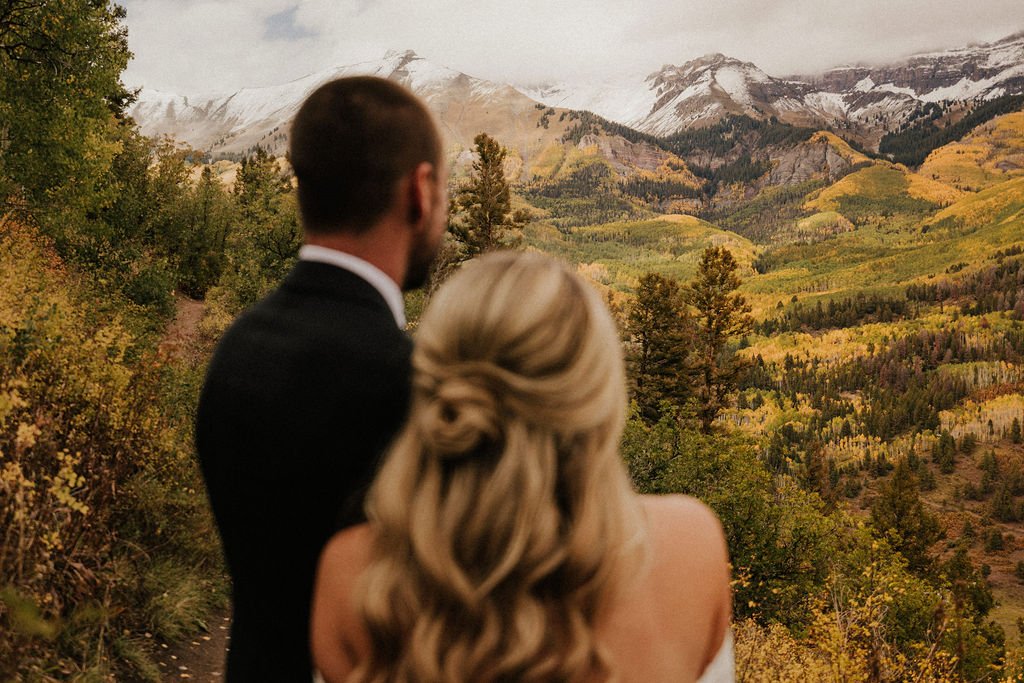
Fall is widely considered the most photogenic window in northern New Mexico thanks to the aspen color change, while spring and winter are best for desert locations like White Sands, where summer heat can be brutal by midday.
Step 3: Pick Your Elopement Location
Top New Mexico Elopement Locations
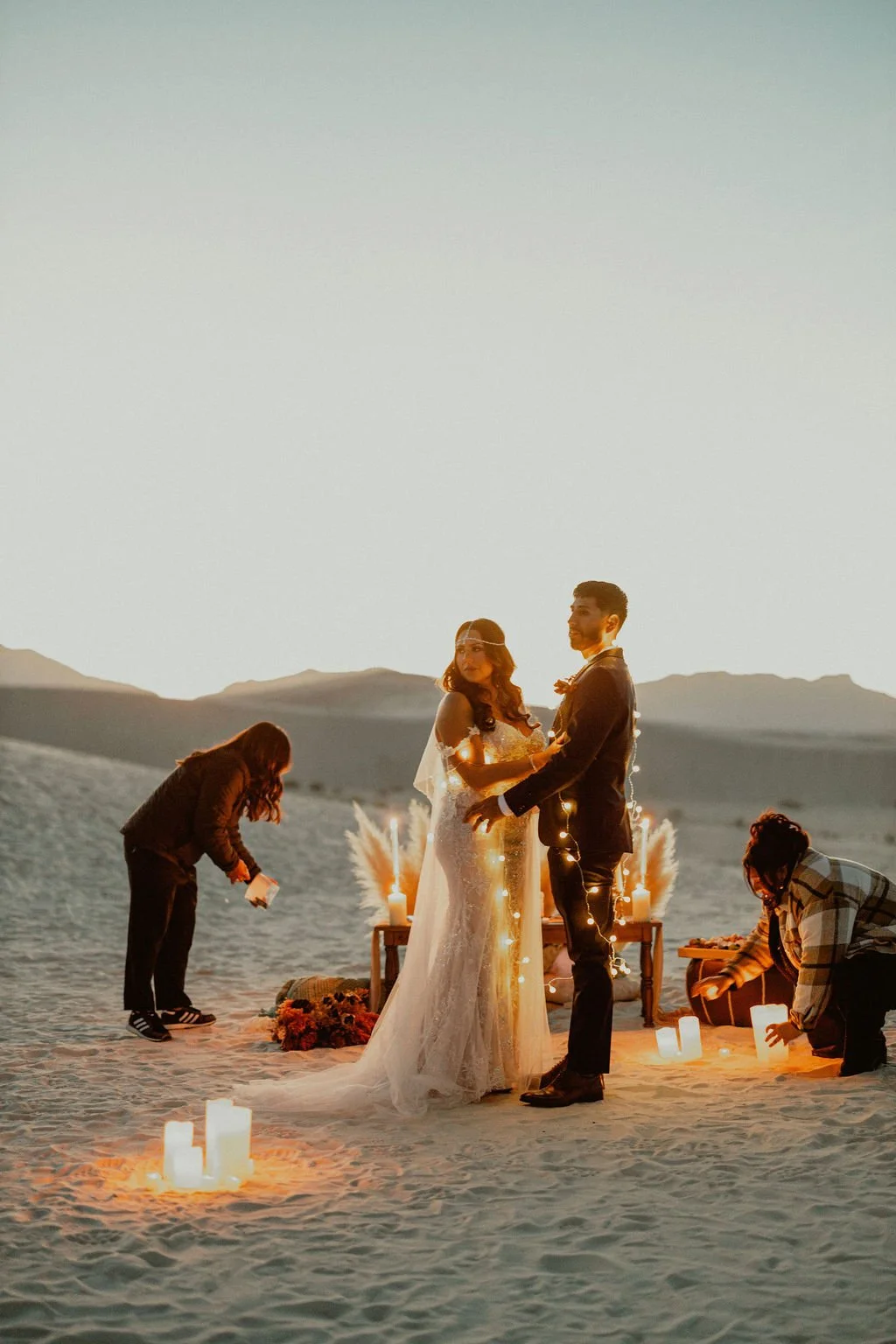
White Sands National Park The most iconic elopement backdrop in the state. Rolling white gypsum dunes create a surreal, almost lunar landscape. A permit is required for any group larger than a standard visitor party or for commercial photography — check current National Park Service guidelines before booking.
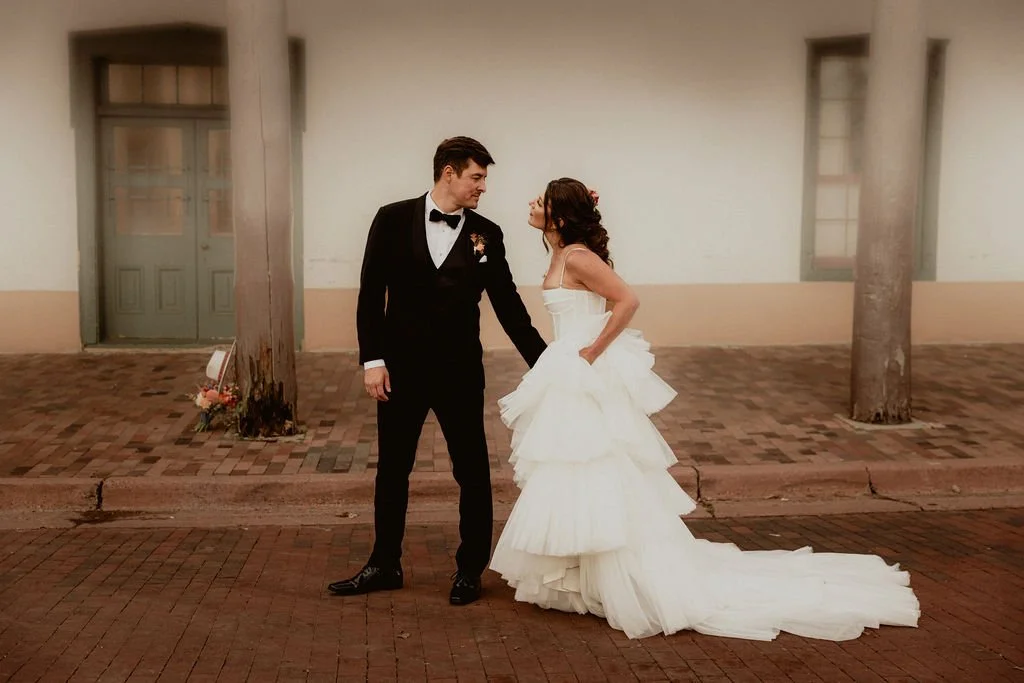
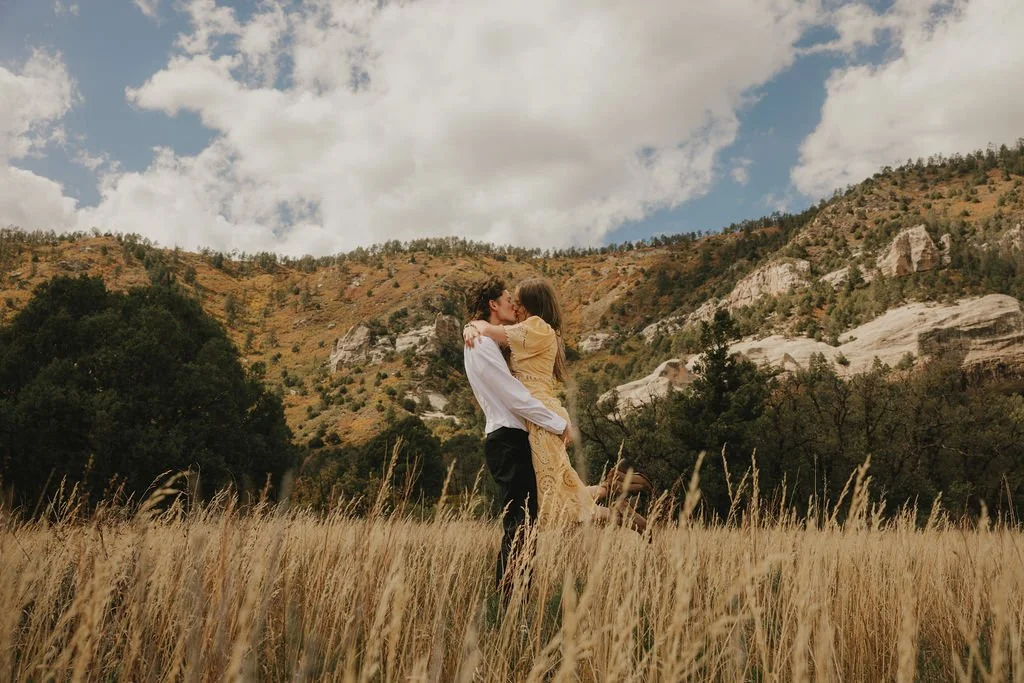
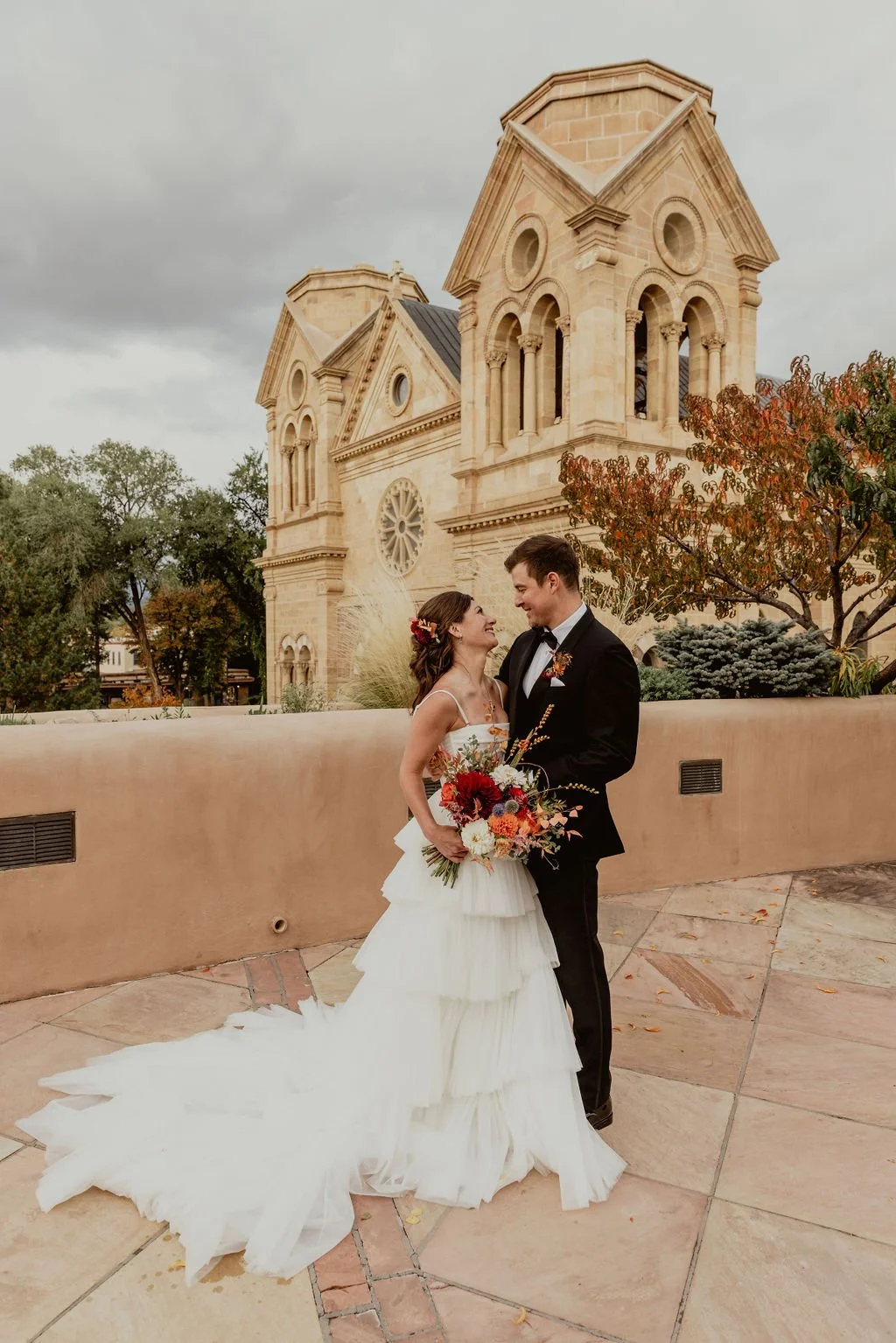
Santa Fe Adobe architecture, historic plazas, and nearby canyon trails make Santa Fe a favorite for couples who want a blend of culture and nature. The Santa Fe National Forest offers accessible trailheads for short hikes to scenic overlooks.
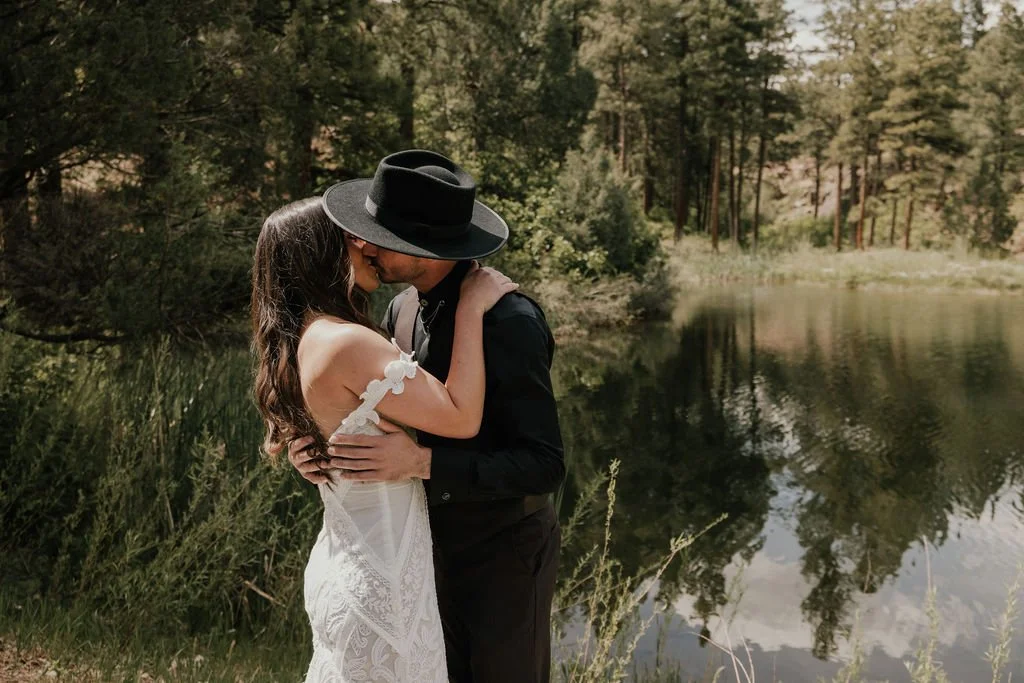
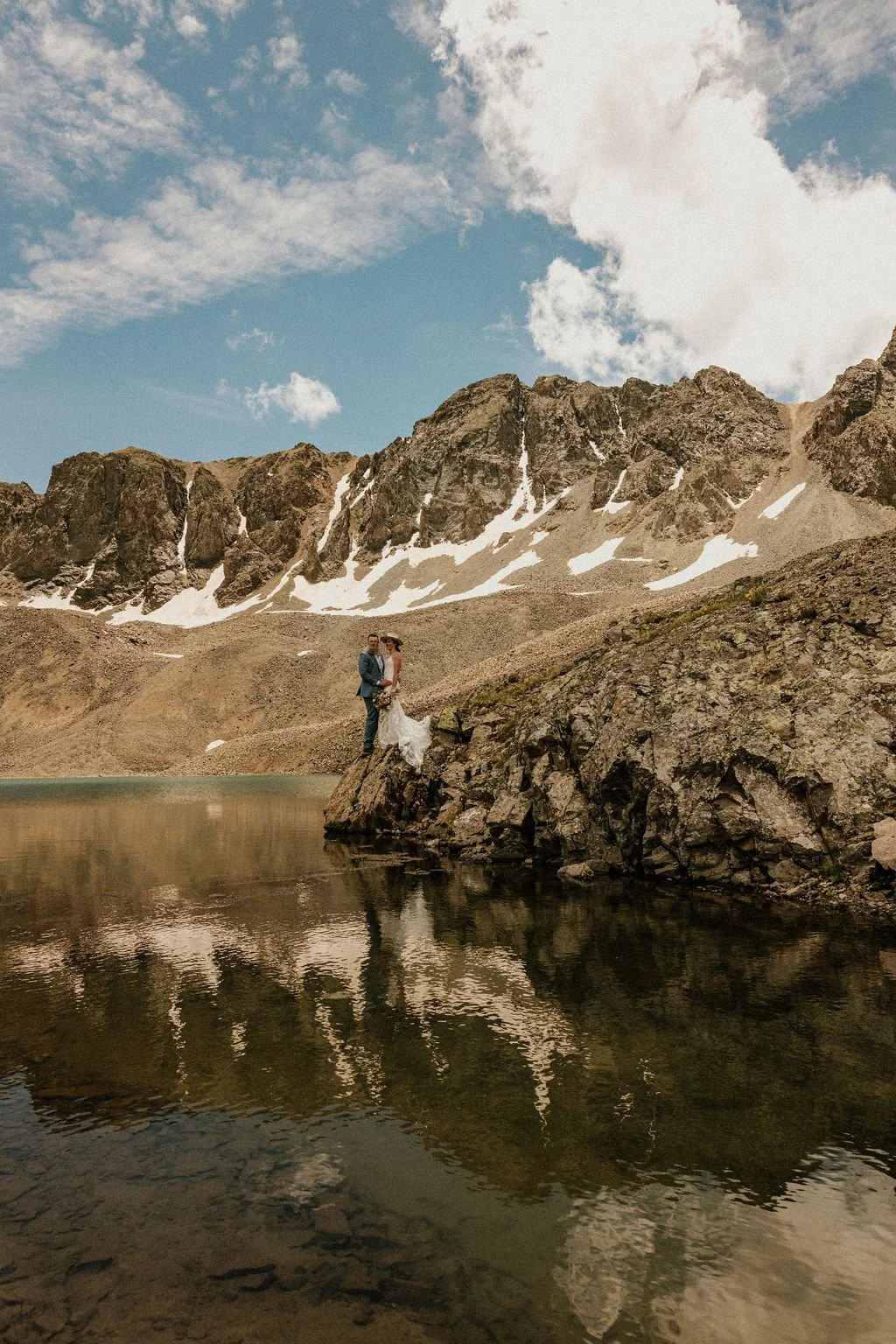
Taos & Carson National Forest For couples wanting mountains, alpine lakes, and aspen groves, Taos delivers. The Rio Grande Gorge Bridge area also offers dramatic canyon views for ceremony backdrops.
Bandelier National Monument Ancient cliff dwellings and canyon trails near Los Alamos offer a more historic, earthy setting. Permits are required for ceremonies here, and group size limits apply.
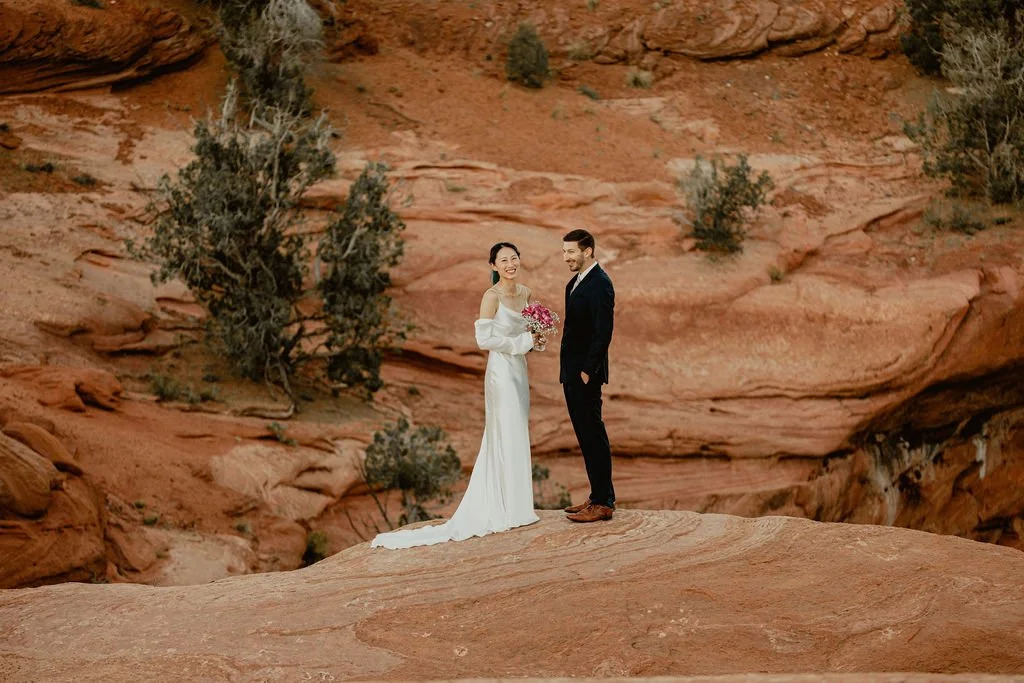
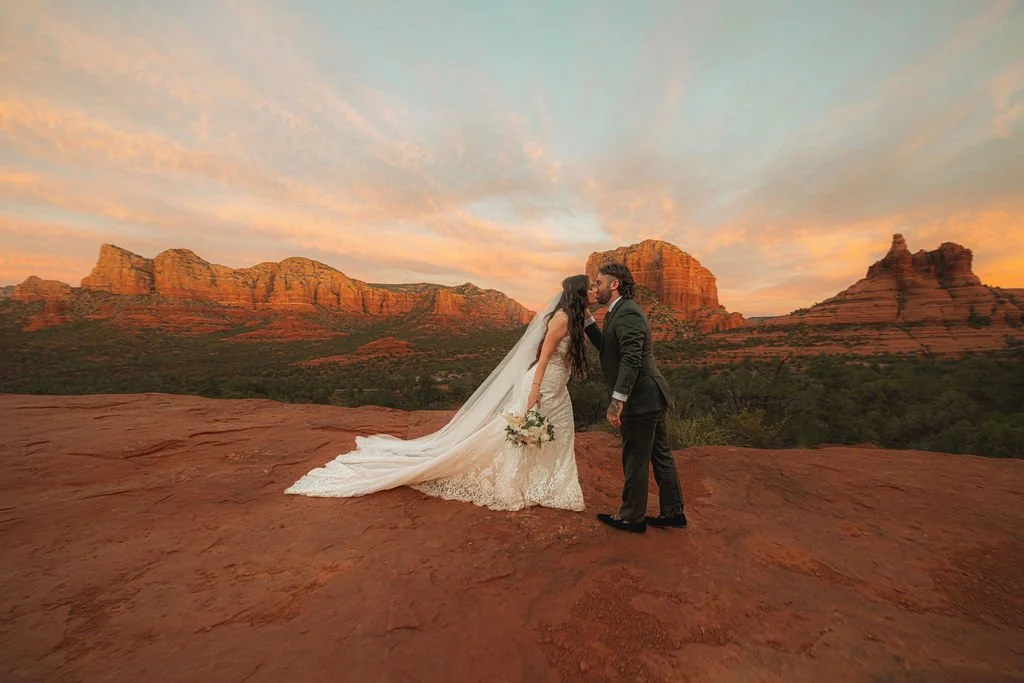
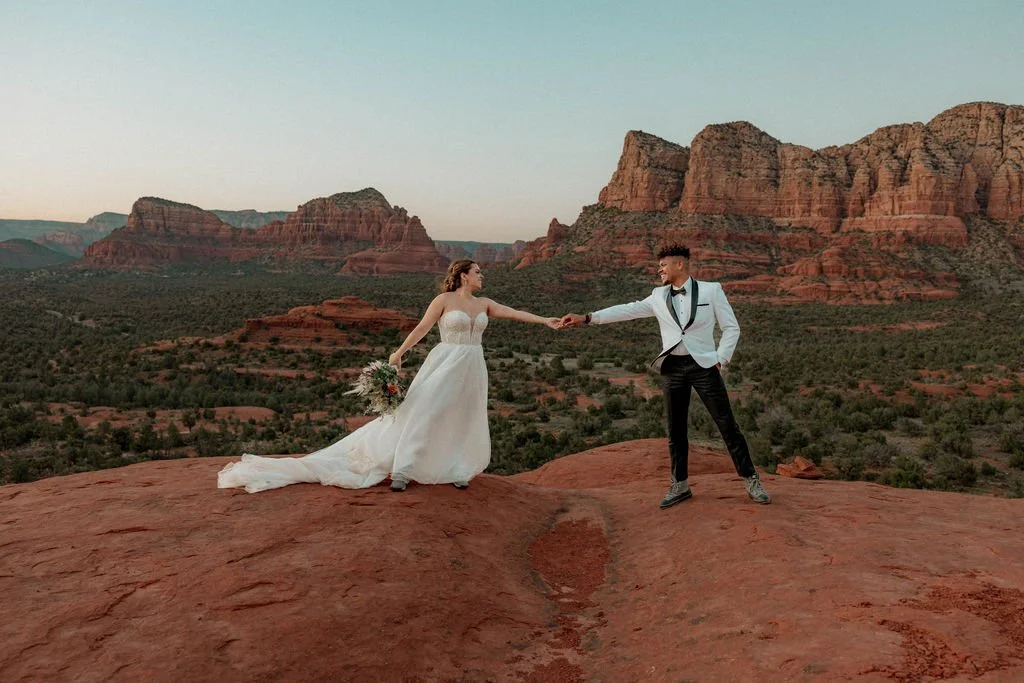
Ghost Ranch (Abiquiú) Made famous by Georgia O'Keeffe's paintings, Ghost Ranch's red rock mesas are a bucket-list backdrop for couples wanting that classic Southwest color palette.
If you're comparing New Mexico against other Southwest elopement states, our Arizona elopement guide and Colorado elopement guide break down similar location and permit logistics for those states.
Step 4: Budget for Your New Mexico Elopement
One of the biggest draws of eloping here is cost. A New Mexico elopement typically runs a fraction of a traditional wedding.
| Expense Category | Average Cost Range | Notes |
|---|---|---|
| Marriage License | $25–$35 | Same-day issue, no waiting period |
| Photographer (4–6 hrs) | $1,800–$3,500 | Varies by location and travel |
| Officiant | $150–$400 | Some couples use a friend or family member |
| Florals/Bouquet | $100–$350 | Local florists in Santa Fe and Albuquerque offer desert-style arrangements |
| Permit (if required) | $0–$300 | Depends on park/land managing agency |
| Attire | $200–$2,000+ | Wide range depending on designer vs. off-the-rack |
| Lodging (1–2 nights) | $150–$400/night | Higher in Santa Fe and Taos during peak season |
Total average range: $3,000–$7,000, compared to the national average wedding cost, which regularly exceeds $30,000. This is one of the strongest financial arguments for couples choosing to elope rather than host a full event.
Step 5: Hire a Photographer Who Knows the Terrain
Not every wedding photographer is equipped for elopement work in remote or high-elevation terrain. New Mexico locations like White Sands, Bandelier, and the Sandia Mountains require physical stamina, knowledge of golden-hour timing at altitude, and familiarity with permit logistics.
When vetting a New Mexico elopement photographer, ask about:
Experience hiking with gear to remote locations
Familiarity with National Park Service and BLM permit requirements
Backup plans for sudden weather (monsoon season especially)
Portfolio examples specifically from New Mexico, not just generic desert shoots
Whether they offer planning support, not just photography
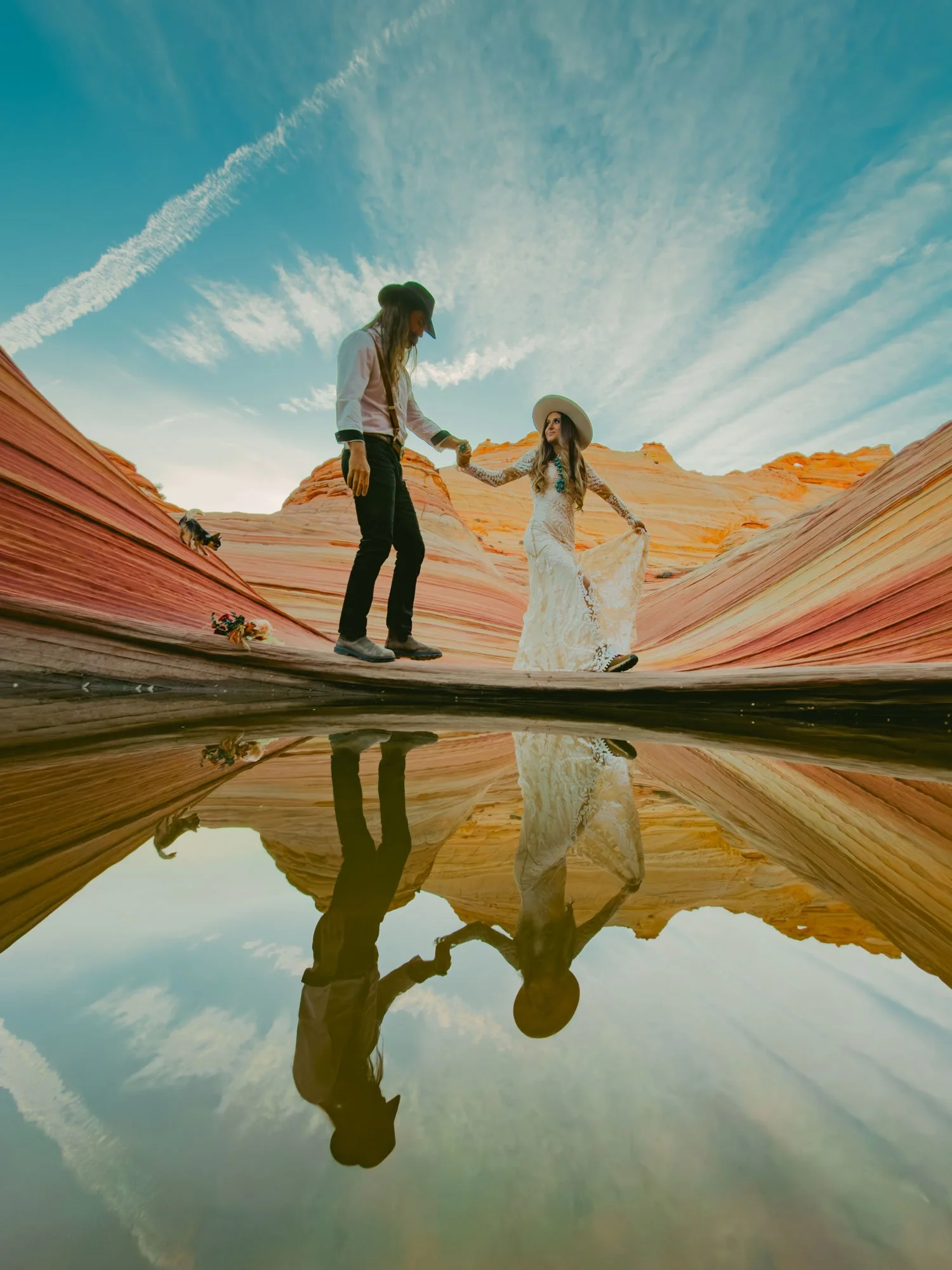
Shutterfreek's team has shot adventure elopements throughout the Southwest, including extensive work across Utah's red rock landscapes, which gives our photographers a strong baseline for desert lighting and terrain that translates directly to New Mexico shoots.
Step 6: Plan Your Timeline
A typical New Mexico elopement day runs in a tight, efficient window rather than a full reception schedule:
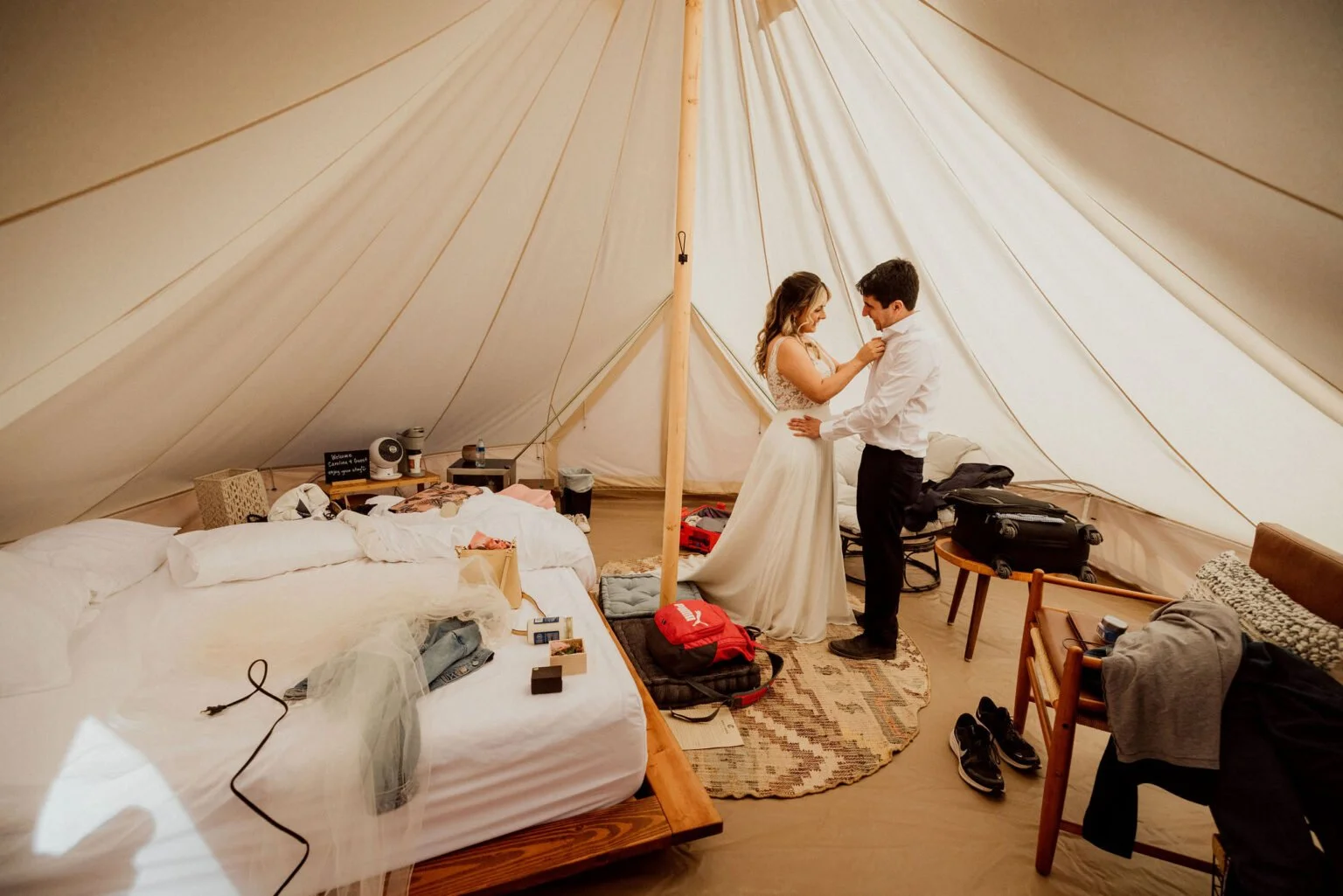
Morning prep — hair, makeup, getting dressed at your lodging
Travel to location — factor in drive time and any hiking distance
First look or private vows — usually 30–45 minutes
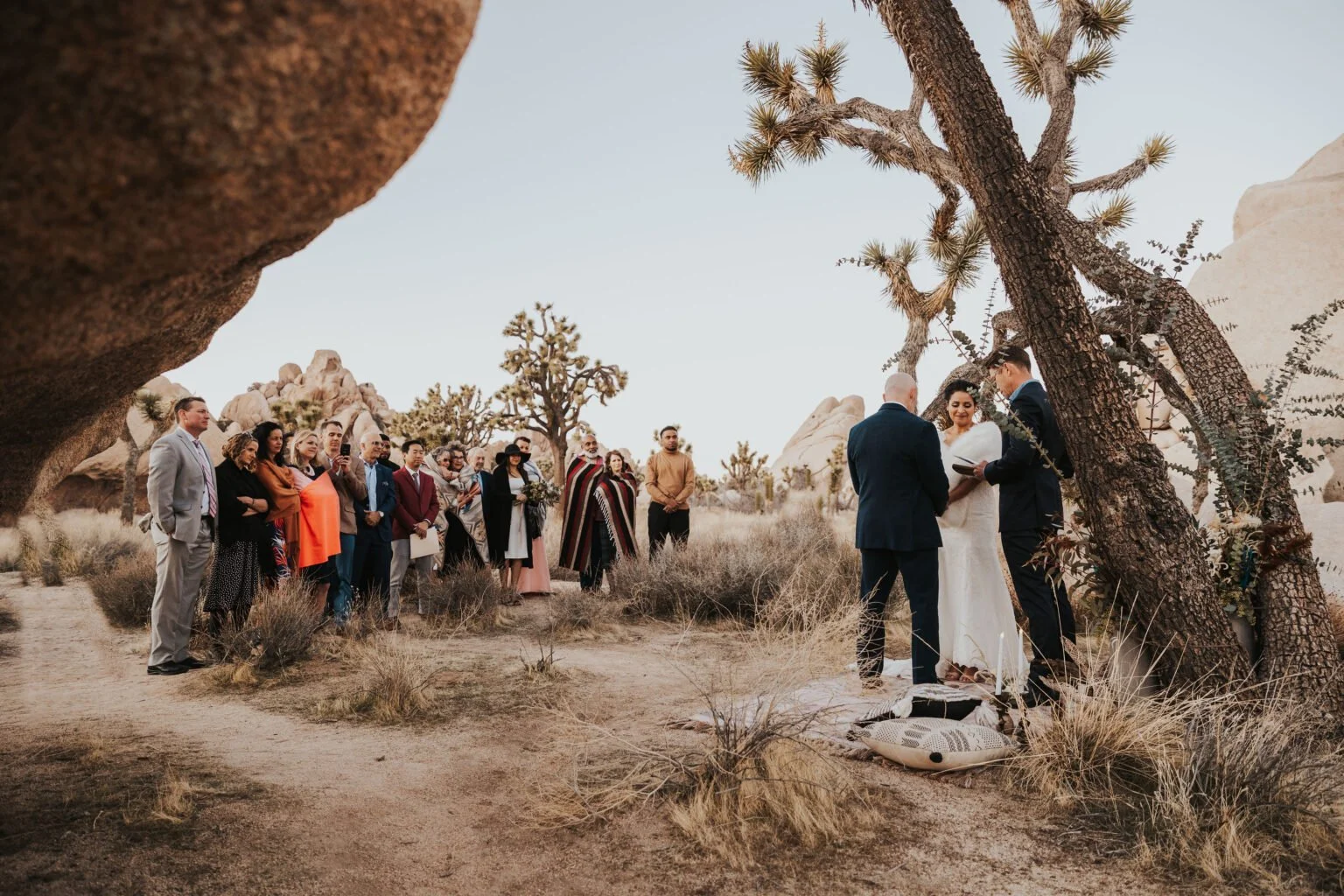
Ceremony — 15–30 minutes, officiant-led or self-written vows
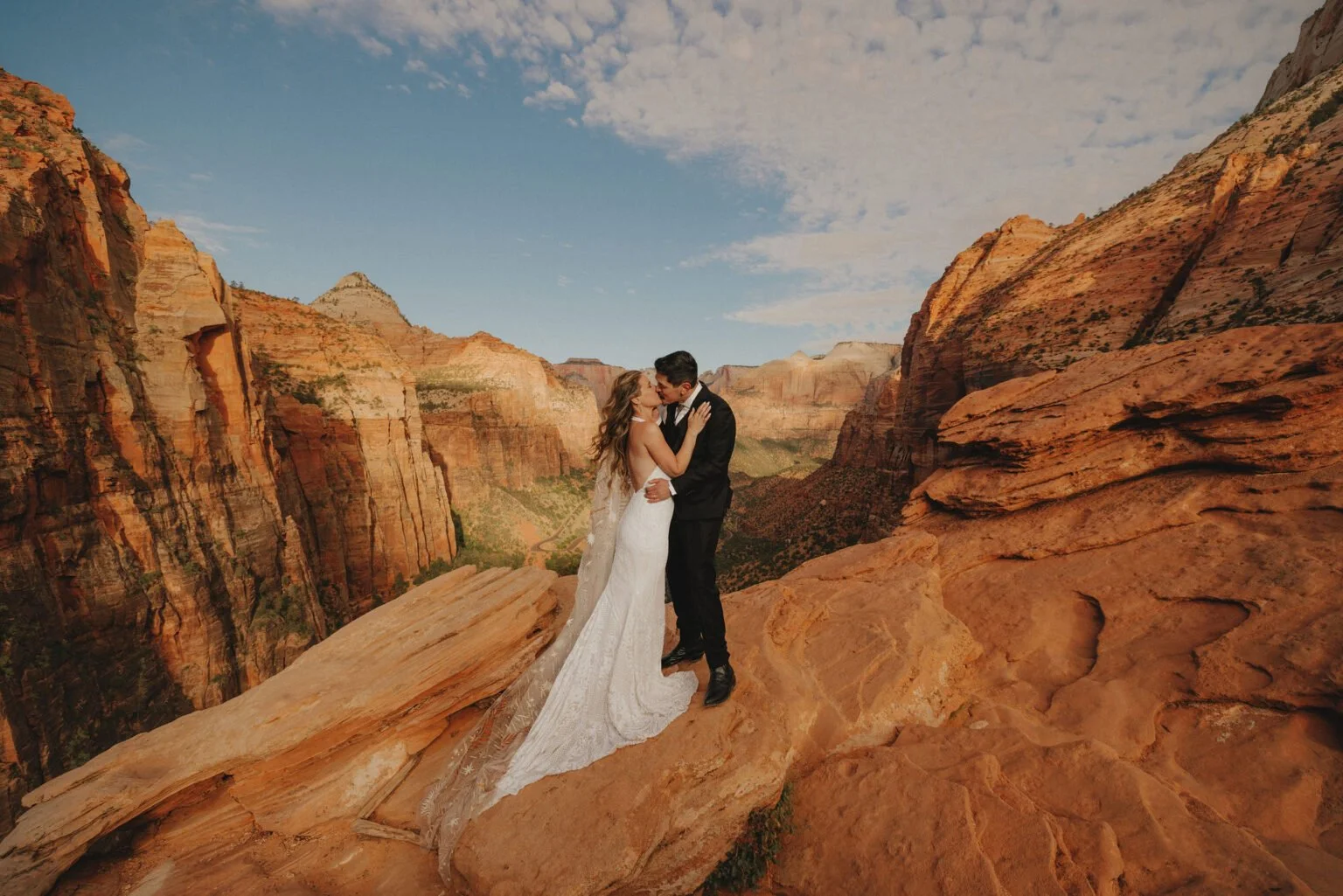
Golden hour portraits — 1–2 hours, the most photographed window of the day
Sunset close or dinner celebration — many couples end with a small dinner in Santa Fe or Taos
Most full elopement coverage runs 4–8 hours depending on how many locations are involved.
What to Pack for a New Mexico Elopement
New Mexico's elevation swings are extreme — Santa Fe sits at roughly 7,000 feet while White Sands is closer to 4,000 — so packing for one region doesn't always cover the other. A few essentials couples often overlook:
Layered clothing — mornings and evenings can be 20–30 degrees cooler than midday, even in summer
Sturdy footwear — heels sink into gypsum sand and loose desert soil; many couples bring a second pair of shoes for hiking sections
Sun protection — high elevation means stronger UV exposure even on cloudy days
Water — dehydration at altitude happens faster than most couples expect
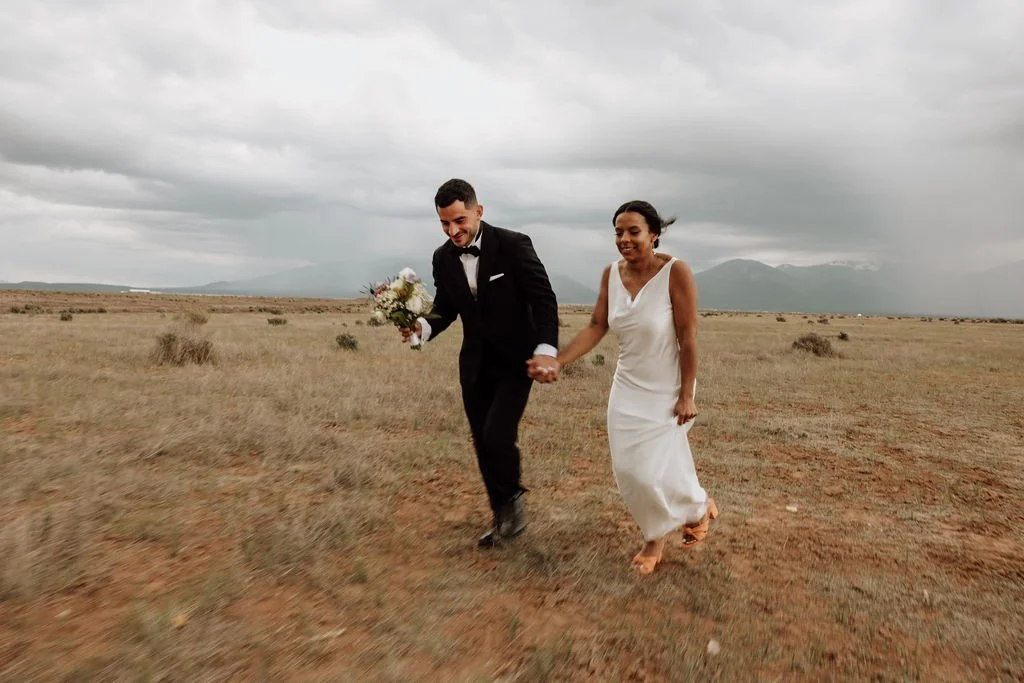
A backup outfit plan — wind at White Sands can be strong enough to affect veils, loose fabric, and hairstyles
Photographers familiar with the region, like the Shutterfreek team behind our adventure elopement work, can usually advise on timing and wardrobe choices specific to the location you've chosen, since what works for a shaded forest ceremony in Taos won't necessarily work for an exposed dune field at White Sands.
Choosing Between New Mexico's Regions
Couples often narrow their decision down to one of three broad regions, and each offers a meaningfully different elopement experience.
Northern New Mexico (Santa Fe, Taos) suits couples who want mountains, forest, and historic adobe charm in the same trip. It's the most photographed region for fall foliage and offers the widest range of lodging and dining options for a celebratory dinner afterward.
Southern New Mexico (White Sands, Las Cruces) is best for couples chasing a single, dramatic, otherworldly backdrop. It's a more minimalist elopement style — fewer side activities, but unmatched visual impact.
Central New Mexico (Albuquerque, Sandia Mountains) works well for couples who want convenience, with a major airport nearby and access to both desert and mountain terrain within a 30-minute drive of the city.
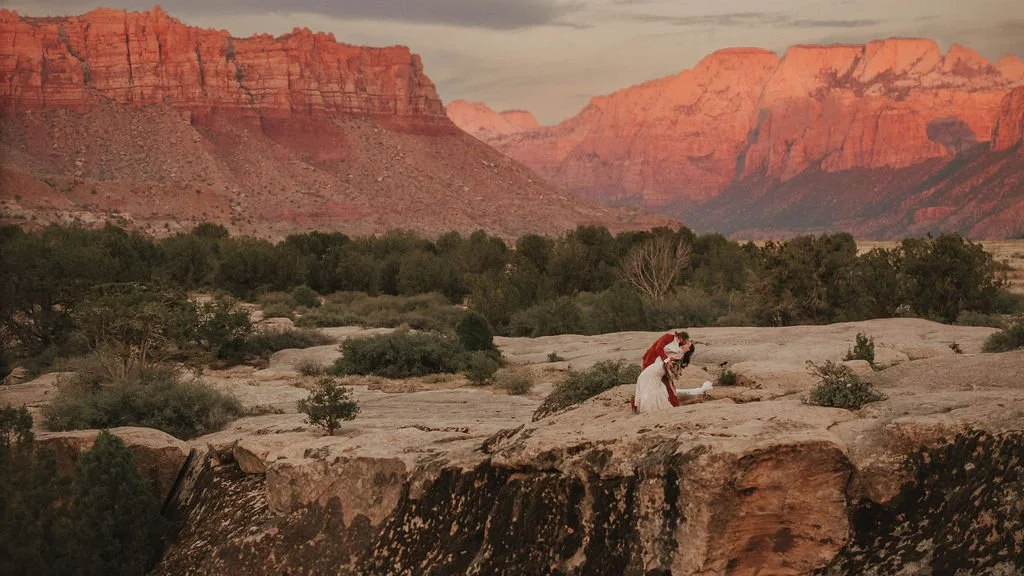
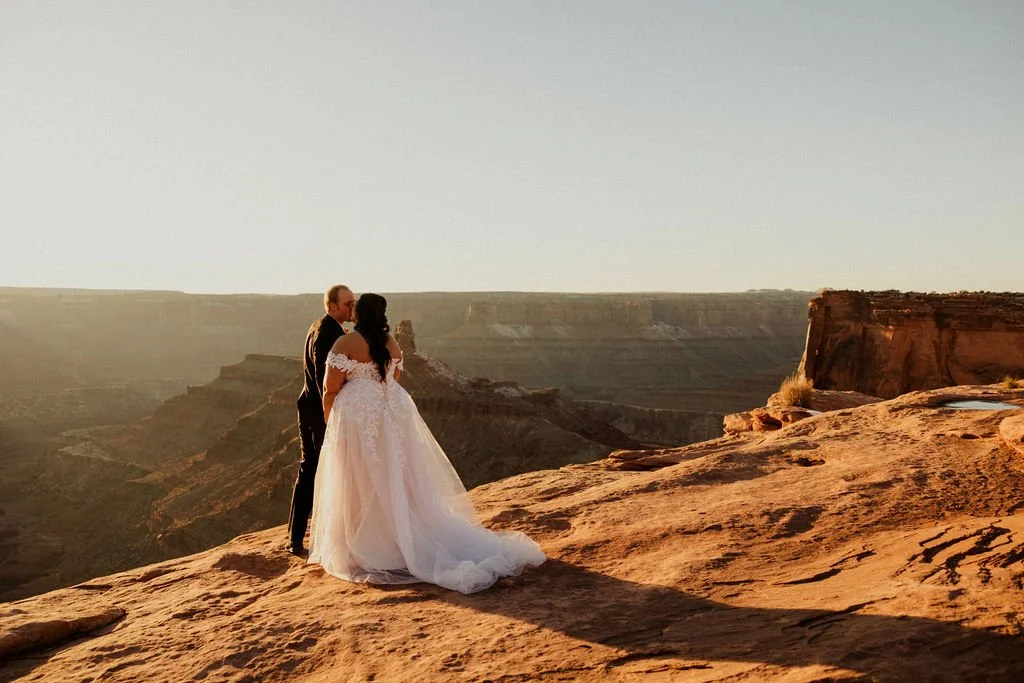
For couples still comparing states rather than regions within New Mexico, it's worth noting how the terrain stacks up against neighboring options. Utah leans heavily into red rock arches and slot canyons, Arizona offers saguaro desert and canyon country, and Colorado is almost entirely alpine. New Mexico is somewhat unique in offering desert, mountain, and historic adobe settings all within the same state — which is part of why it continues to gain popularity among elopement couples comparing options across the Southwest.
Permits and Legal Considerations to Double-Check
Permit rules in New Mexico change periodically, so couples should always verify directly with the managing agency before finalizing plans:
National Parks (White Sands, Carlsbad Caverns) — special use permits often required for ceremonies and always for commercial photography
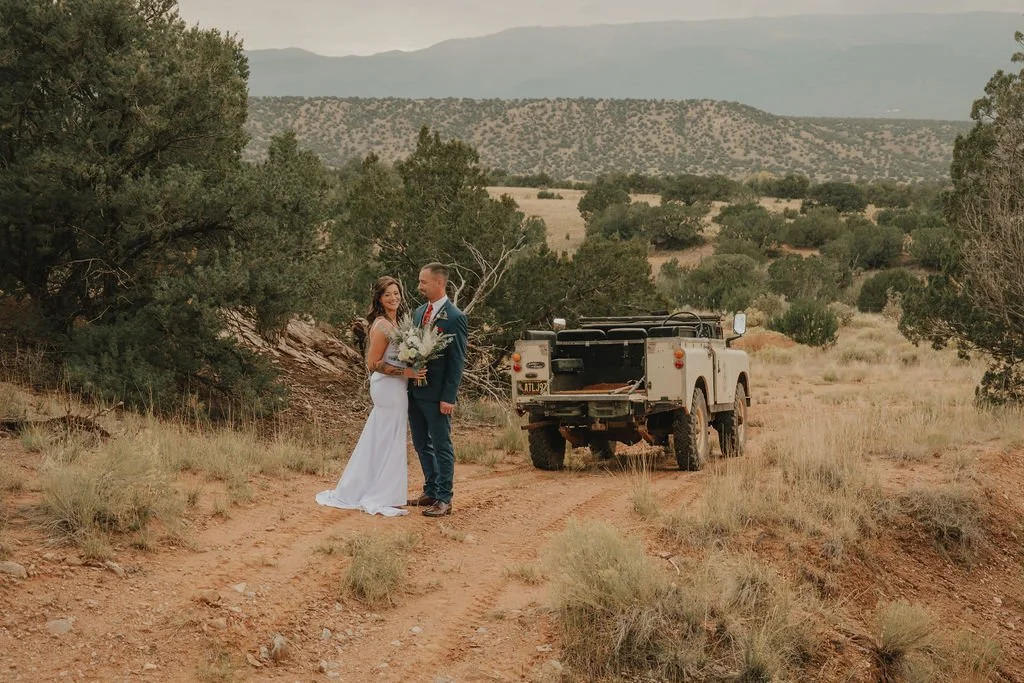
National Forests (Santa Fe, Carson, Cibola) — generally permit-free for small groups under a set size, but check current forest-specific rules
National Monuments (Bandelier, El Malpais) — permits typically required regardless of group size
State Parks — day-use fees apply; ceremony permits vary by park
Private land — owner permission required; many ranches near Santa Fe and Taos rent out for elopements
Final Thoughts
New Mexico rewards couples who want a wedding day shaped by landscape rather than logistics. Between the simplicity of its marriage license process, the affordability compared to a traditional wedding, and the sheer range of terrain available within a short drive, it's easy to see why elopements here continue to grow in popularity. If you're ready to start planning, explore Shutterfreek's New Mexico elopement photography services, or compare neighboring destinations like our Colorado, Arizona, and Utah elopement guides to find the backdrop that fits your story best.
Frequently Asked Questions
-
It depends on location. National forests generally allow small, permit-free ceremonies, while national parks and monuments like White Sands and Bandelier typically require a special use permit, especially if a professional photographer is involved.
-
Most couples spend between $3,000 and $7,000 total, covering the marriage license, photography, officiant, attire, and lodging — significantly less than the national average wedding cost.
-
No. New Mexico has no waiting period, so couples can obtain a license and marry on the same day, as long as both parties appear in person with valid ID at a County Clerk's office.
-
Fall (September–November) is the most popular for its golden aspen colors and mild temperatures, while spring and winter work best for desert locations like White Sands, where summer heat can be extreme.
-
White Sands National Park is the most photographed elopement location in the state, followed closely by Santa Fe's historic district and the aspen forests around Taos.
Keep reading