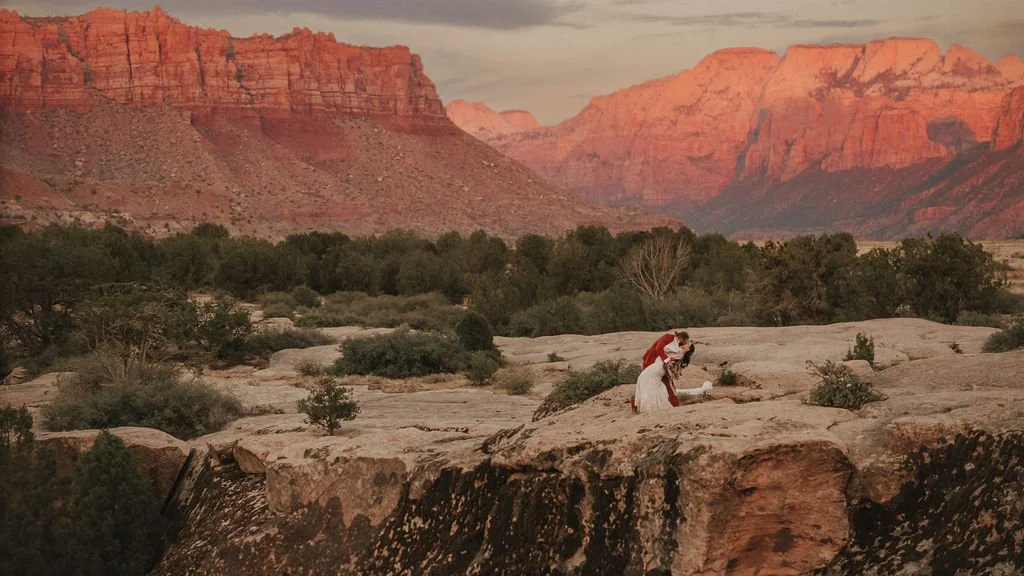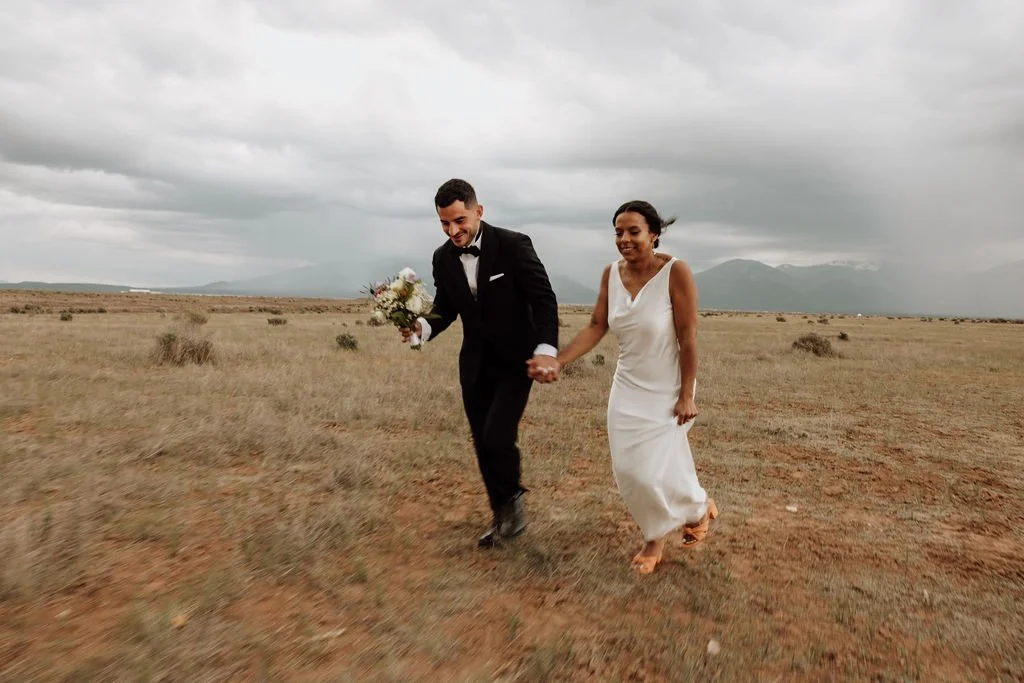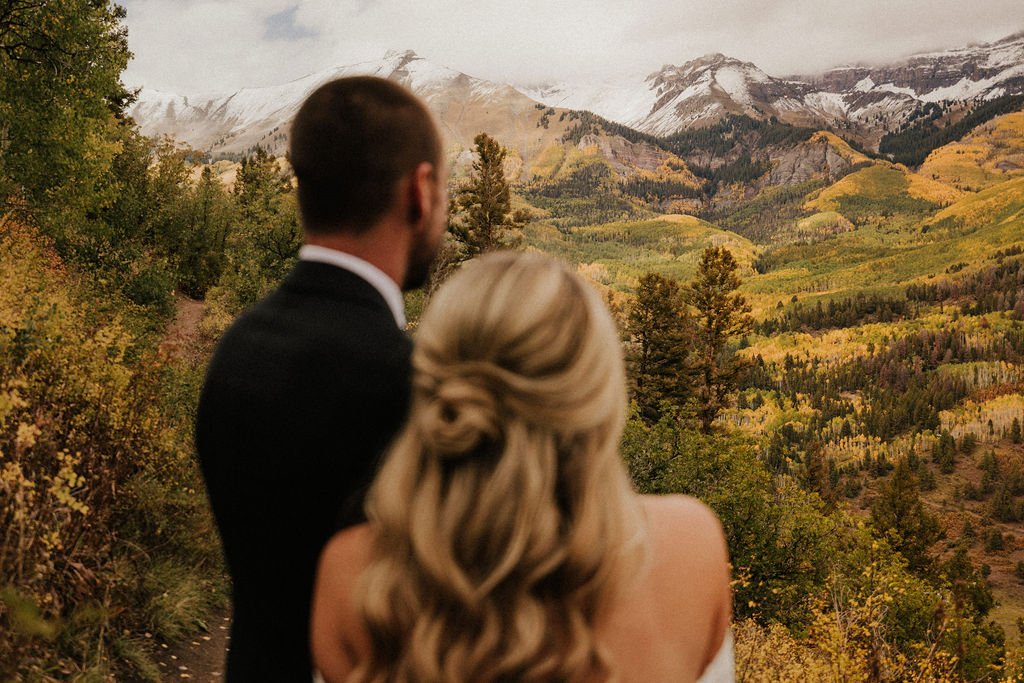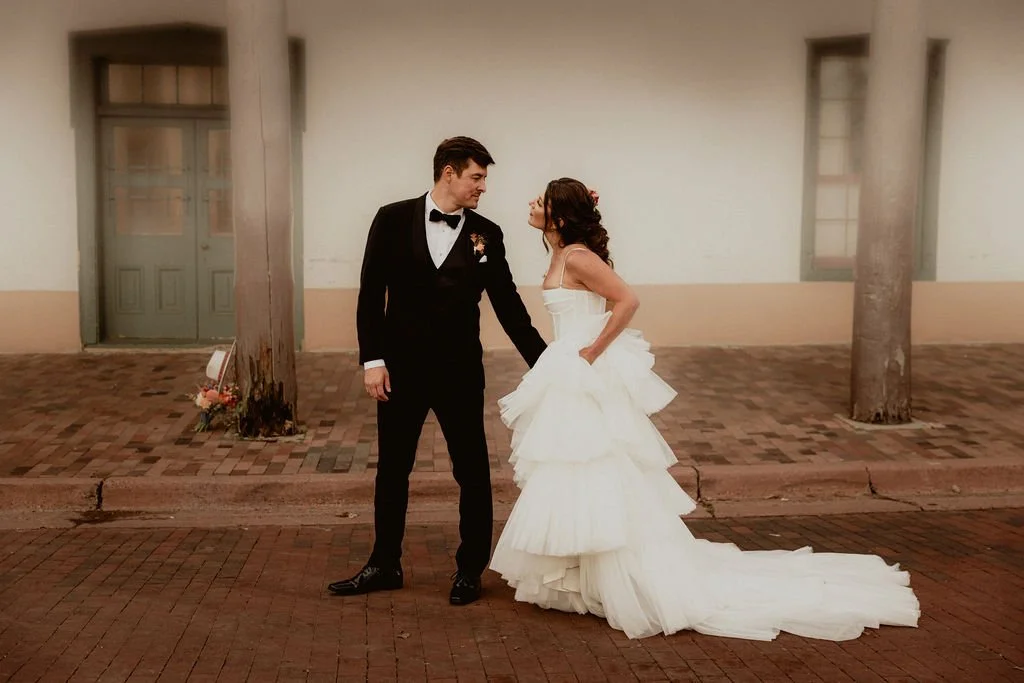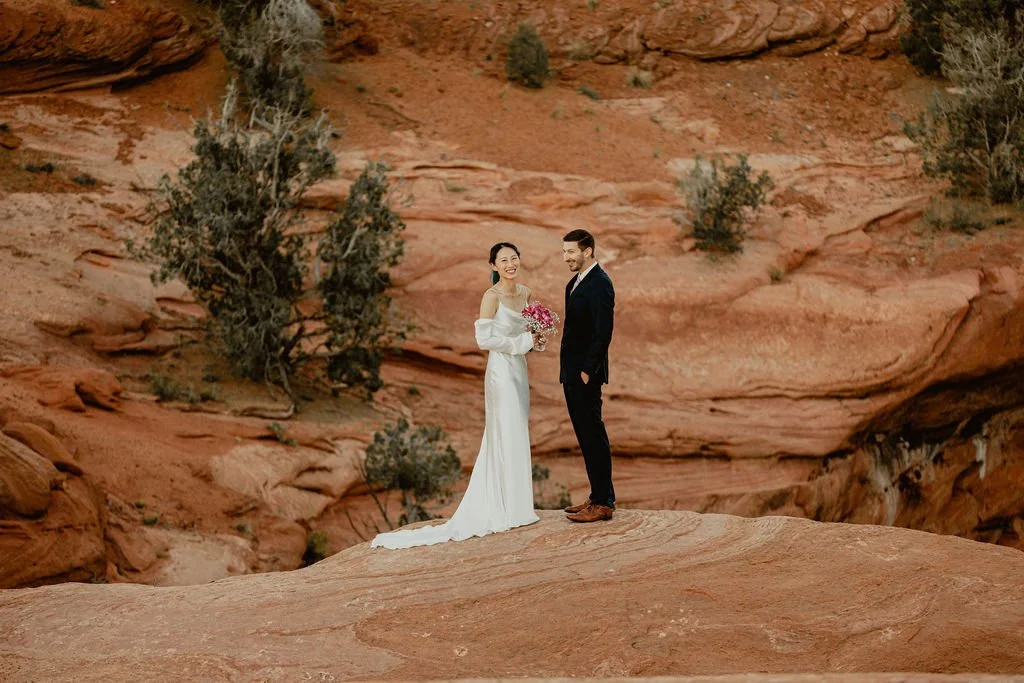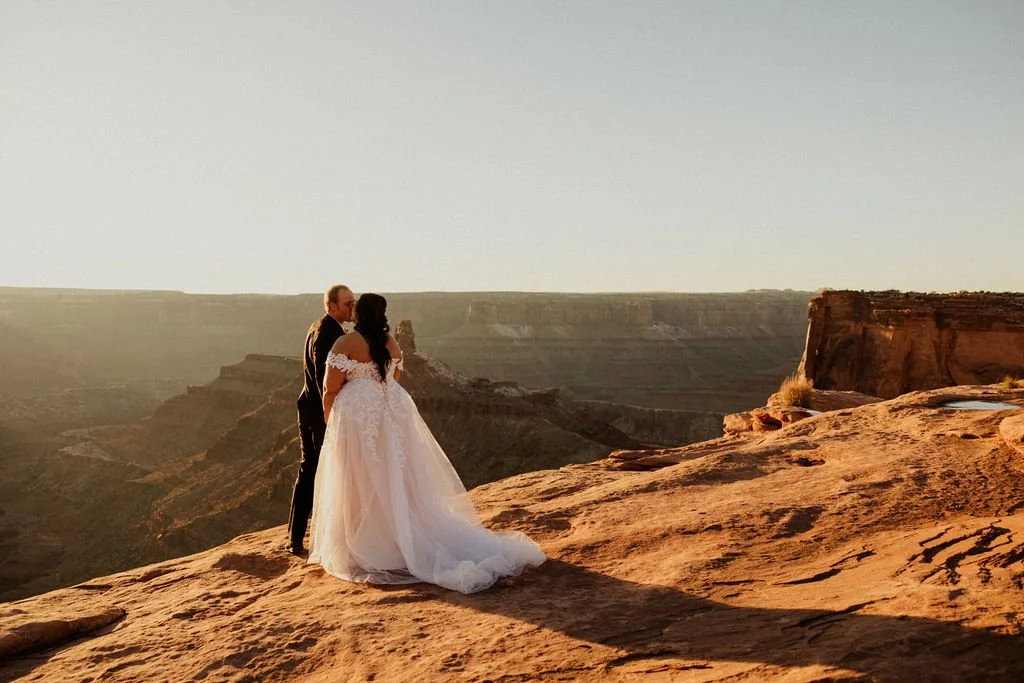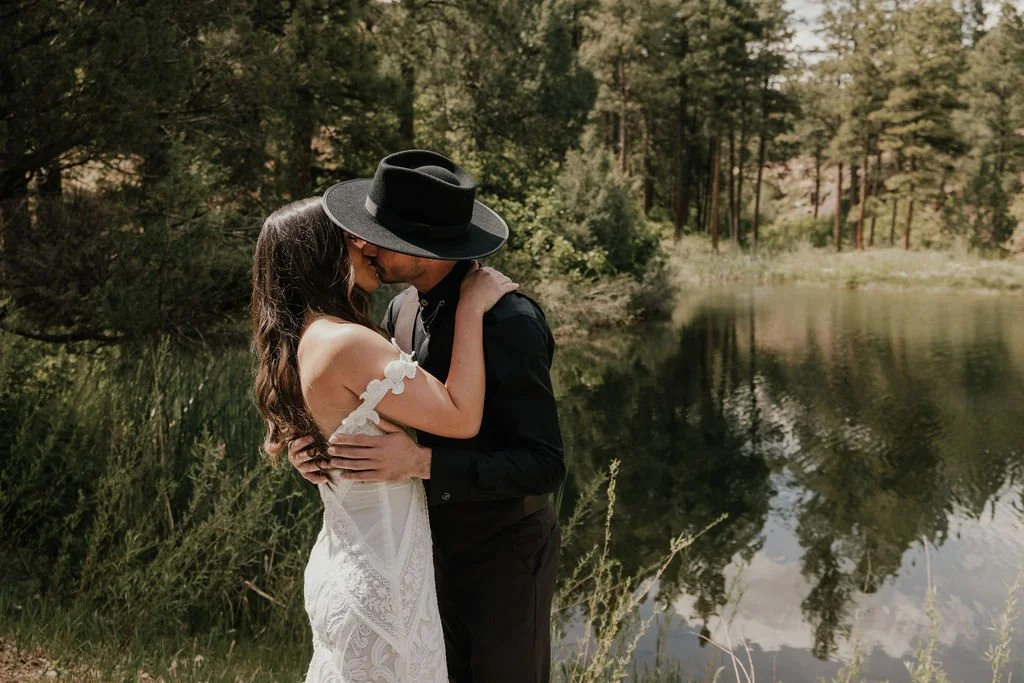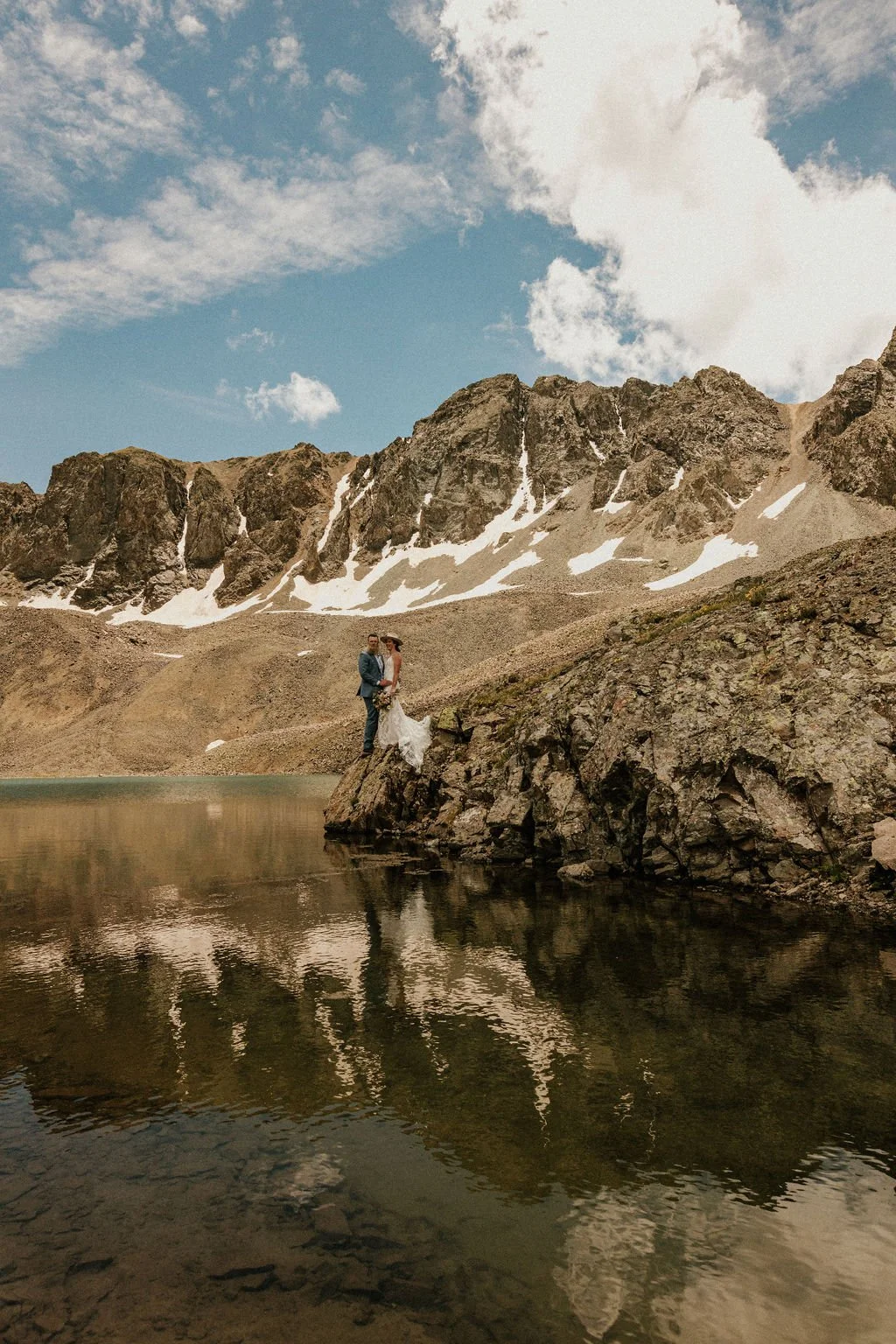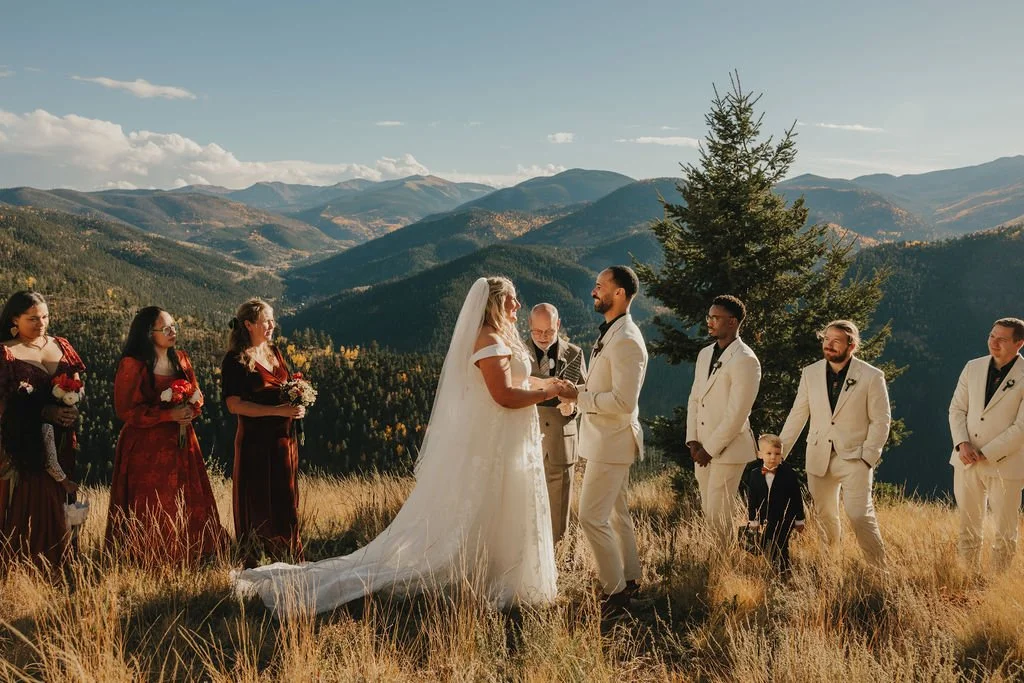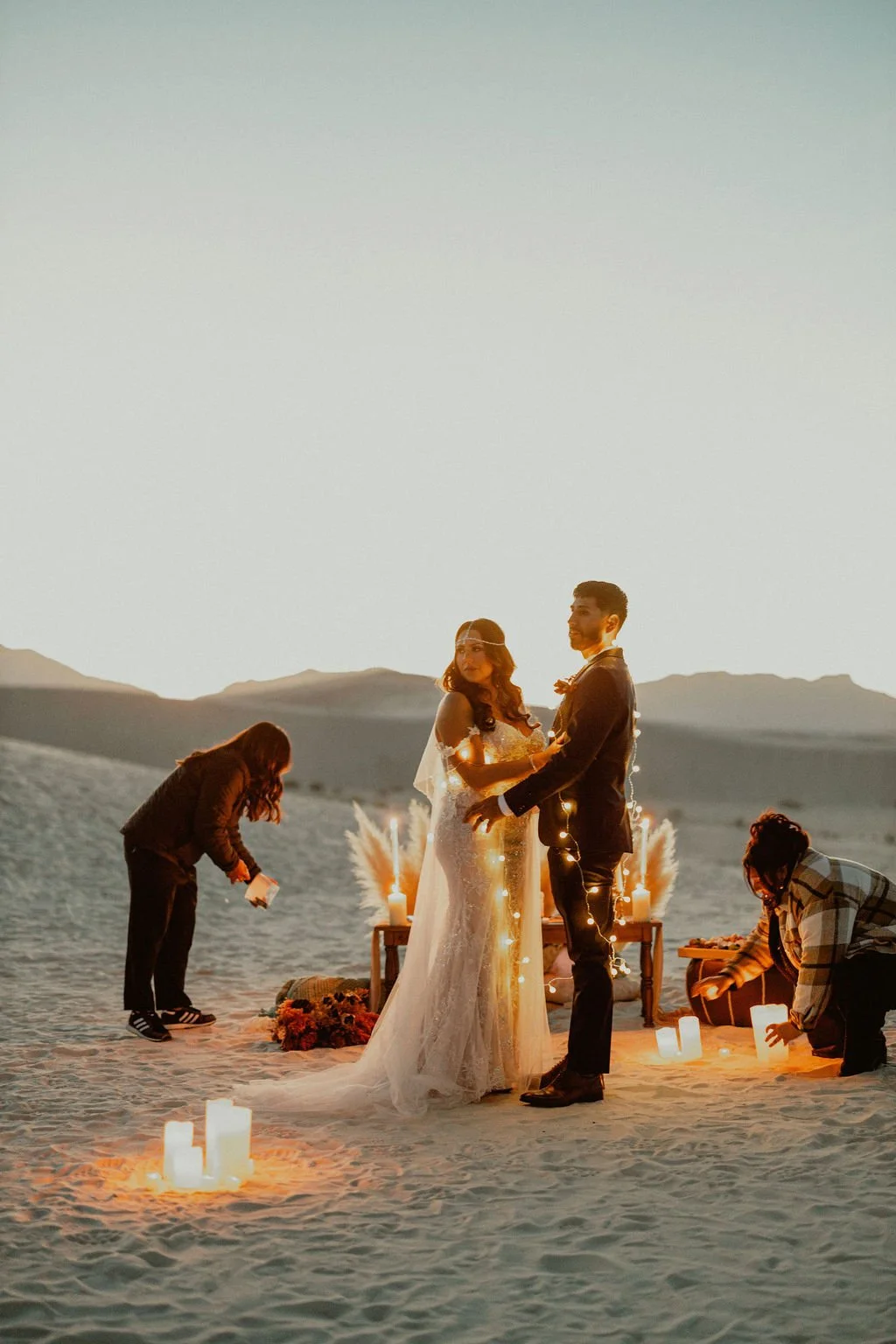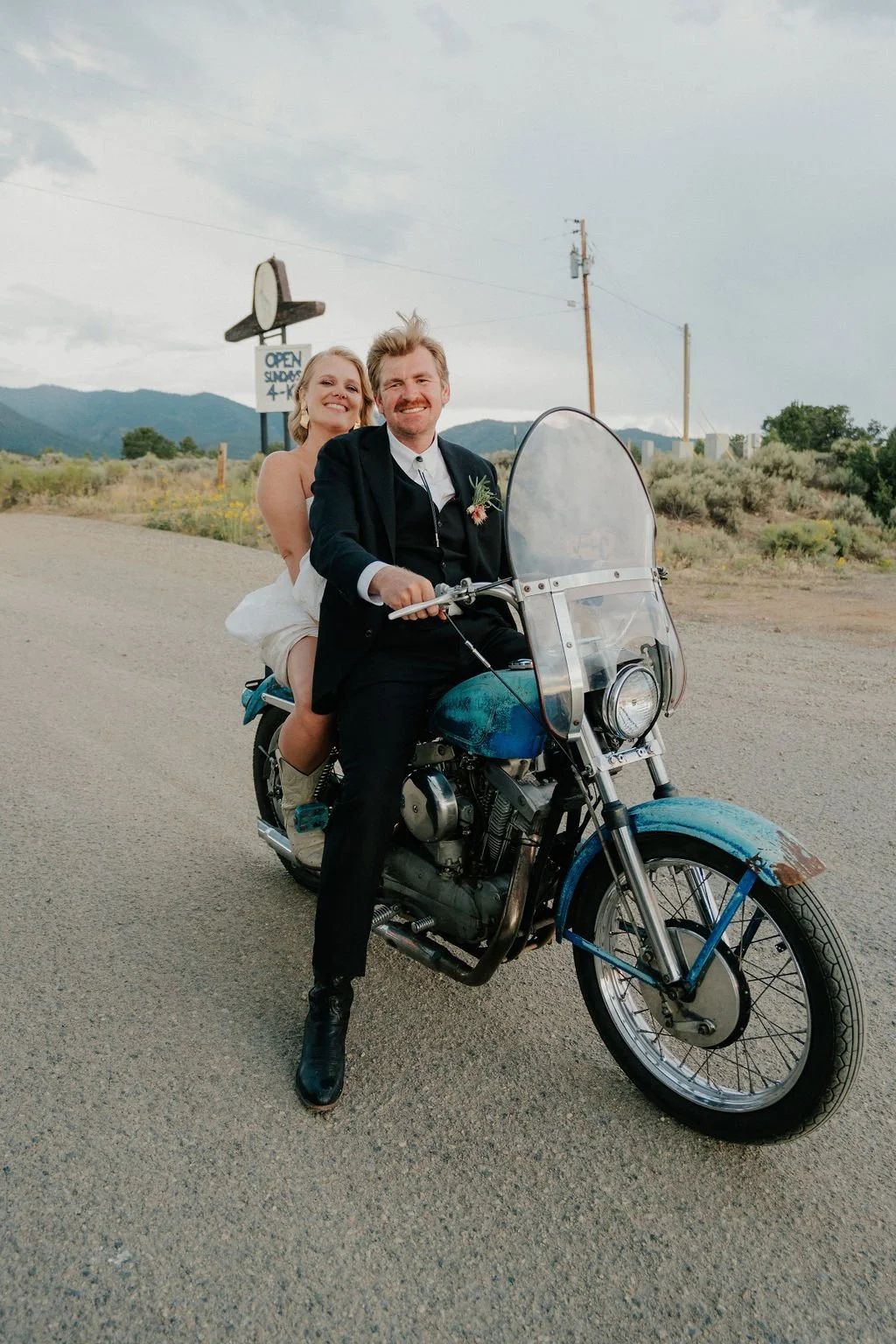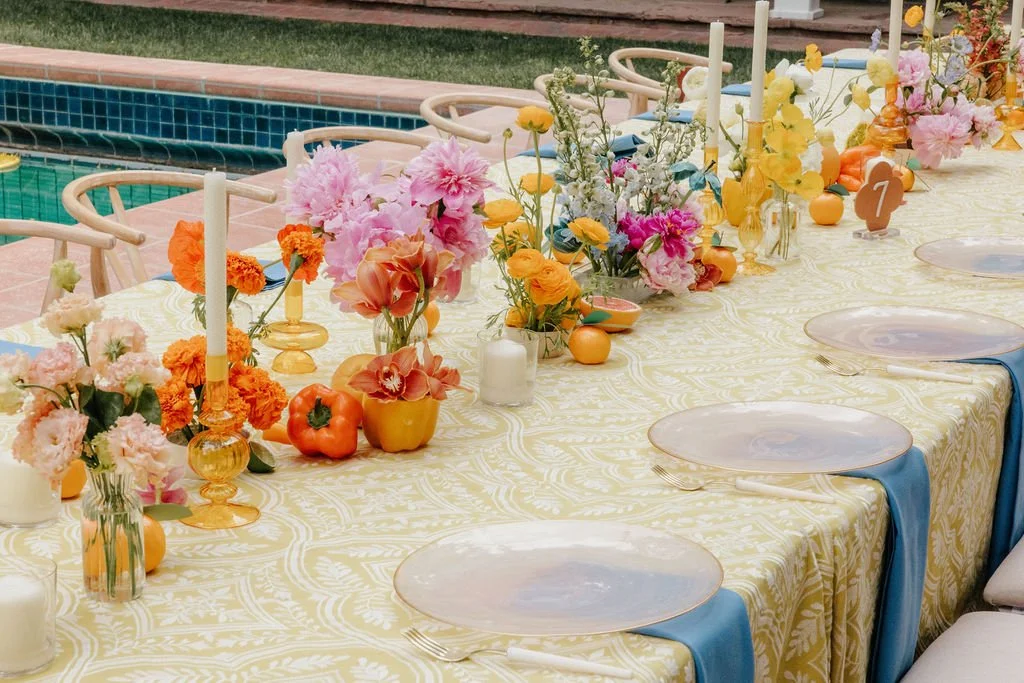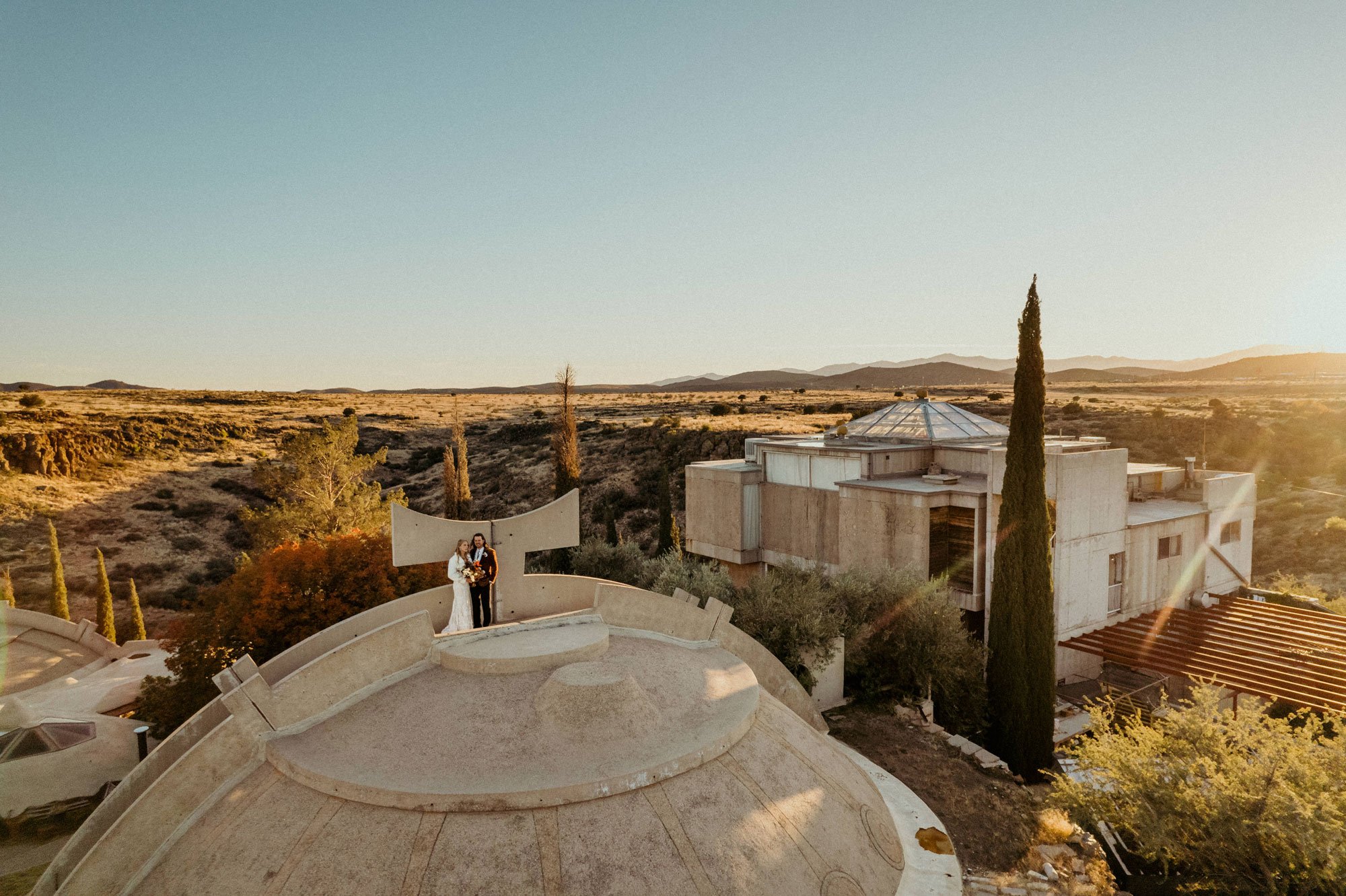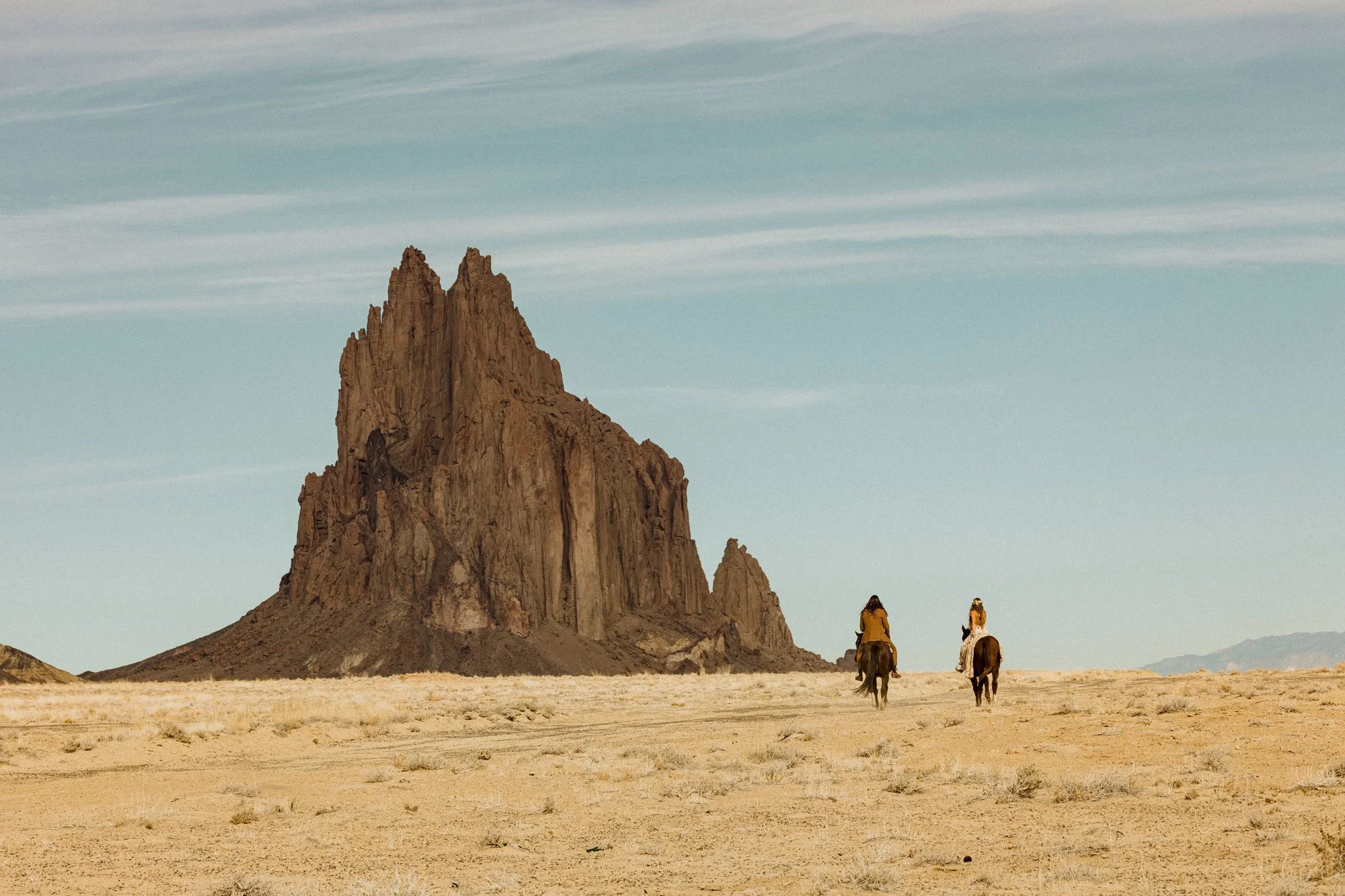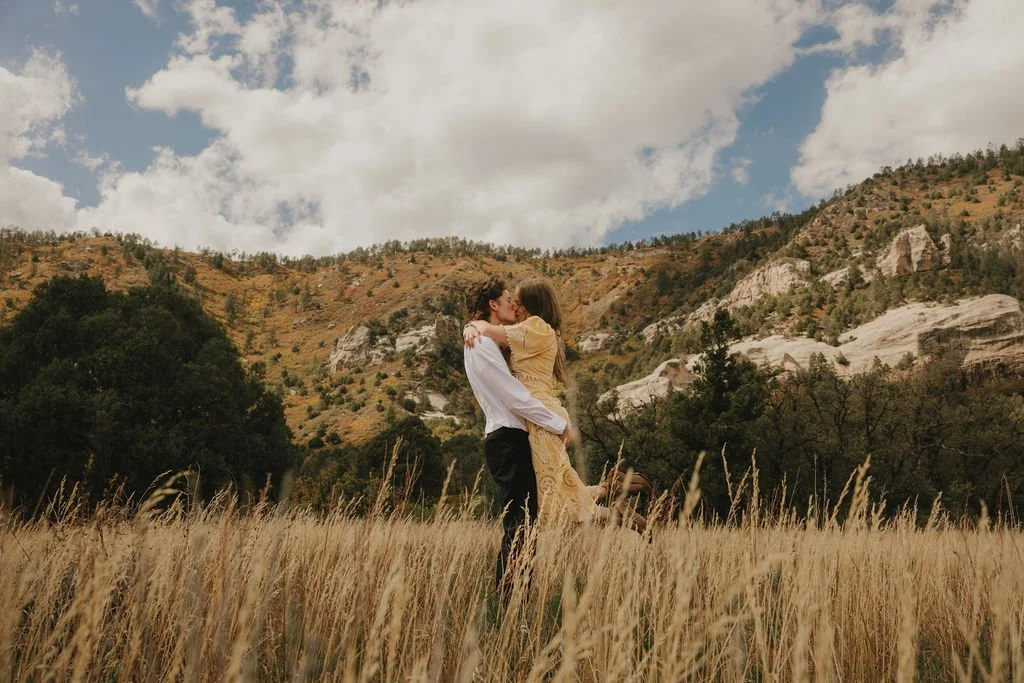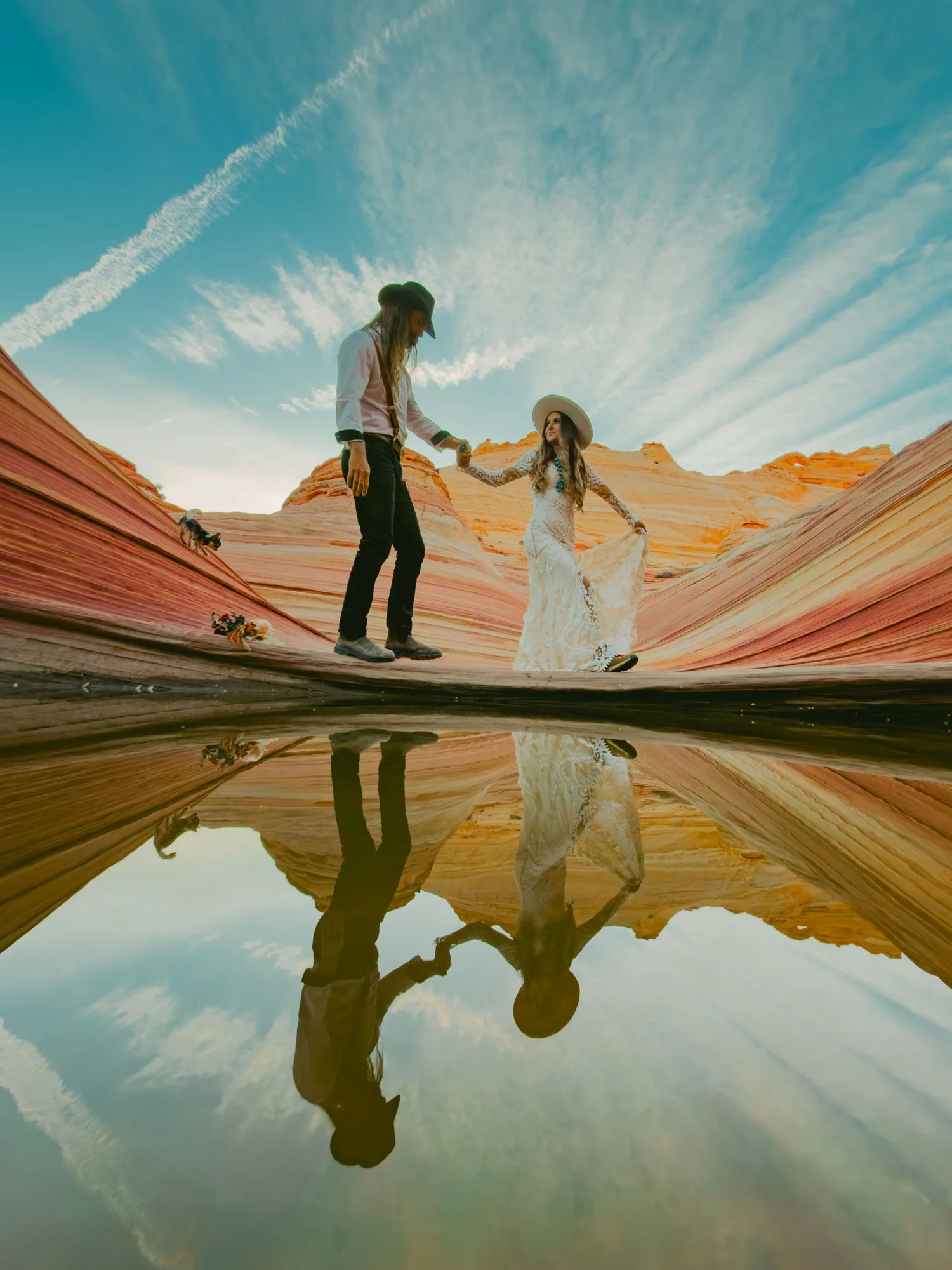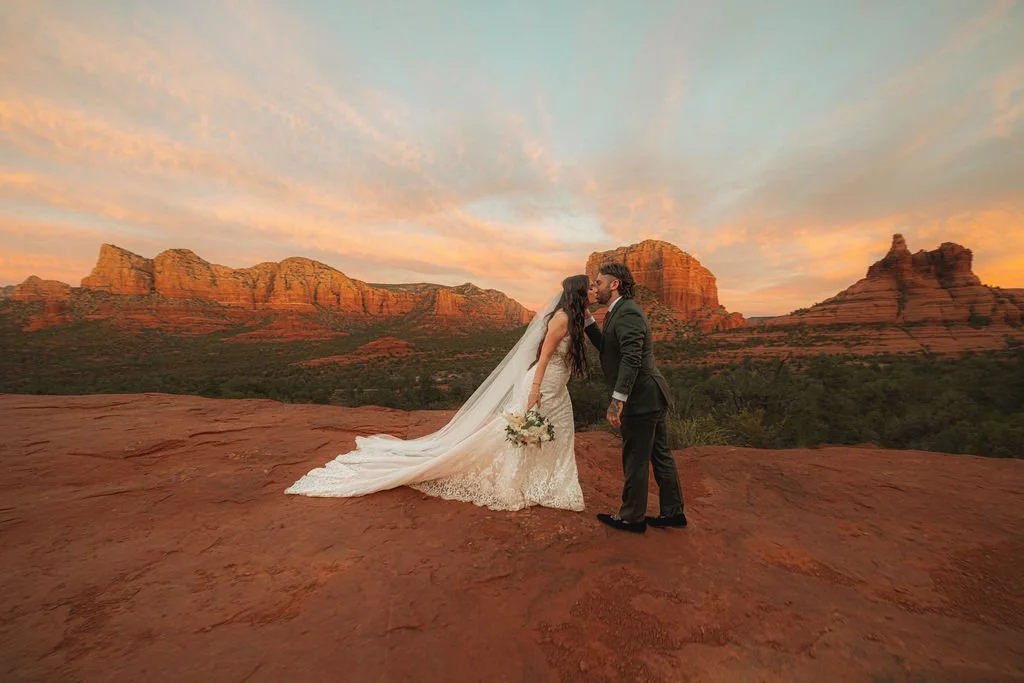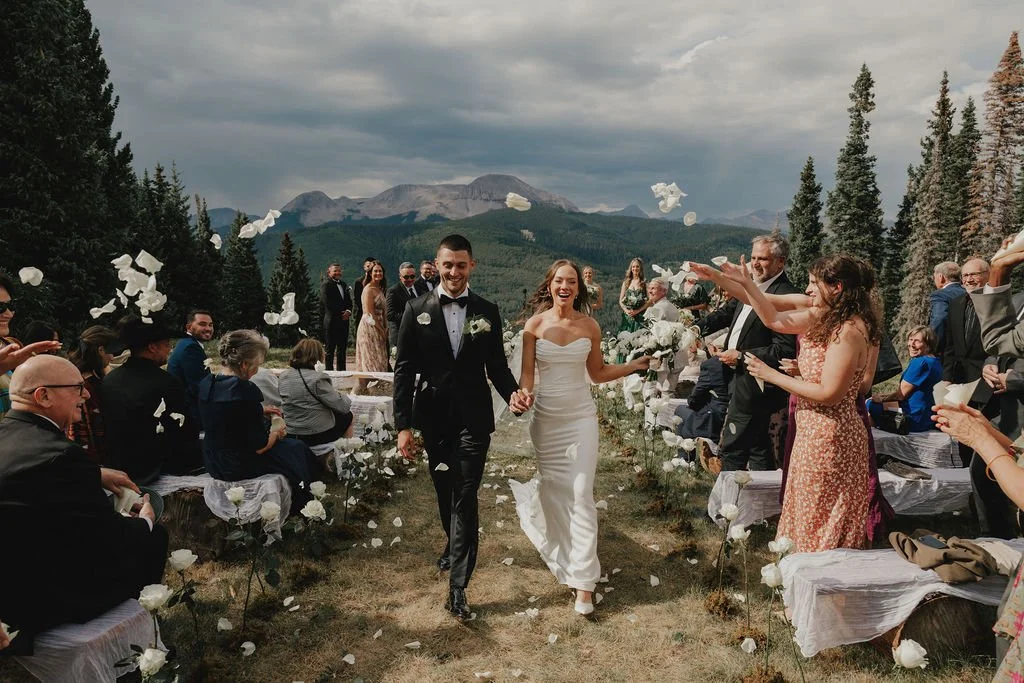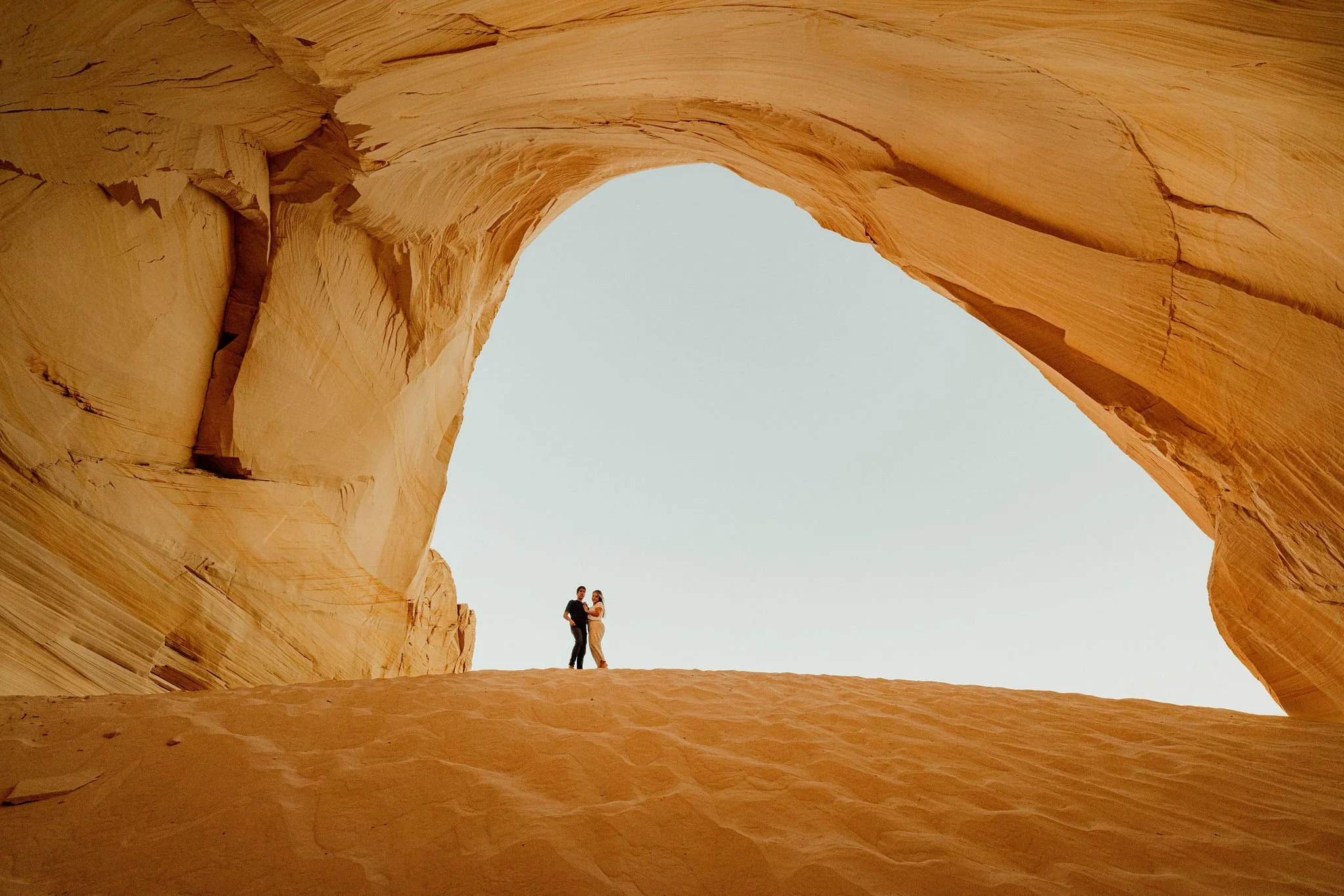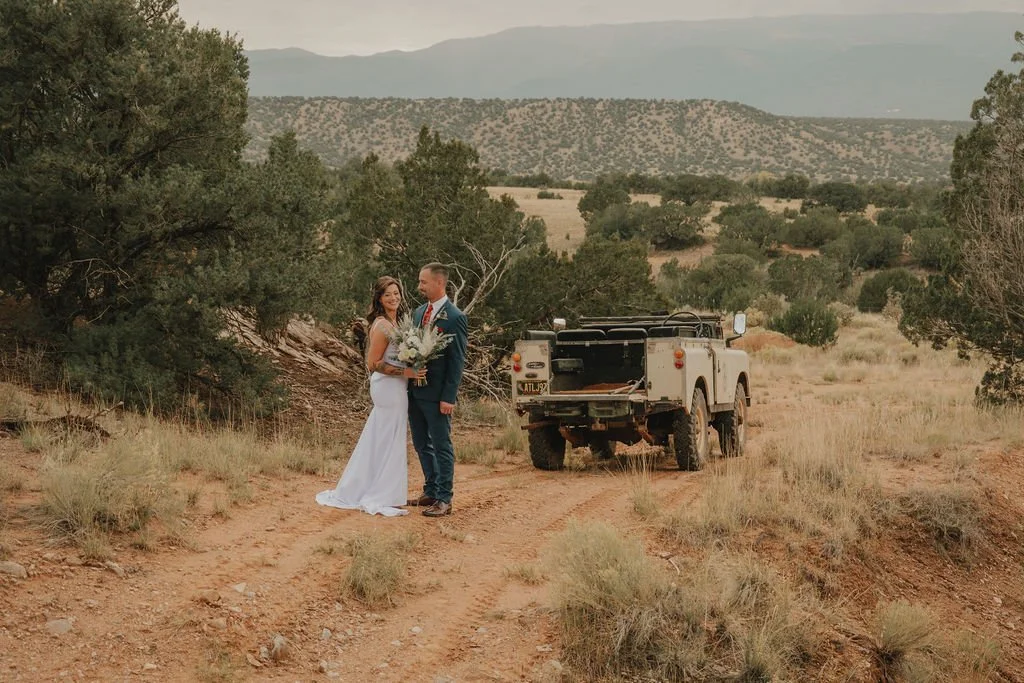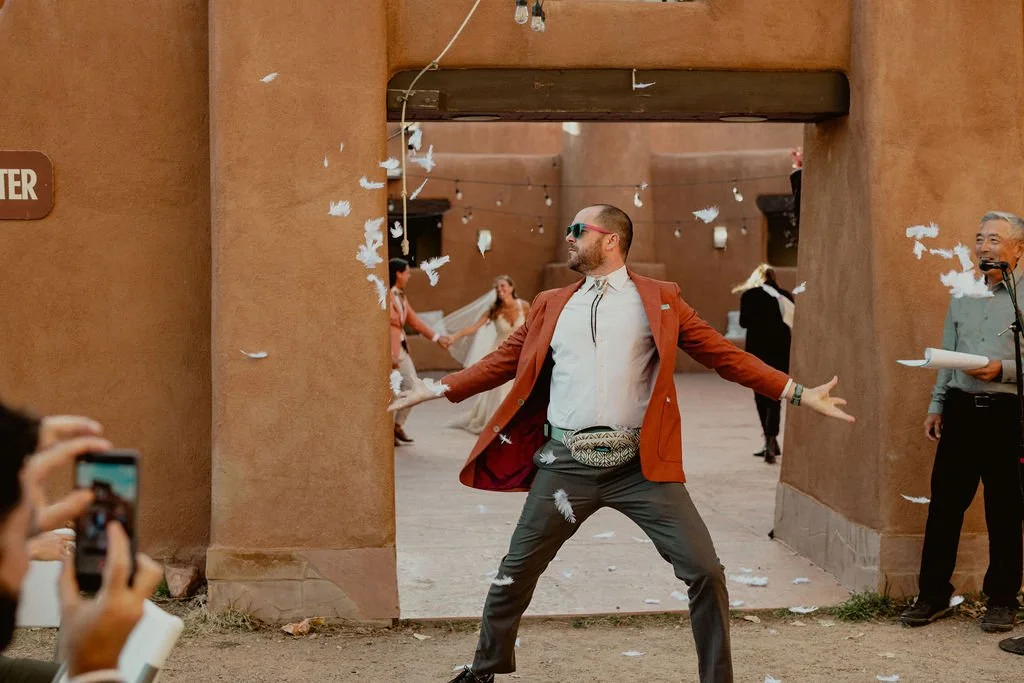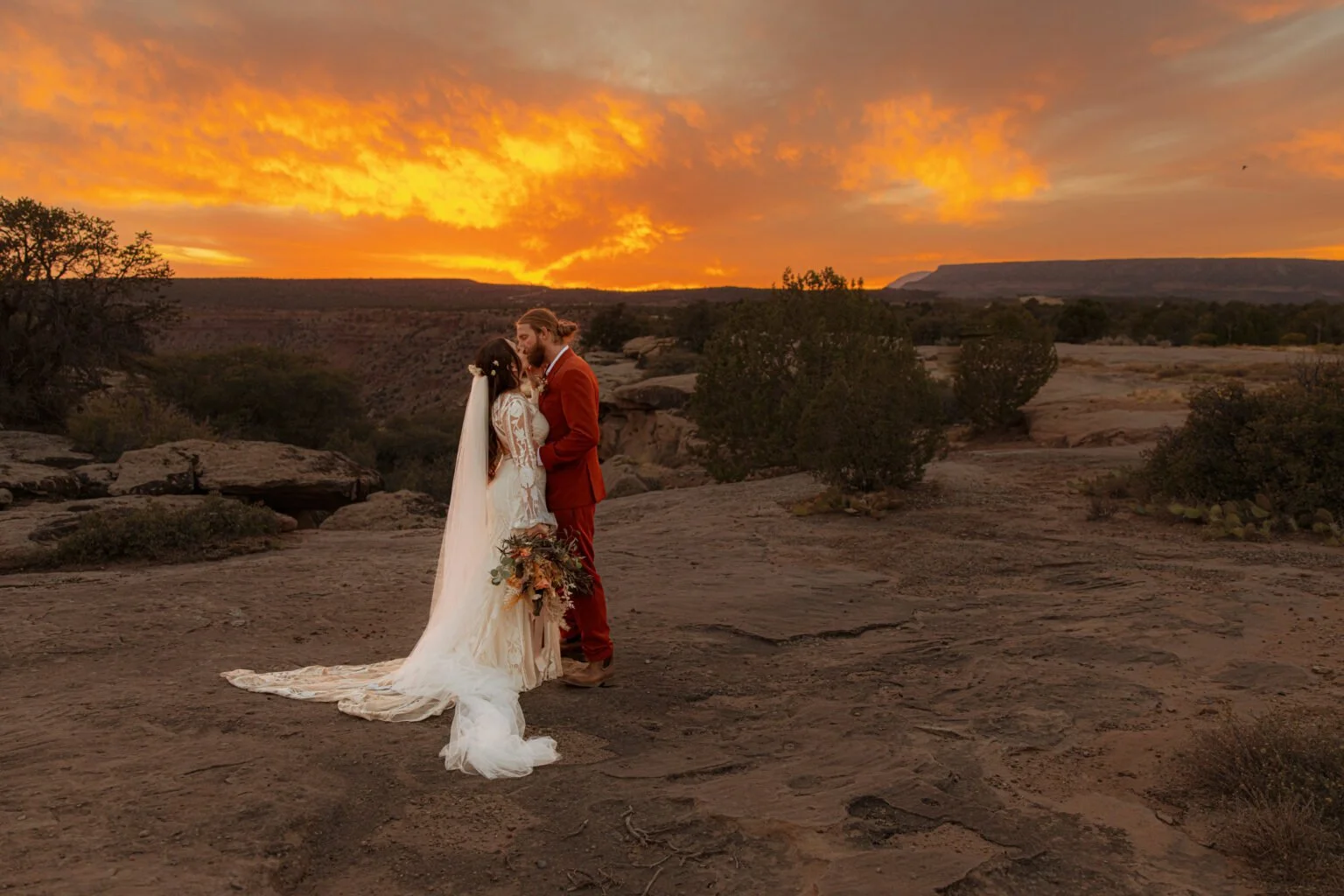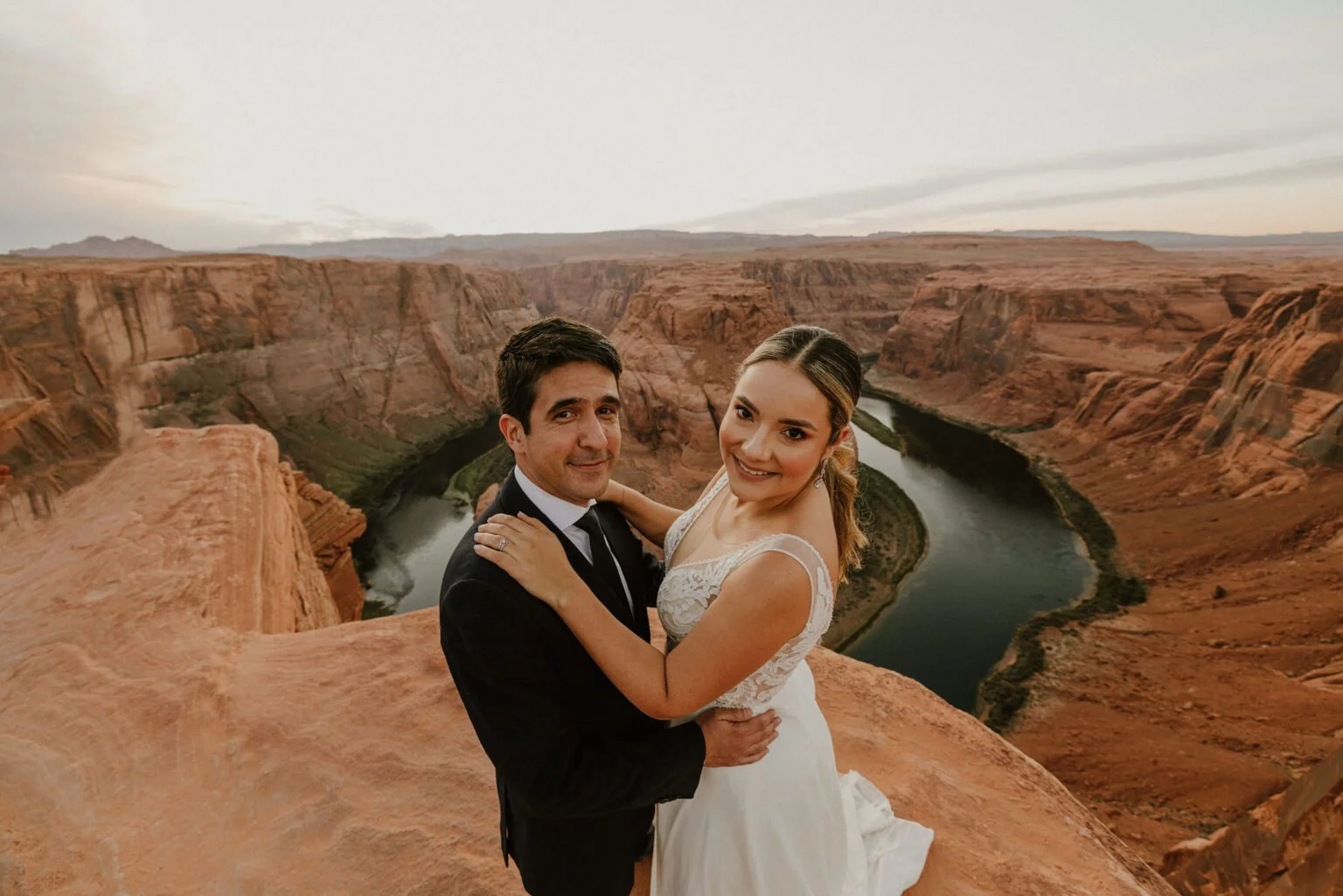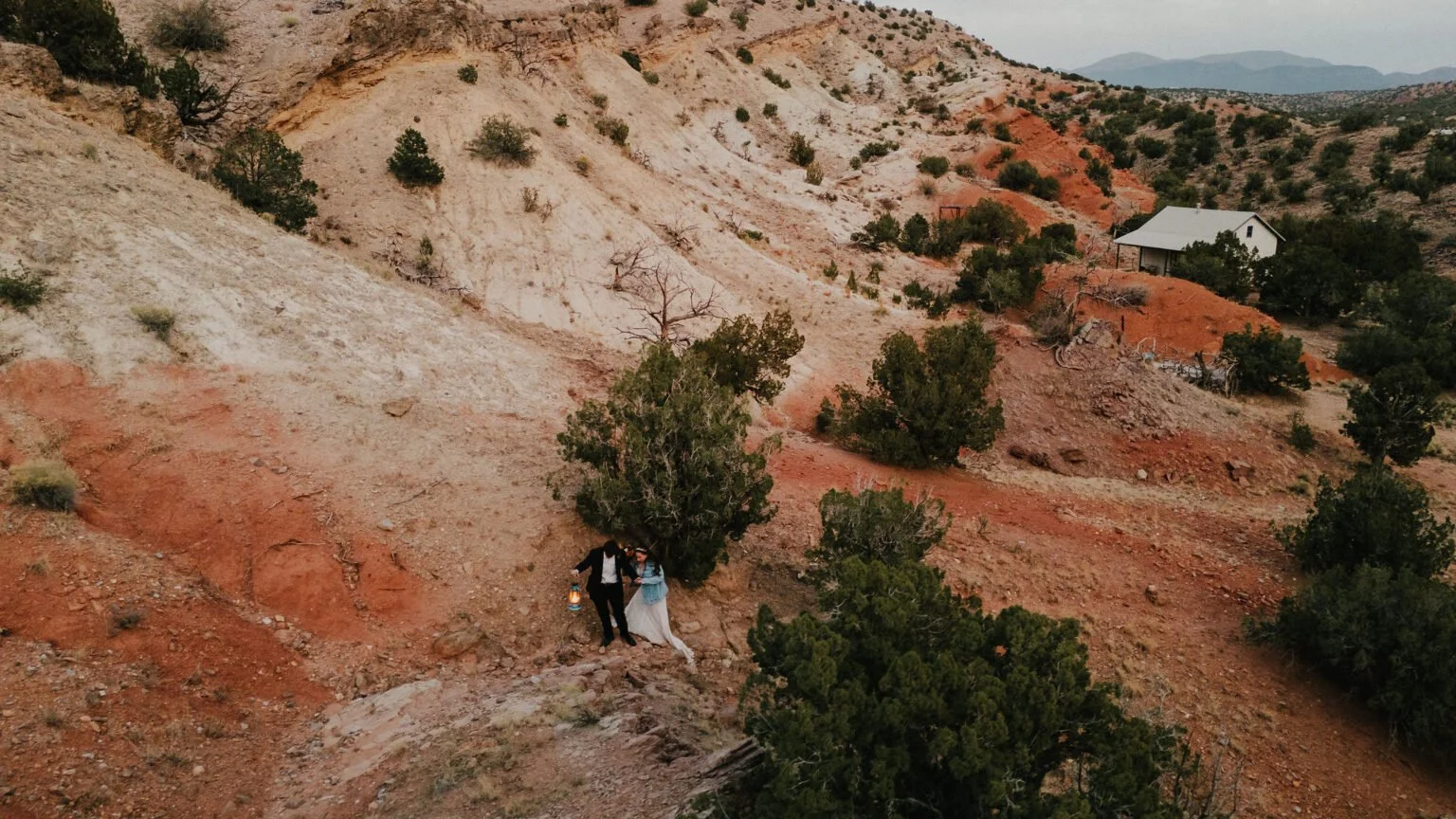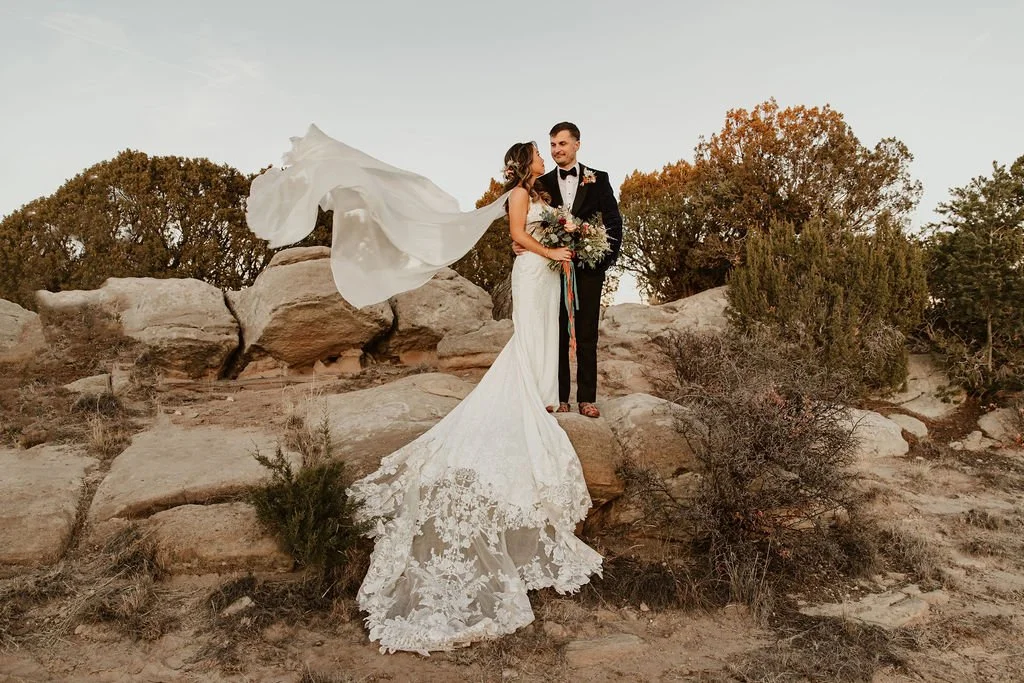
The best Santa Fe mountain wedding locations are found in the Sangre de Cristo foothills, at Ski Santa Fe's alpine overlooks, among the red-rock mesas of Ghost Ranch, and in the quiet backcountry meadows of the Jemez and Sandia mountains, each one offering sweeping high-desert views, dramatic elevation, and the kind of golden, clear light New Mexico is famous for. Whether you want a 150-guest reception with mountain views in the background or a two-person elopement on a ridgeline at 10,000 feet, Santa Fe's mountain landscape gives you a backdrop that very few places in the country can match.
We've spent years photographing weddings across New Mexico's high desert, and if there's one thing couples ask us over and over, it's where should we actually get married. This guide pulls together the mountain locations around Santa Fe that consistently deliver, for photos, for logistics, and for the overall experience of the day. We'll cover the best-known spots, a few lesser-known ones, what permits you'll need, when to go, and how to decide between an intimate elopement and a full mountain wedding celebration.
Why Santa Fe Is One of the Southwest's Best Mountain Wedding Destinations
Santa Fe sits at roughly 7,000 feet, cradled by the southern end of the Sangre de Cristo range, which means you don't have to drive far from the city's historic Plaza to reach alpine meadows, aspen groves, and granite overlooks. That proximity is a big part of what makes it special: you can host a ceremony in a mountain meadow at 9,500 feet and still be back at a downtown adobe inn for dinner within the hour.
The region also benefits from New Mexico's famously clear, high-desert light. Thin air and low humidity mean richer sunsets, bluer skies, and that warm, golden quality photographers chase during the magic hour before sunset. Add in the cultural backdrop, centuries-old pueblo architecture, Spanish colonial churches, and some of the best art and food scenes in the Southwest, and you get a wedding destination that feels genuinely distinct, not like a copy of Colorado or Utah.
What Makes a Location a Santa Fe Mountain Wedding Style
Before we get into specific spots, it helps to know what separates a true Santa Fe mountain wedding location from a generic outdoor venue:
Elevation and layered views, most great spots sit between 8,000 and 10,500 feet, with long sightlines across valleys, mesas, or the Rio Grande basin.
High-desert flora, pinon and juniper at lower elevations give way to ponderosa pine and aspen higher up, so the backdrop shifts dramatically depending on how far up the mountain you go.
Access to permits or private land, many of the best overlooks sit inside the Santa Fe National Forest or on Bureau of Land Management land, which means permitting is part of the planning process, not an afterthought.
Weather windows, mountain weather at elevation moves fast, so locations are usually chosen with a plan B in mind.
Top Santa Fe Mountain Wedding Locations
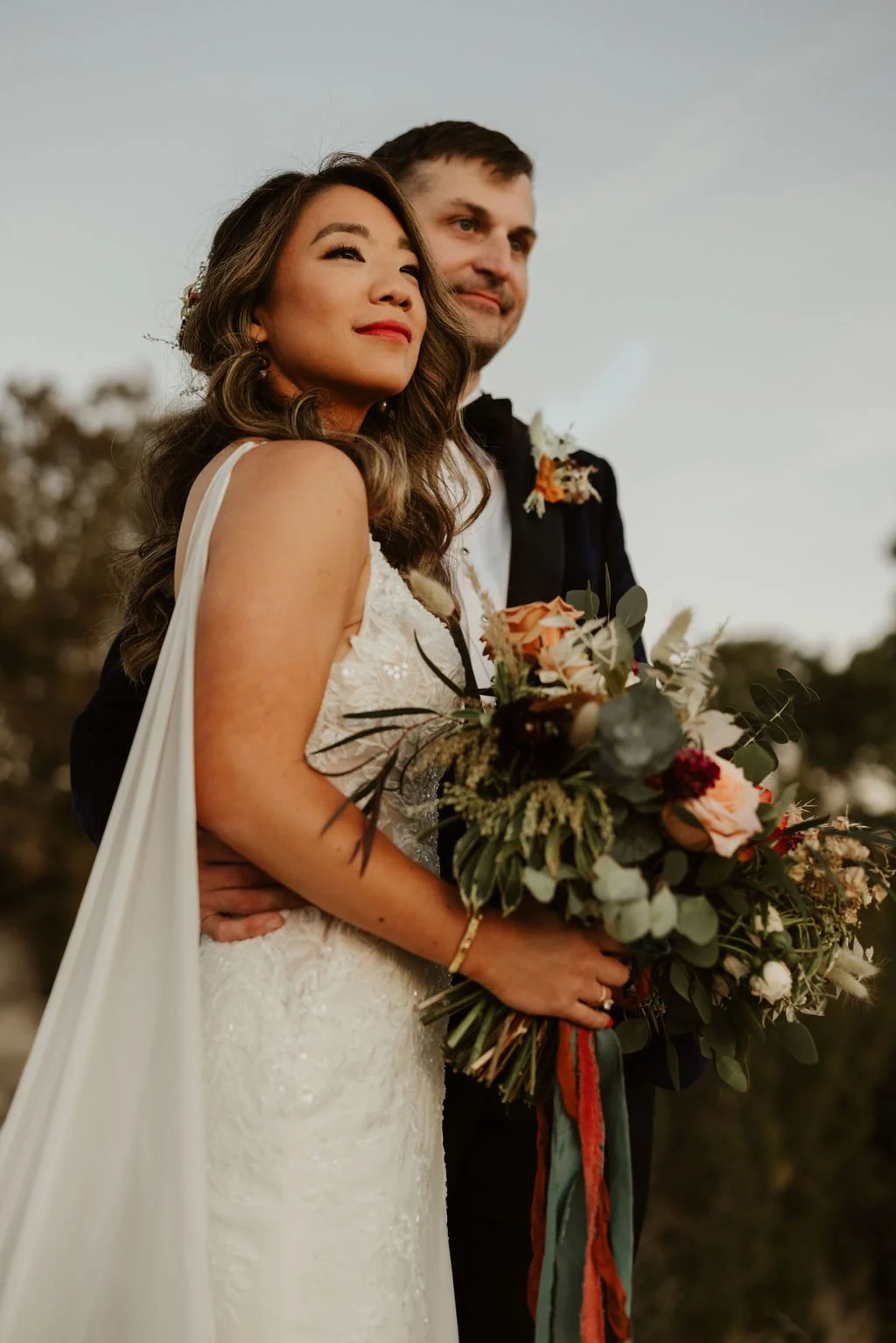
1. Santa Fe National Forest and the Sangre de Cristo Foothills
The Santa Fe National Forest wraps around the city and climbs into the southern Sangre de Cristo range, giving couples access to pine forests, alpine meadows, and overlooks with views stretching toward the Jemez Mountains to the west. This is the go-to zone for couples who want a genuine mountain feel without driving more than 20 to 30 minutes from town. Popular pockets include the Aspen Vista trailhead area and the forest roads above Hyde Memorial State Park, both of which turn gold with aspen color in late September and early October.
A forest wedding here usually means a small guest list and a special-use permit from the ranger district, since this is public land. It's an excellent fit for couples drawn to the idea of an elopement rather than a large production, intimate, quiet, and genuinely remote-feeling despite being close to the city.
2. Ski Santa Fe
At roughly 10,350 feet, Ski Santa Fe is the highest easily accessible point in the immediate area, and in summer the ski runs turn into wildflower meadows with 360-degree mountain views. Many couples take the chairlift up before a short ceremony near the summit, then head back down for a reception at lower elevation. It's dramatic, it's unique, and because it's a managed resort rather than open forest, logistics like parking, restrooms, and backup indoor space are already built in.
3. Ghost Ranch
Technically mesa and badlands country rather than true alpine terrain, Ghost Ranch sits beneath dramatic red-and-white cliff formations with the Jemez Mountains as a backdrop. It's become a favorite for couples who want that iconic painted-desert-meets-mountain look, layered mesas in the foreground, distant peaks behind. The property has lodging on-site, which makes it a strong option for multi-day wedding weekends rather than single-day elopements.
4. Sandia Mountains, Crest and Foothills
About an hour south of Santa Fe, the Sandia Mountains rise sharply above Albuquerque, and the Sandia Crest area offers some of the most dramatic elevation gain in the region, from desert floor to 10,678 feet in a short drive or a tram ride. Couples planning a Santa Fe wedding weekend sometimes use the Sandias for engagement sessions or a second-day adventure shoot, since the crest delivers views across the entire Rio Grande valley.
5. Jemez Mountains and Valles Caldera
West of Santa Fe, the Jemez Mountains hold one of the most visually unusual landscapes in New Mexico: Valles Caldera, a massive volcanic crater filled with open grassland and ringed by forested peaks. It's remote, it requires advance permitting through the National Park Service, and it is not a casual booking, but for couples chasing a truly one-of-a-kind mountain backdrop, almost nothing else in the Southwest compares.
6. Private Ranches and Lodges in the Sangre de Cristo Foothills
For couples who want mountain views without the permitting process of public land, several private ranches and lodges in the foothills north of Santa Fe, toward Tesuque and the Chimayo and Truchas corridor, offer leased event space with unobstructed mountain backdrops, existing infrastructure for larger guest counts, and far simpler booking logistics than national forest land.
Comparing Santa Fe's Top Mountain Wedding Locations
| Location | Approx. Elevation | Permit Needed? | Best For | Drive from Santa Fe Plaza |
|---|---|---|---|---|
| Santa Fe National Forest / Aspen Vista | 8,500–10,500 ft | Yes (USFS special use) | Elopements, small ceremonies | 20–30 min |
| Ski Santa Fe | ~10,350 ft | Resort booking, not USFS permit | Dramatic alpine views, built-in logistics | 25–35 min |
| Ghost Ranch | ~6,500–7,000 ft (mesa) | Property booking | Multi-day weekends, artistic backdrop | 60–75 min |
| Sandia Crest | ~10,678 ft | Permit for ceremonies on USFS land | Engagement/adventure shoots, day trips | 60 min |
| Valles Caldera | ~8,500–9,500 ft | Yes (NPS permit) | Unique landscape, serious planners | 60–75 min |
| Private ranches (Tesuque/Chimayo corridor) | 7,000–8,000 ft | Venue booking only | Larger guest counts, simpler logistics | 20–45 min |
Best Season and Time of Year for a Santa Fe Mountain Wedding
Mountain elevation changes everything about timing. A June wedding that feels warm in downtown Santa Fe can still be chilly at 10,000 feet, and afternoon monsoon storms are a real planning factor from July through early September.
| Season | Conditions at Elevation | Notes for Planning |
|---|---|---|
| Late Spring (May–Early June) | Mild days, cool mornings/evenings, occasional wind | Wildflowers starting; fewer crowds |
| Summer (June–August) | Warm days, afternoon monsoon storms common | Plan ceremonies for morning or early evening; have a weather backup |
| Early Fall (Mid-Sept–Mid-Oct) | Crisp, dry, peak aspen color | Most popular season, book 9–12 months out |
| Late Fall/Winter (Nov–March) | Cold, possible snow at elevation | Dramatic snowy backdrops; smaller guest counts recommended |
For most couples, late September is the sweet spot, aspen color in the high country, stable weather, and comfortable temperatures for a ceremony above 9,000 feet.
Permits and Legal Requirements for Mountain Locations Near Santa Fe
Because so many of the best viewpoints sit on public land, permitting is one of the first things to sort out:
Santa Fe National Forest: requires a special-use permit for weddings, typically applied for through the Santa Fe/Espanola ranger district. Fees and group-size limits change, so confirm current requirements directly with the ranger district before locking in a date.
Valles Caldera National Preserve: administered by the National Park Service; ceremonies require advance written permission and have stricter group-size and vehicle limits than national forest land.
State parks such as Hyde Memorial: generally require a day-use or event permit and may cap guest numbers.
Private ranches, resorts, and lodges: no government permit needed, but confirm the venue's own insurance and vendor requirements.
As a rule, build in at least 60 to 90 days for permit processing on any public-land location, longer during peak wedding season.
Elopement or Full Mountain Wedding? How to Decide
The mountain locations above split naturally into two categories. Spots like Aspen Vista, Ski Santa Fe's summer meadows, and most of Valles Caldera work best for small, intimate ceremonies, two to twenty people, minimal infrastructure, and a focus on the landscape itself. If that's the experience you're picturing, our elopements page walks through how a mountain elopement day typically unfolds, from permit timing to what to actually bring up the mountain.
If you're planning for fifty, a hundred, or more guests, private ranches and lodges in the foothills, or a property like Ghost Ranch, will serve you better, they already have parking, restrooms, and reception space built in, which public mountain land simply doesn't offer at scale.
How Shutterfreek Photographs Santa Fe Mountain Weddings
We approach mountain weddings differently than studio or ballroom work, because the terrain is part of the story. Our team hikes locations in advance to map sun direction and shadow patterns at your actual ceremony time, builds a weather contingency into every mountain timeline, and carries lightweight gear suited to elevation and uneven ground, tripods and lighting setups that work at 10,000 feet don't always work the same way they do at sea level.
We've photographed ceremonies on exposed ridgelines in gusting wind, in surprise September snow at Ski Santa Fe, and in Valles Caldera's open grassland under a sky that changes every ten minutes. That hands-on experience is exactly why we build a backup plan into every mountain wedding timeline rather than treating it as optional.
How Santa Fe Compares to Other Southwest Mountain Wedding Destinations
Santa Fe isn't the only high-elevation option in the region. Couples weighing their choices often compare it against southern Utah's red-rock canyon country, where slot canyons and sandstone formations create a very different, more desert-forward look , you can see how that landscape plays out in our guide to Utah weddings and adventure elopements.
Within New Mexico itself, Santa Fe is one part of a larger picture that includes Taos, the Gila Wilderness, and White Sands, each with its own elevation, light, and access considerations. Our broader New Mexico weddings and adventure elopements guide covers how these destinations compare if you're still deciding between regions, and the same page is worth bookmarking if Santa Fe ends up being one stop on a multi-location elopement.
For couples who've already fallen in love with New Mexico's high desert specifically, it's worth revisiting that New Mexico weddings and adventure elopements resource again once you've narrowed down a mountain location, it includes planning details such as travel logistics, vendor recommendations, and timing that apply across every mountain and mesa location in the state, not just Santa Fe.
Tips for Planning Your Santa Fe Mountain Wedding
Book permits early. Public-land permits, especially for Santa Fe National Forest and Valles Caldera, should be started 6 to 9 months ahead.
Plan for elevation, not just season. A date that's warm in town can be 15 to 20 degrees cooler at your ceremony site.
Have a weather plan, not just a weather hope. Afternoon storms in summer are common enough that a backup time or covered space should be part of the plan, not an afterthought.
Scout at the actual ceremony time. Light and shadow at 10am look nothing like light and shadow at 5pm, walk the site at your scheduled time if you can.
Keep guest mobility in mind. Several of the best overlooks involve a short hike or uneven footing; communicate this to guests, especially if anyone has mobility concerns.
Final Thoughts
Santa Fe's mountain landscape gives couples a rare combination: genuine alpine terrain, dramatic high-desert light, and a cultural backdrop unlike anywhere else in the country, all within a short drive of a city built for a wedding weekend. Whether you're drawn to a quiet elopement on a forest overlook or a full celebration at a foothills ranch, the location you choose will shape the entire feel of your day, so start with the landscape, then build the logistics around it.
If you're ready to talk through locations, permits, or timing for your own Santa Fe mountain wedding, Shutterfreek has shot enough of these high-elevation days to help you plan one that actually goes smoothly, reach out and let's map it out together.
Frequently Asked Questions
-
There's no single best spot, it depends on guest count and style. Aspen Vista and the Santa Fe National Forest foothills suit small, intimate ceremonies, Ski Santa Fe offers dramatic high-alpine views with resort infrastructure, and private ranches in the Tesuque and Chimayo corridor work well for larger receptions that still want a mountain backdrop.
-
Yes, if the location sits on public land such as the Santa Fe National Forest or Valles Caldera National Preserve. Private ranches, lodges, and resorts don't require a government permit, but they do require a venue booking and usually proof of vendor insurance.
-
Late September through mid-October is the most popular window, thanks to peak aspen color and stable, dry weather. Summer works well too, but plan ceremonies for morning or early evening to avoid common afternoon monsoon storms.
-
Temperatures drop noticeably with elevation, expect it to run 10 to 20 degrees cooler at a 10,000-foot site than it is in downtown Santa Fe, even in summer, and mornings and evenings can be cold year-round. Always plan layering options for guests.
-
Public-land overlooks generally aren't set up for large receptions since they lack parking, restrooms, or power on site. For bigger guest counts, private ranches, lodges, or properties like Ghost Ranch that already have built-in infrastructure are a better fit than open forest or national preserve land.
Keep reading