White Sands Elopement Permit: Everything You Need to Know Before You Apply
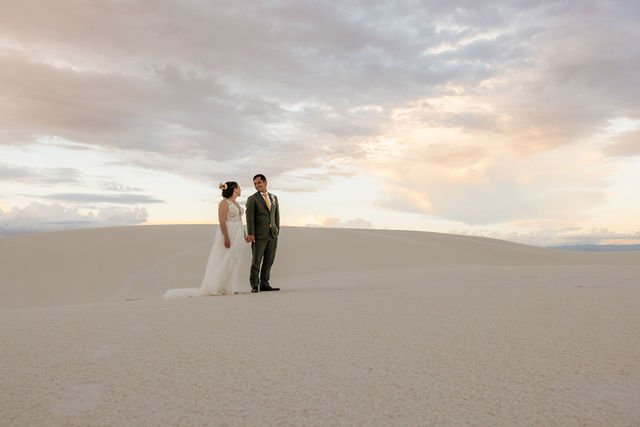
A White Sands elopement permit is a Special Use Permit (SUP) issued by the National Park Service, and it costs $100, non-refundable, plus the park's standard $25 entrance fee per vehicle. You'll need this permit any time your ceremony involves more than just the two of you, think an officiant, a photographer setting up gear, a small group of guests, or any kind of decor. Couples eloping with zero guests and no added equipment can sometimes get away without one, but applying is cheap, fast, and removes all the guesswork, which is why nearly every couple we work with at Shutterfreek gets one regardless. Below, we're walking you through exactly how to apply, what it costs in total, what's allowed on the dunes, and the mistakes we see couples make almost every season.
If you're weighing New Mexico against other adventure elopement destinations in the Southwest, our New Mexico elopement guide breaks down the state's best locations beyond White Sands, and our Utah elopement guide is a great next read if red rock canyons are also on your shortlist.
Why White Sands National Park Is Worth the Paperwork
White Sands National Park sits in the Tularosa Basin near Alamogordo, New Mexico, and it's home to nearly 275 square miles of blindingly white gypsum dunes, the largest gypsum dune field on Earth. Unlike red rock or forest venues, there's no shade, no crowds blocking your background, and no two dunes that look exactly alike, which is part of why it's become one of the most requested adventure elopement locations we shoot every year.
A few things make it genuinely different from other national park weddings:
It's one of the most permit-friendly parks in the system. Because the dune field is constantly shifting sand with minimal fragile plant life, the NPS has fewer environmental restrictions here than at parks like Yosemite or Zion.
The fee is lower than almost anywhere else. At $100, the White Sands special use permit undercuts many national parks, where similar permits run $250 or more.
You get flexibility most parks don't allow. Outside of the reservable Group Use Area, you're generally free to hold your ceremony anywhere in the public dune field, as long as you follow park rules.
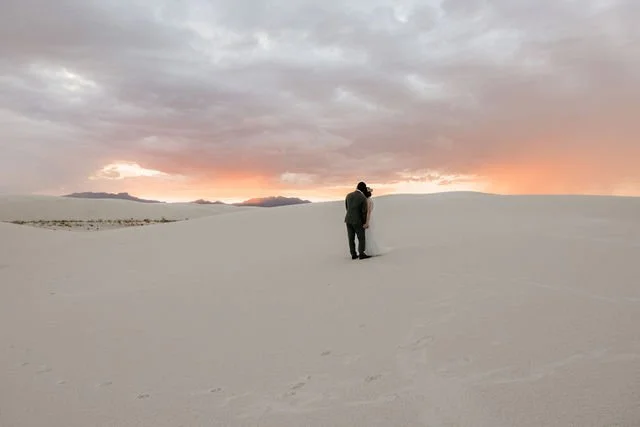
Golden hour here is unlike anywhere else in the Southwest. The white gypsum reflects sunset color in a way that reads almost pink or lavender in photos, it's the reason so many of our couples specifically request this location.
We've photographed dozens of ceremonies here, and the short version of our advice is this: apply early, keep your guest count realistic, and build your ceremony time around sunrise or sunset. Everything else tends to fall into place.
Do You Actually Need a Permit to Elope at White Sands?
This is the question we get asked most, so let's be direct about it.
You do not need a Special Use Permit if:
It's just the two of you and an officiant (no photographer setup, no décor, no group)
You're not bringing any equipment, arch, signage, or amplified sound
Your guest count stays extremely minimal and informal
You DO need a Special Use Permit if:
You're bringing a photographer or videographer who needs to set up gear
You have guests beyond an officiant and witness
You want to reserve a specific spot, like the Group Use Area
You're bringing decor, an arch, chairs, or anything beyond what you can carry in by hand
You want written protection in case a ranger asks what you're doing on the dunes
Here's the honest truth: even in the "you technically don't need one" scenario, we still tell every one of our couples to apply. It's $100. It guarantees the park knows you're there, gives you a documented right to be doing what you're doing, and means no ranger interaction interrupts your ceremony. Skipping it to save $100 on a day you're already investing thousands of dollars into just isn't worth the risk.
How Much Does a White Sands Elopement Permit Actually Cost?
The permit itself is a flat fee, but it's rarely the only cost tied to your legal ceremony. Here's the full breakdown couples should budget for:
Table 1: White Sands Elopement Permit & Legal Cost Breakdown
| Item | Cost | Required? | Notes |
|---|---|---|---|
| Special Use Permit (SUP) | $100, non-refundable | Yes | Required if guests, gear, or décor are involved. |
| Park entrance fee (per vehicle, 7-day pass) | $25 | Yes | Or free with an America the Beautiful annual pass. |
| Photography/Filming Permit | Typically included in the SUP for small elopements | Situational | Separate commercial permit may be required for larger productions. |
| New Mexico Marriage License | $25 | Yes | Required to legally marry in New Mexico. |
| Group Use Area Reservation | Additional fee, varies | Optional | Semi-private pavilion reservation. |
| Horse & Pack Animal Permit | Additional fee at the fee station | Situational | Only applicable if using horses or pack animals. |
Total out-of-pocket for the legal, permit, and licensing side of a White Sands elopement typically lands around $150–$250, before you factor in photography, officiant, attire, or accommodations.
How to Apply for Your White Sands Elopement Permit, Step by Step
Applying isn't complicated, but timing matters more here than couples expect. Here's exactly how the process works:
Pick your ceremony date and rough headcount first. You'll need both before you can fill out the application.
Download the Special Use Permit application from the official White Sands National Park website (search "White Sands NPS wedding permits" or go directly through nps.gov/whsa).
Fill in your event details. This includes your requested date, estimated guest count, ceremony location preference, vehicle information, and any decor or equipment you're bringing.
Submit your completed form by email to the park's permits office, along with your $100 payment through the park's official payment portal.
Apply within the correct window. You can apply as early as 6 months before your date, but no later than 21 days before it. We push our couples toward the earlier end of that window.
Wait for confirmation. The park office reviews your application and will follow up if they need more information about your setup.
Call the park 1–2 weeks before, and again the day before. White Sands sits inside a missile testing range, and the park occasionally closes for scheduled tests. A quick phone call confirms your ceremony window is clear.
Bring a printed copy of your approved permit with you on the day, along with your park entrance receipt.
If you're working with us, this is one of the pieces we help walk couples through directly, our elopement planning services include permit guidance so you're not decoding NPS paperwork solo while also picking a dress and building a timeline.
What's Allowed (and Not Allowed) on the Dunes
Because White Sands is a protected natural landmark, the NPS enforces Leave No Trace rules more strictly than you might expect for a "just sand" landscape. Here's what typically gets flagged on applications and what sails through without issue.
Table 2: Allowed vs. Restricted Items for a White Sands Ceremony
| Category | Generally Allowed | Typically Restricted or Banned |
|---|---|---|
| Decor | Fabric arches, dried florals, artificial petals, ribbon, wooden signage | Live flowers, live plant material, glass bottles/vases |
| Send-off items | Bubbles, ribbon wands, sparklers with a fire permit | Rice, birdseed, confetti, real flower petals |
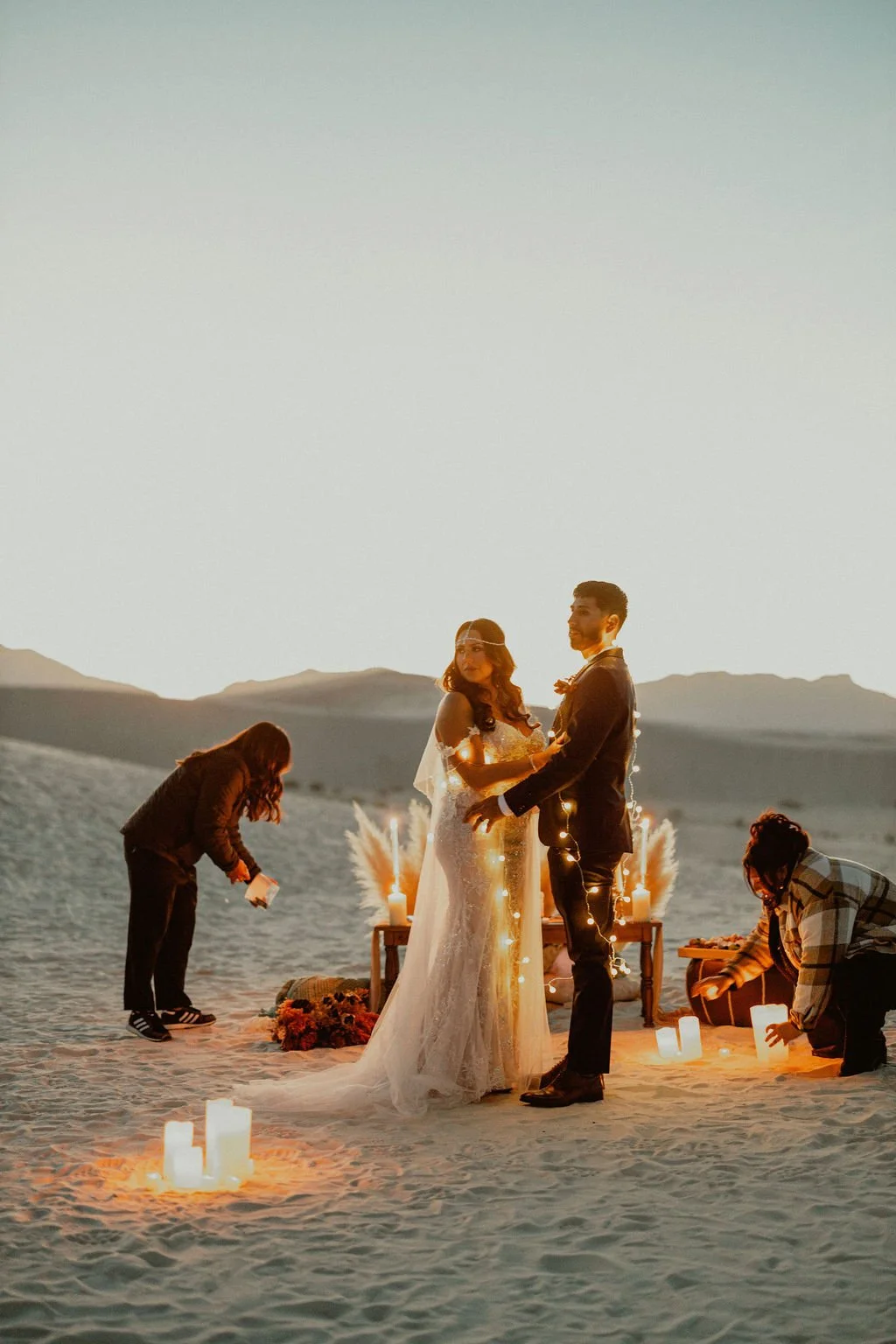
| Fire & lighting | LED candles, string lights (battery-powered) | Open flame candles without an extinguisher, open fires, torches |
| Sound | Small portable speaker at reasonable volume | Large amplified sound systems |
| Animals | Leashed domesticated pets | Non-domesticated or wild animals |
| Transportation | Vehicles parked in designated lots, trailered horses with a separate permit | Unauthorized off-road driving on the dunes |
| Group size | Small, permitted elopement parties | Anything approaching "large wedding" scale without prior park approval |
The takeaway: keep your styling simple, natural-toned, and reusable. It's not just an environmental rule, it also happens to be exactly the aesthetic that photographs best against white gypsum sand.
Best Time of Year (and Day) to Apply for and Hold Your Ceremony
Timing your White Sands elopement affects both your comfort and your photos, and it should factor into when you apply.
Spring (March–May): Warm days, but winds can pick up in early spring. Late spring tends to be calmer.
Summer (June–August): Daytime temps can exceed 100°F, though the white sand stays surprisingly cool underfoot. Sunrise or early evening ceremonies are strongly recommended.
Fall (September–November): Our favorite season to shoot here. Temperatures moderate into the 60s–70s, and sunset skies shift into deep orange and pink tones against the white dunes.
Winter (December–February): Cold, clear, and quiet, with daytime temps around 60°F and dramatic long-shadow light. Nights drop into the 20s, so plan ceremony timing around daylight.
Whatever season you choose, build your ceremony around sunrise or the hour before sunset. The park's operating hours shift seasonally, closing anywhere from 6 to 9 p.m., so your permit application should reflect the actual sunset time for your date, not a guess.
Common Mistakes Couples Make With Their White Sands Permit
After shooting adventure elopements across the Southwest for years, these are the permit-related slip-ups we see most often:
Applying inside the 21-day minimum window and getting rejected or rushed. Give yourself buffer time.
Underestimating guest count on the application, then having more people show up than what's approved.
Forgetting to call ahead for missile test closures. This is unique to White Sands and easy to forget.
Bringing live florals or glass decor that gets flagged on-site, even though it wasn't caught on paper.
Assuming the photographer's permit and the couple's permit are the same thing. Confirm with your photographer what's already covered.
Not bringing a printed copy of the approved permit. Cell service is unreliable in parts of the park.
We build permit timing directly into the planning process for every couple we work with, which is part of why it rarely trips anyone up on the day itself.
Final thoughts
A White Sands elopement permit is one of the simplest, most affordable pieces of paperwork in the national park wedding world, $100, a short application, and a straightforward review process. The part that actually takes planning is everything around it: timing your ceremony to the light, choosing decor that fits the park's rules, and knowing the dune field well enough to find the spot that's going to make your photos unforgettable.
That's where having a team who already knows this landscape makes the difference. If you're picturing your ceremony on these dunes, our adventure elopement planning and photography services cover the permit process, location scouting, and full-day storytelling so you can focus on the vows, not the logistics. And if White Sands is one stop on a bigger Southwest adventure, take a look at what we offer for New Mexico elopements and Utah elopements as you're building out your itinerary.
Shutterfreek is an award-winning adventure elopement photography and film team based in the Four Corners, specializing in White Sands, New Mexico, and Southwest elopements since 2009. Explore our full elopement services or start planning your New Mexico elopement today.
Frequently Asked Questions
-
The Special Use Permit costs $100, non-refundable, plus the standard $25 park entrance fee per vehicle. Most couples budget $150–$250 total once the New Mexico marriage license is included.
-
You can apply up to 6 months before your date and no later than 21 days before it. Applying closer to the 4–6 month mark gives the park office the most time to process your request and flag anything you need to adjust.
-
If you're eloping with absolutely no guests, no photographer setup, and no décor, a permit typically isn't required. The moment you add a photographer, officiant party, decor, or any guests, you'll need the Special Use Permit.
-
No. The park permit only covers your right to hold a ceremony on-site, it doesn't make your marriage legal. You'll still need to apply for a New Mexico marriage license, which costs around $25 and is separate from the park's process.
-
White Sands sits within a missile testing range, and the park occasionally closes for scheduled tests, usually announced one month to one day in advance. Call the park two weeks before your ceremony, then again the day before and the morning of, to confirm there are no closures planned.
Keep reading