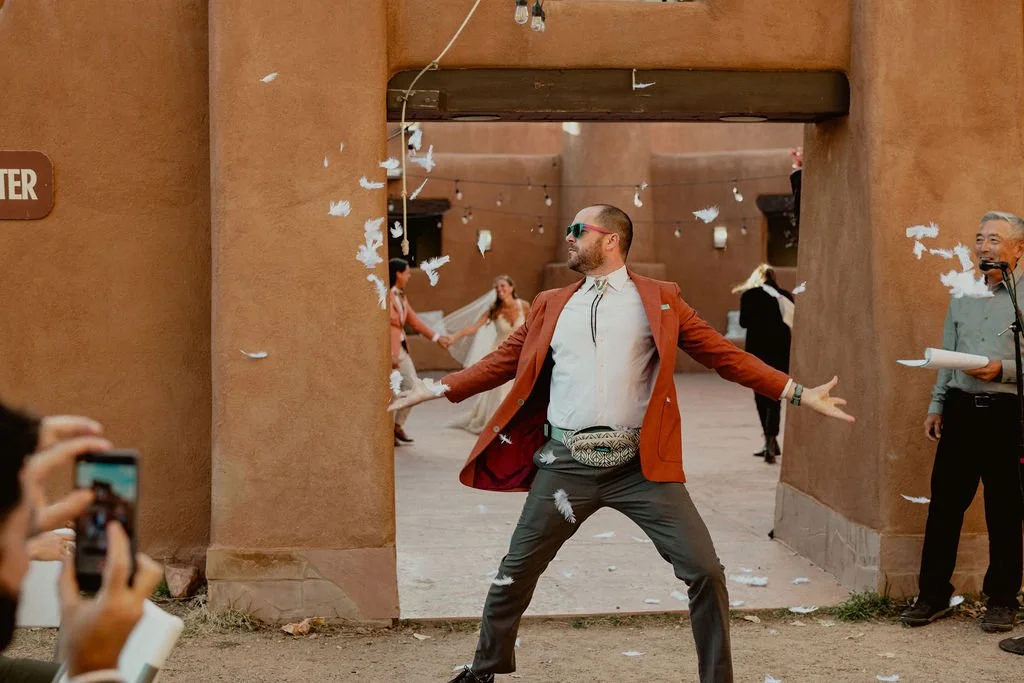
Taos Mountain Elopement Photographer: Your Guide to an Intimate New Mexico Adventure
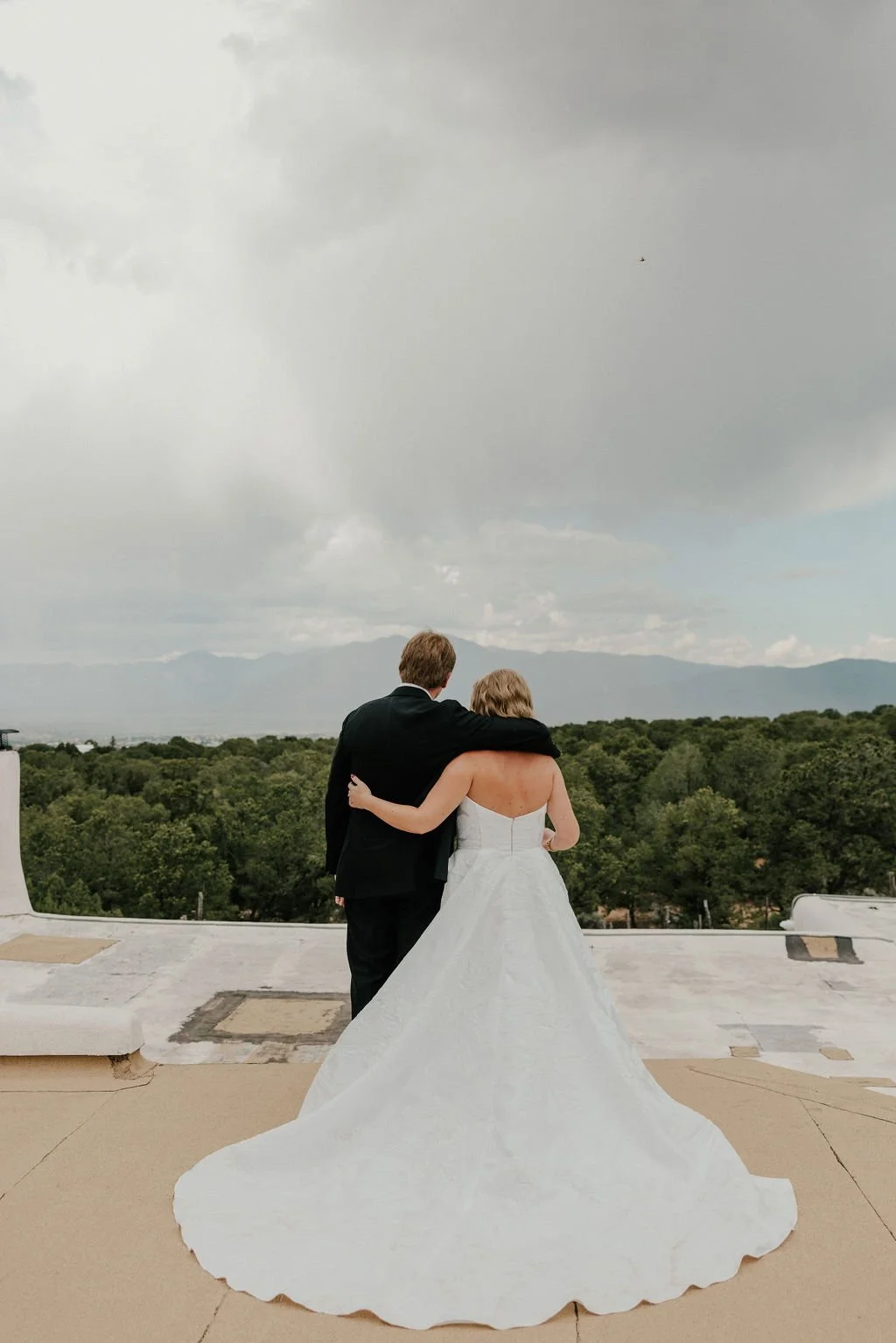
A Taos mountain elopement photographer is a local wedding specialist who plans, hikes, and shoots intimate ceremonies in the Sangre de Cristo range around Taos, New Mexico, handling permits, altitude logistics, and golden-hour timing so couples get authentic, adventure-style photos without the stress of a traditional wedding. Shutterfreek has spent over a decade photographing elopements across the American Southwest, and Taos is one of the destinations we return to most, because few places offer this combination of alpine scenery, desert light, and genuine solitude within a single afternoon of driving.
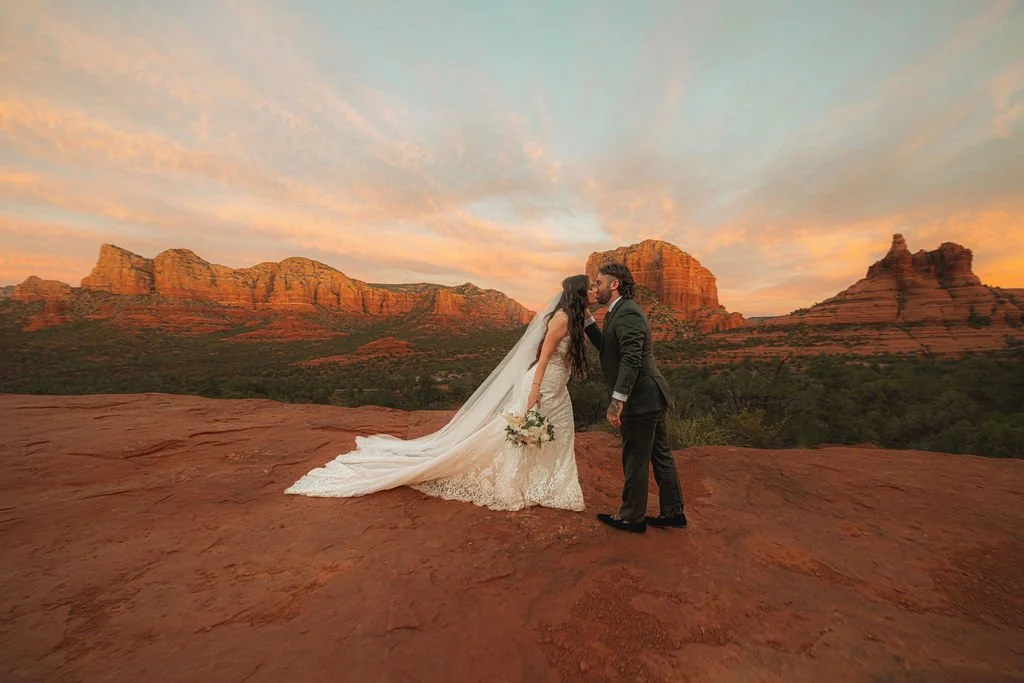
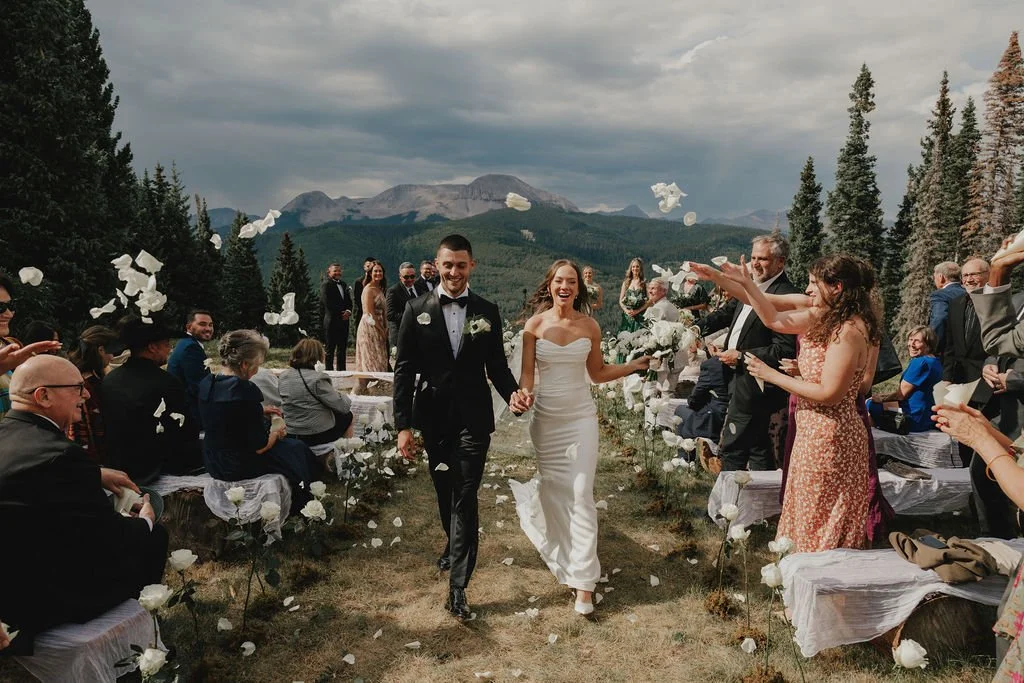
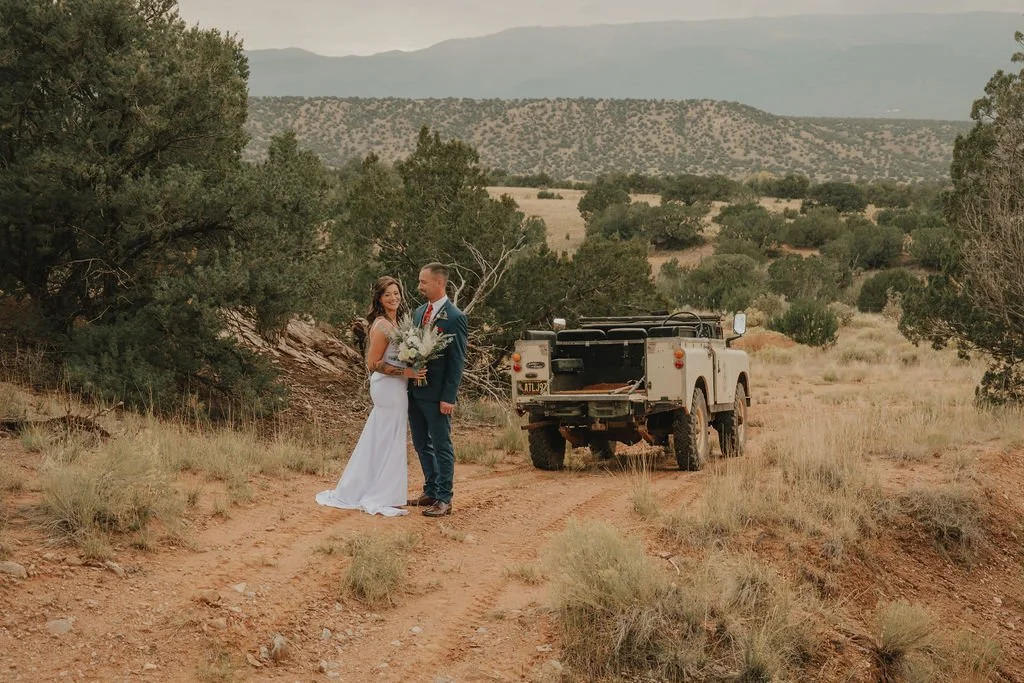
If you're searching for a Taos mountain elopement photographer, you're probably picturing something specific: two people, a mountain ridge, maybe some aspen trees turning gold, and none of the noise of a 150-guest reception. That instinct is a good one. Taos was built for this kind of wedding. This guide walks through why the region works so well for elopements, what a real shoot day looks like, where to go, when to go, what it costs, and how to plan the logistics so the day feels easy instead of overwhelming.
Why Taos Is One of the Best Places for a Mountain Elopement
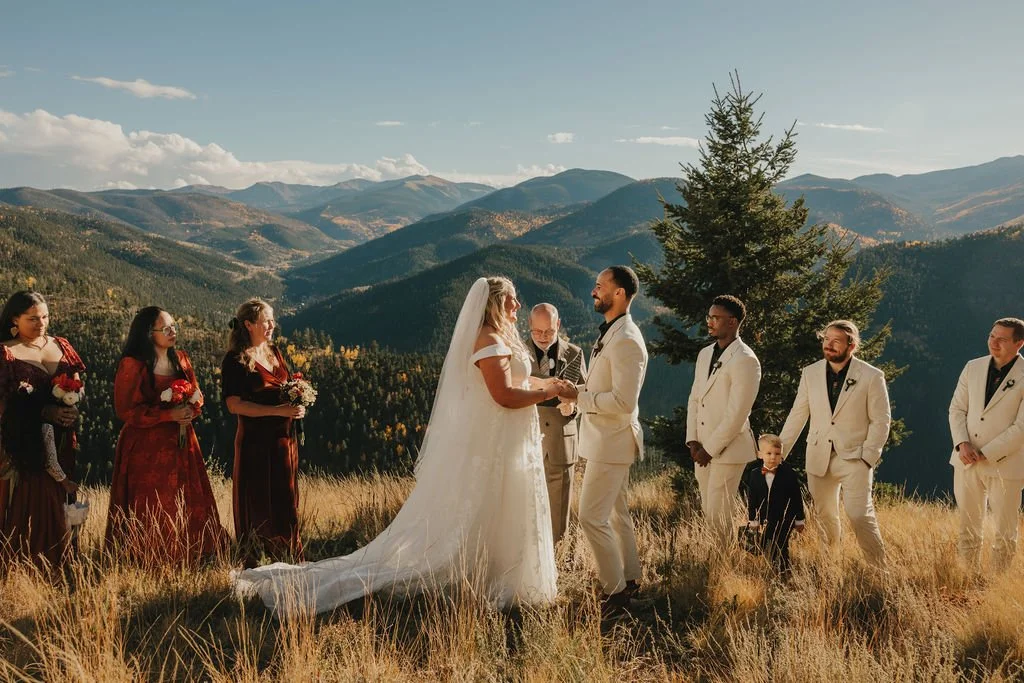
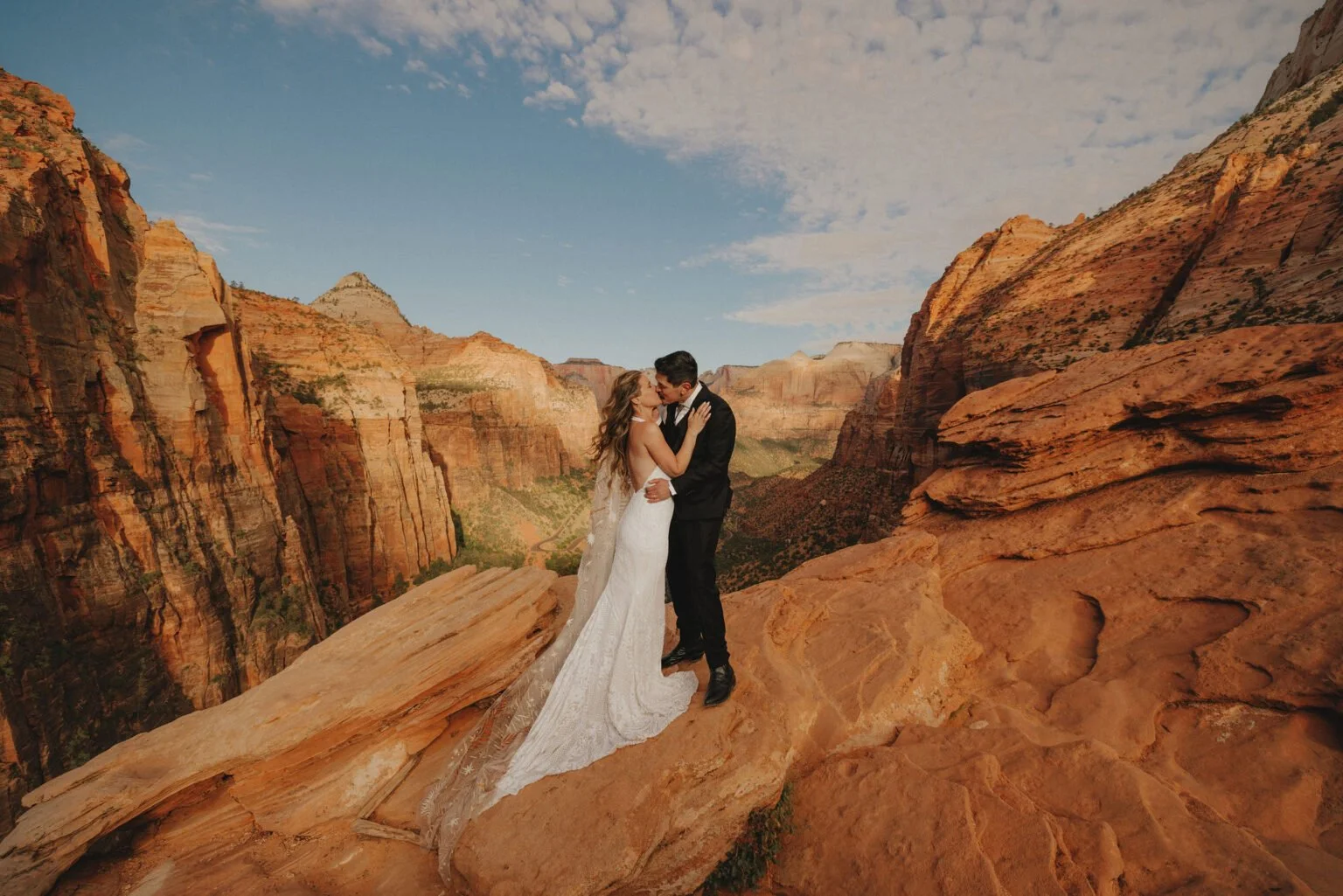
Taos sits at roughly 6,900 feet, with Wheeler Peak, New Mexico's highest point, rising to over 13,000 feet just outside town. That elevation range means couples can choose their scenery: high alpine meadows and pine forest above 10,000 feet, or the softer piñon-and-sage foothills closer to town, all within a 20–40 minute drive.
A few reasons couples keep choosing this region for an adventure elopement instead of a hotel ballroom:
Light quality. New Mexico's high desert air produces some of the clearest, most dramatic light in the country, especially at sunrise and sunset.
Variety in one trip. You can shoot alpine forest, high desert mesa, and adobe architecture in a single day without changing states.
Privacy. Much of the Carson National Forest land around Taos sees very little foot traffic on weekdays, which means real solitude for your ceremony.
Cultural depth. Taos Pueblo and the surrounding area carry centuries of history, giving the region a texture that a generic mountain backdrop doesn't have.
What to Expect When You Hire a Taos Mountain Elopement Photographer
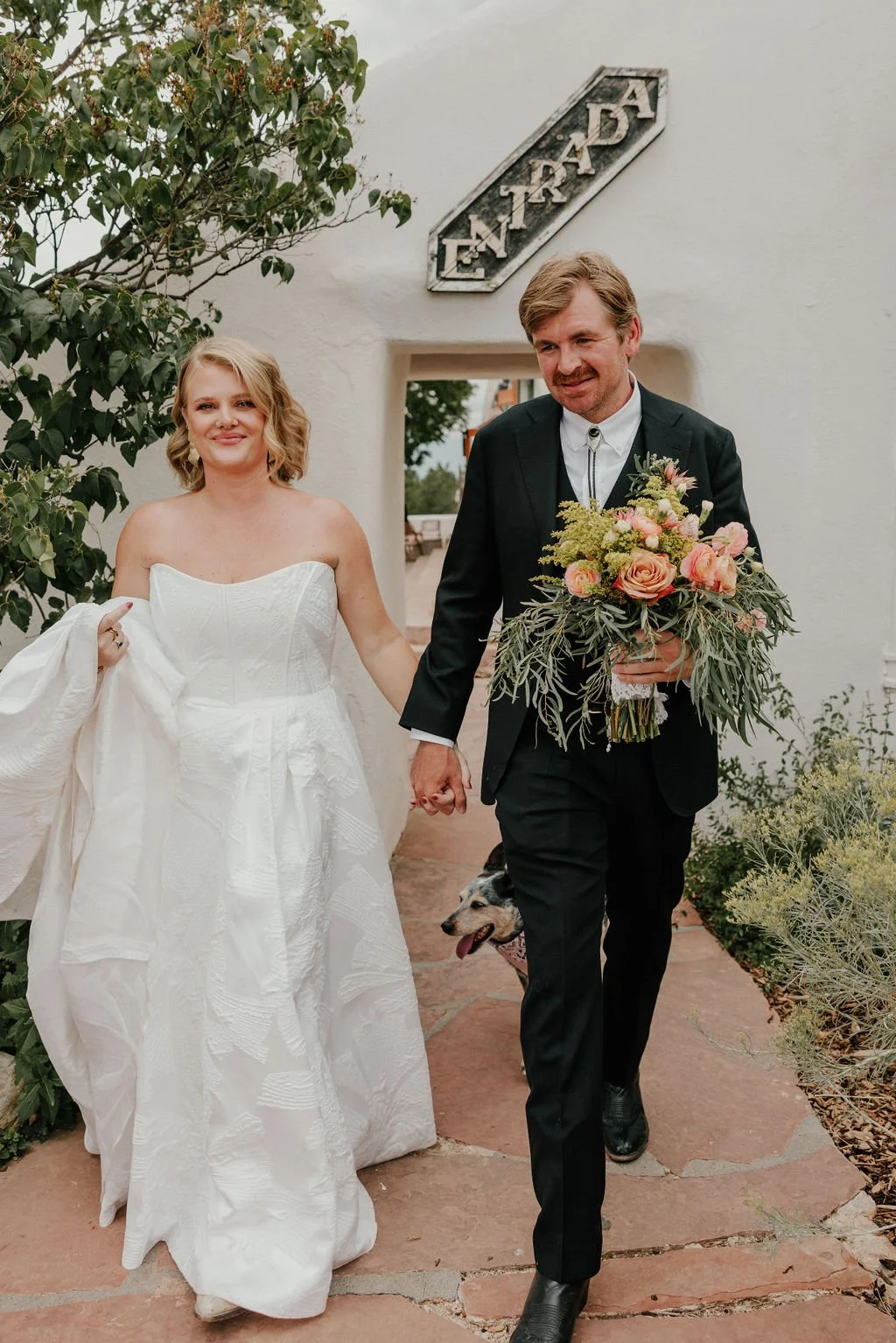
A well-run elopement day is closer to a guided hike with a camera than a traditional wedding shoot. Here's the typical flow we use with couples:
Pre-trip planning call. We talk through fitness level, desired scenery (alpine vs. desert vs. mixed), season, and any permit requirements for the specific trail or land.
Sunrise or sunset timing. Most ceremonies are scheduled around golden hour, which in Taos can mean a 5:30 a.m. start in summer or a mid-afternoon start in winter.
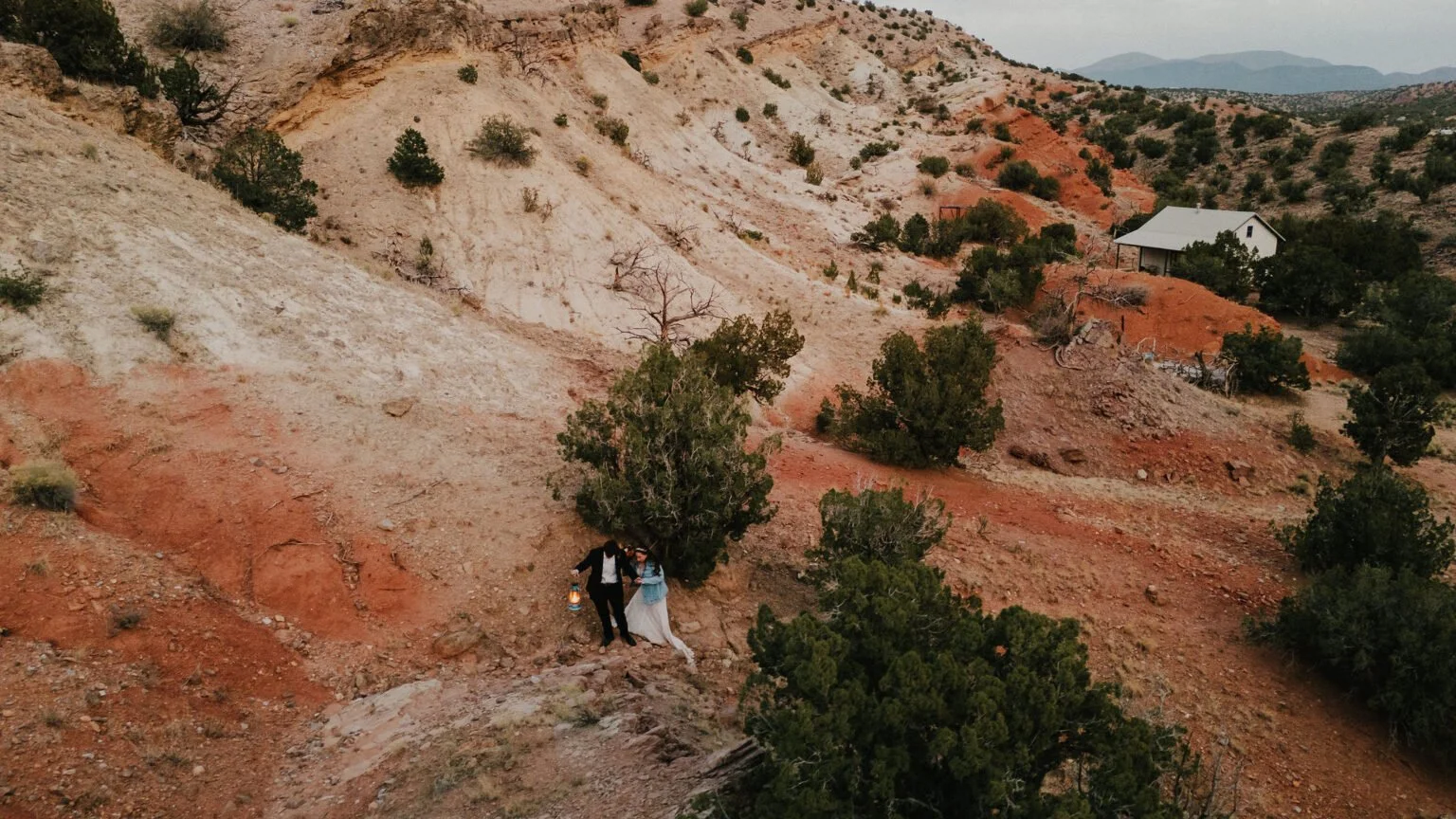
The hike or drive-in. Some locations are roadside; others require a moderate hike of 1–3 miles. We scout in advance so there are no surprises.
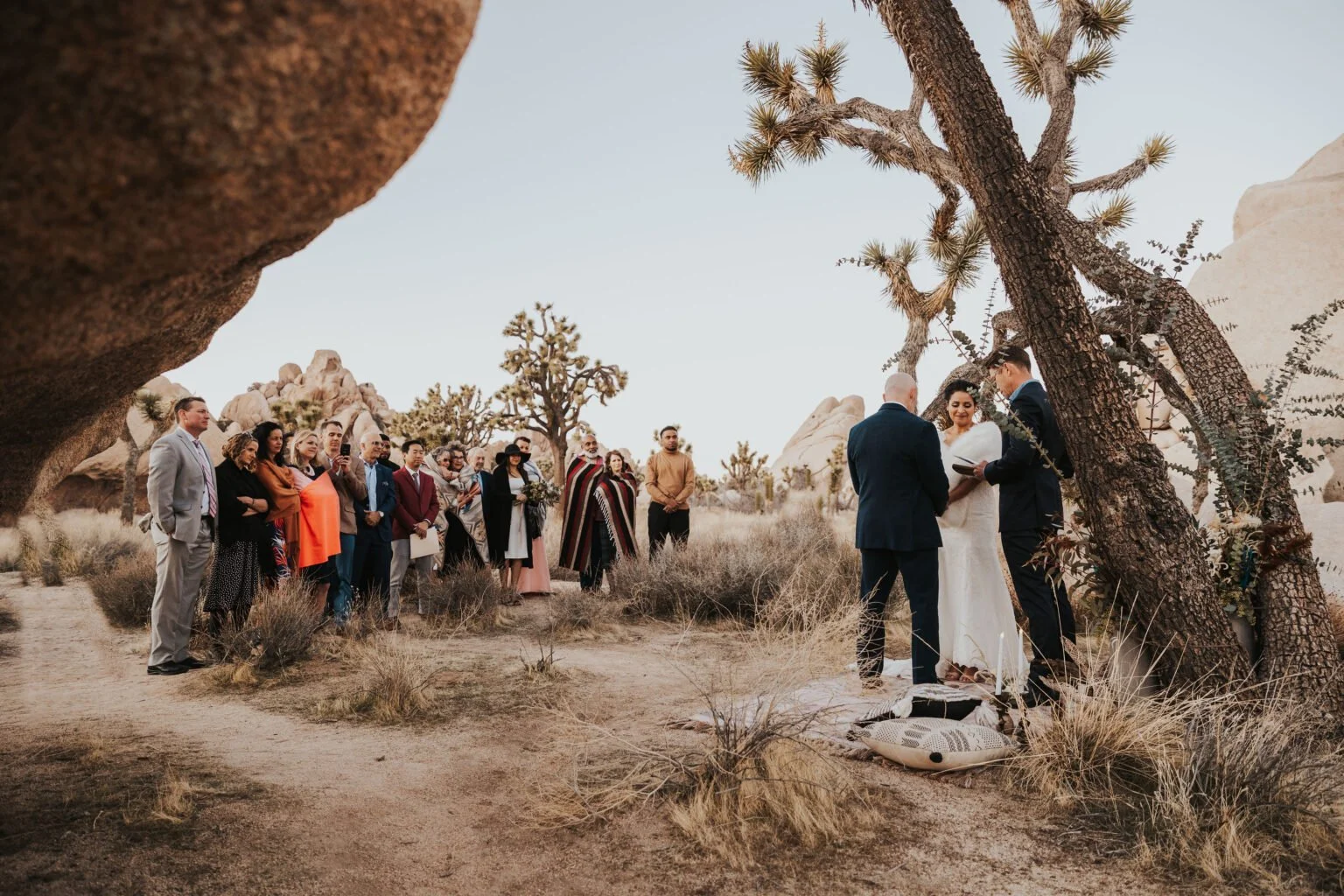
Ceremony and portraits. A celebrant or self-solemnized vows, followed by portraits that use the terrain rather than fighting it.
Weather contingency. Mountain weather changes fast. Every plan we build has a backup location at lower elevation.
This is the same framework we use for our New Mexico weddings and adventure elopements, adjusted for whatever terrain a couple picks.
Best Mountain Elopement Locations Near Taos
Not every trailhead is elopement-friendly, some require permits, some are too crowded on weekends, and some simply don't have the right light angle for photos. Below is a comparison of the locations we recommend most often.
| Location | Elevation | Access | Permit Needed | Best For |
|---|---|---|---|---|
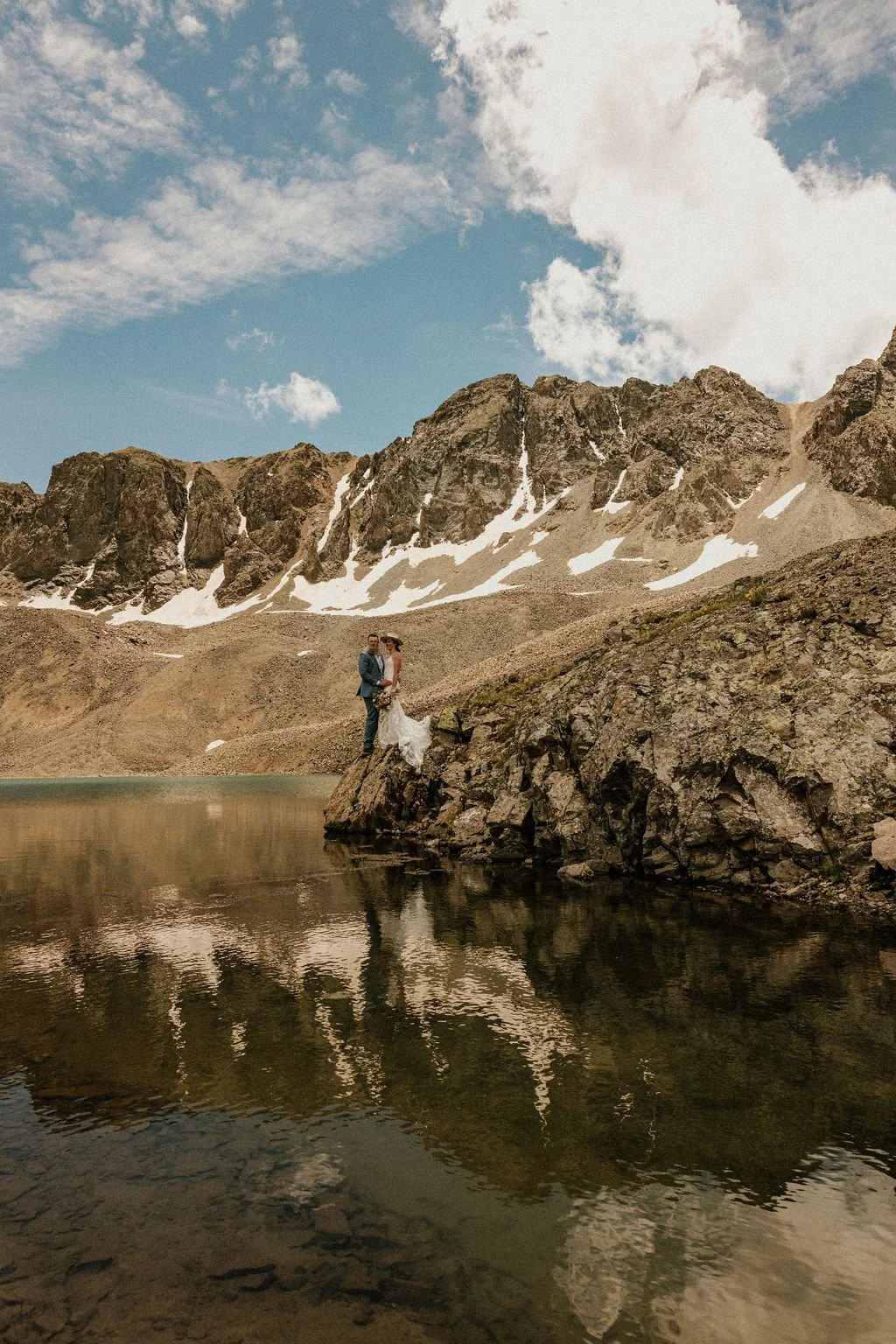
| Williams Lake Trail | ~11,040 ft | Moderate hike (~4 mi round trip) | Carson NF day-use, no permit for small groups | Alpine lake backdrop, aspen color in fall |
| Taos Ski Valley Ridge | ~9,200–10,800 ft | Drive-up + short walk, or chairlift in summer | None for ridge access | Panoramic mountain views, easy logistics |
| Rio Grande del Norte (Gorge) | ~7,000 ft | Roadside pull-offs | None | Dramatic canyon views, sunset light |
| Carson National Forest backroads | 8,000–9,500 ft | High-clearance vehicle recommended | Group size limits apply | Total privacy, pine forest setting |
| Taos Pueblo area foothills | ~7,200 ft | Drive-up | Photography restrictions on Pueblo land itself | Desert-mountain hybrid look |
Note: permit requirements change seasonally and by group size. Shutterfreek confirms current rules before every booking.
Best Time of Year for a Taos Mountain Elopement
Season affects everything from road access to the color palette in your photos. Here's how the four seasons compare for mountain elopements specifically.
| Season | Weather at Elevation | Access | Photo Style | Trade-Offs |
|---|---|---|---|---|
| Spring (Apr–May) | Cool, occasional snow above 9,000 ft | Some high trails still closed | Fresh green, dramatic clouds | Unpredictable weather |
| Summer (Jun–Aug) | Mild days, cool mornings | Full access to all trails | Bright alpine meadows, wildflowers | Afternoon thunderstorms are common |
| Fall (Sept–Oct) | Crisp, stable | Full access, best window overall | Gold aspens, clear skies | Books up early — limited weekday availability |
| Winter (Nov–Mar) | Cold, snow-covered | Many trails require snowshoes | Dramatic snow, quiet ski-town backdrop | Requires cold-weather gear and shorter days |
For most couples, September and early October offer the best balance of stable weather, aspen color, and manageable logistics, but a genuinely private winter elopement in fresh snow is one of the most requested shoots we do every year.
What Makes a Taos Elopement Photographer Worth Hiring (vs. DIY)
Some couples consider skipping a hired photographer to save money, especially for a small ceremony. In our experience running dozens of these trips, three things consistently make a professional worth the cost:
Local terrain knowledge. Knowing which trailheads flood with weekend hikers, which roads wash out after rain, and which ridgelines actually catch sunset light isn't something you learn from a map.
Permit and land-use awareness. National Forest, BLM, and Pueblo land each carry different rules. A photographer who works this region regularly keeps that current so you're not turned away on the day.
Safety margin at altitude. Above 9,000 feet, weather and fatigue change faster than most visitors expect. Having someone who's guided couples through that terrain before reduces real risk, not just photo risk.
This is also why we treat every Taos booking the same way we treat our Utah adventure elopements: a full site-specific plan, not a copy-paste itinerary.
How Much Does a Taos Mountain Elopement Photographer Cost?
Pricing for elopement photography in the Taos area generally falls into three tiers, based on coverage length and travel included:
Half-day (3–4 hours): Best for roadside or short-hike locations. Typically covers ceremony plus a focused portrait session.
Full-day (6–8 hours): Covers a longer hike-in location, multiple looks, and both ceremony and golden-hour portraits.
Multi-day (2–3 days): Popular with couples combining the elopement with a Taos or Santa Fe honeymoon stretch, including a "second look" session at a different elevation or location.
Exact pricing depends on hike distance, permit costs, and season, fall and holiday weeks run higher demand. We recommend booking 6–9 months out for peak fall dates.
Practical Planning Tips for Your Mountain Elopement Day
Layer clothing. Temperatures can swing 30+ degrees between sunrise and midday at elevation. Bring a jacket you're willing to be photographed in and one you're not.
Choose footwear you can actually hike in. Many couples bring a second pair of shoes for the trail and switch for ceremony portraits.
Build in a weather buffer day. If your timeline allows, a 2-day window gives us a fallback date if a storm rolls in.
Hydrate before the hike. Altitude sickness is a real risk for visitors coming from sea level, even on short trails.
Get your license sorted in advance. New Mexico marriage licenses are issued at the county clerk's office and are valid statewide, but same-day issuance isn't guaranteed everywhere, so plan a day ahead if possible.
Permits, Land Access, and Legal Logistics
Most Carson National Forest land allows small-group ceremonies without a special-use permit, but rules shift depending on group size, whether you're bringing additional guests, and whether you plan to use drone photography (which requires separate FAA and land-management authorization in most of this region). Taos Pueblo land is separately governed and has its own restrictions on photography, we always confirm boundaries before scouting a location so no part of your ceremony accidentally crosses into restricted land.
If your ideal location is inside Rio Grande del Norte National Monument, day-use rules are more relaxed, but vehicle access to certain overlooks can be seasonal. This is one of the reasons a dedicated elopement photography planning call happens before any location is finalized, not after.
How Shutterfreek Approaches Every Taos Elopement
We've built our process around three things couples consistently tell us they care about most:
Real scouting, not stock recommendations. Every location we suggest, we've either shot before or scouted specifically for the season you're booking.
No rushed timelines. We build extra time into every itinerary for weather delays, altitude adjustment, and simply slowing down to enjoy the day.
Full-resolution, unedited-feel storytelling. We lean toward natural light and minimal posing so the final gallery feels like your actual day, not a styled shoot.
This same philosophy carries across our other adventure elopement work, including our New Mexico adventure elopements portfolio, where couples can see full galleries from similar terrain before booking.
Ready to Plan Your Taos Mountain Elopement?
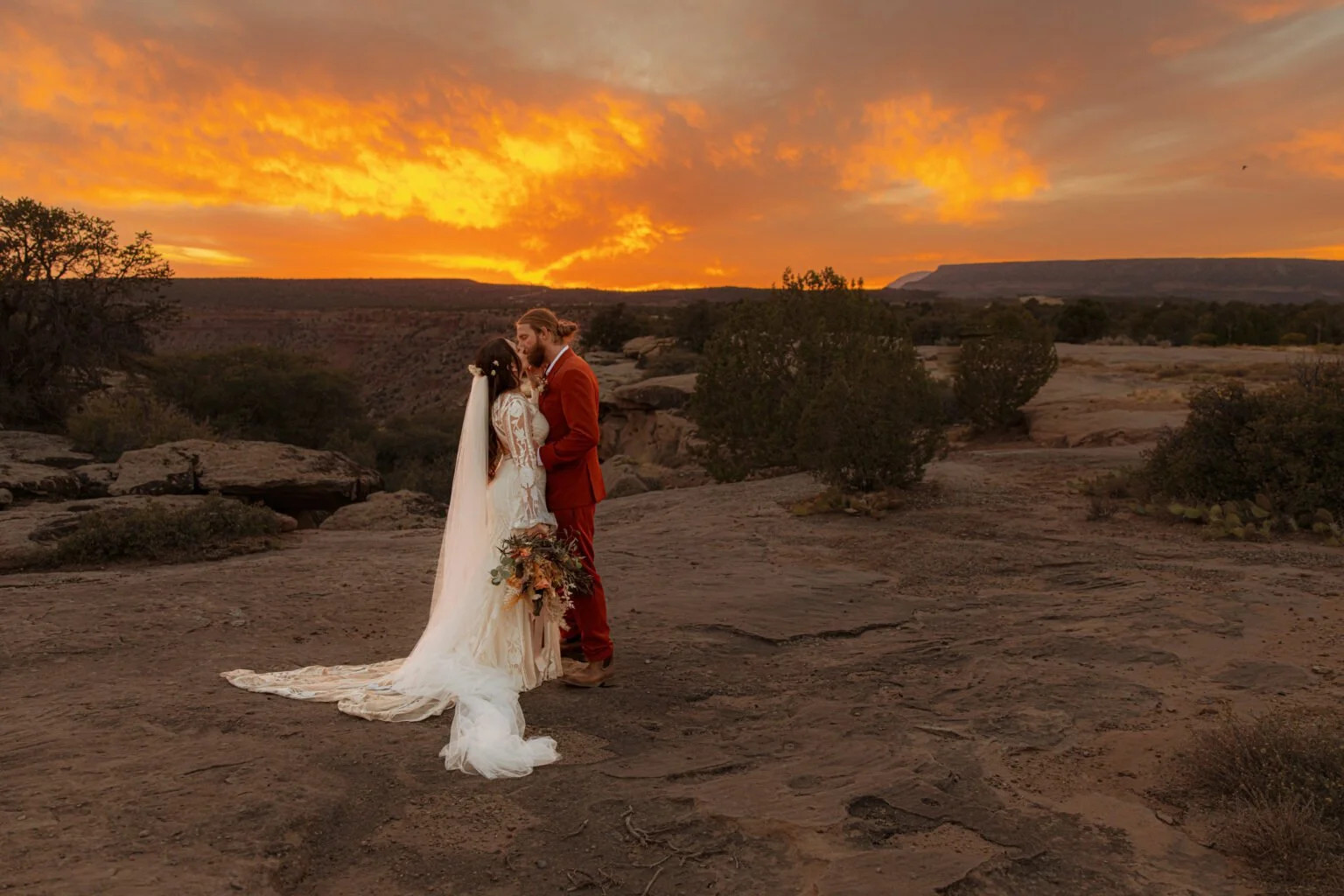
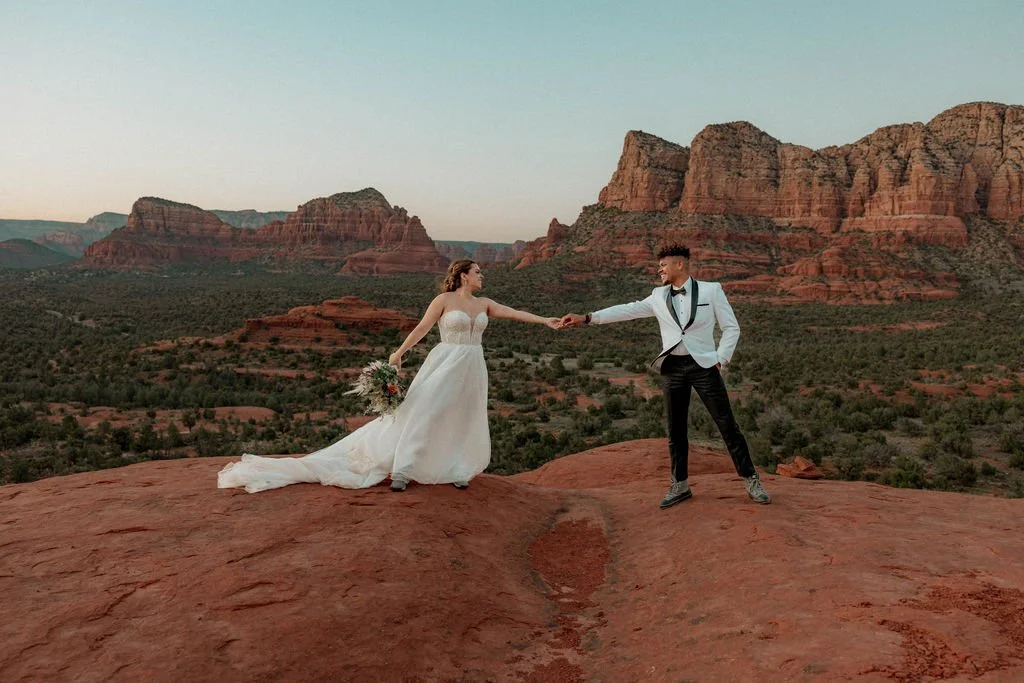
Taos offers something few U.S. wedding destinations can match: genuine alpine solitude within a short drive of high desert scenery, centuries-old cultural history, and light that photographers travel across the country to shoot in. Whether you're picturing sunrise vows above 10,000 feet or a quiet sunset ceremony at the edge of the Rio Grande Gorge, the right local photographer makes the logistics disappear so the day itself can just be the day.
Shutterfreek has been documenting adventure elopements across the Southwest for over a decade, and our elopement photography services are built specifically around mountain and high-desert terrain like Taos offers. If you're comparing regions, our galleries from Utah adventure elopements and other New Mexico locations can help you decide which landscape fits your vision, then we'll build the plan around it.
Frequently Asked Questions
-
For small groups (typically under 10 people) on Carson National Forest land, most locations do not require a special-use permit for a private ceremony. Larger groups, commercial drone use, or ceremonies inside specific protected zones may require additional authorization, which we confirm before booking.
-
September and early October are generally considered ideal, offering stable weather, aspen color, and full trail access. Late June through August also works well but carries a higher chance of afternoon thunderstorms at elevation.
-
It depends on the location. Roadside spots like Taos Ski Valley Ridge or Rio Grande Gorge overlook require little to no hiking. Locations like Williams Lake involve a moderate 4-mile round-trip hike at high elevation, which is best suited to couples comfortable with a few hours of walking.
-
New Mexico marriage licenses are obtained through a county clerk's office and are valid statewide with no waiting period, but same-day issuance depends on the specific county office's hours and process. We recommend securing your license at least one business day before your ceremony.
-
For peak fall weekends, 6–9 months in advance is recommended due to limited weekday and weekend availability. Winter and early spring dates can often be booked with 2–4 months' notice.
Keep reading