Farmington Photography Guide: Best Locations, Lighting Tips & Hidden Gems in New Mexico
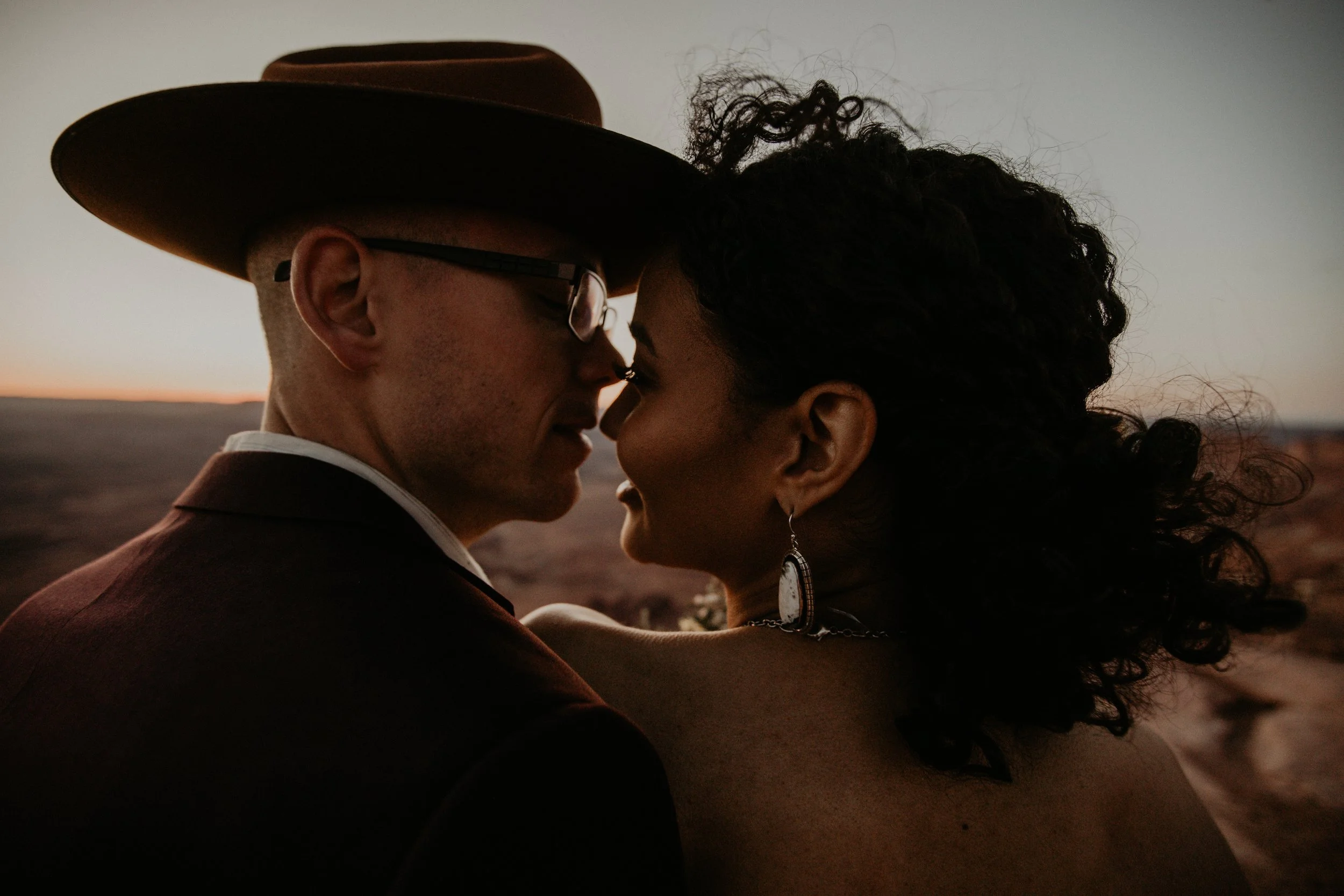
Farmington, New Mexico is one of the Southwest's most underrated photography destinations — a high-desert city where ancient ruins, sculpted badlands, river corridors, and dramatic skies converge to create endlessly compelling imagery. This Farmington photography guide covers the top shooting locations, the best times of day and year to visit, gear recommendations, permit requirements, and expert tips for capturing everything from sweeping landscape compositions to intimate couples portraits and adventure elopements. Whether you are a solo photographer chasing otherworldly rock formations or a couple looking for an unforgettable backdrop for your elopement session, Farmington delivers a variety that few New Mexico cities can match — without the crowds that follow more famous destinations.
Sitting at the confluence of the San Juan, Animas, and La Plata rivers in the Four Corners region, Farmington offers access to terrain that shifts from riverside cottonwood groves and verdant meadows to moon-like badlands and ancient Ancestral Puebloan ruins — all within a short drive. This diversity is the cornerstone of what makes a Farmington photography session so rewarding, no matter your experience level or preferred genre.
Top Photography Locations Around Farmington, NM
1. Bisti/De-Na-Zin Wilderness — The Crown Jewel
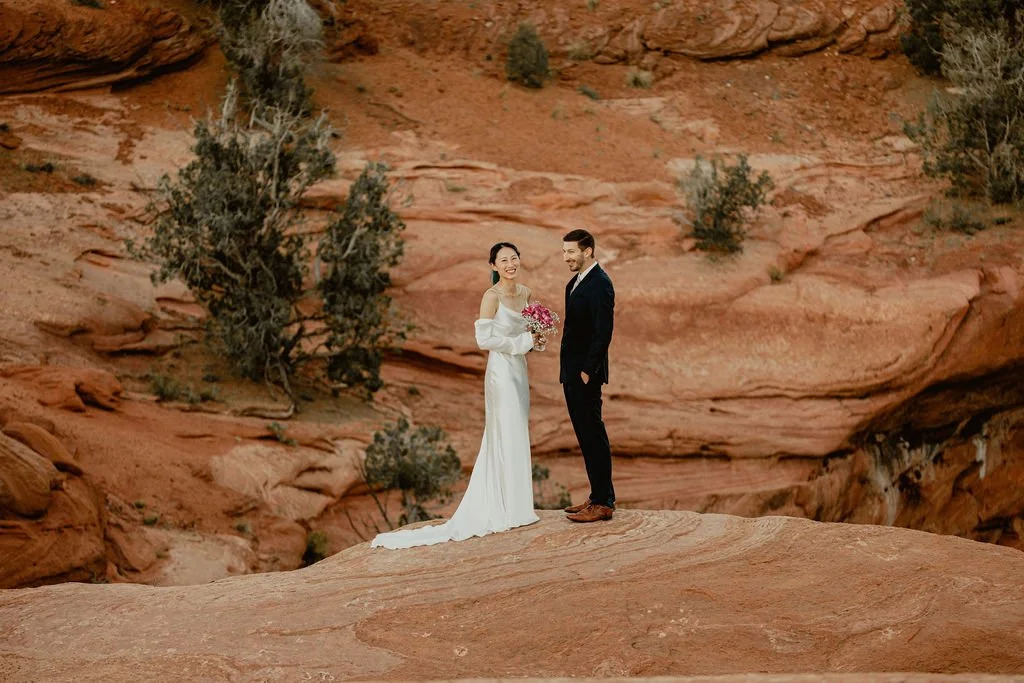
No Farmington photography guide would be complete without leading with the Bisti/De-Na-Zin Wilderness. Located roughly 37 miles south of Farmington, this BLM-managed wilderness area is a surreal landscape of hoodoos, cracked earth, petrified wood, and "alien egg" rock formations shaped over millions of years. Light here behaves like nowhere else — at golden hour, the pale grey badlands transform into a warm palette of amber, rose, and violet that makes every frame look like a scene from another planet.
For couples seeking a truly one-of-a-kind elopement backdrop, Bisti is unparalleled in New Mexico. At Shutterfreek, we have guided elopements and portrait sessions throughout the Southwest, and Bisti consistently surprises couples with how intimate and cinematic it feels. If you are exploring New Mexico adventure elopements, Bisti belongs at the top of your shortlist.
Best times: Sunrise (April–October) and late afternoon in winter. Bring sturdy footwear, extra water, and a compass — there are no marked trails and cell service is nonexistent.
2. Angel Peak Scenic Area
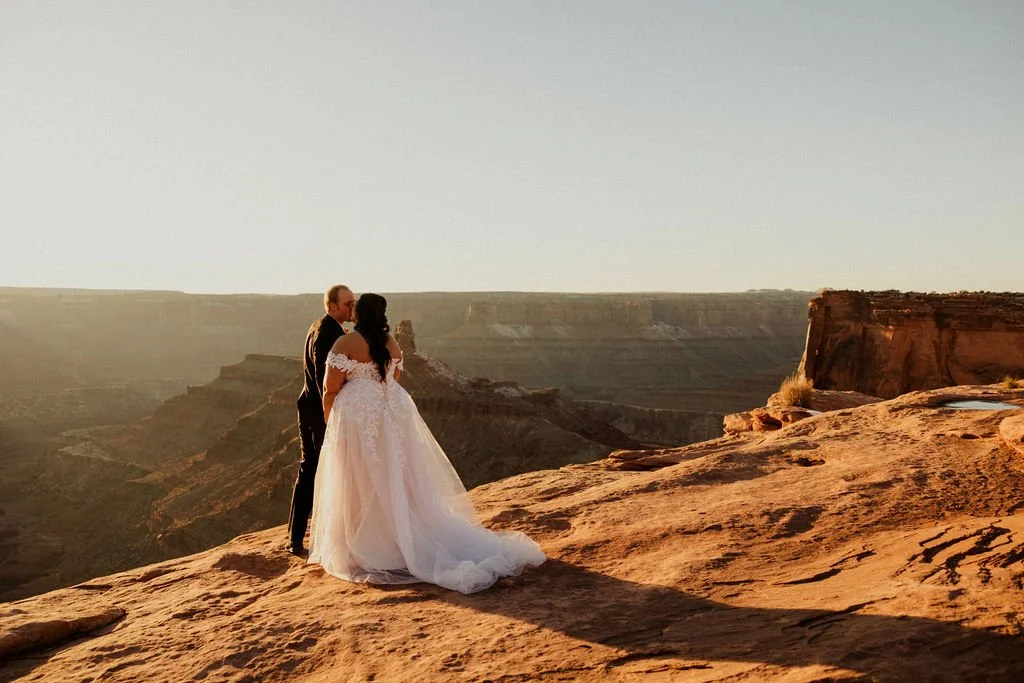
About 15 miles south of Bloomfield (adjacent to Farmington), Angel Peak offers sweeping canyon views and dramatically stratified rock formations in shades of burgundy, cream, and ochre. The BLM campground here provides accessible viewpoints where even a smartphone can capture stunning compositions, but telephoto lenses and wide-angles both shine here depending on what you want to emphasize — intimate rock detail or the full scale of the canyon.
Angel Peak is also an ideal warm-up location for photographers preparing for a more demanding Bisti expedition, or for elopement couples who want accessible beauty without a strenuous hike.
3. Riverside at the Confluence — San Juan, Animas & La Plata Rivers
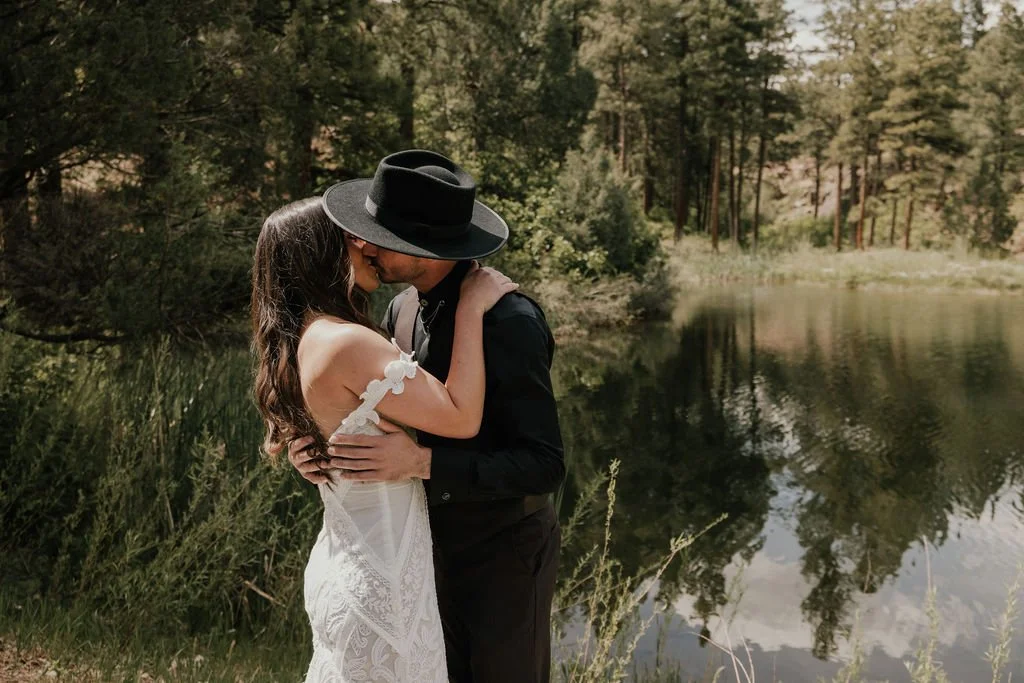
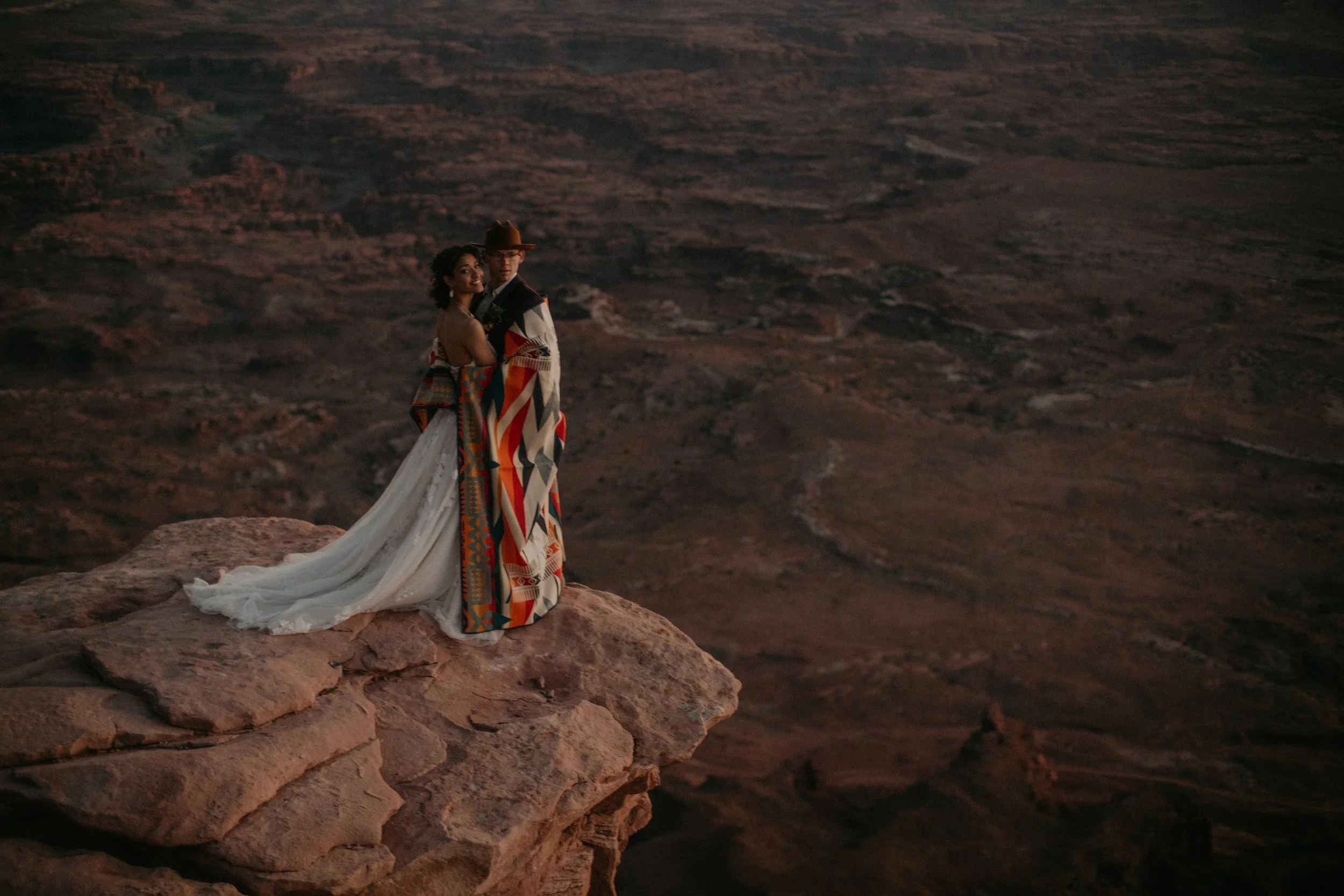
The rivers that define Farmington's geography are a gift to photographers who love organic, soft, and reflective imagery. The Animas River Trail winds through lush riparian corridors thick with cottonwoods that turn brilliant gold every October — arguably the most photogenic two-week window in the entire city. Morning light filtering through cottonwood canopies creates a dreamy, dappled quality that is nearly impossible to replicate in a studio.
Couples photography here benefits enormously from the natural softboxing effect of the tree canopy. These locations are also beginner-friendly, making them excellent starting points for photographers just developing their eye for natural light.
4. Aztec Ruins National Monument
While technically located in the nearby city of Aztec (about 14 miles from Farmington), Aztec Ruins National Monument is firmly within the Farmington photography orbit and deserves a dedicated section. The Great Kiva — a fully reconstructed circular ceremonial chamber — is one of the most architecturally dramatic subjects in the Four Corners region. Morning light entering the monument grounds creates long, directional shadows that add extraordinary depth to both wide-angle architectural frames and tighter portrait compositions. Note that commercial photography here requires a permit; always contact the NPS in advance if you plan to shoot for a business or publication.
5. Salmon Ruins & Heritage Park
Salmon Ruins, just west of Bloomfield, is another Ancestral Puebloan site that rewards the patient photographer. Unlike the busier national monuments in the region, Salmon Ruins maintains a quiet, reflective atmosphere that lends itself to storytelling photography — the kind of imagery that pairs heritage and human connection in the same frame. Late afternoon light grazes the pueblo walls at a low angle, revealing incredible texture in the sandstone construction.
Farmington Photography Locations at a Glance
Use this quick-reference table to match each location to your photography style and skill level:
| Location | Best Time | Light Quality | Subject Type | Skill Level |
|---|---|---|---|---|
| Bisti/De-Na-Zin Wilderness | Golden Hour | Dramatic / Warm | Landscape / Portrait | Intermediate |
| Angel Peak | Sunrise | Soft / Pastel | Landscape / Elopement | Beginner |
| San Juan River | Afternoon | Reflective / Natural | Couples / Wildlife | Beginner |
| Aztec Ruins NM | Morning | Golden / Even | Architecture / Portrait | All Levels |
| Salmon Ruins | Late Afternoon | Warm / Textured | Heritage / Portrait | All Levels |
Best Lighting Conditions & Seasons for Farmington Photography
Farmington sits at approximately 5,300 feet elevation, which means the atmosphere is thinner and light travels with less diffusion than at sea level. The practical effect: colors are more saturated at golden hour, sunrises and sunsets happen fast, and the transition from bright sun to deep shadow is more abrupt than photographers used to coastal environments might expect.
Golden Hour & Blue Hour
The hour after sunrise and the hour before sunset are your prime windows at every Farmington location. At Bisti, golden hour light turns the grey hoodoos into copper and rose sculptures. Along the river corridor, the same light filters horizontally through cottonwood leaves and creates a painterly, backlit effect that is ideal for portrait work. Blue hour — the 20–30 minutes after sunset — is particularly valuable for landscape images where you want deep, saturated sky tones without harsh contrast.
Season-by-Season Breakdown
Spring (March–May): Wildflowers appear along river corridors in April and May. Temperatures are comfortable (50–75°F), making this one of the most pleasant seasons for extended outdoor sessions. Storm systems rolling in from the west create dramatic cloud formations over the badlands.
Summer (June–August): Monsoon season brings afternoon thunderstorms that produce extraordinary cloudscapes and double rainbows over the high desert. Shoot mornings before 10 AM to avoid heat and harsh light. Heat shimmer can actually be used creatively for telephoto shots compressing distant formations.
Fall (September–November): The undisputed favorite of Shutterfreek's photographers. Cottonwood gold along the Animas River peaks in mid-to-late October. Combined with cooler temperatures and the lingering warmth of late-season light, fall is peak elopement season around Farmington.
Winter (December–February): Occasional snow transforms both Bisti and Angel Peak into monochromatic, minimalist canvases. Snow rarely lingers more than a day or two, so weather monitoring is essential. Winter sunrises hit the canyon walls at an ultra-low angle, maximizing texture and shadow.
Gear Recommendations for Farmington, NM Photography
The diversity of Farmington's photography environments means your ideal kit will depend on your primary subject. Below are our core gear recommendations organized by shooting scenario:
Wide-angle lens (16–35mm): Essential for capturing the full scale of Bisti hoodoos, Angel Peak canyon panoramas, and the river's sweeping bends. A fast aperture (f/2.8 or wider) also opens up low-light creative options at blue hour.
Mid-range zoom (24–70mm): The workhorse for couples and portrait sessions. This range lets you work at a natural-feeling distance from your subjects while including enough environmental context to tell the location's story.
Telephoto (70–200mm): Compresses the layered canyon walls at Angel Peak beautifully and is invaluable for isolating details in the sandstone formations at Salmon Ruins and Aztec Ruins.
Circular polarizer filter: The single most impactful accessory for New Mexico high-desert photography. It saturates blue skies, cuts glare off the river surface, and enhances the contrast between red rock and white clouds.
Drone (Part 107 certification required): Aerial perspectives of the Bisti formations and the river confluence are extraordinary. Check BLM and NPS regulations carefully before flying — restrictions vary by zone and season.
Planning an Elopement or Couples Session Near Farmington
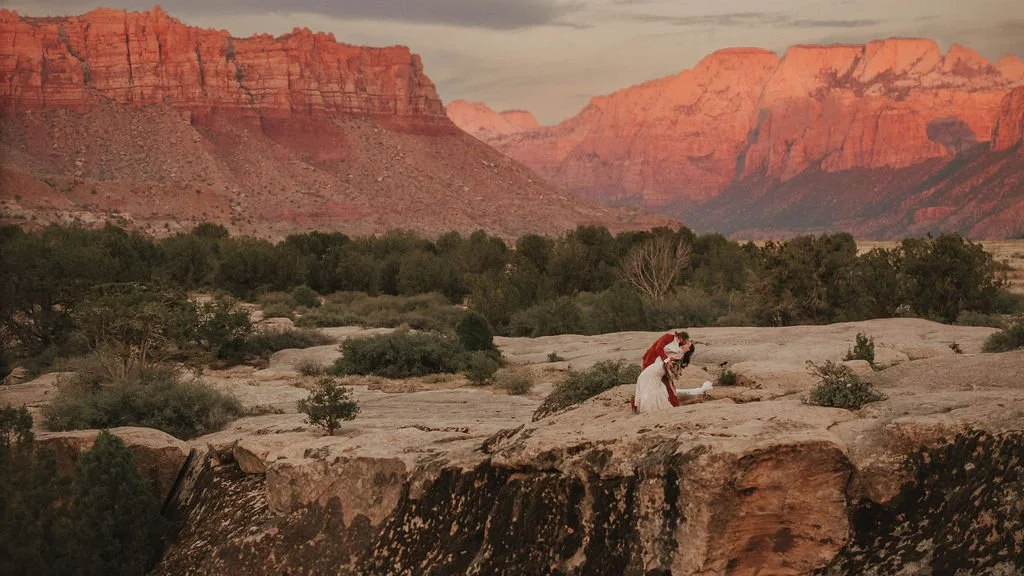
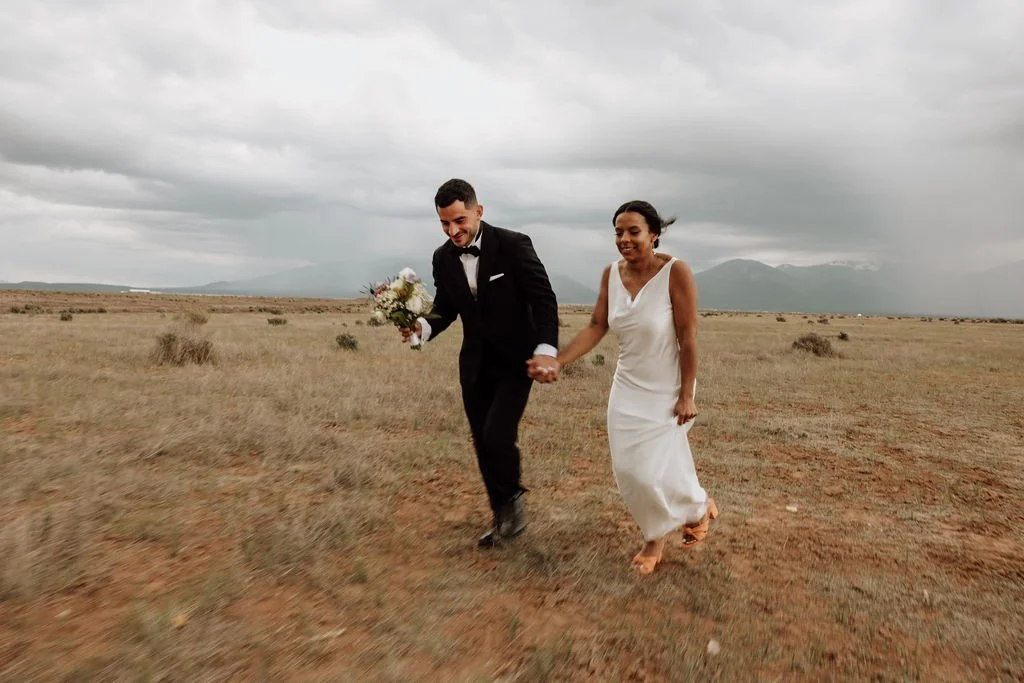
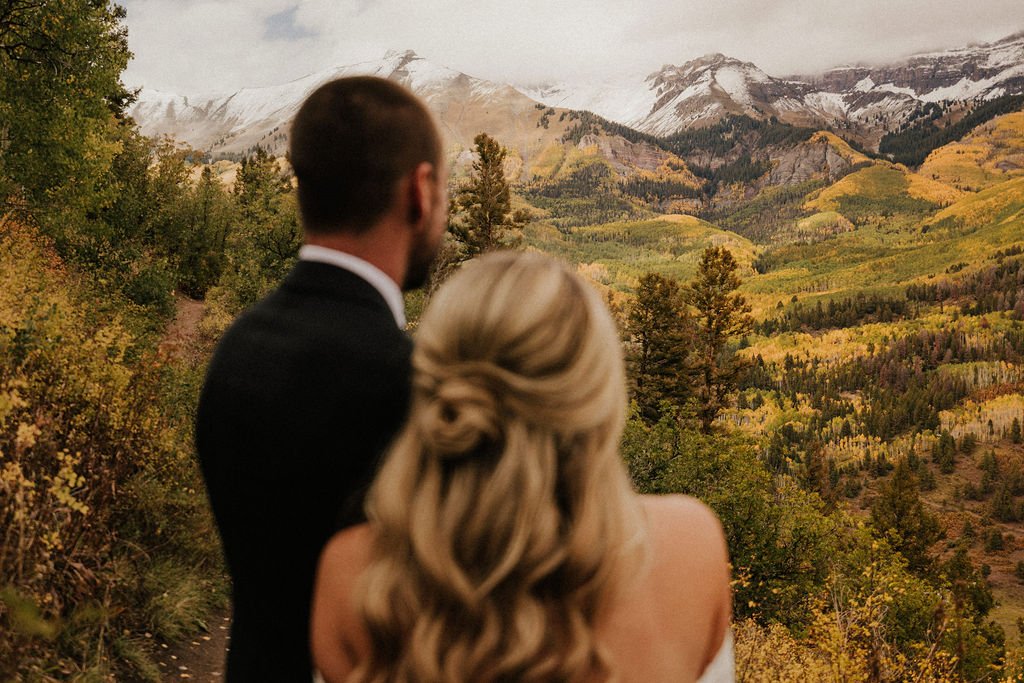
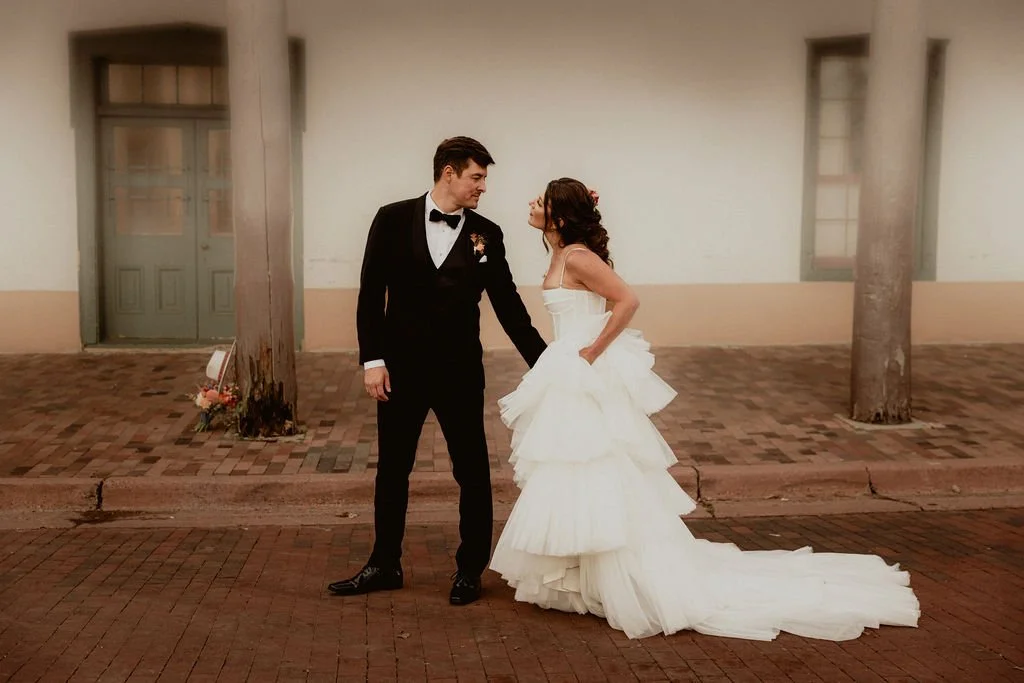
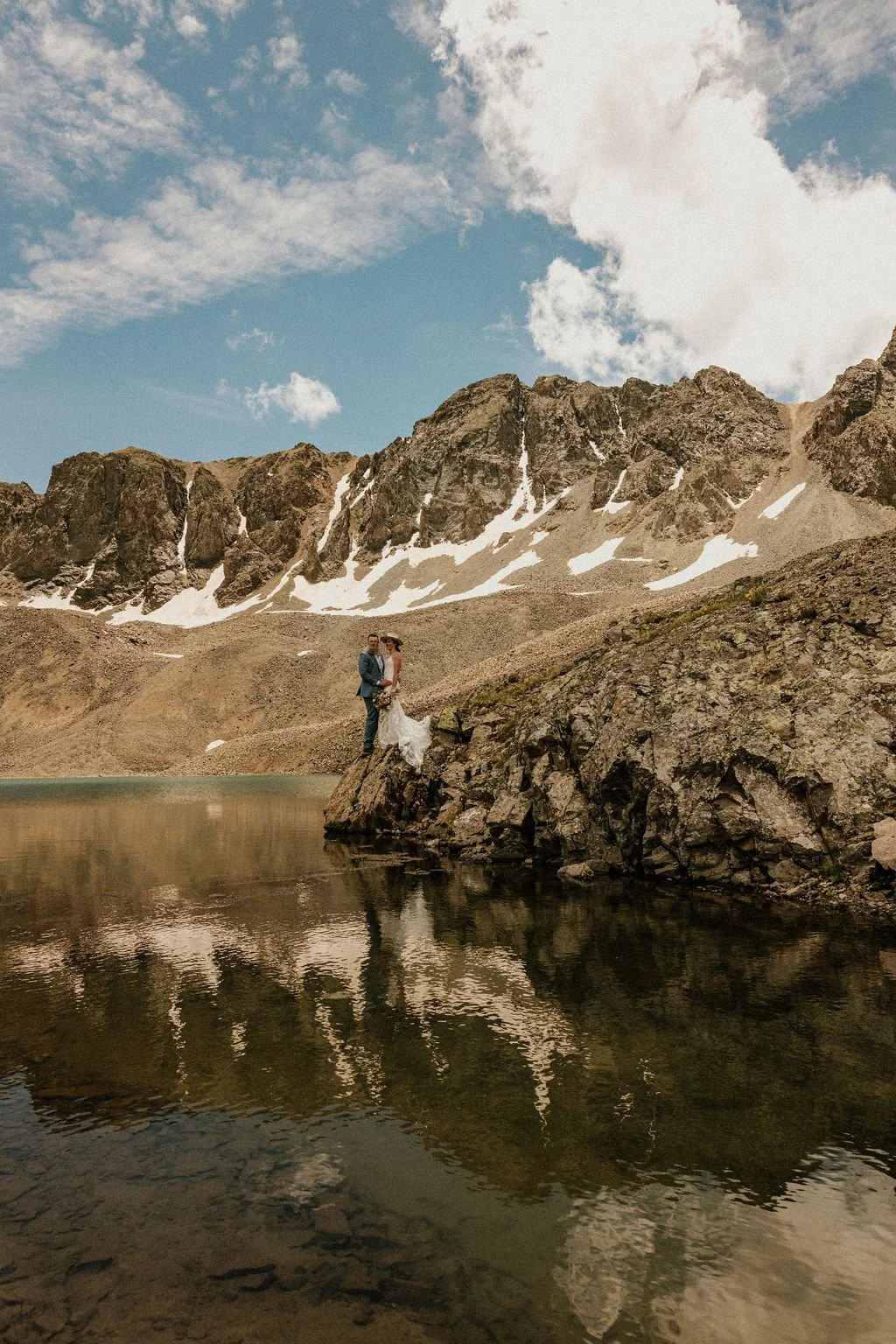
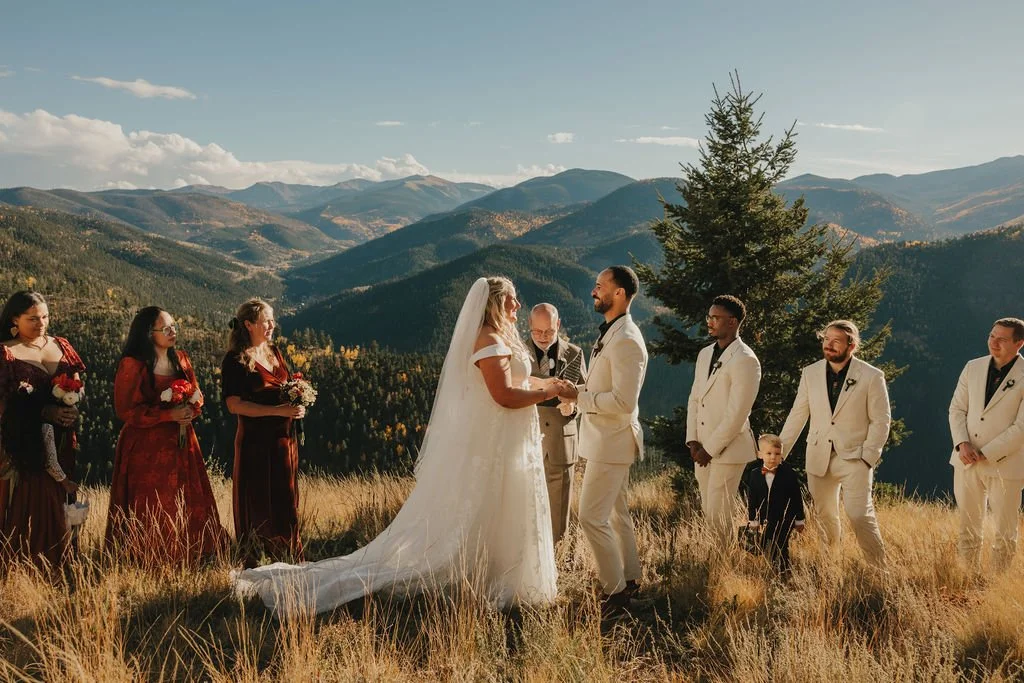
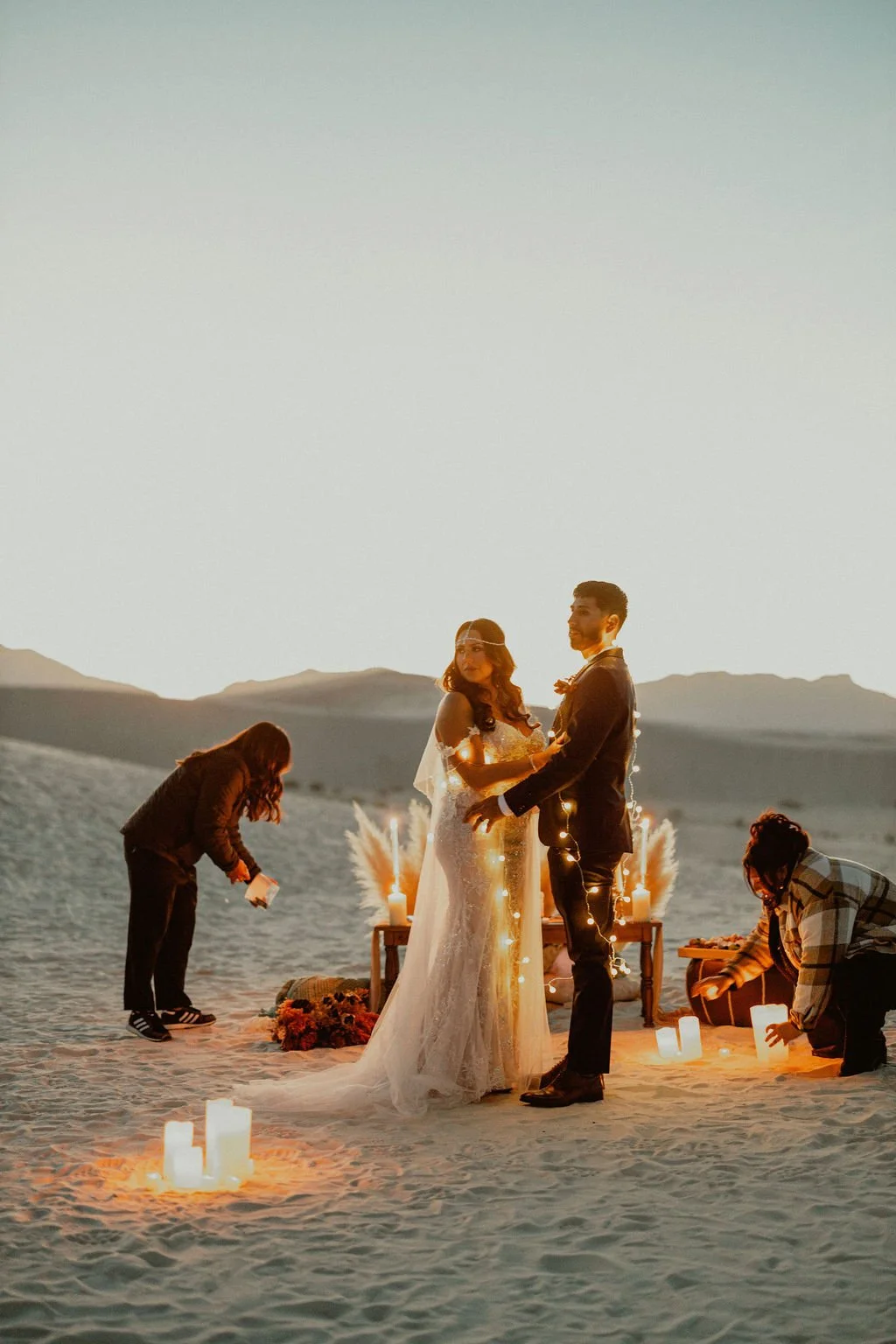
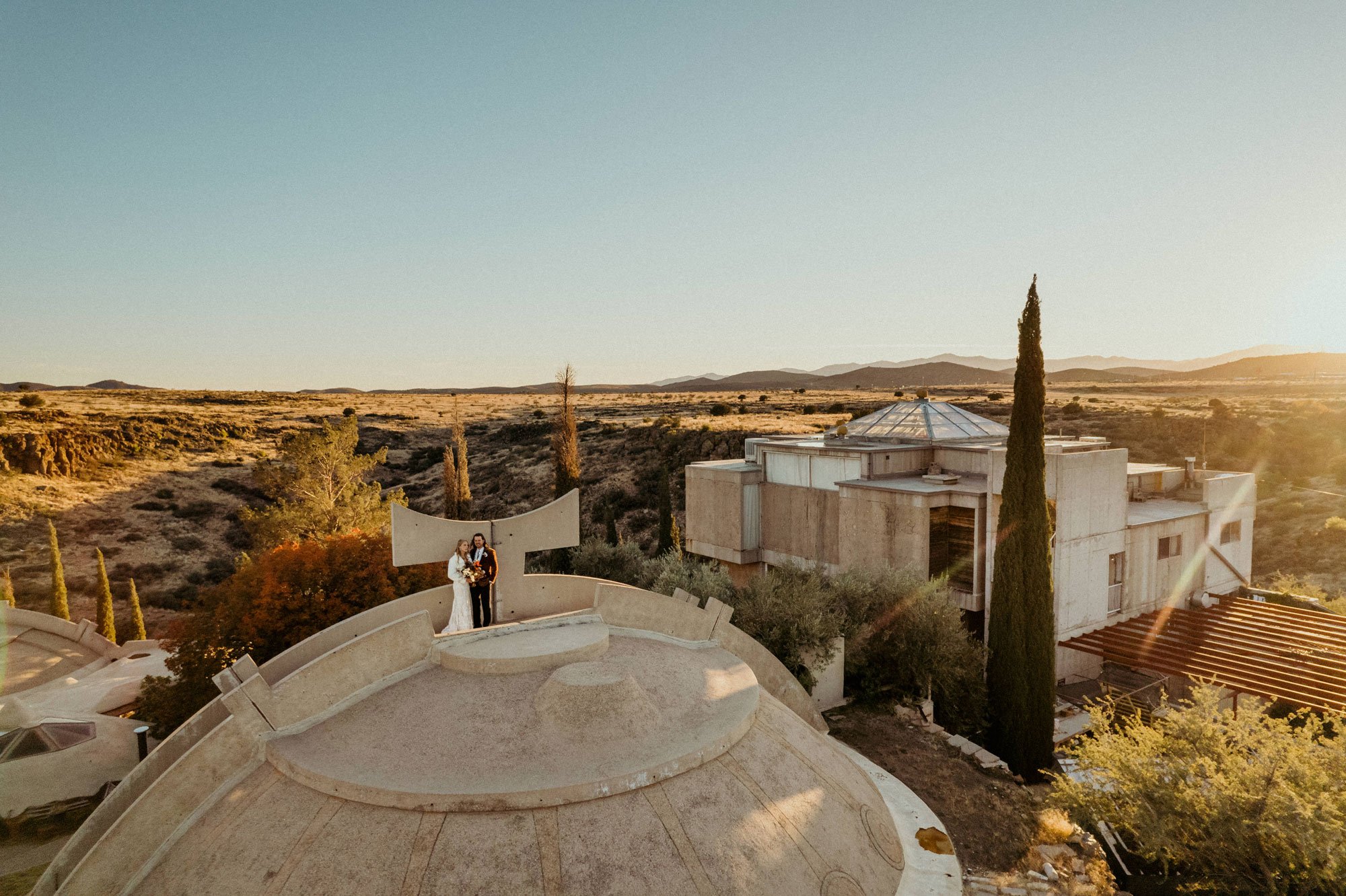
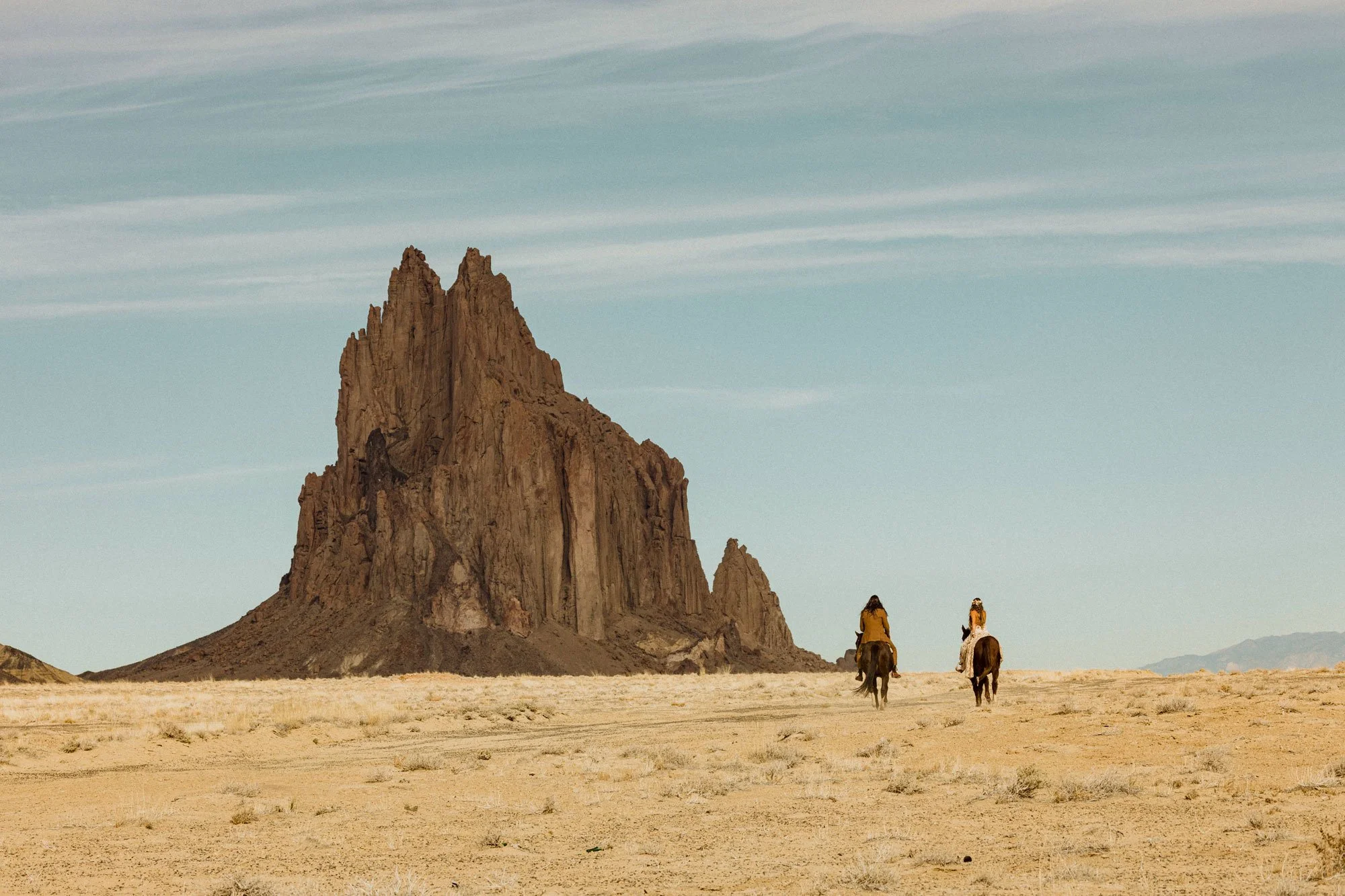
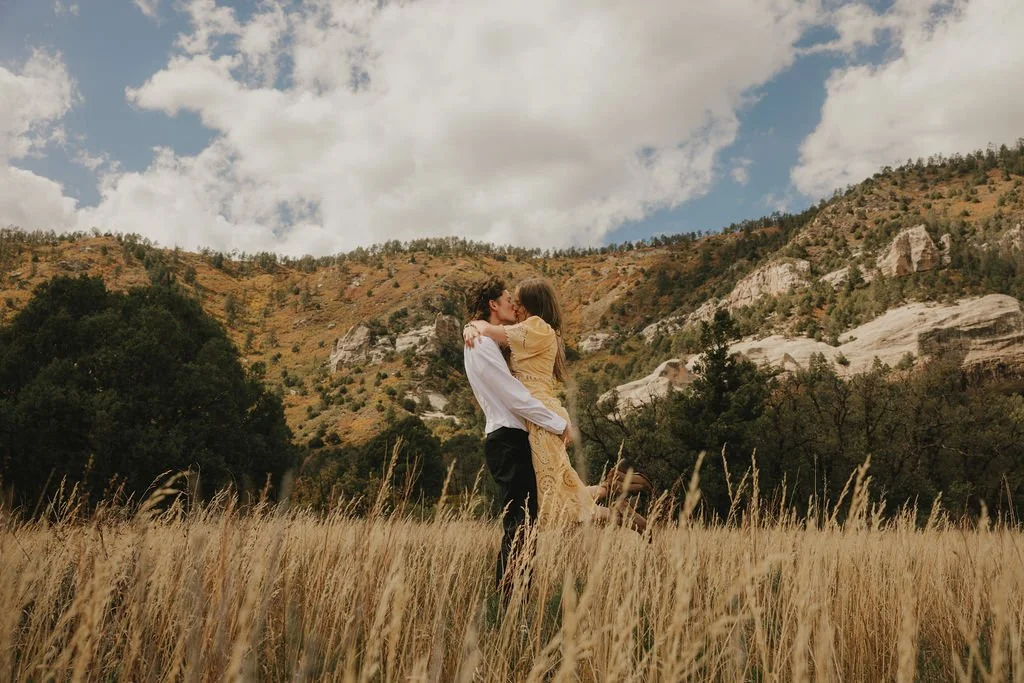
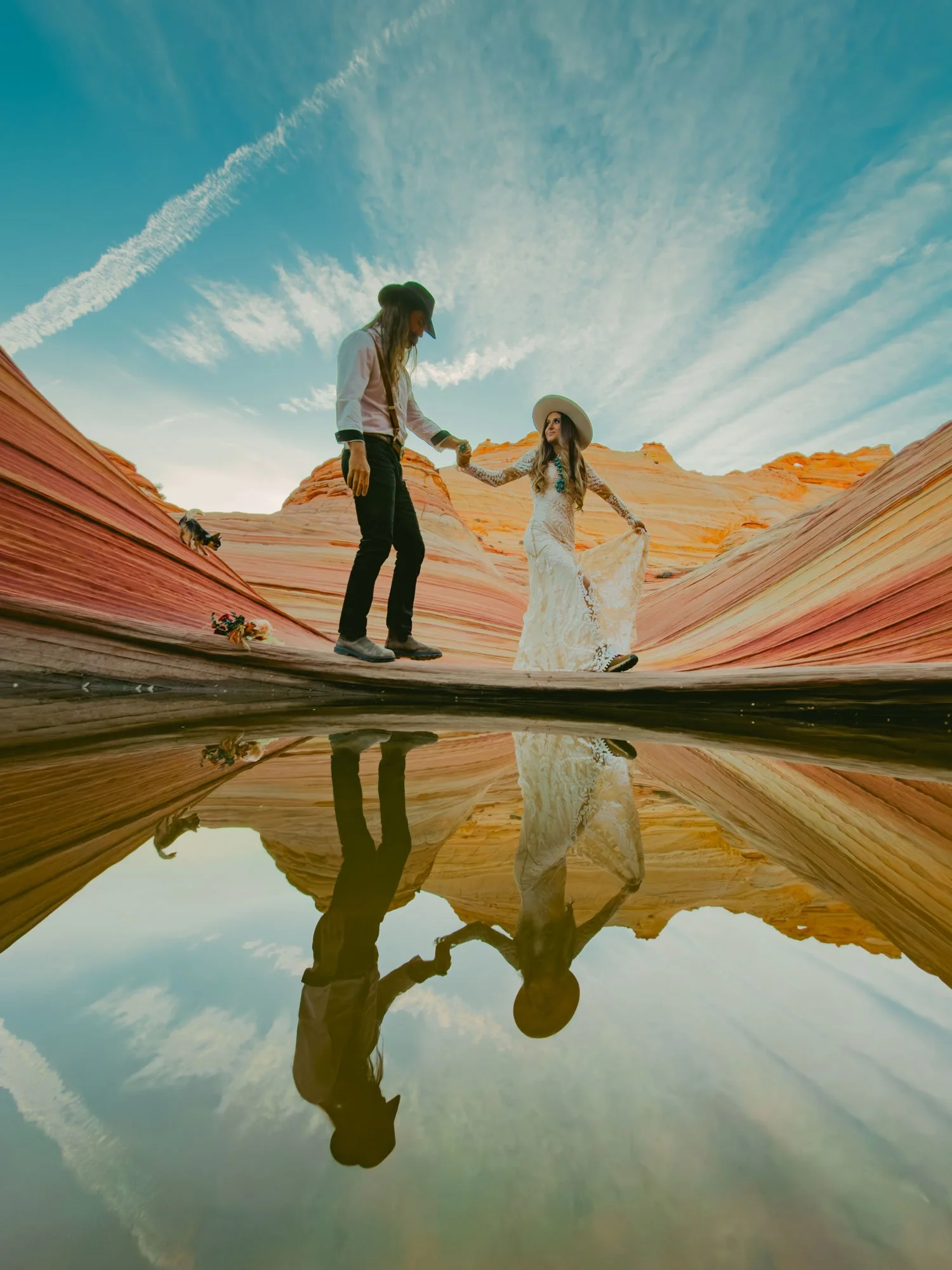
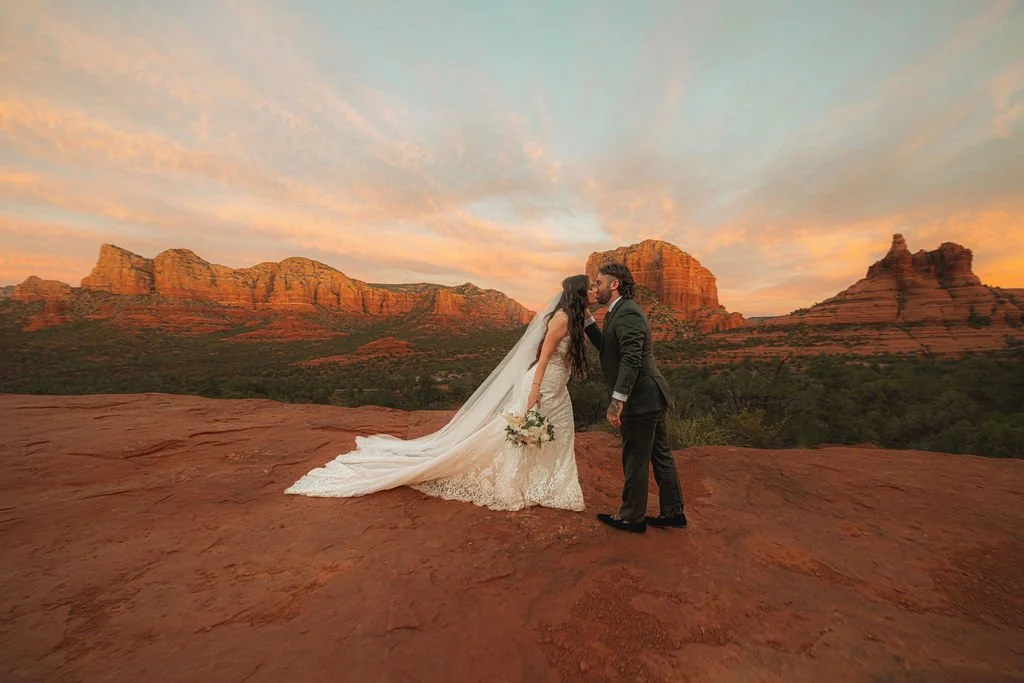
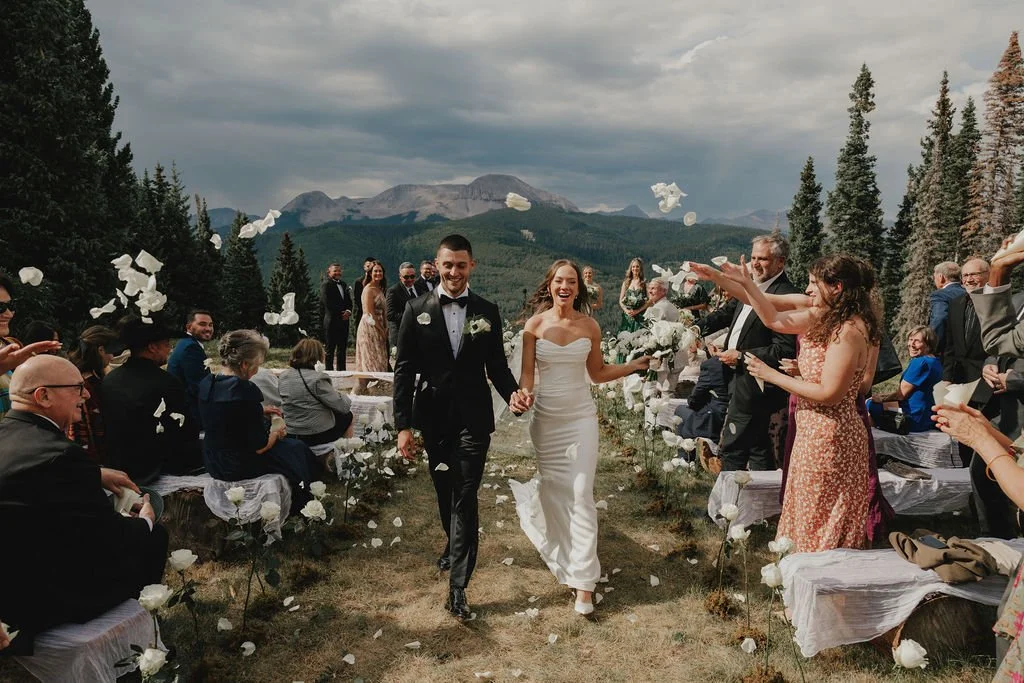
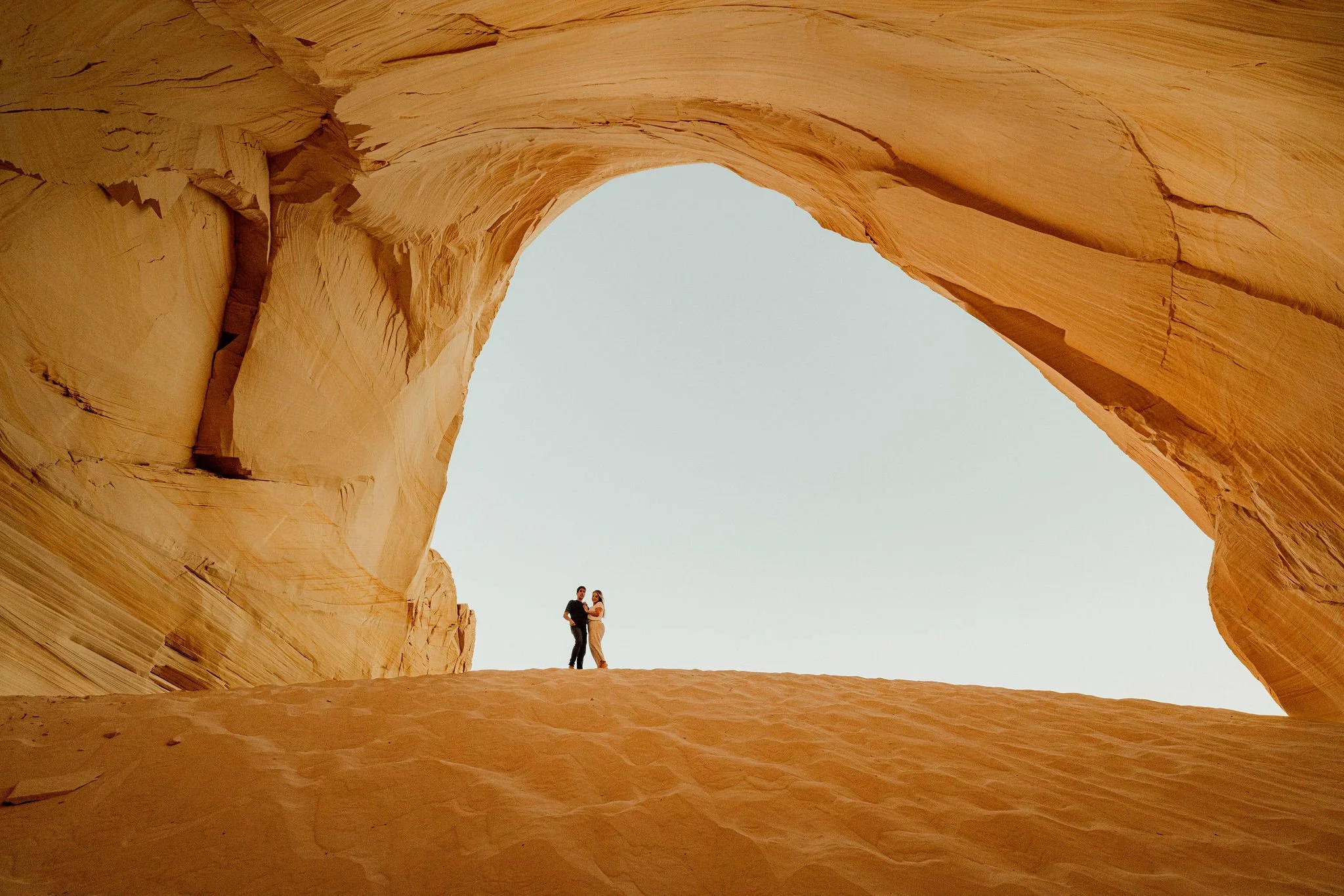
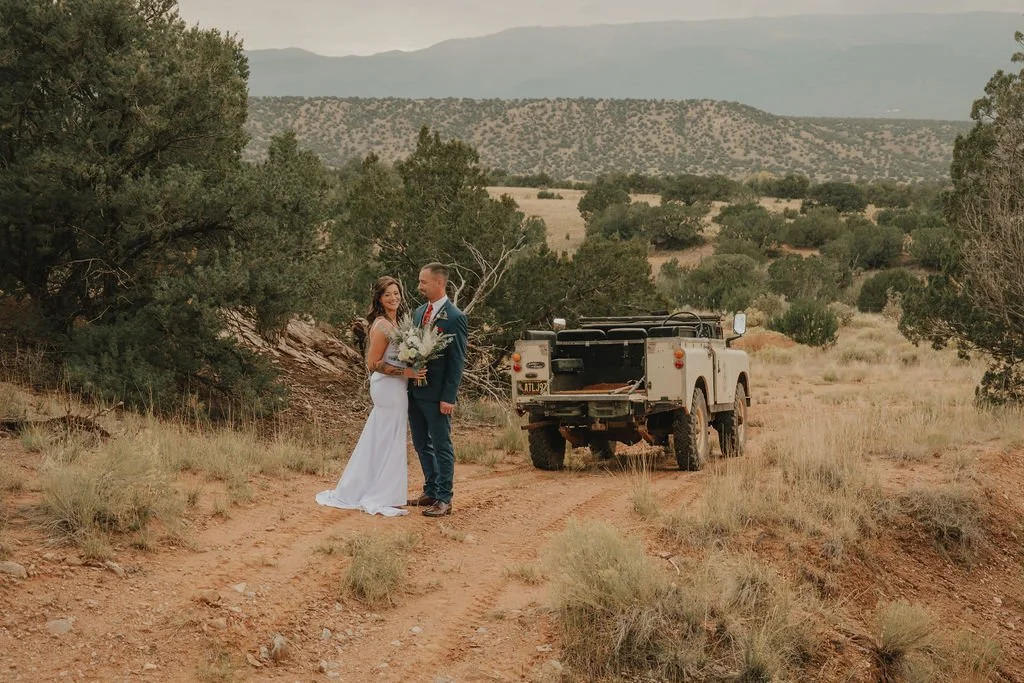
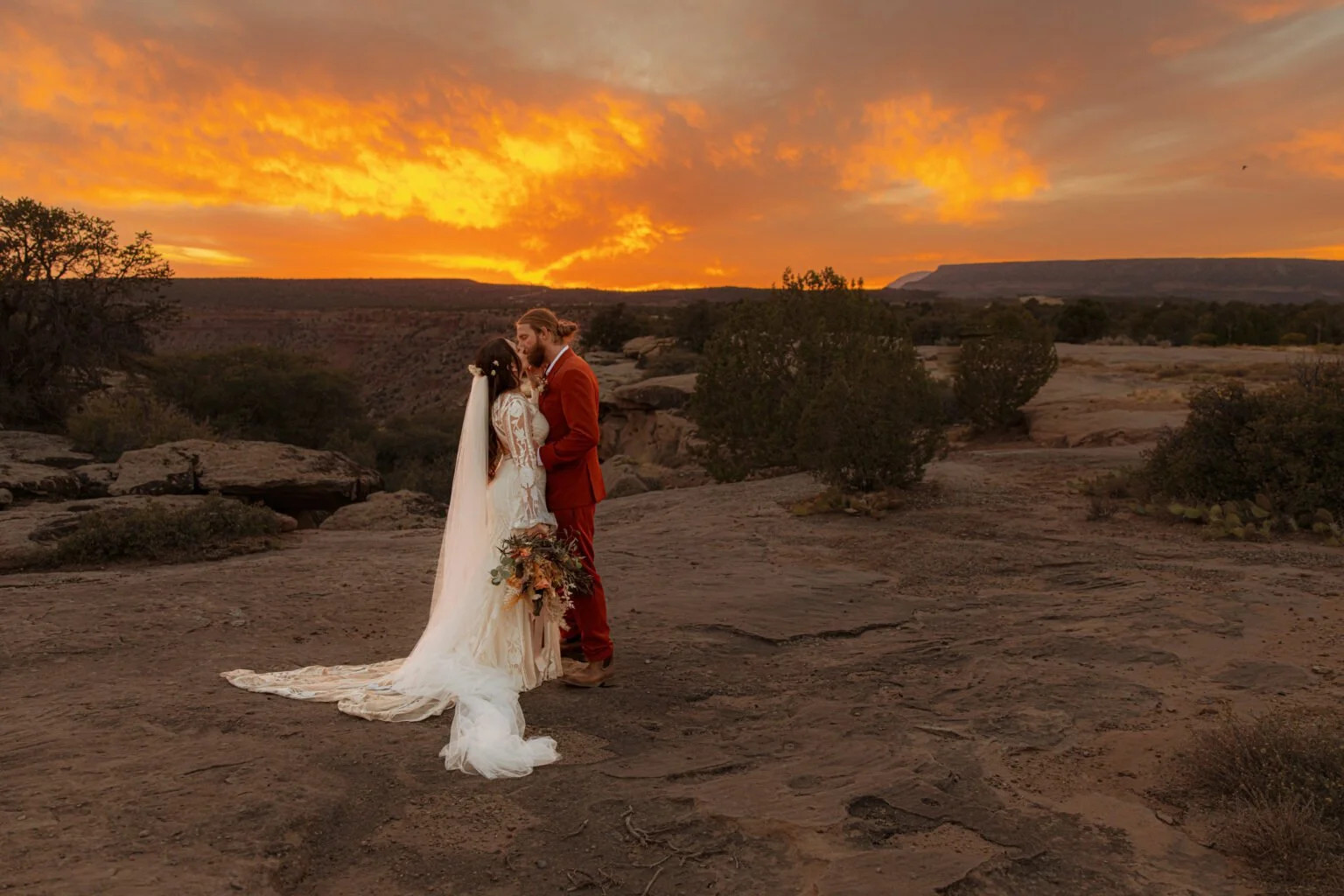
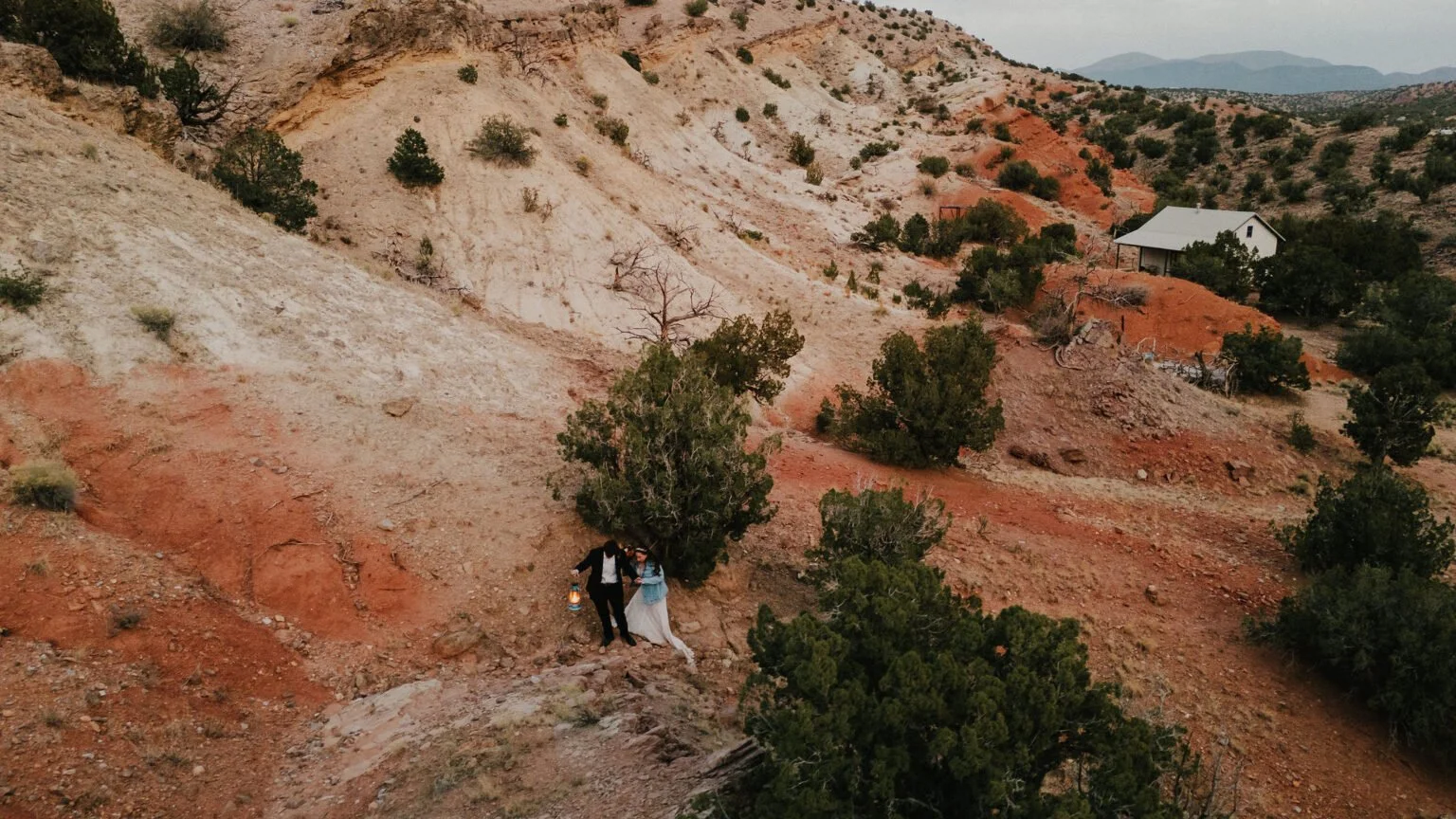
Farmington and the surrounding Four Corners region have become an increasingly popular backdrop for intimate weddings and adventure elopements, and for good reason. The combination of otherworldly terrain, minimal crowds, and the rich cultural heritage of the Ancestral Puebloan landscape creates a ceremony setting that feels genuinely meaningful — not just visually spectacular. If you are considering a desert elopement, our team at Shutterfreek specializes in adventure elopements that go beyond typical wedding photography to create a full narrative of your day in the landscape.
Couples who fall in love with the Farmington area's aesthetic often also explore neighboring states. Our Arizona adventure sessions take place in similarly dramatic high-desert terrain — you can explore Arizona weddings and adventure elopements to see how the Southwest's color palette shifts across state lines. Similarly, Utah's canyon country is just a short drive north of Farmington, and our Utah weddings and adventure elopements portfolio showcases what is possible when red rock and open sky become your venue.
For couples trying to decide between the established New Mexico photography destinations, our detailed comparison of Albuquerque vs Santa Fe as wedding locations can help you weigh the options — though Farmington's lack of crowds and raw landscape character gives it distinct advantages for couples who value privacy and dramatic imagery above urban amenity.
Farmington vs Other New Mexico Photography Destinations
Choosing where to base your photography trip or elopement in New Mexico? Here's how Farmington compares to the state's more recognized photography hubs:
| Factor | Farmington, NM | Albuquerque, NM | Santa Fe, NM |
|---|---|---|---|
| Landscape Variety | Very High | High | High |
| Crowd Levels | Low | Moderate | High |
| Elopement-Friendly | Excellent | Good | Good |
| Avg. Drive from ABQ | 3 hrs | — | 1 hr |
| Photographer Availability | Moderate | High | High |
| Permit Requirements | Minimal | Varies | Varies |
As the table illustrates, Farmington's greatest competitive advantages are its low visitor volume and exceptional elopement-friendly terrain — factors that matter enormously when you are looking for an intimate, uninterrupted experience in the landscape.
Permits, Access & Practical Photography Logistics
Bisti/De-Na-Zin Wilderness: No permit required for recreational photography. Commercial photography permits are available through the BLM Farmington Field Office. No entrance fee. The North Unit and South Unit are accessed via separate dirt roads off NM-371 — high-clearance vehicles are strongly recommended after rain.
Angel Peak Scenic Area: Free access, no permit required for recreational photography. The BLM campground provides restroom facilities. Commercial photography follows BLM permitting standards.
Aztec Ruins National Monument: Standard NPS entrance fee applies. Commercial photography and filming requires a special use permit from the site superintendent. Allow 3–4 weeks for permit processing.
Salmon Ruins: Small admission fee. Contact the San Juan County Museum Association for commercial photography inquiries. The site is privately managed and policies may differ from BLM/NPS.
Best seasons for access: Spring and fall are optimal for road conditions. Summer afternoon monsoons can make dirt access roads impassable — always check local weather before driving to remote sites.
Final Thoughts
Farmington, New Mexico does not advertise itself the way Sedona or Moab do, and that is precisely its appeal. The photographers and couples who discover its badlands, ruins, and river corridors often describe it as a secret they wish they'd known sooner. The light here is extraordinary. The terrain is extraordinary. And when experienced with the right guide or photographer, the imagery you take home is extraordinary too.
At Shutterfreek, we bring over a decade of Southwest photography experience to every session — from intimate elopements in the Four Corners to larger Utah wedding adventures and Arizona destination weddings. If you are ready to plan a Farmington photography session, elopement, or adventure couple's shoot, reach out to our team — we would love to help you find the perfect light.
Frequently Asked Questions
-
The optimal seasons for Bisti photography are spring (April–May) and fall (September–October). During these months, temperatures are moderate enough for extended hikes into the wilderness, and the light quality at golden hour is exceptionally warm and directional. Fall in particular offers the added bonus of dramatic monsoon cloud remnants in the sky, even after the rain season has wound down.
-
For personal or recreational photography at BLM-managed lands like Bisti and Angel Peak, no permit is required. However, commercial photography — meaning any photography intended for advertising, stock licensing, or paid client work — requires a Special Recreation Permit from the BLM Farmington Field Office. Aztec Ruins National Monument and Salmon Ruins each have their own commercial photography permit processes.
-
Absolutely. Farmington and its surroundings — particularly Bisti Wilderness and Angel Peak — offer elopement terrain that rivals far more famous Southwest destinations, without the foot traffic and permitting complexity. At Shutterfreek, we have documented New Mexico adventure elopements across dozens of locations, and the Four Corners region consistently produces some of our most emotionally resonant work.
-
At minimum, bring a wide-angle lens for landscape work and a versatile zoom (such as a 24–70mm) for portraits and elopement sessions. A circular polarizing filter is perhaps the single most impactful accessory for high-desert shooting — it cuts haze, saturates skies, and eliminates glare off the river.
-
Farmington is approximately 185 miles northwest of Albuquerque (roughly a 3-hour drive via US-550) and about 180 miles northwest of Santa Fe (also approximately 3 hours). This makes Farmington a viable day trip from either city for photography-focused visits, though an overnight stay is strongly recommended if you want to catch both sunrise and sunset at locations like Bisti or Angel Peak — the golden-hour windows at these sites are the most rewarding shooting conditions and are worth organizing your itinerary around.
Keep reading