Best Locations for Small Weddings in New Mexico
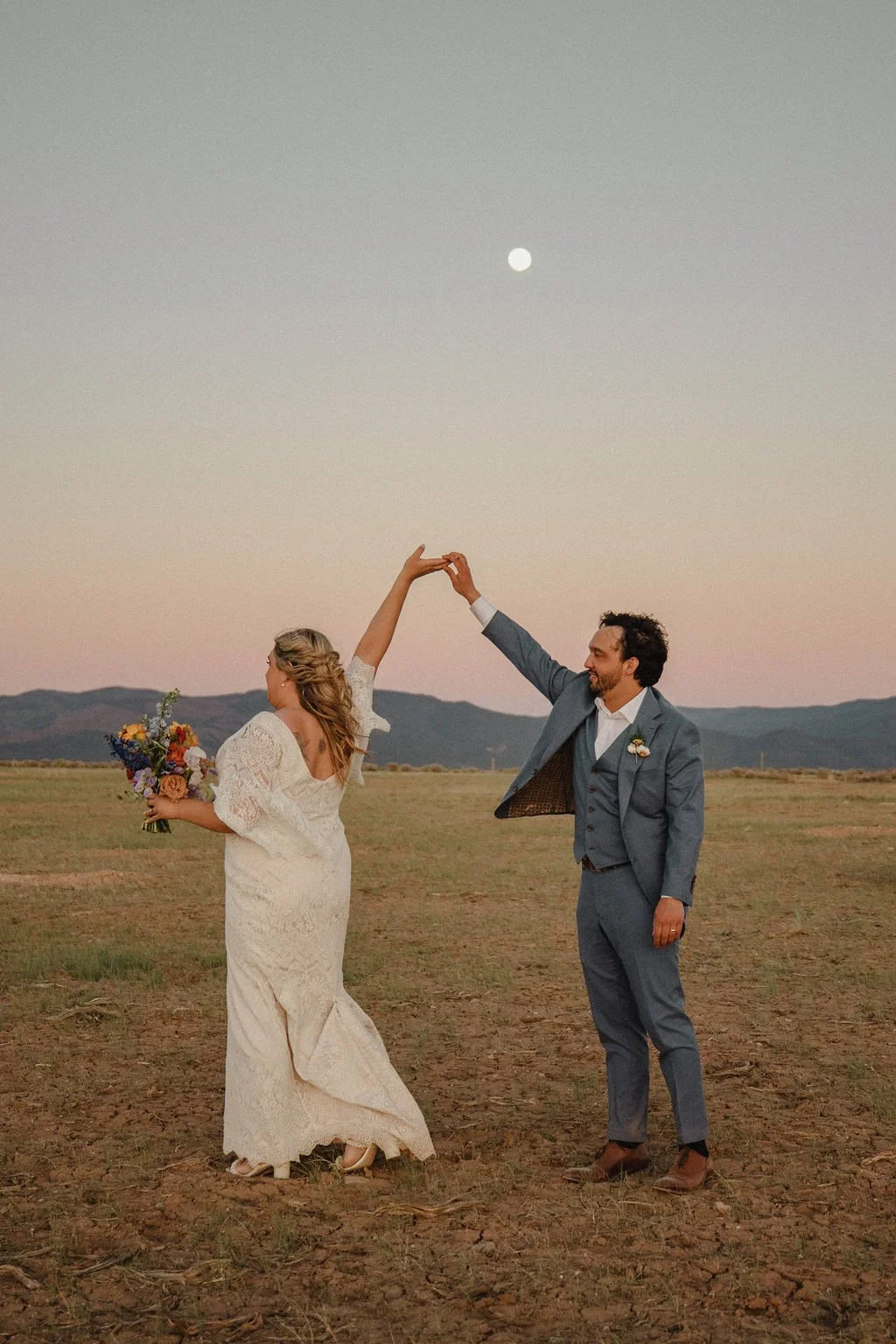
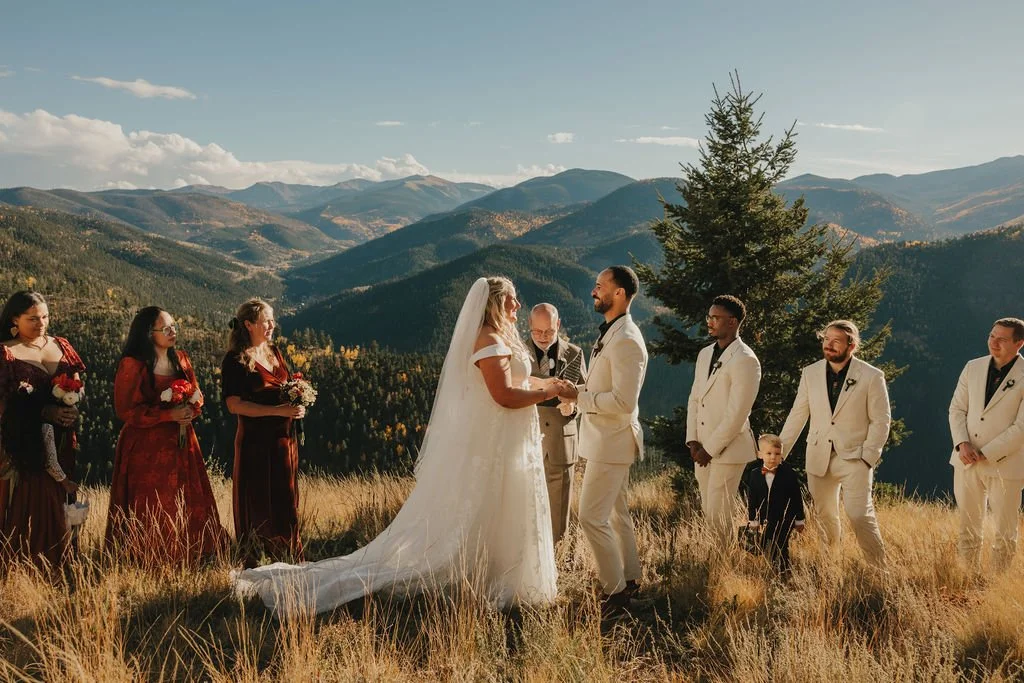
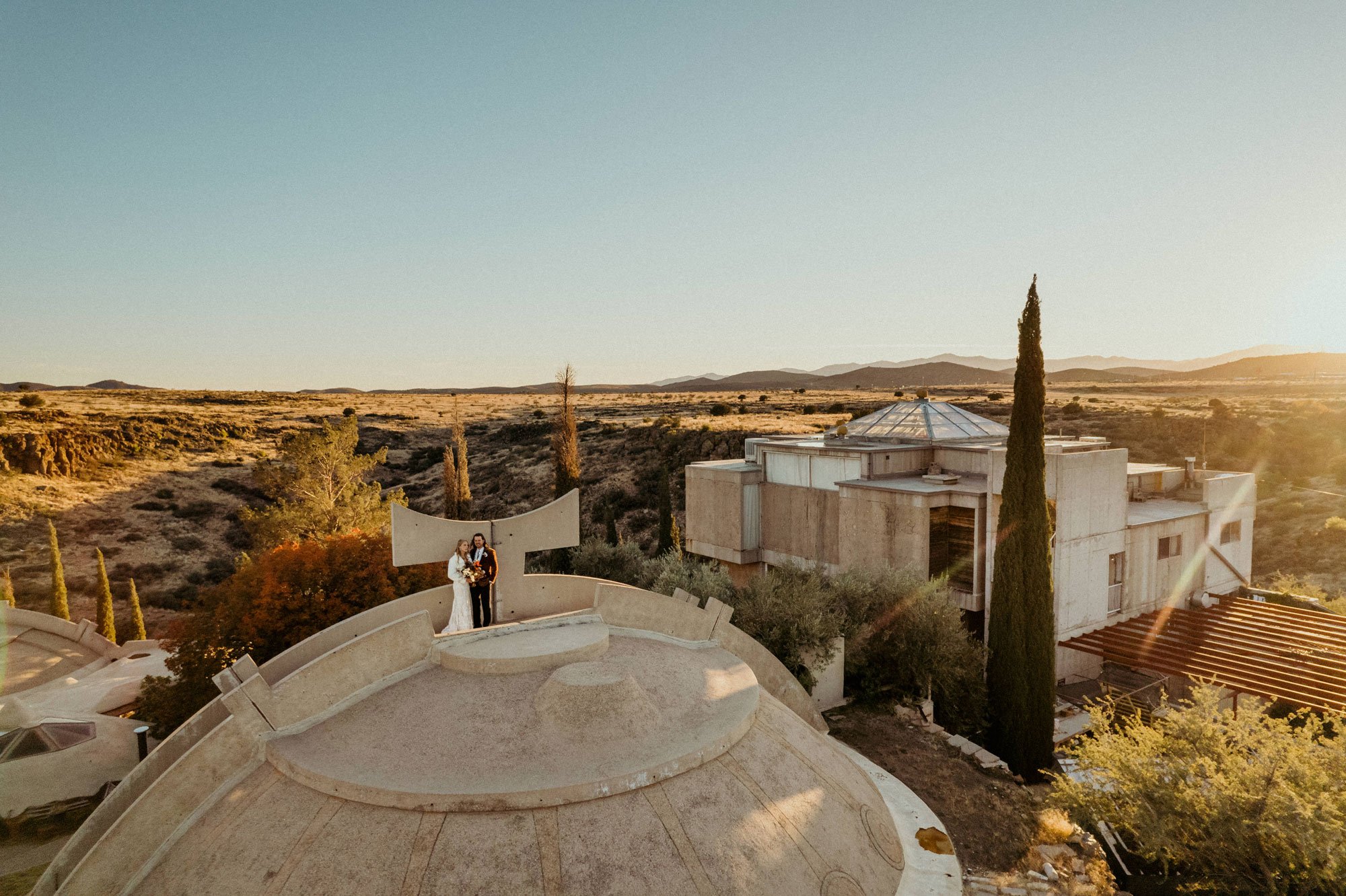
The best locations for small weddings in New Mexico are Taos (adobe chapels and mountain meadows), Santa Fe (high-desert canyons and historic plazas), Abiquiú near Ghost Ranch (red-rock mesas), White Sands National Park (gypsum dunes), and the Sandia foothills outside Albuquerque (pine forest and mountain overlooks), each offering intimate, permit-friendly settings for 2 to 50 guests with dramatic backdrops that don't require a resort-sized budget. New Mexico has become one of the most requested states for small and intimate weddings because it pairs public-land access with a shorter drive between wildly different landscapes than almost anywhere else in the Southwest.
We've spent years photographing small weddings and elopements across northern New Mexico, and this guide pulls from that on-the-ground experience, not just a list of pretty places, but what each location is actually like to plan around, permit, and shoot in.
Why New Mexico Is Ideal for Small and Intimate Weddings
New Mexico earns its "Land of Enchantment" nickname honestly. Within a two-hour drive you can go from high-desert canyon to alpine forest to gypsum dune field, which is part of why couples planning a small wedding or elopements that keep landing here instead of the more crowded elopement hubs in Utah or Colorado.
A few reasons small weddings thrive here:
Lower permit costs than national parks in California or Utah. Many BLM and state-land sites in New Mexico issue photography and small-ceremony permits for under $100.
Fewer crowds. Popular Utah elopement locations like Arches or Zion book out permits months in advance. New Mexico's public lands see a fraction of the visitor traffic.
Adobe architecture you can't get anywhere else. Historic mission chapels and territorial-style courtyards give small weddings a built-in sense of place.
Year-round shoulder seasons. Because the state spans desert and mountain elevations, there's almost always a location in season.
If you're comparing regions before booking flights, our breakdown of New Mexico weddings adventure elopements covers logistics for out-of-state couples in more depth, and our Utah weddings adventure elopements guide is a useful side-by-side if you're still deciding between the two states.
Top 5 Locations for Small Weddings in New Mexico
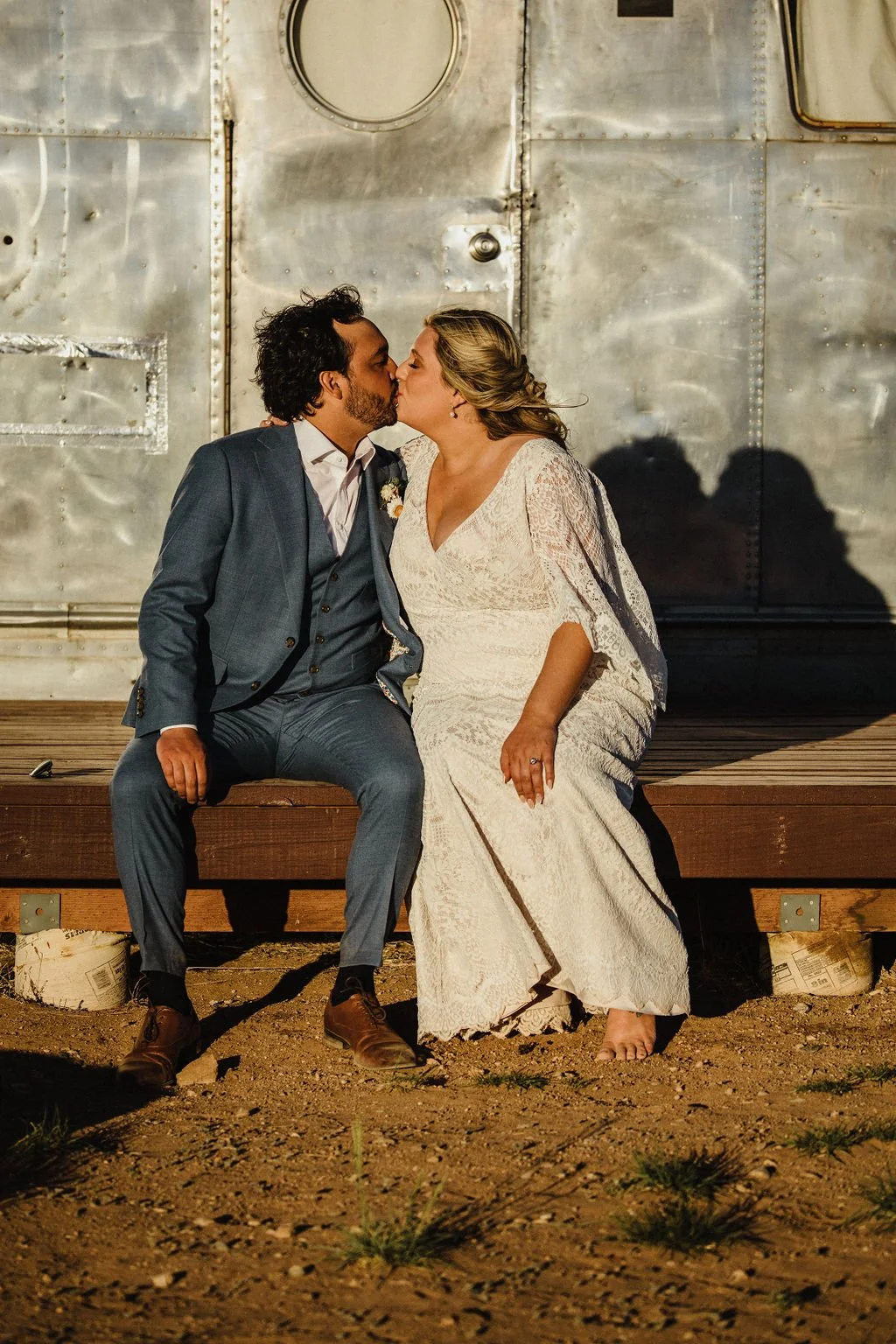
1. Taos
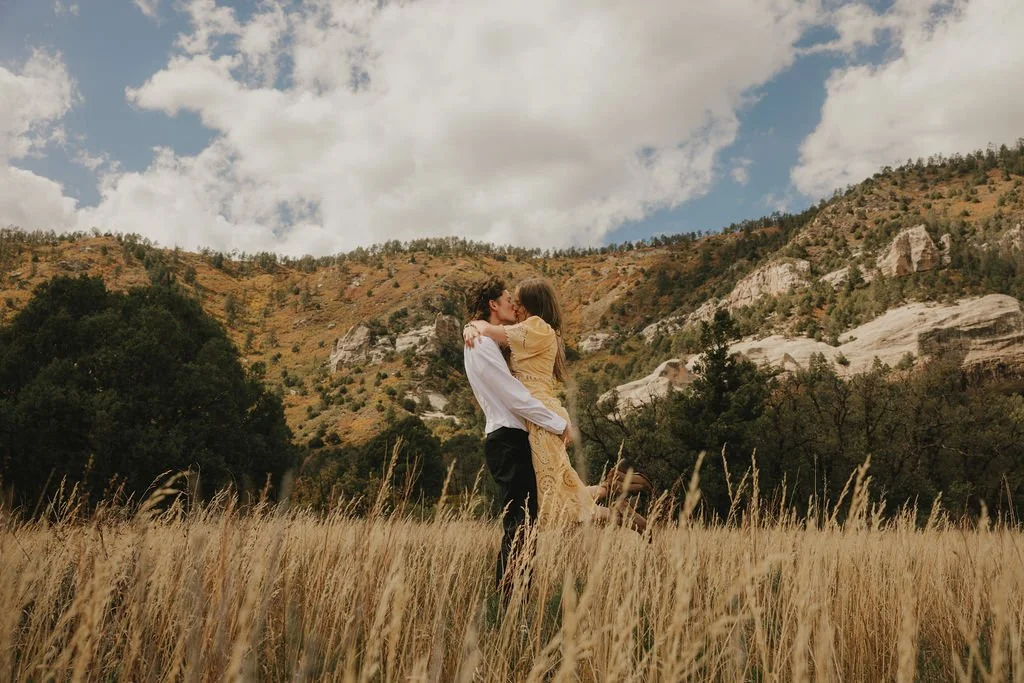
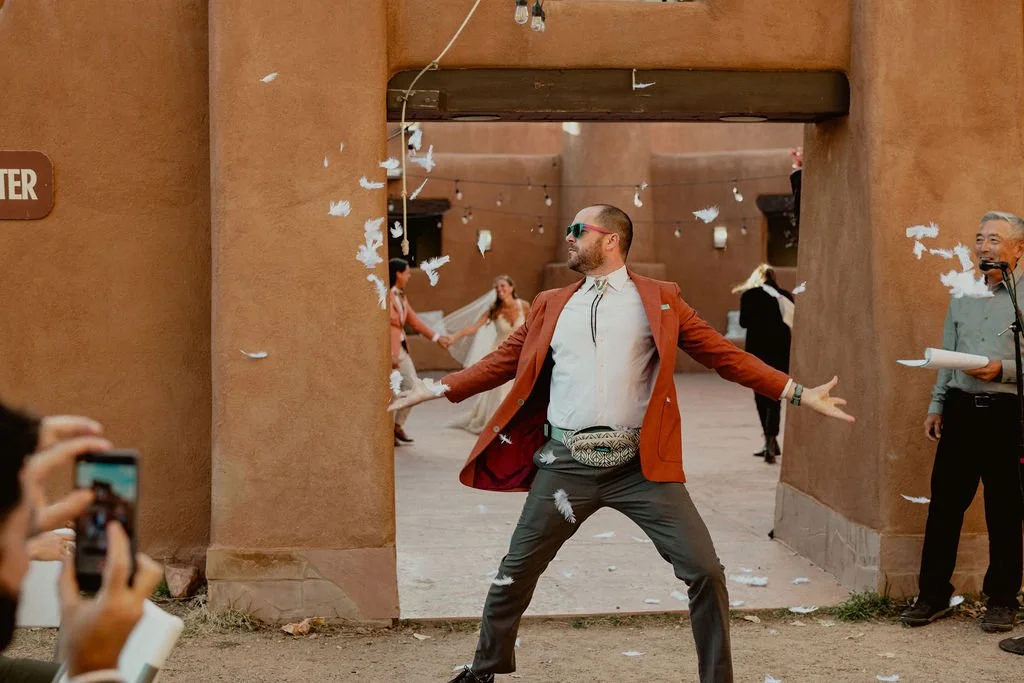
Taos is the heart of New Mexico's small-wedding scene, and for good reason. The town blends 400-year-old adobe architecture with immediate access to the Sangre de Cristo mountains and the Rio Grande Gorge. Couples get a walkable historic plaza for getting-ready photos, a dramatic gorge bridge fifteen minutes away, and alpine meadows another twenty minutes past that.
If you want the full breakdown of venues, permits, and timing specific to this town, we've written a dedicated guide on planning a Taos micro wedding and if you're leaning toward a two-person ceremony instead, our Taos elopement photographer page walks through the most photogenic spots in the area.
Best for: Couples who want adobe architecture plus mountain scenery in one trip.
2. Santa Fe
Santa Fe offers a more polished, art-town backdrop, think historic plaza, centuries-old churches, and high-desert canyons just outside the city limits like Diablo Canyon. It's also the easiest New Mexico location to fly into, with a major airport and a wide range of small inns and boutique hotels that welcome intimate ceremonies of 10-30 guests.
Best for: Couples who want a mix of city convenience and desert scenery without renting a car for hours of driving.
3. Abiquiú / Ghost Ranch
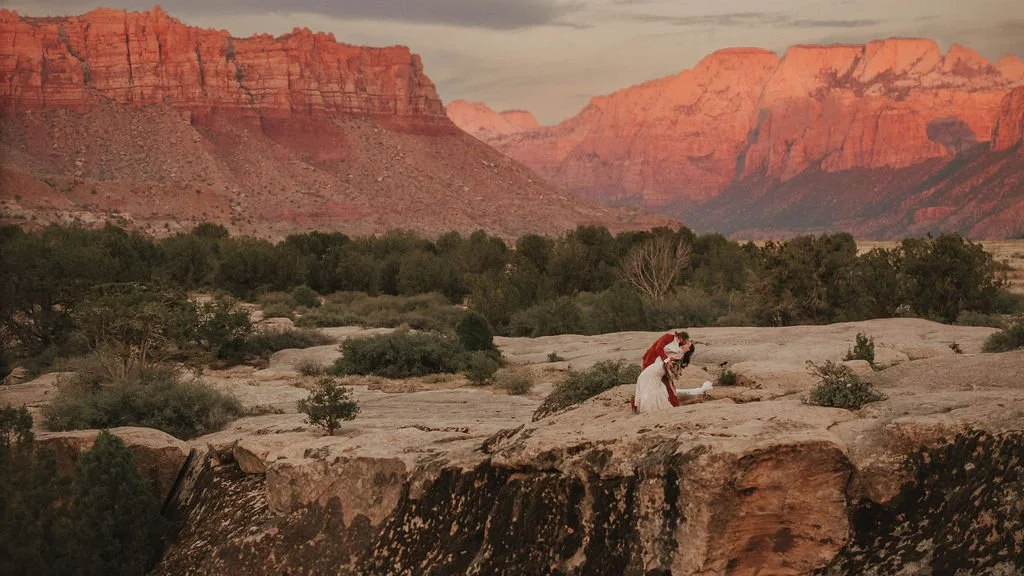
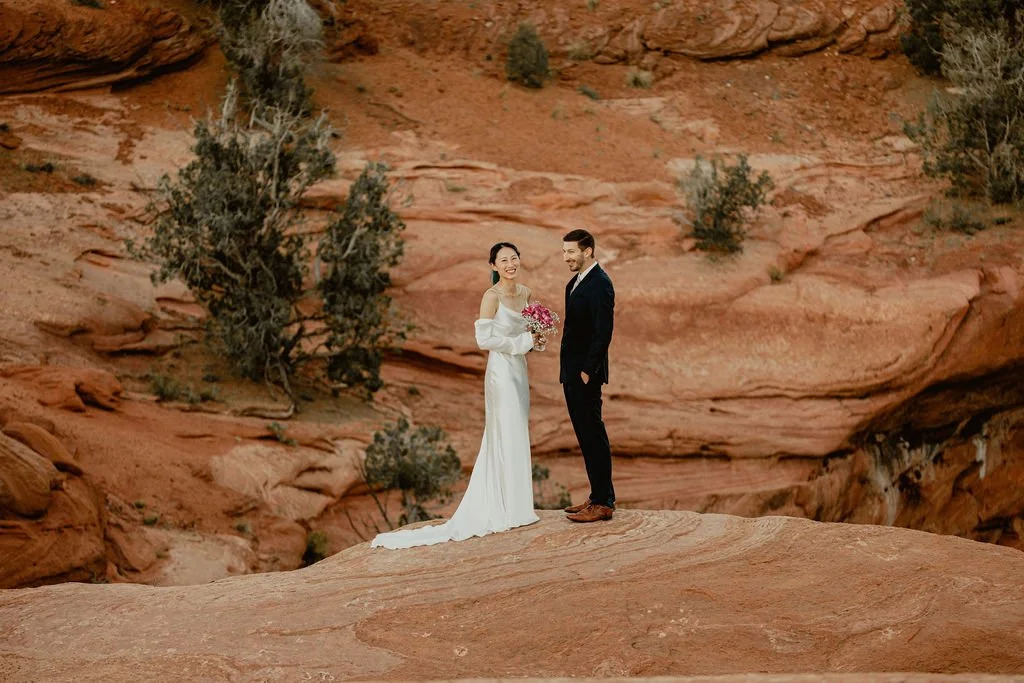
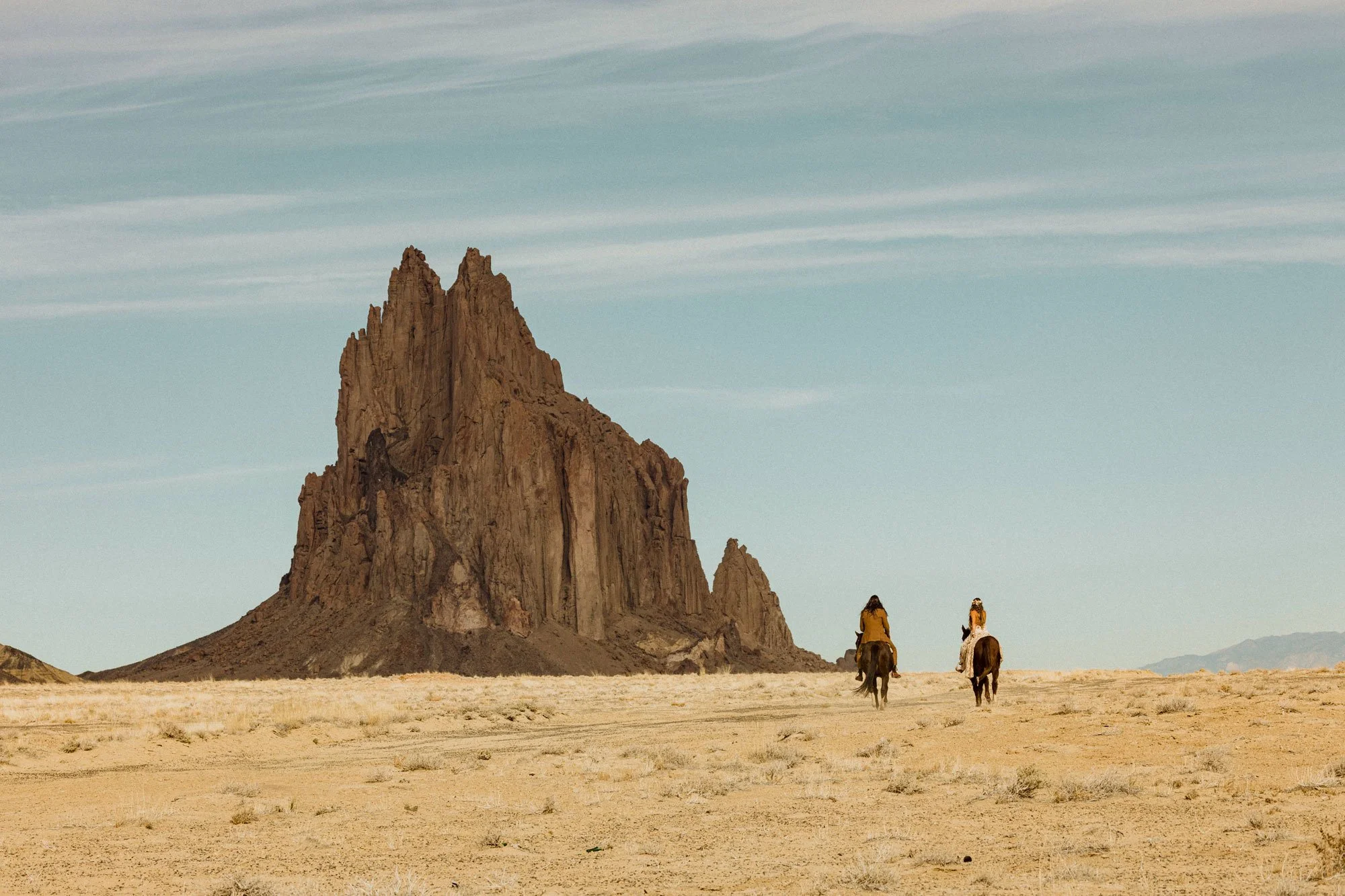
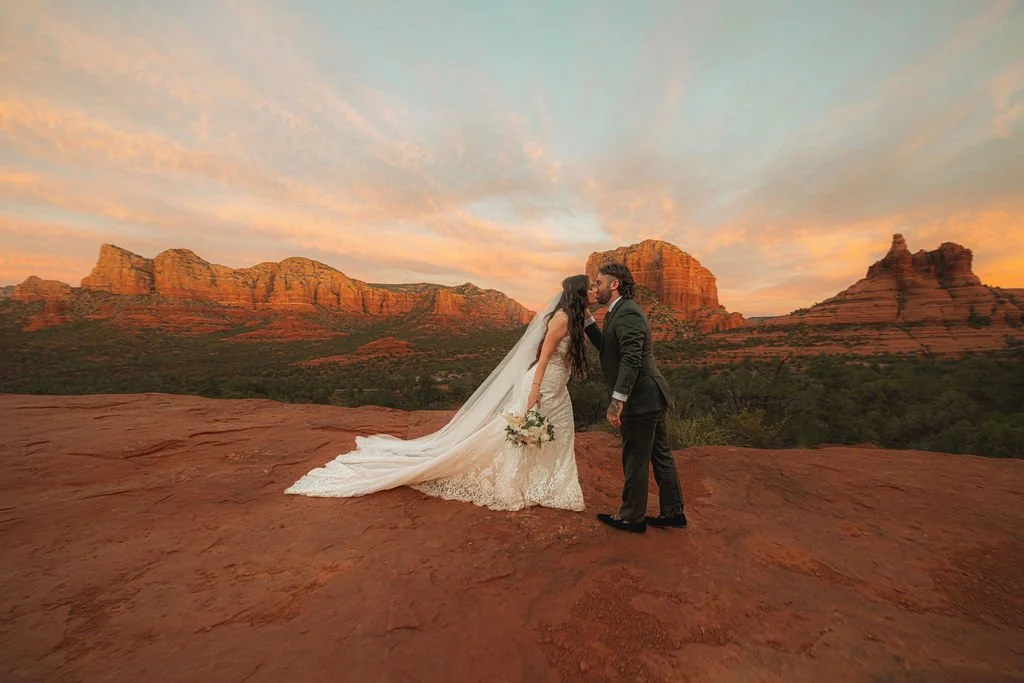
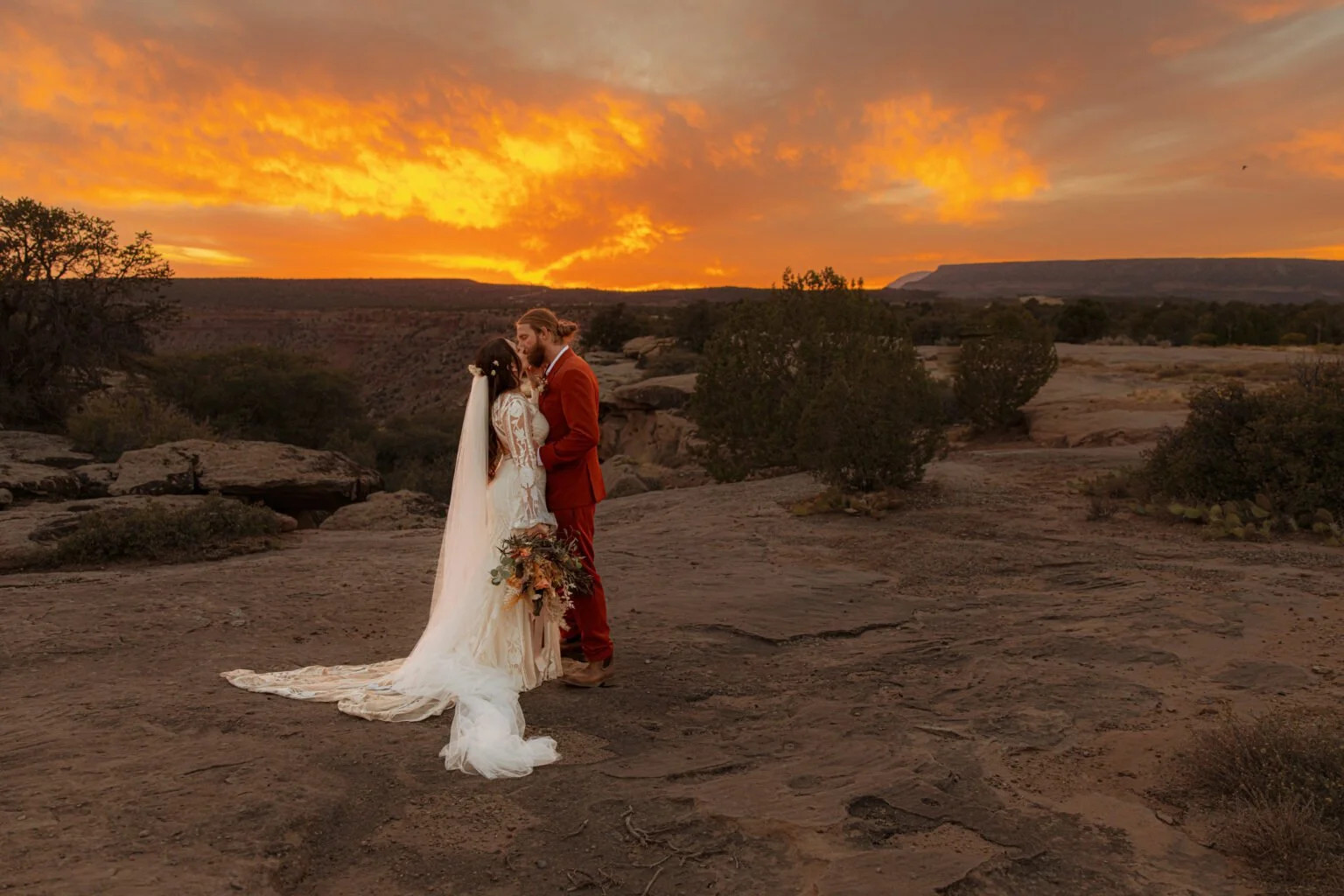
Made famous by Georgia O'Keeffe's paintings, the red-and-ochre mesas around Ghost Ranch are one of the most visually striking backdrops in the Southwest. The ranch itself issues day-use and event permits for small ceremonies, and the surrounding BLM land offers free, permit-based access for elopement-style shoots.
Best for: Couples who want their photos to look like nowhere else on Earth.
4. White Sands National Park
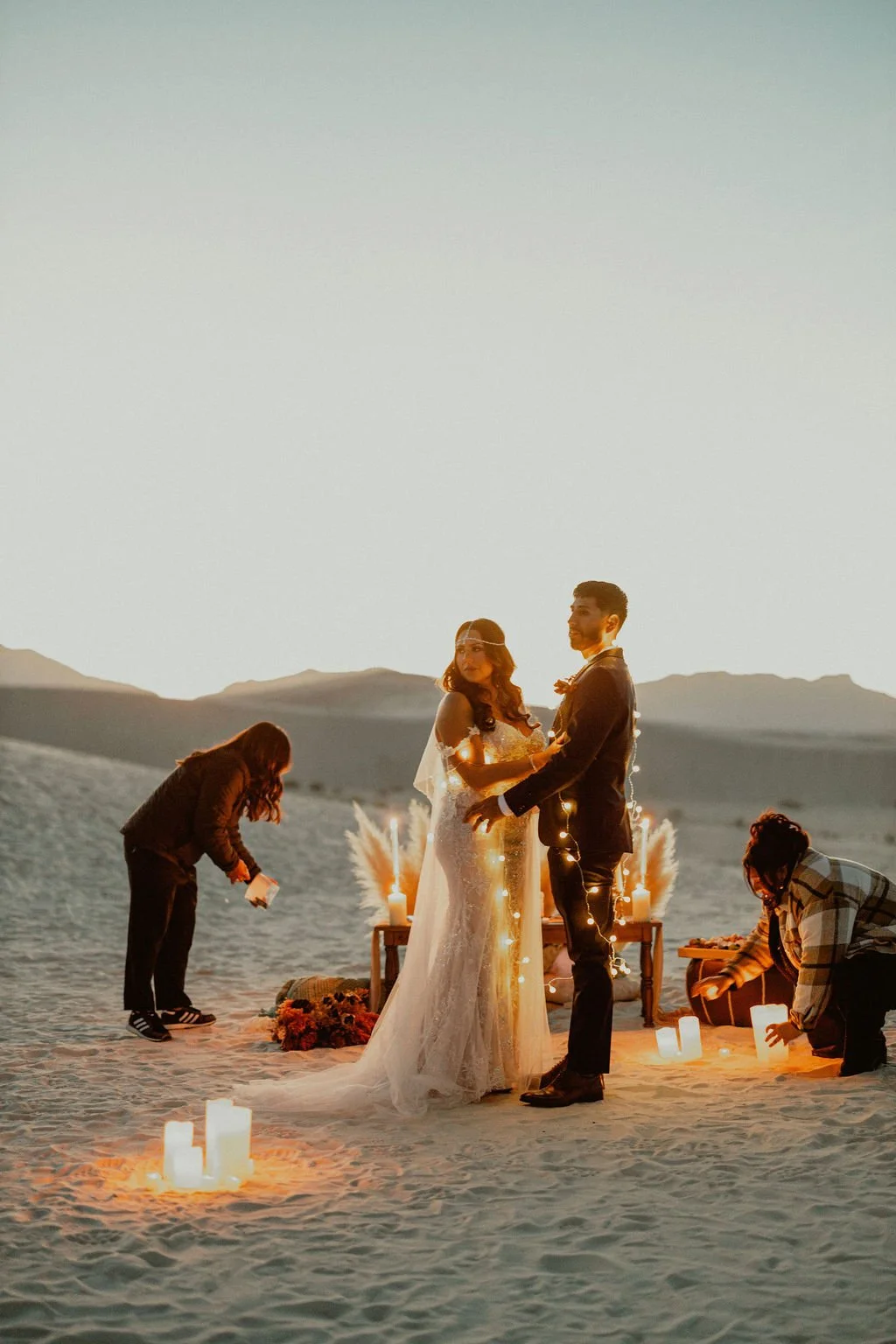
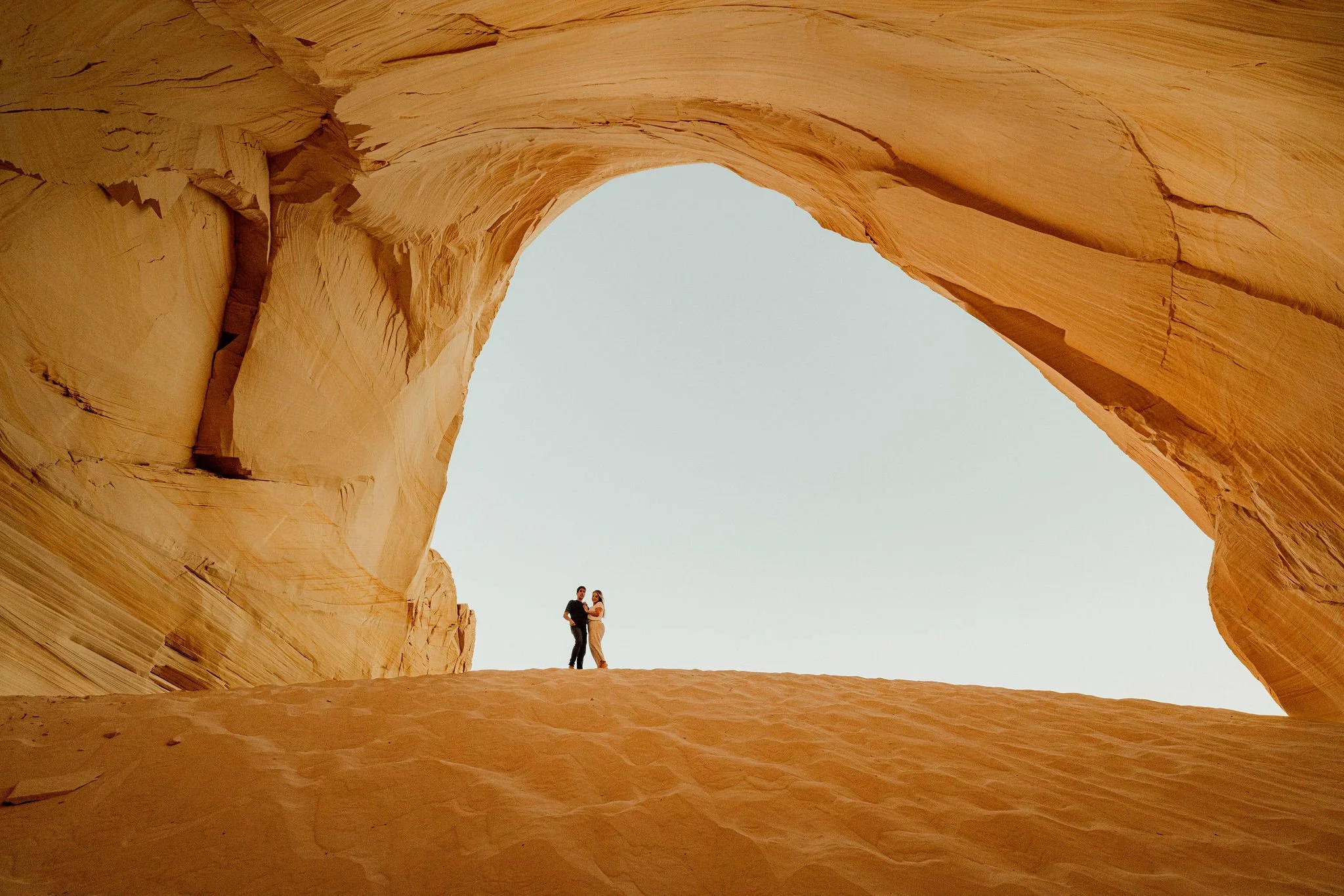
For a genuinely surreal small wedding, White Sands' gypsum dunes near Alamogordo create an almost lunar, all-white landscape. The National Park Service issues special-use permits for ceremonies of typically 10 guests or fewer, and sunrise or sunset light on the dunes is unmatched.
Best for: Couples chasing a minimalist, otherworldly aesthetic and comfortable with stricter permit rules.
5. Sandia Mountains, Albuquerque
Just outside Albuquerque, the Sandia foothills and Cibola National Forest give couples pine forest, granite outcrops, and sweeping city-and-desert overlooks. It's the most accessible option for guests flying into New Mexico's largest airport and needing hotels, restaurants, and rental cars nearby.
Best for: Couples balancing guest convenience with a mountain setting.
Comparison Table: New Mexico's Best Small Wedding Locations
| Location | Guest Capacity | Permit Needed | Best Season | Signature Look |
|---|---|---|---|---|
| Taos | 2–50 | Varies by site (some free, some ~$50–150) | May–Oct | Adobe + mountain |
| Santa Fe | 2–40 | Yes, city/venue-dependent | Apr–Oct | High-desert canyon |
| Abiquiú / Ghost Ranch | 2–30 | Yes, ranch or BLM permit | Apr–Jun, Sep–Oct | Red-rock mesa |
| White Sands | 2–10 | Yes, NPS special-use permit | Oct–Apr (cooler months) | Gypsum dunes |
| Sandia Mountains | 2–40 | Forest Service permit for groups | May–Sep | Pine forest + overlook |
Small Wedding vs. Micro Wedding vs. Elopement: What's the Difference?
These terms get used interchangeably online, but they mean different things when you're actually planning logistics, budget, and permits.
| Term | Typical Guest Count | Typical Budget Range | Common Setting |
|---|---|---|---|
| Elopement | 0–2 (just the couple) | $1,500–$6,000 | Remote public land, no permit for guests |
| Micro Wedding | 2–20 | $5,000–$15,000 | Small venue, backyard, or public land with permit |
| Small Wedding | 20–50 | $10,000–$30,000 | Venue, ranch, or larger permitted outdoor site |
Where you fall on this spectrum changes which New Mexico location makes the most sense. An elopement-style ceremony can happen almost anywhere with a simple permit, while a small wedding with 40 guests needs a location with parking, restrooms, and often a rain-contingency plan — which is why venues in Santa Fe and Taos tend to book up faster than raw public land.
Permits and Legal Requirements in New Mexico
Because so many of New Mexico's best backdrops sit on public land, permitting is part of planning, not an afterthought.
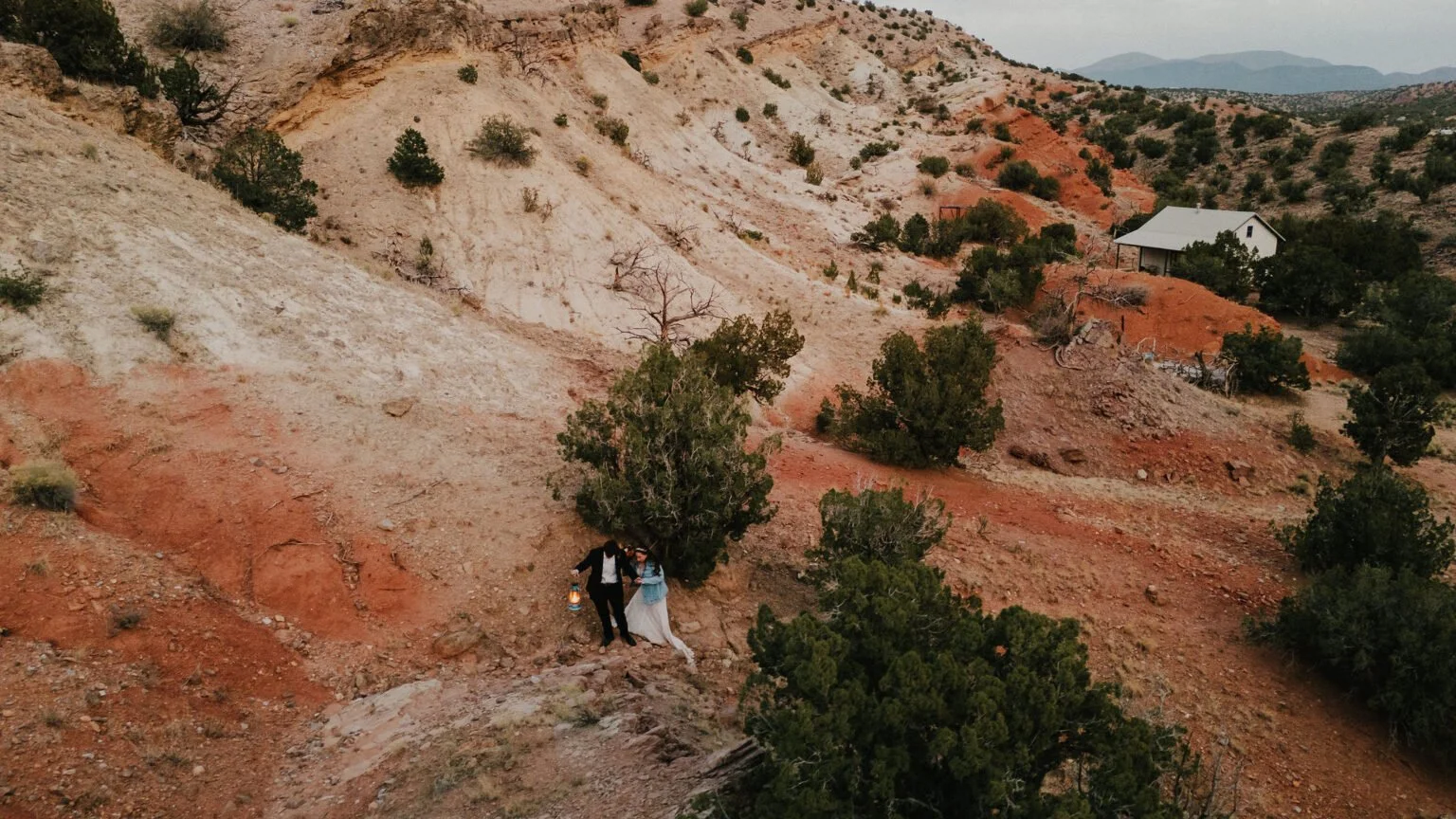
BLM land (much of the Rio Grande Gorge and Abiquiú area): Requires a special recreation permit for ceremonies over a small guest threshold, usually applied for 2–4 weeks in advance.
National Forest land (Sandia, Carson): Wedding-specific permits through the local ranger district; fees typically range $50–$200.
National Park sites (White Sands): Special-use permits with stricter guest caps and no amplified sound.
State-owned historic sites and plazas: Usually managed through the city or county clerk's office.
Marriage license: New Mexico has no waiting period and no residency requirement, and the license is valid statewide, which makes it one of the easier states in the country for destination couples.
Booking a local photographer who's already navigated these permits, rather than researching from scratch, is one of the fastest ways to avoid a denied application close to your date.
Best Time of Year for a Small Wedding in New Mexico
Spring (April–June): Mild temperatures, wildflowers in the high desert, but windier afternoons — plan ceremonies for morning or golden hour.
Fall (September–October): The most popular season. Cottonwood trees turn gold along the Rio Grande, daytime highs stay comfortable, and light is soft.
Summer (June–August): Hot at lower elevations like White Sands and Albuquerque, but pleasant in the Taos and Sandia mountains; watch for monsoon storms in July and August.
Winter (November–March): Underrated for couples who want snow-dusted adobe and dramatic light, though some high-elevation sites can be inaccessible after storms.
Budgeting for a Small New Mexico Wedding
Small weddings in New Mexico typically run far below the national average, largely because you're not paying for a large venue or catering minimums. A realistic small-wedding budget (20–30 guests) usually breaks down as:
Venue or permit fees: $100–$1,500
Photography: $1,800–$4,500
Officiant: $200–$500
Catering or small reception: $2,000–$6,000
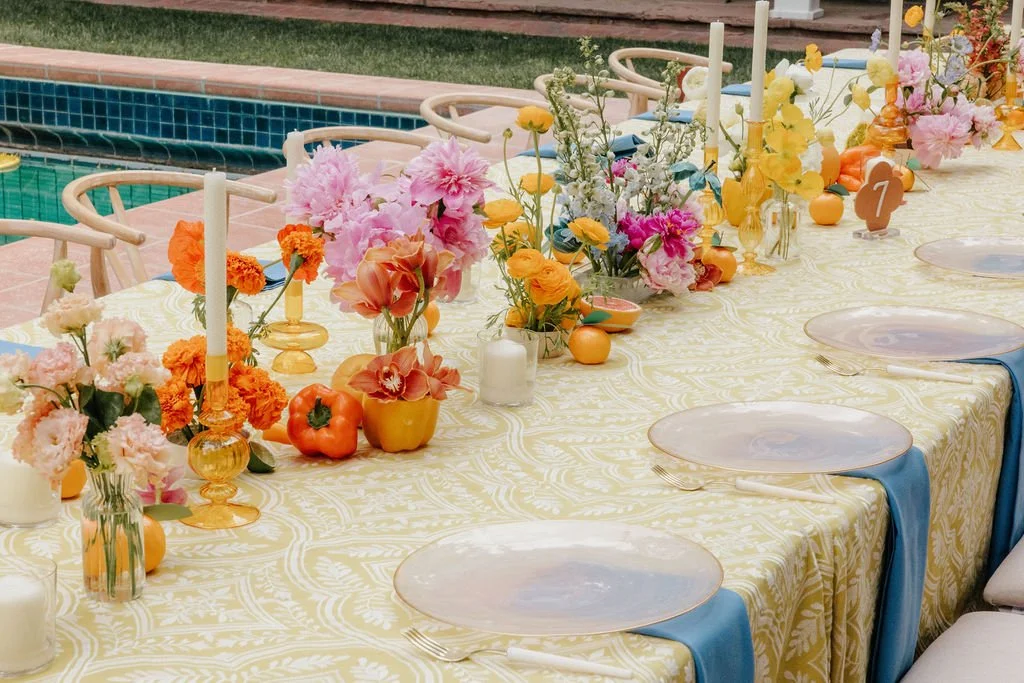
Florals and styling: $500–$2,000
Lodging for the couple: $200–$600/night
Even on the higher end, most couples spend a fraction of what a 150-guest wedding costs, which is part of why small and intimate weddings have grown so quickly as a category over the past several years.
How to Choose the Right Location for Your Small Wedding
Start with guest count. A 40-person wedding needs parking and restrooms; a 2-person elopement doesn't.
Match the season to the elevation. Taos and Sandia run cooler; White Sands and Albuquerque run hotter.
Check permit timelines early. Some public-land permits require 30+ days notice.
Plan your golden hour window. New Mexico's dry air produces intense sunset color, worth building your timeline around.
Have a backup plan for the wind and monsoon season. Especially July–August.
What It's Actually Like Shooting Small Weddings in New Mexico
Guides that rank locations by how they look in a search result often miss the details that matter once you're standing there with your guest list. A few things worth knowing from actually working these locations:
Wind is the real variable, not heat. At elevation in Taos and along the Rio Grande Gorge, afternoon wind can pick up fast, which affects everything from veils to string quartets. Morning ceremonies are more predictable than sunset ones in spring.
Cell service is inconsistent on BLM land. Vendors coordinating a small wedding at a remote overlook should confirm meeting points and timing in person the day before, not rely on text updates.
Adobe chapels book out for both weddings and film shoots. Taos and Santa Fe are popular filming locations, so venue calendars fill differently than you'd expect, worth confirming availability before locking in a date.
Light changes fast at these elevations. Golden hour at 7,000 feet in Taos is shorter and more intense than at sea level, so a tight, well-planned timeline matters more here than in a lot of other wedding destinations.
Permits protect your date more than they restrict it. Couples sometimes assume a permit application will get denied or delayed; in practice, most New Mexico public-land permits for small guest counts are approved within a couple of weeks when submitted with enough lead time.
None of this shows up in a stock photo of a mesa at sunset, but it's the difference between a small wedding that runs smoothly and one where the photographer is troubleshooting instead of shooting.
Final Thoughts
New Mexico's range of terrain, adobe villages, red-rock mesas, gypsum dunes, and alpine forest, is what makes it one of the strongest states in the country for a small or intimate wedding. Whether you're picturing a two-person elopement on BLM land or a 40-guest ceremony in a Santa Fe courtyard, the state's permitting is manageable and its scenery does most of the work for you.
Frequently Asked Questions
-
Taos is generally considered the best all-around location because it combines historic adobe architecture, mountain scenery, and easier permitting than more heavily trafficked states, all within a compact area.
-
Most planners define a small wedding as 20 to 50 guests, distinct from a micro wedding (2–20 guests) and an elopement (just the couple, sometimes with a witness or officiant).
-
In most cases, yes. BLM land, national forests, and national park sites like White Sands all require a special-use or event permit, though fees are generally lower than comparable permits in Utah or California.
-
Late winter (January–March) and midsummer (July–August) tend to have lower vendor and lodging rates, though summer comes with monsoon risk and winter can limit access to higher-elevation sites.
-
Yes. New Mexico offers similarly dramatic desert and mountain scenery with fewer permit restrictions and shorter booking lead times than Utah's most popular elopement parks, making it a strong option for couples who want a less crowded experience.
Keep reading